Tag Archives: das planetarische Denken

Sokratismus / Grammatologie

Frage des Schülers:

Ich habe in Ihre Texte schon des Öfteren reingelesen und verstehe noch nicht so ganz, was die klassische Sokratische Methode in einer Philosophischen Praxis unterscheidet von Ihrer Grammatologischen Philosophischen Praxis

GK:

Die Grammatologische Philosophische Praxis ist ein spezifischer Ansatz innerhalb der Philosophischen Praxis, der maßgeblich von uns beiden (Gerhard Kaučić und Anna Lydia Huber)  geprägt wurde.

Er grenzt sich von klassischen Beratungsformen durch seine theoretische Fundierung in der Dekonstruktion und der Sprachanalytischen Philosophie ab.

ALH:

Ich nenne Dir ein paar Kernmerkmale unserer Praxis:

Schrift und Spur: In Anlehnung an Jacques Derridas Grammatologie wird das Augenmerk auf das „Geschriebene/die Textur“ gelegt, die unser Denken und Handeln vorstrukturiert.

(  im weitesten Sinne: Texte, – Text  meint  alles, was als Zeichen oder Diskurs analysiert und dekonstruiert werden kann – also weit mehr als nur geschriebene Worte.   „Text“ in einem erweiterten, philosophischen Sinne.  

Für uns ist „Text“ nicht nur geschriebene Sprache, sondern umfaßt alle Formen von Zeichen, Diskursen, Filmen, Sprache, sogar Institutionen, Strukturen gesetzter (z.B. politischer) Handlungen und alle Formen von  kulturellen Äußerungen.

So kann beispielsweise ein Film als „Text“ gelesen und analysiert werden, indem man seine Zeichen, Strukturen und Bedeutungen dekonstruiert und interpretiert. Diese Herangehensweise stammt aus der Grammatologie und Semiologie, die sich mit der Analyse von Zeichen und ihrer Bedeutung beschäftigen.  

Jacques Derridas Textbegriff ist radikal erweitert und umfaßt nicht nur geschriebene Dokumente, sondern alle Wirklichkeitsbereiche, da alles durch Zeichen, Bedeutungen und Interpretationen vermittelt wird. Seine berühmte Formulierung „il n’y a pas de hors-texte“ (es gibt kein Außerhalb des Textes) bedeutet, daß soziale, historische oder reale Strukturen stets bereits textuell bzw. interpretativ verfaßt sind.    

«Il n’y a pas de hors-texte» (Kein Außerhalb des Textes): Dies ist keine Leugnung der Realität, sondern die Aussage, daß die Realität uns nie „nackt“, sondern immer strukturiert durch Sprache, Zeichen und Bedeutungen – also als Text – erscheint.  

Text ist ein Gewebe von Zeichen (réseau de signes), ein System aus differentiellen Verweisen. Ein Zeichen hat keinen festen, innewohnenden Sinn, sondern erhält seine Bedeutung erst durch die Beziehung zu anderen Zeichen, die wiederum auf andere verweisen.   

Différance und Spuren: Ein Text ist niemals vollständig gegenwärtig oder abgeschlossen. Bedeutung entsteht durch Aufschub (différance) und Spuren, die auf andere, abwesende Texte verweisen. Es gibt nur „Spuren von Spuren“.    

Derrida spricht nicht von einem spezifischen Werk, sondern von einer allgemeinen Textualität, die als Grundstruktur von Welt und Erfahrung fungiert. 

Der Text ist bei Derrida ein dynamisches, offenes „System“ (! ohne Zentrum !), das durch ständige Verschiebung und Ergänzung (Supplement) von Bedeutung gekennzeichnet ist. )   

Methodische Dekonstruktion: Anstatt fertige Lebensantworten zu liefern, zielt unser Ansatz darauf ab, festgefahrene sprachliche und begriffliche Konstruktionen des Klienten zu hinterfragen und zu dekonstruieren.

Wissenschaftliche Einbettung: Unsere Grammatologische Philosophische  Praxis versteht sich als akademisch fundierte Reflexion, die über die bloße Lebensberatung hinausgeht und philosophisches Wissen als Ressource für die Öffentlichkeit nutzbar macht.

Pluralität: Unsere Praxis, so denke ich, ordnet sich in die Vielfalt zeitgenössischer Ansätze ein, die Philosophie nicht als reine Theorie, sondern als „Bildung des Selbst“ und „Untersuchung des Menschseins“ betreiben.

GK:

Nun, du möchtest mehr darüber erfahren, wie sich dieser dekonstruktive Ansatz konkret von der klassischen Sokratischen Methode in der Beratung unterscheidet. Das zu beantworten verlangt eine längere Antwort und bedarf einer kurzen Pause.

Nach etwa 10 Minuten beginnen wir mit einem vorläufigen Antwortversuch:

Ad hoc würde ich sagen, der entscheidende Unterschied liegt im Umgang mit der Wahrheit und dem Subjekt.

Während das Sokratische Gespräch nach (durch die Art und Weise des Fragens gesteuerter) Erkenntnis strebt, fragt die Grammatologische Praxis nach den Strukturen, die diese Erkenntnis überhaupt erst ermöglichen (oder verhindern).

Hier für Dich auf dem Stand-Flipchart in wenigen Worten und Wörtern ein direkter Vergleich der beiden Ansätze:

Vergleich:                                   Sokratik            vs.             Grammatologische Praxis

Merkmal             Sokratische Methode (Mäeutik)              Grammatologische Praxis

Ziel   Die „Geburt“ einer Wahrheit durch Dialog.     Das Sichtbarmachen von Voraussetzungen  festgefahrener „Texte“.

Rolle des/der Berater*in            Geburtshelfer*in, der/die durch Fragen zum Kern führt.            Grammatologe*in, der/die auf Widersprüche und „Spuren“ von Präsenz im Gesagten und auf Ungesagtes hinweist.

Fokus  Der Inhalt   (Was ist Gerechtigkeit? Was will ich?).       Die Form   (Wie ist mein Denken sprachlich konstruiert?).

Ergebnis             (Idealerweise) Klarheit, Einsicht, Definition.         Differenz, Offenlegung von Machtstrukturen (z.B. patriarchale Spuren von Präsenz), Verflüssigung von Dogmen.

Warum die Grammatologische Praxis anders „fragt“(!?)

In der klassischen Sokratik gehen wir davon aus, daß die Wahrheit bereits im Klienten schlummert und nur „hervorgeholt“ werden muß. Die Grammatologische Praxis ist hier skeptischer:

Gegen das „Zentrum“:

Die Grammatologie (nach Derrida) misstraut der Idee, daß es ein festes Zentrum oder eine einzige Wahrheit gibt.

In der Beratung (Auseinandersetzung, manchmal durchaus konfliktuös) bedeutet das: Es gibt keine „wahre Identität“ des Klienten, die man freilegen könnte, sondern nur ein Geflecht aus Erzählungen und Rollen.

Die Macht der Sprache: Während Sokrates die Sprache als Werkzeug nutzt, sieht die Grammatologische Praxis die Sprache als das Medium, das uns beherrscht. Wir sprechen nicht nur Sprache, die Sprache „spricht“ auch uns (durch gesellschaftliche Normen und Begriffe).

Vom Sprechen zum Schreiben (auch das Sprechen ist ein Schreiben, eine Einschreibung als Versuch!): Während Sokrates das mündliche Gespräch (Präsenz/Absenz) privilegierte, betont die Grammatologie die Schriftlichkeit (wir suchen die Texte auf, das Eingeschriebene), die Einschreibung. Strukturen, Gesetze, Sprache, Unterweisungen, Gehörtes schreiben sich ein. In uns Einzelne. In die Gesellschaft als Ganzes.

In unserer Praxis bedeutet das oft auch die Zuhilfenahme von schon Geschriebenem,- die Arbeit mit konkreten Texten, Tagebüchern, Notizen, Autobiographischem oder der Analyse der „Skripte“, die wir im Praxisprogreß mitnotieren, um dann gleich hernach über dieses Aufgezeichnete zu sprechen. Vorerst und zuallererst nur darüber. Ohne allzuviele Digressionen, wenn möglich.  

ALH:

Ein praktisches Beispiel

Stellen wir uns einen Gast/Gästin/Klient*in vor, der/die sagt: „Ich muß endlich authentisch sein.“

Der Sokratiker, die Sokratikerin würde fragen: „Was bedeutet ‚authentisch‘ für dich? Wann fühlst du dich so?“ – Ziel ist die Definition und Annäherung an das Ideal.

Der Grammatologische Praktiker, die Praktikerin würde fragen: „Welcher Diskurs schreibt dir vor, daß man ‚authentisch‘ sein muß?   Woher stammt dieser Begriff in deiner Biografie?   Welche Gegensätze (z.B. echt/unecht werden hier konstruiert?“ – Ziel ist die Dekonstruktion des Begriffszwangs.

Die Grammatologische Praxis ist daher oft „anstrengender“ oder intellektuell fordernder, da sie nicht direkt zur Lösung führt, sondern das Problem selbst als sprachliches Konstrukt auflöst.

Ich möchte Dir noch gern zeigen, wenn ich darf, wenn noch Zeit dafür ist, ganz kurz und schnell, wie sieht ein konkreter Ablauf einer solchen dekonstruktiven Sitzung aus?

In einer grammatologischen Sitzung (nach Kaučić und Huber) steht nicht die Suche nach einer Lösung im Vordergrund, sondern die Analyse der „Textur“ des Problems. Es geht darum, das Thema als ein Geflecht aus Spuren von Verschiebung/Verschiftung, autoritären Begriffsanwendungen und historischen Vorbelastungen zu lesen.

Ein typischer Ablauf läßt sich in diese Phasen unterteilen:

1. Die „Verschriftlichung“ des Anliegens

Statt nur frei zu erzählen, wird der Klient oft ermutigt, sein Problem als „Text“ zu betrachten und wenn möglich kurz schriftlich zu skizzieren.

Aktion: Der Praktiker, die Praktikerin achtet extrem genau auf die Wortwahl. Begriffe wie „müssen“, „natürlich“ oder „eigentlich“ werden als Ankerpunkte markiert.

Ziel: Distanz schaffen. Das Problem ist nicht „im“ Klienten, sondern es zeigt sich „zwischen“ den Worten.

2. Aufspüren binärer Oppositionen

Der dekonstruktive Kern: Jedes Problem basiert meist auf einer versteckten Zweiteilung (z. B. Erfolg vs. Mißerfolg, Natur vs. Kultur, Aktivität vs. Passivität).

Aktion: Der Praktiker fragt: „Welches Gegenteil wird hier unterdrückt?“ Wenn der Klient über „Sinnlosigkeit“ spricht, wird untersucht, welche überhöhte und unerreichbare Definition von „Sinn“ diesen Zustand erst konstruiert.

Ziel: Die Hierarchie zwischen diesen Begriffen ins Wanken zu bringen.

3. Die Suche nach der „Aporie“ (Sackgasse)

In dieser Phase wird der Klient, die Klientin mit den inneren Widersprüchen seiner/ihrer eigenen Argumentation konfrontiert.

Aktion: Der Praktiker zeigt auf, daß die Begriffe, die der Klient, die Klientin zur Lösung nutzen will, Teil des Problems sind. (Beispiel: Man versucht, durch noch mehr „Selbstkontrolle“ die Angst vor „Kontrollverlust“ zu bekämpfen).

Ziel: Ein Moment des Innehaltens, in dem das alte Denksystem nicht mehr greift.

4. Das „Schreiben“ neuer Spuren

Am Ende steht keine fertige Antwort, sondern eine Verschiebung.

Aktion: Es werden neue Begriffe eingeführt oder alte Begriffe „unter Anführungszeichen“ gesetzt (man nutzt sie, markiert aber ihre Unzulänglichkeit oder Fraglichkeit).

Ziel: Der Klient verläßt die Sitzung nicht mit einem Plan, sondern mit einer höheren Sensibilität für die Sprache, die sein Leben formt. Er/Sie erkennt, daß seine/ihre Identität kein fester Kern, sondern ein ständig fortlaufender Schreibprozeß ist.

Beispiel aus der Praxis:

Ein Klient leidet unter „Zeitdruck“.

Klassisch: „Wie priorisierst du?   Was streßt dich?“

Grammatologisch: „Wer hat das ‚Skript‘ geschrieben, daß Zeit etwas ist, das man ‚besitzen‘ oder ‚verlieren‘ kann? Untersuchen wir die Metapher ‚Zeit ist Geld‘ in deiner persönlichen Erzählung.“

Spielen wir noch kurz und einfach ein konkretes Beispiel für eine solche Wort-Analyse (z. B. zum Begriff  „Authentizität“  oder  „Erfolg“) durch.

In der grammatologischen Praxis (wohlgemerkt nach Kaučić & Huber) wird ein Wort nicht als Gefäß für eine feste Bedeutung behandelt, sondern als Schauplatz von Spannungen.

GK:

Nehmen wir das Beispiel „Authentizität“ – ein häufiges Ziel in der Beratung. In einer grammatologischen Sitzung würde dieser Begriff wie folgt dekonstruiert:

1. Das Wort als Zitat (Etymologische Spur)

Zuerst wird die „Unschuld“ des Wortes enttäuscht.

Analyse: „Authentisch“ kommt vom Griechischen authentikós ( αὐθεντικός „echt“, „glaubwürdig“, „originalgetreu“, aber auch „selbstherrlich“). Es steckt das Wort aut-hentēs (αὐθέντης) darin: derjenige, der mit eigener Hand handelt, – was so viel wie „Selbsttäter“, „Urheber“ oder „Herr“ bedeutet – ursprünglich auch in Abwandlung des Kontexts die Bedeutung eines Mörders oder Täters.

Effekt: Der Klient erkennt, daß „Authentizität“ kein sanfter Naturzustand ist, sondern etymologisch mit Macht, Tat und Autorenschaft verknüpft ist.

2. Aufdeckung der binären Opposition

Der Begriff funktioniert nur durch das, was er ausschließt.

Die Hierarchie: Authentisch (gut/echt) vs. Künstlich (schlecht/Fassade).

Die Dekonstruktion: Der Praktiker zeigt auf, daß man „Authentizität“ oft performen muß, um als authentisch zu gelten (z. B. auf Social Media). Das „Echte“ braucht also das „Künstliche“ (die Darstellung), um überhaupt sichtbar zu sein.

Ergebnis: Die scharfe Trennung bricht zusammen. Man erkennt: Authentizität ist selbst eine Form der Inszenierung.

3. Die Arbeit der „Différance“

Nach Derrida verschiebt und verzögert sich Bedeutung ständig.

Frage in der Praxis: „Wenn Sie sagen, Sie wollen ‚ganz Sie selbst‘ sein – welches ‚Selbst‘ schreiben Sie gerade in diesem Moment? Und welches andere Selbst wird durch diesen Text gerade unterdrückt oder überschrieben?“

Ziel: Weg vom statischen Ziel („Ich will authentisch sein“) hin zur Einsicht, daß man ein lebendiger Text ist, der sich ständig ein– und umschreibt.

ALH:

Zusammenfassender Vergleich der Analyse

Begriff:    Erfolg               Klassische Sicht                         Dekonstruktion

Fokus  Erreichen von Zielen.          Wer hat das „Skript“ des Erfolgs geschrieben?

Gegensatz   Erfolg   vs.   Scheitern.       Wo ist das Scheitern im Erfolg bereits eingeschrieben (z. B. Erschöpfung, Erfahrungsmangel, Milieu, ökonomischer Mangel, …)?

Wirkung     Druck, das Ziel zu erreichen.            Befreiung vom Begriffszwang.  Erfolg wird als „Spur“ gesellschaftlicher Erwartungen lesbar.

Dieser Prozeß führt oft zu einer „Ent-Täuschung“ im wörtlichen Sinne: Der Klient ist nicht mehr Gefangener seiner Begriffe, sondern beginnt, die Grammatik seines Lebens aktiv zu hinterfragen.

GK:

In der grammatologischen philosophischen Praxis wird ein Satz wie „Ich bin nicht gut genug“ nicht als psychologische Wahrheit, sondern als ein „fremdes Skript“ behandelt, das dekonstruiert werden muß.

Anstatt gegen das Gefühl anzukämpfen, zerlegen wir die Grammatik des Leidens in vier Schritten:

1. Das Subjekt „Ich“ einklammern

In der Grammatologie ist das „Ich“ kein fester Kern, sondern eine Leerstelle, die durch Sprache gefüllt wird.

Die Frage: Wer spricht hier eigentlich? Ist das „Ich“ in diesem Satz der Autor oder nur der Vorleser eines Textes, den Eltern, Lehrer oder die Leistungsgesellschaft geschrieben haben?

Ziel: Die Identifikation lösen. Nicht du bist mangelhaft, sondern der Satz über dich ist eine Konstruktion.

2. Die Kopula „bin“ erschüttern

Das Wörtchen „bin“ (sein) suggeriert einen statischen, unveränderlichen Zustand (Ontologie).

Die Dekonstruktion: Wir ersetzen das „bin“ durch „werde“ oder „schreibe mich als“.

Aktion: Der Praktiker/die Praktikerin fragt: „In welchem Moment der Schrift deines Lebens wurde dieses ‚bin‘ festgeschrieben?

Können wir es ‚unter Anführungszeichen‘ setzen (bin), um zu zeigen, daß es nur eine provisorische Behauptung ist?“

Anna Lydia und ich betonen hierbei oft die radikale Offenheit des Werdens.

3. Die Leere des Prädikats „gut genug“ entlarven

„Gut“ ist ein leerer Signifikant – er hat keinen festen Inhalt, sondern ist ein Platzhalter für vorangegangene Erwartungen.

Die Analyse: „Gut genug“ braucht immer einen Maßstab. Wir suchen nach dem Supplement (Ergänzung): Gut genug wofür? Gut genug für wen?

Die Paradoxie: Wer „gut genug“ sein will, setzt voraus, daß es einen perfekten Endzustand gibt. Die Grammatologie zeigt: Es gibt keinen fertigen Text.

Ein Text ist immer „unabgeschlossen“ und unabschließbar.

4. Das „Nicht“ als Spur der Differenz

Das „Nicht“ erzeugt eine schmerzhafte Trennung zwischen dem, was ist, und einem Ideal.

Die Umkehrung: In der Dekonstruktion schauen wir auf das, was das „Nicht“ verbirgt.

Oft schützt der Satz „Ich bin nicht gut genug“ vor der Angst, die eigene Freiheit wirklich zu nutzen. Er ist eine bequeme (wenn auch schmerzhafte) Ausrede, um im gewohnten Skript zu bleiben.

ALH, GK:

Das Ergebnis der Sitzung

Am Ende steht kein positiver Glaubenssatz (wie „Ich bin wertvoll“ – das wäre nur ein neues, starres Skript), sondern eine sprachliche Verflüssigung:

„Es gibt eine Erzählung in meinem Leben, die den Begriff  ‚gut genug‘  verwendet, um eine Hierarchie aufzubauen, der ich mich bisher unterworfen habe.

Ich erkenne die Ränder dieses Textes und beginne, am Rand neue Kommentare zu schreiben.“ 

GK:

Para-Graphien. § Para-Graphie : K o m m e n t a r. Parekbase (griechisch parekbasis „Abweichung, Abschweifung“). Parekbase, Parabase (Schlegel, Barthes, Derrida, Cončić-Kaučić) !

P.s.:

Randnotiz ParaGraphie:

Häufig wird auch der Begriff παράβασις (parábasis) verwendet. Während die Parabase den rituellen Akt des „Vortretens“ des Chors in der Komödie betont, fokussiert die Parekbase (besonders in der literaturtheoretischen Rezeption durch Friedrich Schlegel) stärker auf das Heraustreten aus der fiktionalen Illusion. παρέκβασις (parékbasis)

Question from the student:

I have read your texts several times and still don’t quite understand what distinguishes the classical Socratic method in Philosophical Practice from your Grammatological Philosophical Practice

GK:

Grammatological Philosophical Practice (GPP) is a specific approach within philosophical practice that was significantly influenced by both of us (Gerhard Kaučić and Anna Lydia Huber).

It differs from classical forms of counseling in its theoretical foundation in deconstruction and linguistic-analytic philosophy.

ALH:

I’ll mention a few key features of our practice:

Writing and traces: Following Jacques Derrida’s grammatology, attention is focused on the “written/texture” that pre-structures our thoughts and actions.

(  In the broadest sense: texts – text means everything that can be analyzed and deconstructed as a sign or discourse – in other words, much more than just written words.   “Text” in an expanded, philosophical sense. 

For us, “text” is not only written language, but encompasses all forms of signs, discourses, films, language, even institutions, structures of established (e.g., political) actions, and all forms of  cultural expressions.

For example, a film can be read and analyzed as “text” by deconstructing and interpreting its signs, structures, and meanings. This approach stems from grammatology and semiology, which deal with the analysis of signs and their meanings.  

Jacques Derrida’s concept of text is radically expanded and encompasses not only written documents, but all areas of reality, since everything is conveyed through signs, meanings, and interpretations. His famous phrase “il n’y a pas de hors-texte” (there is no outside of the text) means that social, historical, or real structures are always already textual or interpretive.  

 “Il n’y a pas de hors-texte” (There is no outside of the text): This is not a denial of reality, but rather a statement that reality never appears to us “naked,” but always structured by language, signs, and meanings—in other words, as text.  

Text is a network of signs (réseau de signes), a system of differential references. A sign has no fixed, inherent meaning, but only acquires its meaning through its relationship to other signs, which in turn refer to others.  

Différance and traces: A text is never completely present or complete. Meaning arises through deferral (différance) and traces that refer to other, absent texts. There are only “traces of traces.”   

Derrida does not speak of a specific work, but of a general textuality that functions as the basic structure of the world and experience. 

For Derrida, the text is a dynamic, open “system” (without a center!) that is characterized by constant shifts and additions (supplements) of meaning. )  

Methodical deconstruction: Instead of providing ready-made answers to life’s questions, our approach aims to question and deconstruct the client’s entrenched linguistic and conceptual constructions.

Scientific embedding: Our grammatological philosophical  practice sees itself as an academically grounded reflection that goes beyond mere life counseling and makes philosophical knowledge available as a resource for the public.

Plurality: I believe that our practice fits into the diversity of contemporary approaches that pursue philosophy not as pure theory, but as “education of the self” and “exploration of humanity.”

GK:

Well, you want to learn more about how this deconstructive approach differs specifically from the classical Socratic method in counseling. Answering that requires a longer response and a short pause.

After about 10 minutes, we begin with a preliminary attempt at an answer:

Ad hoc, I would say that the decisive difference lies in the treatment of truth and the subject.

While Socratic dialogue strives for insight (guided by the manner of questioning), grammatological practice inquires into the structures that make this insight possible (or prevent it) in the first place.

Here is a direct comparison of the two approaches in a few words and phrases on the stand-up flipchart:

Comparison:                                   Socratic            vs.             Grammatological Practice

Feature                                Socratic method (maieutics)                                Grammatological Practice

Goal                                The “birth” of a truth through dialogue.                                The visualization of the prerequisites of entrenched “texts.”

Role of the consultant: Birthing assistant who guides the client to the core through questions. Grammatologist who points out contradictions and “traces” of presence in what is said and possibly unsaid.

Focus    The content   (What is justice? What do I want?).    The form   (How is my thinking constructed linguistically?).

Result    (Ideally) Clarity, insight, definition.         Difference, disclosure of power structures (e.g., patriarchal traces of presence), liquefaction of dogmas.

Why grammatological philosophical practice “asks” differently (!?)

In classical Socratic dialogue, we assume that the truth already lies dormant within the client and only needs to be “brought out.” Grammatological practice is more skeptical here:

Against the “center”:

Grammatology (according to Derrida) distrusts the idea that there is a fixed center or a single truth.

In counseling (discussion, sometimes quite conflictual), this means that there is no “true identity” of the client that can be uncovered, but only a web of narratives and roles.

The power of language: While Socrates uses language as a tool, grammatological practice sees language as the medium that controls us. We do not only speak language, language also “speaks” us (through social norms and concepts).

From speaking to writing (speaking is also a form of writing, an inscription as an attempt!): While Socrates privileged oral conversation (presence/absence), grammatology emphasizes writing (we seek out texts, the inscribed), inscription. Structures, laws, language, instructions, and what we hear become inscribed. In us as individuals. In society as a whole.

In our practice, this often means making use of what has already been written—working with concrete texts, diaries, notes, autobiographical material, or analyzing the “scripts” that we note down in the course of our practice, in order to then talk about what has been recorded immediately afterwards. For the time being and first and foremost, only about this. Without too many digressions, if possible.

ALH:

A practical example

Let’s imagine a guest/client who says, “I finally have to be authentic.”

The Socratic would ask: “What does ‘authentic’ mean to you? When do you feel that way?” – The goal is to define and approach the ideal.

The grammatological practitioner would ask: “Which discourse dictates that one must be ‘authentic’?   Where does this concept originate in your biography?   What opposites (e.g., real/fake) are constructed here?” The goal is to deconstruct the conceptual constraint.

Grammatological practice is therefore often more “exhausting” or intellectually demanding, as it does not lead directly to a solution, but rather dissolves the problem itself as a linguistic construct.

If I may, and if there is still time, I would like to show you very briefly and quickly what a concrete sequence of such a deconstructive session looks like.

In a grammatological session (according to Kaučić and Huber), the focus is not on finding a solution, but on analyzing the “texture” of the problem. The aim is to read the topic as a web of traces of displacement/deplacement, authoritarian conceptual applications, and historical prejudices.

A typical process can be divided into the following phases:

1. Putting the issue into writing

Instead of just talking freely, the client is often encouraged to view his or her problem as a “text” and, if possible, to briefly outline it in writing.

Action: The practitioner pays extremely close attention to the choice of words. Terms such as “must,” “of course,” or “actually” are marked as anchor points.

Goal: To create distance. The problem is not “in” the client, but manifests itself “between” the words.

2. Identifying binary oppositions

The deconstructive core: Every problem is usually based on a hidden dichotomy (e.g., success vs. failure, nature vs. culture, activity vs. passivity).

Action: The practitioner asks, “Which opposite is being suppressed here?” If the client talks about “meaninglessness,” the practitioner examines which exaggerated and unattainable definition of “meaning” constructs this state in the first place.

Goal: To destabilize the hierarchy between these terms.

3. The search for the “aporia” (dead end)

In this phase, the client is confronted with the internal contradictions of his or her own argumentation.

Action: The practitioner shows that the concepts the client wants to use to solve the problem are part of the problem. (Example: One tries to combat the fear of “loss of control” with even more “self-control”).

Goal: A moment of pause in which the old system of thinking no longer applies.

4. “Writing” new traces

The end result is not a finished answer, but a shift.

Action: New terms are introduced or old terms are put “in quotation marks” (they are used, but their inadequacy or questionable nature is highlighted).

Goal: The client does not leave the session with a plan, but with a greater sensitivity to the language that shapes his or her life. He or she recognizes that his or her identity is not a fixed core, but a constantly ongoing writing process.

Practical example:

A client suffers from “time pressure.”

Classic: “How do you prioritize? What stresses you out?”

Grammatological: “Who wrote the ‘script’ that time is something you can ‘possess’ or ‘lose’? Let’s examine the metaphor ‘time is money’ in your personal narrative.”

Let’s briefly and simply play through a concrete example of such a word analysis (e.g., for the term “authenticity” or “success”).

In grammatological practice (according to Kaučić & Huber, mind you), a word is not treated as a vessel for a fixed meaning, but as a scene of tensions.

GK:

Let’s take the example of “authenticity” – a frequent goal in counseling. In a grammatological session, this term would be deconstructed as follow:

1. The word as a quotation (etymological trace)

First, the “innocence” of the word is disappointed.

Analysis: “Authentic” comes from the Greek authentikós ( αὐθεντικός “genuine,” “credible,” “true to the original,” but also “autocratic”). It contains the word aut-hentēs (αὐθέντης): one who acts with his own hand, which means “self-actor,” “creator,” or “lord”—originally also, in a variation of the context, the meaning of a murderer or perpetrator.

Effect: The client recognizes that “authenticity” is not a gentle natural state, but is etymologically linked to power, action, and authorship.

2. Exposure of the binary opposition

The term only works through what it excludes.

The hierarchy: Authentic (good/real) vs. Artificial (bad/facade).

The deconstruction: The practitioner shows that one often has to perform “authenticity” in order to be considered authentic (e.g., on social media). The ‘real’ therefore needs the “artificial” (the representation) in order to be visible at all.

Result: The sharp distinction collapses. We recognize that authenticity is itself a form of staging.

3. The work of “différance”

According to Derrida, meaning is constantly shifting and delayed.

Practical question: “When you say you want to be ‘completely yourself’—which ‘self’ are you writing about at this very moment? And which other self is being suppressed or overwritten by this text?”

Goal: Move away from the static goal (“I want to be authentic”) toward the realization that you are a living text that is constantly writing and rewriting itself.

ALH:

Summary comparison of the analysis

Term:    Success     Classical view                Deconstruction

Focus    Achieving goals.           Who wrote the “script” for success?

Opposite   Success   vs.   Failure.    Where is failure already inscribed in success (e.g., exhaustion, lack of experience, milieu, economic deprivation, …)?

Effect     Pressure to achieve the goal.    Liberation from conceptual constraints.  Success becomes legible as a “trace” of social expectations.

This process often leads to a “disillusionment” in the literal sense: the client is no longer a prisoner of his concepts, but begins to actively question the grammar of his or her life.

GK:

In grammatological philosophical practice, a sentence such as “I am not good enough” is not treated as psychological truth, but as a “foreign script” that must be deconstructed.

Instead of fighting the feeling, we break down the grammar of suffering in four steps:

1. Bracket the subject “I”

In grammatology, the “I” is not a fixed core, but a void that is filled by language.

The question: Who is actually speaking here? Is the “I” in this sentence the author or just the reader of a text written by parents, teachers, or the meritocracy?

Goal: To dissolve identification. It is not you who is deficient, but the sentence about you that is a construct.

2. Shake up the copula “am”

The little word “am” (to be) suggests a static, unchanging state (ontology).

The deconstruction: We replace “am” with ‘become’ or “write me as.”

Action: The practitioner asks: „At what moment in the writing of your life was this ‘am’ established?

Can we put it in quotation marks (am) to show that it is only a provisional assertion?“

Anna Lydia and I often emphasize the radical openness of becoming.

3. Exposing the emptiness of the predicate “good enough”

“Good” is an empty signifier—it has no fixed content, but is a placeholder for previous expectations.

The analysis: “Good enough” always needs a measuring stick. We look for the supplement (addition): Good enough for what? Good enough for whom?

The paradox: Anyone who wants to be “good enough” assumes that there is a perfect end state. Grammatology shows that there is no finished text.

A text is always “unfinished” and unfinishable.

4. “Not” as a trace of difference

“Not” creates a painful separation between what is and an ideal.

The reversal: In deconstruction, we look at what “not” conceals.

Often, the sentence “I’m not good enough” protects us from the fear of truly exercising our own freedom. It is a convenient (albeit painful) excuse to stay within the familiar script.

ALH, GK:

The outcome of the session

The end result is not a positive belief (such as “I am valuable” – that would just be a new, rigid script), but rather a linguistic fluidity:

„There is a narrative in my life that uses the term ‘good enough’ to establish a hierarchy to which I have submitted myself until now.

I recognize the margins of this text and begin to write new comments in the margins.“ 

GK:

Para-graphs. § Para-graphy: C o m m e n t. Parekbase (Greek parekbasis “deviation, digression”). Parekbase, Parabase (Schlegel, Barthes, Derrida, Cončić-Kaučić)!

P.S.:

Side note paraGraphia:

The term παράβασις (parábasis) is also frequently used. While parabase emphasizes the ritual act of the chorus “stepping forward” in comedy, parekbase (especially in Friedrich Schlegel’s literary-theoretical reception) focuses more strongly on stepping out of the fictional illusion. παρέκβασις (parékbasis)

Philosophical Lounge / Philosophischer Salon G Kaučić & AL Huber Wien, Österreich, –
Gerhard Kaučić (*1959), Leiter einer Grammatologischen Philosophischen Praxis seit 37 Jahren in Wien ( 1989-2026 ff.)
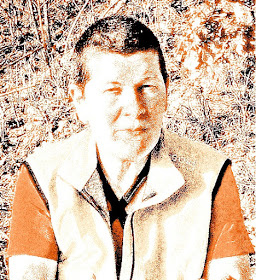
Anna Lydia Huber (MSc, 67, 2026), Philosopher, Austria, Vienna / Philosophin, Österreich, Wien
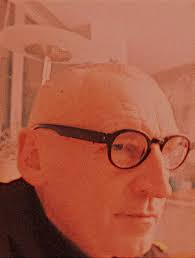
Gerhard Kaučić (Dr. phil., 67, 2026), Philosopher, Austria, Vienna / Philosoph, Österreich, Wien

cf. Jacques Derrida, Signatur Ereignis Kontext, – in: Randgänge der Philosophie, Wien 1988, S. 291-314 ( Französische Originalausgabe: Marges de la philosophie, Paris 1972 )

Grammatologische Philosophische Praxis (GPP), Gerhard Kaučić / Djay PhilPrax & Anna Lydia Huber, Wien, 1989 – 2026 ff.

Unser Blog als Textereignis im Zusammenspiel zwischen unserer Philosophischen Praxis als Textereignis ohne Protokoll und unserer philosophischen Praxis als „Protokoll“ zwischen Archiv und Anarchiv.

Our blog as a text event in the interaction between our philosophical practice as a text event without protocol and our philosophical practice as a „protocol“ between archive and anarchive.

Mein Lebenswerk, – unsere philosophische Praxis!

Die Erfindung der Wirklichkeit, die Wahrheit eines Werkes, ob eines philosophischen, psychoanalytischen, literarischen, künstlerischen oder eines juristischen, medizinischen, technischen, sportlichen, erfinderischen, organisatorischen, bürokratischen, wissenschaftlichen, architektonischen, fotografischen Werkes oder eines wirtschaftlich-unternehmerischen, politischen, militärischen, ökonomischen Werkes oder einer künstlich-naturhaft herbeigeführten Wirklichkeit als Wahrheit etwa eines Werkes von Klimawandel und Folgen, – – – die Wahrheit eines Werks (!!!) enthüllt sich erst und allein in der erkannten und erkennbaren(!) Geschichte seiner Wirkungen.

Es geht darum, es geht mir in meiner Philosophischen Praxis

(( und dazu gehört das Gespräch in dieser, aber auch meine/unsere Schreibpraxis vorher und nachher einer jeden Setzung / Sitzung(!) ))

immer darum, Texte (geschrieben, gesprochen oder Darstellungen(!) z. B. technischer, künstlerischer, ökonomischer, politischer, institutioneller Art) in ihrer inneren Struktur und in ihrem Zusammenwirken mit anderen Texten zu erfassen.

Die Texte sind nicht nur zu analysieren und zu interpretieren, sondern durch die Praxis der Dekonstruktion ihrer Konflikthaftigkeit, ihrer Aggressivität, ihrer verdeckt mitgeführten Gehalte und Intentionen zu enttarnen.

Gemeint ist die Sichtbarmachung der Doppelheit des gleichzeitigen An- und Abwesendsein(!) von Wahrheit.

Wir äußern Sätze gewollter analytischer Wahrheit und verdrängen dadurch gleichzeitig andere eventuale Wahrheits- oder Unwahrheitssätze.

The invention of reality, the truth of a work, whether a philosophical, psychoanalytical, literary, artistic or a juridical, medical, technical, sporting, inventive, organizational, bureaucratic, scientific, architectural, photographic work or an economic, entrepreneurial, political, military, economic work or an artificially-natural reality as the truth of a work of climate change and consequences, – – – the truth of a work (!!!) is revealed only and explicitly in the recognized and recognizable (!) history of its effects.

The point is, in my philosophical practice

(( and this includes the conversation in this, but also my/our writing practice before and after each setting / session(!) )

is always about capturing texts (written, spoken or representations(!) e.g. technical, artistic, economic, political, institutional) in their inner structure and in their interaction with other texts.

The texts are not only to be analysed and interpreted, but also to be unmasked through the practice of deconstructing their conflictual nature, their aggressiveness, their hidden contents and intentions.

What is meant is the visualization of the duality of the simultaneous presence and absence (!) of truth.

We express sentences of desired analytical truth and thereby simultaneously repress other possible sentences of truth or untruth.

[[ Gerhard Kaučić / Djay PhilPrax (born 1959), Anna Lydia Huber (born 1959), Philosophers, –

Writers, Feminists, Freeriders, Grammatological Philosophical Practice (GPP), Vienna, PP since 1989, Dr. phil., MSc, —

( Copyright, Bildrechte, Urheberrecht, rights to images, copyright, Picture rights, Image Rights, Copyright, –

Texte, Fotos © Anna Lydia Huber, Gerhard Kaučić ) ]]

Zum besseren Verständnis und zur beginnenden Einübung in unsere philosophische Praxis lesen Sie bitte unsere Charakterisierung der Grammatologischen Philosophischen Praxis (GPP GK & ALH, Deutsch/Englisch), –

Url/Link: 

https://www.philosophischepraxiskaucicundhuber.at/charakterisierung/

For a better understanding and to begin practicing our philosophical approach, please read our characterization of Grammatological Philosophical Practice. (GPP GK & ALH, German/English), –  

Url/Link: 

https://www.philosophischepraxiskaucicundhuber.at/charakterisierung/

……………………………………. Anarchiv …………………… Archiv ……………………………………….

Bedenken Sie, was geschrieben werden wird! ……………………..

Gerhard Kaucic ……………………..

auch „Gespräche“ müssen gelesen werden! Gehörtes ist gehört worden und in der verstehenden Verstandestätigkeit „gelesen“ worden.

Aus-gelesen! Ausgewählt! Aus-sortiert! Aus der gehörten „Wirklichkeit“ er-hört und ent-hört, ver-hört, verwirklicht, verkettet, sprachverkoppelt, verlesen!, zusammen-ge-lesen!, zusammengesammelt, ver-sammelt, ge-doublet, ge-setzt, produktiv ausgelesen! )

Es gibt kein Kriterium für die Identität des Sinns eines Ausdrucks: die Interpretation wird im wissenschaftlichen Sinne eine Sache der Unentscheidbarkeit.

Philosophische Praxis Dr. Gerhard Kaučić ……………………….. …………………………………………………………………………………………………………………………………………………………………………………………………………………………………………… ………………………………………………………. Mise-en-Abyme ……………………………………. mise en abîme ………………………………………………………………………………………………………………………………………………………………………………………………………………………………………………………………………………………………….. Abyssos …………………………………………………………………………………………………………………………………………………………………………………………………………………………………………………………………….. intertextuelle Strukturen als die „Natur“ der Sprache …………………………………………This reason of understanding, limited by „territory“ (temporally and spatially), the image of temporary textual-configurations ( mise en abyme, picture in picture in picture…), „picture“ as a metaphor of re-flection, the picture of the mirror without tinfoil, the picture of standing behind the mirror as „standing“ in the mirror, –

a mirror of distortion and performance/performation (!), a mirror of the initial transformation without origin, – a mirror, which gives the picture ( away ! ?!) for our language, – our language as graphically marked poetics of communication, – literally ! (see J. Derrida, La dissémination, p. 350 und passim) ……………………………………………………………. ……………………………………………………………………………………………………………………………………………………………………………………………………………………………………. GERHARD KAUČIĆ ……………………. Gegenwartsphilosophie

………………………………… Philosophische Praxis ……………………………. Contemporary Philosophy ………………….. Gegenwartsphilosophie ……………………………

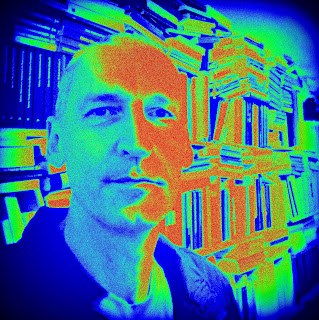
Gerhard Kaucic (67), Bibliothek, PP zu Archiv, Speichermedien und Autodekonstruktion  im Gespräch; Philosophische Praxis heute im März 2025 donnerstags, nachmittags, von 13.00 Uhr bis 17.00 Uhr in der Guglgasse im Gasometer Wien bei uns in unserer Privatbibliothek.
Ein die Addenda zur Biographie (oder was die meisten von uns dafür halten!) umklammerndes und hinausleitendes Addendum zum Thema Curriculum, Archiv, Anarchiv und Speichermedien heute!

Jedes Archiv im Sinne einer Veranlagung von etwas beruht auf dem Anarchivischen, dem nicht Archivierbaren (zum Beispiel der Raumklang in einem Konzertsaal), dem noch nicht Archivierten, ja vielleicht dem noch nicht einmal Objektivierten als Produziertes oder zumindest Produzierbares. Dieses Denken des Anarchivs und des Archivs zeitgleich beruht auf dem Denken Derridas in Bezug auf das, was er „Spur“ nennt.  „Es gilt, die Spur vor dem Seienden zu denken.“ (J. Derrida, op.cit., Grammatologie, S. 82). 

vorläufig endend mit dem Medium Fotographie als Botschaft/INformation/Interpretat/Verkehrung der Logik des Sinns/Abgrund/die Ordnung der Dinge als Befragung/das Recht der Dinge auf Eigensinn/Dissemination aus einem Diesseits und Jenseits von Zeit

Falls Sie interessiert sind an einer PP mit mir/uns, bitte nur unter dieser E-mail einen Termin reservieren: To contact me/us, please use only this email: g.kaucic[at]chello.at

If you are interested in a PP (Philosophical Practice) with me, please reserve an appointment only under this email: To contact us, please use only this email: gack[at]chello.at

Philosophers, Writers, Philosophical Practitioners, Mediators, Translators, Feminists, Freeriders, (Wild) Camping Enthusiasts, Survivors Vienna

Grammatological Philosophical Practice (GPP) weltweit … rund um die Uhr … rund um die Welt, … „face à face“, … confidential one-to-one conversation, … around the clock … around the world

Grammatologische Philosophische Praxis (GPP) Dr. Gerhard Kaucic / Djay PhilPrax ( geb. 1959, Autor, Philosoph, PP seit 1989 ) Gespräch, Analyse, Diskurs, Problematisierung, Identitätsdislokation, Subjektivierung, Formalisierung, Fältelung, Komplizierung, Aporie, Dekonstruktion

Öffnungszeiten / Hours of opening:  Mo –  Do:  11 – 20 Uhr

Honorar nach Vereinbarung / Charge by arrangement

Gespräche outdoor/indoor: Grammatologien, Kontextualisierungen, Analysen, Komplizierungen, Plurivalenzen, Dependenzen, Interdependenzen, Grammatiken, Aporien, Dekonstruktion…rund um die Uhr…rund um die Welt…

…around the clock …around the world…

cf. Jacques Derrida, Signatur Ereignis Kontext, – in: Randgänge der Philosophie, Wien 1988, S. 291-314 ( Französische Originalausgabe: Marges de la philosophie, Paris 1972 )

Grammatological Philosophical Practice (GPPVienna 1989 ff. Analysis Complication Aporia Identity Dislocation Meta-thesis Deconstruction

Cf. list of publications at: https://scholar.google.at/citations?user=wNUSN64AAAAJ&hl=de   

To contact us, please use only these emails:

Projekte / Projects (1989 – 2026 ff.) 37 Jahre Grammatologische Philosophische Praxis (GPP) Wien GK & ALH

Mehr dazu siehe unseren Teaser und unseren Footer sowie die übrigen Postings im Blogspot-Blog 2014 ff.

Homepage: 
https://disseminationsdjayphilpraxkaucic.blogspot.com/2016/03/was-ist-philosophische-praxis-iii-teil-3.html

https://disseminationsdjayphilpraxkaucic.blogspot.com/2016/03/was-ist-philosophische-praxis-iii-teil-3.html?m=1

https://web.archive.org/web/20250910172931/https://disseminationsdjayphilpraxkaucic.blogspot.com/2016/03/was-ist-philosophische-praxis-iii-teil-3.html?m=1

Anna Lydia Huber (67, 2026), Philosopher, Austria, Vienna / Philosophin, Österreich, Wien
Gerhard Kaučić (67, 2026), Philosopher, Austria, Vienna / Philosoph, Österreich, Wien

Mehr zur Vita und zum Werk der Philosophin und Schriftstellerin Anna Lydia Huber (67, 2026, Philosophische Praxis seit 2009) und des Philosophen und Schriftstellers Gerhard Kaučić (67, 2026, Philosophische Praxis seit 1989) in deren Postings  „Künstliche Intelligenz“ hier in diesem Blog !

Künstliche Intelligenz 09.07.2025 Url/Link: 

Künstliche Intelligenz,- eine Ergänzung 25.09.2025 Url/Link: 

Zum besseren Verständnis und zur beginnenden Einübung in unsere philosophische Praxis lesen Sie bitte unsere Charakterisierung der Grammatologischen Philosophischen Praxis (GPP GK & ALH, Deutsch/Englisch), –

Url/Link: 

https://www.philosophischepraxiskaucicundhuber.at/charakterisierung/

For a better understanding and to begin practicing our philosophical approach, please read our characterization of Grammatological Philosophical Practice. (GPP GK & ALH, German/English), –  

Url/Link: 

https://www.philosophischepraxiskaucicundhuber.at/charakterisierung/

https://disseminationsdjayphilpraxkaucic.blogspot.com/2025/03/latest-news-information.html?m=1
Freedom / Freiheit

Zumindest der Versuch eines Protokolls eines Experiments, – aufgezeichnet von Gerhard Kaučić und Anna Lydia Huber:

Zwei Gruppen, ein Thema.

Eine aus München auf Deutsch und eine aus Bratislava auf Englisch.

Die Gesprächs- und Analysegrundlage bildet Kaučićs und Hubers Text

  „The concept of freedom and its freedoms“

vom 13.03.2025 mit dem Url/Link: 

https://www.philosophischepraxiskaucicundhuber.at/2025/03/13/the-concept-of-freedom-and-its-freedoms/

Weiterführende Literatur als Gesprächsgrundlage dieses Experiments einer Grammatologischen Philosophischen Praxis (GPP) zweier voneinander unabhängiger Gruppen in 2 unterschiedlichen Sprachen:

Hannah Arendt: Die Freiheit, frei zu sein, Vita activa, Über die Revolution.

Immanuel Kant: Kritik der reinen Vernunft (transzendentale Freiheit) und Kritik der praktischen Vernunft (moralische Freiheit) plus Grundlegung zur Metaphysik der Sitten ( Verbindung von Freiheit, Autonomie und dem kategorischen Imperativ). 

Jacques Derrida: Schurken. Zwei Essays über die Vernunft, Von der Gastfreundschaft.

Das Konzept der Freiheit und seine Freiheiten. Über das Konzept und die Verständlichkeit von Freiheit  bei Gerhard Kaučić und Anna Lydia Huber ?

Grundgedanke: Freiheit existiert nur in realen Bedingungen

Kaučić und Huber verstehen Freiheit nicht als abstrakte metaphysische Eigenschaft.

Freiheit wird erst bedeutsam, wenn man sie in den tatsächlichen politischen, ökonomischen und sozialen Bedingungen betrachtet.

Freiheit ist nie absolut.

Sie ist immer situiert und begrenzt.

Sie muss sich in der Realität bewähren.

Demokratische, transparente und rechtsstaatliche Strukturen sind die Voraussetzung dafür, daß Freiheit überhaupt entstehen kann.

At least an attempt at a protocol of an experiment, recorded by Gerhard Kaučić and Anna Lydia Huber:

(partial translation into German or vice versa into English by GK & ALH)

Two groups, one topic.

One from Munich in German and one from Bratislava in English.

The basis for discussion and analysis is Gerhard Kaučić’s and Anna Lydia Huber’s text

“The concept of freedom and its freedoms”

dated March 13, 2025, with the URL/link: https://www.philosophischepraxiskaucicundhuber.at/2025/03/13/the-concept-of-freedom-and-its-freedoms/

Further reading as a basis for discussion of this experiment in Grammatological Philosophical Practice (GPP) by two independent groups in two different languages:

Hannah Arendt: The Freedom to Be Free, The Human Condition (Vita Activa), On Revolution.

Immanuel Kant: Critique of Pure Reason (transcendental freedom) and Critique of Practical Reason (moral freedom) plus Groundwork of the Metaphysics of Morals (connection between freedom, autonomy, and the categorical imperative). 

Jacques Derrida:  Rogues: Two Essays on Reason,  Of Hospitality.

1. Core Idea: Freedom Exists Only in Real Conditions

Kaučić and Huber argue that traditional philosophical debates about “free will” fail because they ignore the concrete conditions in which human beings actually live.

Freedom is not a metaphysical essence.

It is something that must be understood within political, economic, and social frameworks.

What we call “free will” is always shaped by these frameworks.

They emphasize that constitutional, transparent, democratic structures are what make freedom even partially possible.

2. Freedom as a Space of Action

According to them, individuals experience freedom as a subjective scope of action:

This scope is limited by economic circumstances.

It is also limited by our own “subjectively diverse reasonableness”—our biases, fears, and internal obstacles.

Real freedom requires constant effort to overcome these internal and external barriers.

Freedom is therefore not a state but a practice.

3. Kant and the Demand for Objective Reality

They invoke Kant to argue that freedom must prove itself in objective reality:

Freedom is not meaningful unless it can be enacted.

Philosophy itself presupposes freedom—without it, thinking collapses.

Thus, freedom is both a precondition and a task.

4. Democracy as the Condition for Free Philosophy

They draw on Derrida’s idea of a “democracy to come”:

A free philosophy requires a democracy in development, always improving.

Freedom is inseparable from democratic structures.

Literature, art, science, and quality journalism also depend on this democratic space.

Freedom is therefore collective, not merely individual.

5. Philosophical Practice as a Way to Navigate Freedom

In their broader work, Kaučić and Huber describe Grammatological Philosophical Practice as:

A method for overcoming fear.

A way to analyze and deconstruct power, authority, and ideology.

A communicative effort to resist domination and open spaces for freedom and emancipation.

This practice is part of their understanding of how freedom can be lived and expanded.

6. What “the freedoms/liberties” mean

The plural—freedoms—signals that:

Freedom is not one thing but many overlapping dimensions.

Political freedom, economic freedom, communicative freedom, artistic freedom, and personal autonomy all interact.

These freedoms can support or undermine one another depending on the conditions.

Freedom is therefore a constellation, not a single concept.

7. Comprehensibility of Freedom

They argue that freedom becomes comprehensible only when:

It is grounded in real-world structures.

It is understood as a dynamic process.

It is seen as something that must be continually defended and enacted.

Freedom is not a mystical enigma. Nor is it a gift. Freedom is not a mystery—it is a practical, lived, and political phenomenon.

Freedom is not a metaphysical mystery, but a practical, lived, and political phenomenon as desire.

The eternal dream of free and unrestricted movement in space.

Personal. Social. Political. Spatial. Economic. Intellectual. Communicative. Informative. Societal. Libidinal. Freedom of the press. Artistic. Performative. Gender. 

Ein Experiment!  

Zumindest der Versuch eines Protokolls eines Experiments, – aufgezeichnet von Gerhard Kaučić und Anna Lydia Huber:

Zwei Gruppen, ein Thema.

Eine aus München auf Deutsch und eine aus Bratislava auf Englisch.

Die Gesprächs- und Analysegrundlage bildet Kaučićs und Hubers Text

vom 13.03.2025 mit dem Url/Link: https://www.philosophischepraxiskaucicundhuber.at/2025/03/13/the-concept-of-freedom-and-its-freedoms/

1. Grundgedanke: Freiheit existiert nur in realen Bedingungen

Kaučić und Huber verstehen Freiheit nicht als abstrakte metaphysische Eigenschaft.

Freiheit wird erst bedeutsam, wenn man sie in den tatsächlichen politischen, ökonomischen und sozialen Bedingungen betrachtet.

Freiheit ist nie absolut.

Sie ist immer situiert und begrenzt.

Sie muss sich in der Realität bewähren.

Demokratische, transparente und rechtsstaatliche Strukturen sind die Voraussetzung dafür, daß Freiheit überhaupt entstehen kann.

2. Freiheit als Handlungsspielraum

Für Individuen zeigt sich Freiheit als subjektiver Handlungsspielraum:

Er wird durch ökonomische Bedingungen eingeschränkt.

Er wird durch unsere eigenen inneren Grenzen beeinflusst (Ängste, Vorurteile, Gewohnheiten).

Freiheit ist daher kein Zustand, sondern ein ständiger Prozess des Überwindens.

Freiheit ist etwas, das man praktiziert, nicht etwas, das man einfach besitzt.

3. Kant: Freiheit muss sich in der Wirklichkeit zeigen

Kaučić und Huber greifen Kant auf, um zu betonen:

Freiheit ist nur lebbar/sinnvoll, wenn sie wirklich ausgeübt werden kann.

Denken selbst setzt Freiheit voraus.

Freiheit ist sowohl Voraussetzung als auch Aufgabe.

Damit wird Freiheit zu einem Prüfstein: Sie muss sich im Handeln bewähren.

4. Demokratie als Bedingung freier Philosophie

Mit Bezug auf Derridas Idee einer „Demokratie im Kommen“ argumentieren sie:

Freies Denken braucht eine offene, sich entwickelnde Demokratie.

Freiheit ist immer auch kollektiv.

Kunst, Wissenschaft, Qualitäts-Journalismus und Philosophie können nur in einem demokratischen Raum wirklich frei sein.

Freiheit ist also nicht nur individuell, sondern ein gesellschaftliches Projekt.

5. Philosophische Praxis als Weg zur Freiheit

In ihrer Grammatologischen Philosophischen Praxis (GPP) betonen Kaučić und Huber:

Philosophie hilft  Angst zu überwinden.

Sie dient dazu, Machtstrukturen sichtbar zu machen und zu dekonstruieren.

Sie schafft Kommunikationsräume, in denen Freiheit wachsen kann. Eine kommunikative Anstrengung, um sich der Herrschaft zu widersetzen und Räume für Freiheit und Emanzipation zu öffnen.

Philosophieren ist für sie ein Werkzeug der Befreiung, der Emanzipation.

6. Warum sie von „Freiheiten“ sprechen

Der Plural — Freiheiten — zeigt:

Freiheit besteht aus vielen Dimensionen.

Politische, ökonomische, kommunikative, künstlerische und persönliche Freiheiten überlagern sich.

Diese Freiheiten können einander stärken oder behindern.

Freiheit ist also ein Geflecht, kein monolithischer Begriff.

7. Die Verständlichkeit von Freiheit

Freiheit wird verständlich, wenn man sie:

in reale Bedingungen einbettet,

als dynamischen Prozess begreift,

als etwas versteht, das ständig verteidigt und gestaltet werden muss.

Freiheit ist kein mystisches Enigma. Und auch kein Geschenk. Freiheit ist kein metaphysisches Rätsel, sondern ein praktisches, gelebtes und politisches Phänomen als Begehren.

Der ewige Traum von freier und freizügiger Bewegung im Raum.

Des weiteren stellten wir alle uns dem Versuch einer Vergleichsanalyse in unserer GPP:

1. Immanuel Kant

Kant versteht Freiheit als Bedingung der Moral, als Fähigkeit, nach selbstgegebenen Vernunftgesetzen zu handeln.

Kaučić & Huber stimmen zu, daß Freiheit sich in der Realität bewähren muss, verschieben den Fokus aber auf politische, soziale und ökonomische Bedingungen und auf den Fokus des psychoanalytisch gedachten sogenannten Begehrens.

Bei Kant ist Freiheit vor allem innerlich (Autonomie).

Bei Kaučić & Huber ist Freiheit diagnostiziert als Begehren, aber auch situiert und abhängig von demokratischen Strukturen.

Kant gründet Freiheit in der Vernunft, Kaučić & Huber in politischer Praxis, Begehrenskultur und gesellschaftlichen Bedingungen.

2. Hannah Arendt

Arendt definiert Freiheit als Handeln im öffentlichen Raum, als Fähigkeit, Neues zu beginnen.

Kaučić & Huber teilen diese Betonung der politischen Freiheit, erweitern sie aber um ökonomische Einschränkungen, subjektive Ängste und die Psychostruktur des Begehrens.

Arendt betont Pluralität und Handlung, Kaučić & Huber sprechen von pluralen Freiheiten in Strukturen.

Arendt betont das politische Handeln, Kaučić & Huber die strukturellen (polit-ökonomisch und subjektorientiert singulär) und die singulären Voraussetzungen dafür.

3. Jacques Derrida

DerridasDemokratie im Kommen“ ist ein offenes, unvollendetes Projekt.

[[ kleiner Einschub dazu / zum besseren Verständnis von Derrida und Demokratiephilosophie:

Müssen wir, können wir, dürfen wir an die Idee der Demokratie Zweifel setzen ?!?

Und an der Demokratiefähigkeit !?!

An der Demokratiemöglichkeit ?! Der Demokratizität !?

Am Demokratischen?!

An der Frage der kommenden Demokratie !?

Warum bezeichnet Jacques Derrida die Demokratie als kommende, – Demokratie !?

Zitat:

Jacques Derrida: „Aufgrund des Geheimnisses möchte ich die Frage der Demokratie abermals aufnehmen, da es ein Konzept der Politik und der Demokratie als Offenheit gibt – wir sind alle gleich und der öffentliche Bereich steht uns allen offen -, was dazu tendiert, das Geheimnis zu negieren, auszustreichen oder zu verbieten;

in jedem Fall tendiert es dazu, das Recht aufs Geheimnis auf den privaten Bereich zu beschränken und damit eine Kultur der Privatsphäre zu etablieren. (Ich denke, das ist die vorherrschende und hegemoniale Tendenz in der Geschichte der Politik des Westens.) …

ich habe versucht, gegen eine derartige Interpretation der Demokratie eine Erfahrung des Geheimnisses und der Singularität zu denken, der gegenüber der öffentliche Bereich keine Rechte und keine Macht in Anschlag bringen kann.“

( Jacques Derrida: Bemerkungen zu Dekonstruktion und Pragmatismus, – in: Ch. Mouffe (Hg.): Dekonstruktion und Pragmatismus. Demokratie, Wahrheit und Vernunft. Wien 1999 (Passagen Verlag), S. 179. )

Wir bekräftigen:

Jacques Derrida bezeichnet die kommende Demokratie als eben solche aufgrund des Geheimnisses (!) als Erfahrung des Singulären (!), aus der das Politische nur erwachsen kann, – und zwar erwachsen in seiner Offenheit. Offen ist kommend.

Die Erfahrung ist das, was das Subjekt über ein bisher Erfahrbares hinausführt, – quasi entgegen allen und als Überraschung aller Erwartungen, Hoffnungen, Begehrlichkeiten. Das was den Horizont der Wahrnehmung zu übersteigen vermag.

Das Geheimnis haftet an einer solchen „Übersteigung“ von etwas. Das Geheimnis könnte das unmöglich Scheinende, ja das Unmögliche sein, – das Politische werden, als die Erfahrung eines Unmöglichen.

Das Unmögliche ist das Singuläre!

(vgl. Derrida, Politik der Freundschaft, S. 55 und Die unbedingte Universität, S. 73)

Das Politische erwächst aus der Erfahrung des Singulären aufgrund des Geheimnisses, das die Erfahrung des Singulären zur Voraussetzung hat oder besser noch, diesem anhaftet, als Präsenz der Absenz bleibend. Eben die kommende Demokratie, die immer erst ankommende Demokratie.

Dies ist der Initialeffekt des Denkens der Singularität und also des Geheimnisses dafür, warum zum Beispiel in der Literatur alles gesagt werden kann und weswegen Literatur mit Demokratie verantwortlich (!) zusammenzudenken ist.

Warum bezeichnet Derrida die Demokratie als „kommend“?

Derridas Ausdruck „die kommende Demokratie“ (la démocratie à venir) ist von zentraler Bedeutung.

Er signalisiert, daß Demokratie niemals vollständig erreicht, niemals vollständig präsent ist. Sie befindet sich immer im Werden, wird immer aufgeschoben, wird immer von ihrer eigenen Unmöglichkeit heimgesucht.

Dieses „Kommen“ ist keine zeitliche Verzögerung, sondern ein strukturelles Merkmal: Demokratie ist der Name für ein Versprechen, das niemals erfüllt werden kann, sondern endlos bekräftigt werden muss.

Diese Idee wurzelt in Derridas Dekonstruktion von Präsenz und Identität. Demokratie ist für ihn kein festes Regime, sondern ein Aufruf, eine Forderung, ein Versprechen, das uns in Bewegung hält, zum Hinterfragen anregt und unsere politischen Vorstellungen verändert.

Und das Geheimnis ist nichts, was ich in mir verberge; es ist nicht Ich. Das Geheimnis ist nicht das Geheimnis der Vorstellung, die man im eigenen Kopf einschließt und von der man beschließt, sie niemandem zu sagen, es ist eher ein Geheimnis, das der Erfahrung des Singulären koexistent ist. Das Geheimnis kann nicht auf den öffentlichen Bereich reduziert werden – trotzdem nenne ich es nicht privat -, es kann auch nicht auf die Veröffentlichung oder das Politische reduziert werden, zur selben Zeit liegt dieses Geheimnis dem zugrunde, von dem aus der öffentliche Bereich und der Bereich des Politischen zu sein, und offen zu sein, vermag.“

 ( Jacques Derrida: ebda., Bemerkungen zu Dekonstruktion und Pragmatismus, – in: Ch. Mouffe (Hg.): Dekonstruktion und Pragmatismus. Demokratie, Wahrheit und Vernunft. Wien 1999 (Passagen Verlag), S. 178f. )

In der platonischen Ideenlehre ist die Idee des Guten das oberste Prinzip. Ein nicht einfach zu erfassendes Prinzip! Umgelegt auf die heutige Politik möchte ich (GK&ALH) dieses „Prinzip“(!) anwenden auf die modernen Menschenrechtsformulierungen, nach denen sich heutige Politik und PolitikerInnen zu richten hätten, – also auf das, was gut und richtig ist für alle Menschen auf diesem Globus, das sogenannte „planetarische Prinzip“ (vgl. Gayatri Chakravorty Spivak) den „Anderen“ zu denken, im Zeichen der Alterität zu denken, – …

… – ja vom Imperativ(!), das Subjekt als planetarisch zu denken, – auch und besonders auf die großen Herausforderungen der Politik im 21. Jahrhundert gerichtet gedacht.

( cf. Gayatri Chakravorty Spivak: Imperative zur Neuerfindung des Planeten – Imperatives to Re-Imagine the Planet (hg. v. Willi Goetschel engl./dt.). Wien 2013, 2. Aufl., Passagen Verlag, S. 49vv.ff. und Charles Taylor: Multiculturalism and the „Politics of Recognition“. Princeton 1994, p. 28 )  

Eine Demokratie im Werden (sagten wir oben und nicht nur auf nationalstaatlichem Boden, vgl. Kant, Zum ewigen Frieden) in den überstaatlichen Beziehungen, Rechtsverhältnissen und Institutionen, – eine Demokratie, die als kommende noch kaum bis gar nicht begonnen haben dürfte. Das ist das Thema von Liebe und Haß, Frieden und Krieg, Gemeinsames und Einsames, ein Thema der Möglichkeit, Wahrscheinlichkeit und Unmöglichkeit.

Derridas Denken lädt uns dazu ein, Demokratie nicht als ein zu verteidigendes System zu betrachten, sondern als eine Frage, die gelebt werden muss. Es fordert uns auf, wachsam gegenüber dem Dogmatismus jeder politischen Ordnung zu sein, auch der demokratischen.

Es erinnert uns daran, daß die demokratischste Geste darin besteht, die Frage der Demokratie offen zu halten – der Versuchung zu widerstehen, sie abzuschließen, sie ein für alle Mal zu definieren.

Die Demokratie als philosophischer Begriff, die immerwährend im Kommen bleibt (vgl. Teaser in unserem Blogspot-Blog 2014 ff.).  ]]

Kaučić & Huber übernehmen diese Idee: Freiheit ist nie abgeschlossen.

Beide betonen Dekonstruktion von Macht und die Notwendigkeit transparenter demokratischer Prozesse.

Derrida fokussiert Unbestimmtheit, Kaučić & Huber praktische grammatologisch-philosophische Arbeit.

Derridas Freiheit ist aporetisch und konzeptuell, Kaučić & Huber bestehen auf praktischer, institutioneller und persönlicher Freiheit.

Furthermore, we all attempted a comparative analysis in our GPP:

We want the two groups of three people each   a) in German from a university seminar in Munich and   b) in English in Bratislava to compare the position of Kaučić & Huber with Immanuel Kant, Hannah Arendt, and  Jacques Derrida.

1. Immanuel Kant

Kant sees freedom as the condition of morality: the ability to act according to self-given rational laws.

Kaučić & Huber agree that freedom must prove itself in reality, but they shift the focus from moral autonomy to political, social, and economic conditions and on the focus of psychoanalytically conceived so-called desire.

For Kant, freedom is primarily internal (autonomy).

For Kaučić & Huber, freedom is diagnosed as desire, but also situated and dependent on democratic structures.

Kant bases freedom on reason, Kaučić & Huber on political practice, the culture of desire, and social conditions.

2. Hannah Arendt

Arendt defines freedom as action in the public sphere, the ability to begin something new.

Kaučić & Huber share this emphasis on political freedom, but extend it to include economic constraints, subjective fears, and the psychological structure of desire.

Arendt sees freedom as plurality and action.  Kaučić & Huber see it as plural freedoms embedded in structures.

Arendt emphasizes political action, while Kaučić & Huber emphasize structural conditions that make action possible.

3. Jacques Derrida

Derrida’s   “democracy to come” is an open, unfinished project.

[[  A brief aside for a better understanding of Derrida and democratic philosophy:

Must we, can we, are we allowed to question the idea of democracy?

And the capacity for democracy? The possibility of democracy? Democracy itself?

The democratic? The question of the coming democracy?

Why does Jacques Derrida refer to democracy as coming, – democracy!?

Citation:

Jacques Derrida: „Because of secrecy, I would like to revisit the question of democracy, since there is a concept of politics and democracy as openness—we are all equal and the public sphere is open to all of us—which tends to negate, erase, or prohibit secrecy;

in any case, it tends to restrict the right to secrecy to the private sphere and thus establish a culture of privacy. (I think this is the dominant and hegemonic tendency in the history of Western politics.) …

I have tried to counter such an interpretation of democracy with an experience of secrecy and singularity, against which the public sphere can assert no rights and no power.“

(Jacques Derrida: Remarks on Deconstruction and Pragmatism, in: Ch. Mouffe (ed.): Deconstruction and Pragmatism. Democracy, Truth, and Reason. Vienna 1999 (Passagen Verlag), p. 179., german ed.)

A brief digression on our part:

1. Must we, can we, are we allowed to question democracy?

Derrida’s answer is a resounding yes—not only are we allowed, but we must. For Derrida, democracy is not a stable, self-evident system, but a site of constant contestation. To treat democracy as a finished project is to betray its very spirit. Questioning democracy is not anti-democratic; it is the condition of democracy’s survival and evolution.

2. The capacity for democracy? The possibility of democracy? Democracy itself? The democratic?

Derrida distinguishes between democracy (as a historical, institutional reality) and the democratic (as an infinite promise, an ideal that can never be fully realized).

The “capacity for democracy” refers to the conditions that make democracy possible—conditions that are always fragile, contested, and in need of renewal.

The “possibility of democracy” is the open-ended, future-oriented dimension of democracy: it is always to come (à venir), never fully present.

3. Why does Derrida refer to democracy as “coming”?

Derrida’s phrase “democracy to come” (la démocratie à venir) is central.

It signals that democracy is never fully achieved, never fully present. It is always in the process of becoming, always deferred, always haunted by its own impossibility.

This “coming” is not a temporal delay, but a structural feature: democracy is the name for a promise that can never be fulfilled, but must be endlessly reaffirmed.

This idea is rooted in Derrida’s deconstruction of presence and identity. Democracy, for him, is not a fixed regime, but a call, a demand, a promise that keeps us moving, questioning, and transforming our political imaginaries.

4. Secrecy and the Public Sphere

In the passage above, Derrida challenges the dominant Western conception of democracy as transparency, openness, and the eradication of secrecy.

He argues that this vision is not only impossible (since secrecy is inherent to human experience), but also dangerous—it risks becoming a new form of totalitarianism, where everything must be exposed, controlled, and made public.

Derrida insists on the right to secrecy as a condition of democracy. Secrecy is not just a private matter; it is the space where singularity, difference, and the unassimilable can resist the homogenizing forces of the public sphere.

For Derrida, a democracy that cannot tolerate secrecy is a democracy that cannot tolerate the other, the unknown, the unpredictable—it is a democracy that has forgotten its own promise.

5. The Question of the Coming Democracy

The “coming democracy” is not a future democracy, but democracy as the experience of the question itself.

It is the recognition that democracy is always in crisis, always incomplete, always to be reinvented. This is not a weakness, but its strength: democracy’s openness to its own impossibility is what keeps it alive.

Why does this matter?

Derrida’s thought invites us to see democracy not as a system to be defended, but as a question to be lived.

It calls us to be vigilant against the dogmatism of any political order, including democratic ones. It reminds us that the most democratic gesture is to keep the question of democracy open—to resist the temptation to close it off, to define it once and for all.

To reflect further:

How does Derrida’s vision of democracy as “to come” challenge or resonate with your own understanding of political life?

Do you see spaces in contemporary politics where the tension between openness and secrecy, between the public and the singular (in german: das Singuläre), is particularly acute?  ]]

Kaučić & Huber adopt this idea: freedom is never complete, always in development.

Both stress deconstruction of power and the need for transparent democratic processes.

Derrida focuses on indeterminacy; Kaučić & Huber focus on practical philosophical work.

Derrida’s freedom is aporetic and conceptual, while Kaučić & Huber insist on practical, lived, institutional freedom.

English:

How do Kaučić & Huber redefine freedom compared to classical metaphysical accounts?

In what ways does Kant’s concept of autonomy differ from their situated understanding of freedom?

Can freedom exist without democratic structures, according to the authors?

How does Arendt’s idea of political action illuminate or challenge their view?

What does Derrida’s “democracy to come” add to the discussion of freedom?

Are “freedoms” (plural) more useful than “freedom” (singular)?

How do economic constraints shape or limit freedom in contemporary societies?

Is philosophical practice itself a form of political action?

Deutsch:

Wie definieren Kaučić & Huber Freiheit neu im Vergleich zu klassischen metaphysischen Ansätzen?

Worin unterscheidet sich Kants Autonomiebegriff von ihrem situierten Freiheitsverständnis?

Kann Freiheit ohne demokratische Strukturen existieren?

Wie erhellt oder hinterfragt Arendts Begriff des politischen Handelns ihre Position?

Was trägt Derridas „Demokratie im Kommen“ zur Freiheitsdebatte bei?

Sind „Freiheiten“ (Plural) hilfreicher als „Freiheit“ (Singular)?

Wie formen ökonomische Bedingungen die Freiheit in heutigen Gesellschaften?

Ist philosophische Praxis selbst eine Form politischen Handelns?

English:

Concrete grounding: They avoid abstract metaphysics and focus on real political and economic conditions.

Pluralistic approach: Recognizing multiple freedoms reflects contemporary complexity.

Integration of practice: Philosophy becomes a tool for empowerment, not just theory.

Democratic emphasis: They highlight the fragility and necessity of democratic structures.

Underestimation of inner autonomy: By emphasizing structures, they risk downplaying Kantian moral agency.

Potential vagueness: “Plural freedoms” can become conceptually diffuse. (Really? Seriously?!  Are you serious?)

Dependence on democracy: Their model may struggle to explain freedom (!) in non-democratic contexts (!?).

Limited engagement with existential freedom: Thinkers like Sartre or Kierkegaard are absent, though relevant (?! missing or unwanted ?!).

Their concept is powerful for political philosophy and civic practice, but less suited for metaphysical or existential accounts of freedom.    ( !?!? )

(Metaphysics contemporary?! Intellectualism expands!?)

I think I can say that we all worked very hard and were very satisfied with the results (especially with the various complex reading and discussion processes).

It was a wonderful example of intelligent and respectful collaboration. Warm regards to you all, and we hope to see you again in the not too distant future.

Vienna, Austria, Europe, January 29, 2026

Deutsch:

Konkrete Verankerung: Sie vermeiden abstrakte Metaphysik und fokussieren reale politische und ökonomische Bedingungen.

Pluralistischer Ansatz: Die Anerkennung mehrerer Freiheiten entspricht der gesellschaftlichen Komplexität.

Praxisorientierung: Philosophie wird zum Werkzeug der Befreiung.

Demokratiebezug: Sie betonen die Verletzlichkeit und Notwendigkeit demokratischer Strukturen.

Unterschätzung innerer Autonomie: Durch den Fokus auf Strukturen wird die kantische moralische Selbstbestimmung abgeschwächt.

Begriffliche Unschärfe: „Freiheiten“ kann theoretisch ausfransen. (tatsächlich? wirklich?! ernsthaft?)

Demokratieabhängigkeit: Ihr Modell erklärt Freiheit (!) in nicht-demokratischen (!?) Kontexten nur schwer (!)?).

Fehlende (?! fehlend oder unerwünscht ?!) existenzialistische Perspektive: Sartre oder Kierkegaard fehlen, obwohl sie relevant wären.

Ein starkes politisch-philosophisches Freiheitskonzept, aber weniger geeignet für metaphysische oder existenzialistische Fragestellungen.

( !?!? )

( Metaphysik zeitgemäß ?! Intellektualismus expandiert !?)

Ich glaube, ich kann sagen, daß wir alle sehr hart gearbeitet haben und mit den Ergebnissen (besonders mit den divers aufwendigen Lese- und Gesprächsprozessen) sehr zufrieden waren. Es war ein wunderbares Beispiel für intelligente und respektvolle Zusammenarbeit.

Herzliche Grüße an Sie alle, und wir hoffen, Sie in nicht allzu ferner Zukunft wiederzusehen.

Wien, Österreich, Europa,  29.01.2026  

Sein Werk ist geprägt von Dekonstruktion, sprachanalytischer Philosophie und praktischer Philosophie.

Kaucic studierte vergleichende Literaturwissenschaft, Geschichtswissenschaft, Philosophie und Linguistik in Salzburg und Paris.

Er arbeitet an der Schnittstelle von Philosophie, Psychoanalyse, Queer-Theorie und Feminismus.

Seine Grammatologische Philosophische Praxis (GPP) versteht er als Intervention in gesellschaftliche Diskurse, etwa zu Themen wie Demokratietheorie, Tierphilosophie, Gewalt, Identität und Sprache.

Gerhard Kaučić publiziert auch unter dem gemeinsamen Pseudonym „Gerhard Anna Cončić-Kaučić“ mit Anna Lydia Huber. Seine Schriften befassen sich mit der Inkommunikabilität, dem Ende des Kommunizierbaren und der Dekonstruktion großer Begriffe wie Freiheit, Menschenrechte und Demokratie.

Mehr siehe:

https://scholar.google.at/citations?user=wNUSN64AAAAJ&hl=de

Sie arbeitet eng mit Gerhard Kaučić zusammen, publiziert gemeinsam mit ihm und teilt seine philosophischen und literarischen Interessen. Huber ist Mitbegründerin der „Grammatologischen Philosophischen Praxis“ (GPP) und Mitautorin der Zeitschrift „Die Grüne F Abyss“.

Ihr Werk ist geprägt von postmoderner Literatur, Dekonstruktion und der Auseinandersetzung mit Sprache, Schrift und gesellschaftlichen Machtstrukturen.

Zusammen mit Kaučić entwickelt sie eine Philosophie, die sich als „Erbarmen der Philosophie“ versteht und sich gegen Onto-Theo-Logozentrismen wendet.

Huber und Kaučić leben und arbeiten in Wien und sind bekannt für ihre interdisziplinäre und politisch engagierte Herangehensweise.

Beide stehen für eine Philosophie, die sich als lebendige Praxis versteht und sich in gesellschaftliche Debatten einmischt – sei es durch Schriften, Vorträge oder künstlerische Interventionen. Ihr gemeinsames Projekt verbindet literarische, philosophische und politische Dimensionen und sucht nach neuen Formen des Denkens jenseits traditioneller Kategorien.

Zentrale Werke und Themen

Gerhard Kaučić ist bekannt für seine Arbeit in der Grammatologischen Philosophischen Praxis (GPP), die er gemeinsam mit Anna Lydia Huber betreibt. Seine Texte und Gespräche kreisen um folgende Schwerpunkte:

Dekonstruktion und Subjektivierung: Kaučić arbeitet mit dekonstruktiven Methoden, die stark von Jacques Derrida beeinflusst sind. Er hinterfragt feste Identitäten und gesellschaftliche Konstruktionen.

Politische Philosophie: Er analysiert Machtverhältnisse, Demokratie, Krieg und Widerstand aus philosophischer Perspektive.

Philosophische Lebensberatung: In seiner Praxis bietet er Gespräche an, die sich mit existenziellen Fragen, Lebenskrisen und Sinnsuche beschäftigen.

Veröffentlichungen und Texte

Kaučić publiziert (oft gemeinsam mit AL Huber) regelmäßig auf seiner Website und in philosophischen Blogs. Einige seiner Texte tragen Titel wie:

„Was ist Philosophische Praxis?“

„Krieg und Frieden – eine dekonstruktive Annäherung“

„Subjektivität und Widerstand“

https://disseminationsdjayphilpraxkaucic.blogspot.com

https://disseminationsdjayphilpraxkaucic.blogspot.com/?m=1

Diese Texte sind oft essayistisch und laden zur Reflexion ein. Sie sind nicht akademisch im klassischen Sinn, sondern dialogisch und praxisnah.

 Arbeitsweise

Die Gespräche in der Praxis sind nicht therapeutisch, sondern philosophisch. Es geht um das Denken, das Fragen, das Verstehen.

Kaučić verwendet keine festen Methoden, sondern orientiert sich am Gesprächspartner und dessen Anliegen.

Er versteht Philosophie als lebendige Praxis, nicht als abstrakte Theorie.

P.s.:

Anmerkung von uns (GK & ALH)

Diese Zeilen wurden von einer Gruppe von Schülern und Schülerinnen unter der Führung zweier studentischer Moderator:innen in einer unserer zahlreichen Praxiseinheiten in unserer Grammatologischen Philosophischen Praxis in Wien erarbeitet und uns als Ergebnispapier überlassen.

Wir haben an dieser Schüler:innenarbeit nichts geändert und publizieren diese so wie sie uns am Do, 16.10.2025, übergeben worden ist. GK & ALH

In English:

A brief summary of the life’s work of Austrian philosopher Gerhard Kaučić and Austrian philosopher Anna Lydia Huber:

Gerhard Kaučić (born 1959) is an Austrian philosopher, writer, and founder of the “Grammatological Philosophical Practice” (GPP) in Vienna (since 1989). His work is characterized by deconstruction, linguistic-analytical philosophy, and practical philosophy.

Kaučić studied comparative literature, history, philosophy, and linguistics in Salzburg and Paris.

He works at the intersection of philosophy, psychoanalysis, queer theory, and feminism.

He sees his philosophical practice as an intervention in social discourses on topics such as democratic theory, animal philosophy, violence, identity, and language.

Gerhard Kaučić also publishes under the joint pseudonym “Gerhard Anna Cončić-Kaučić” with Anna Lydia Huber. His writings deal with incommunicability, the end of communicability, and the deconstruction of major concepts such as freedom, human rights, and democracy.

For more information, see:

https://scholar.google.at/citations?user=wNUSN64AAAAJ&hl=de

She works closely with Gerhard Kaučić, publishing jointly with him and sharing his philosophical and literary interests. Huber is co-founder of the “Grammatological Philosophical Practice” (GPP) and co-author of the magazine “Die Grüne F Abyss.”

Her work is influenced by postmodern literature, deconstruction, and the examination of language, writing, and social power structures.

Together with Kaučić, she has developed a philosophy that sees itself as the “compassion of philosophy” and opposes onto-theo-logocentrism.

Huber and Kaučić live and work in Vienna and are known for their interdisciplinary and politically engaged approach.

Both stand for a philosophy that sees itself as a living practice and intervenes in social debates—whether through writings, lectures, or artistic interventions. Their joint project combines literary, philosophical, and political dimensions and seeks new forms of thinking beyond traditional categories.

Key works and themes

Gerhard Kaučić is known for his work in Grammatological Philosophical Practice (GPP), which he runs together with Anna Lydia Huber. His texts and discussions focus on the following topics:

Deconstruction and subjectification: Kaučić works with deconstructive methods that are strongly influenced by Jacques Derrida. He questions fixed identities and social constructs.

Political philosophy: He analyzes power relations, democracy, war, and resistance from a philosophical perspective.

Philosophical life counseling: In his practice, he offers conversations that deal with existential questions, life crises, and the search for meaning.

Publications and texts

Kaučić publishes (often together with AL Huber) regularly on his website and in philosophical blogs. Some of his texts have titles such as:

Cf.:

https://disseminationsdjayphilpraxkaucic.blogspot.com

https://disseminationsdjayphilpraxkaucic.blogspot.com/?m=1

These texts are often essayistic and invite reflection. They are not academic in the classical sense, but dialogical and practical.

 Working method

The conversations in the practice are not therapeutic, but philosophical. They are about thinking, questioning, and understanding.

Kaučić does not use fixed methods, but rather orientates himself towards his conversation partner and their concerns.

He understands philosophy as a living practice, not as abstract theory.

P.S.:

Note from us (GK & ALH)

These lines were written by a group of students under the guidance of two university student moderators in one of our numerous practical sessions at our Grammatological Philosophical Practice in Vienna and given to us as a final paper.

We have not changed anything in this student work and are publishing it as it was handed over to us on Thursday, October 16, 2025. GK & ALH

Biographisches / Biographie https://www.philosophischepraxiskaucicundhuber.at/biographisches-biographie/

Biographisches, Bio, Vita, Biographie https://disseminationsdjayphilpraxkaucic.blogspot.com/2017/09/biographisches-bio-vita-biographie.html?m=1

https://disseminationsdjayphilpraxkaucic.blogspot.com/2017/09/biographisches-bio-vita-biographie.html

Lebenslauf Biographie Gegenwartsphilosophie Philosophische Praxis https://disseminationsdjayphilpraxkaucic.blogspot.com/2017/10/lebenslauf-biographie.html?m=1

https://disseminationsdjayphilpraxkaucic.blogspot.com/2017/10/lebenslauf-biographie.html

Noch mehr zur Vita und zum Werk der Philosophin und Schriftstellerin Anna Lydia Huber (66, 2025, Philosophische Praxis seit 2009) und des Philosophen und Schriftstellers Gerhard Kaučić (66, 2025, Philosophische Praxis seit 1989) in deren Postings  „Künstliche Intelligenz“ hier in diesem Blog !

Künstliche Intelligenz 09.07.2025 Url/Link: 

Künstliche Intelligenz,- eine Ergänzung 25.09.2025 Url/Link: 

Philosophical Lounge / Philosophischer Salon G Kaučić & AL Huber Wien, Österreich, –
Gerhard Kaučić (*1959), Leiter einer Grammatologischen Philosophischen Praxis seit 37 Jahren in Wien ( 1989-2026 ff.)

Texte, Fotos © Anna Lydia Huber, Gerhard Kaučić

Anna Lydia Huber (MSc, 67, 2026), Philosopher, Austria, Vienna / Philosophin, Österreich, Wien
Gerhard Kaučić (Dr. phil., 67, 2026), Philosopher, Austria, Vienna / Philosoph, Österreich, Wien

GESPRÄCHE sind EREIGNISSE als TEXT

(( cf. Jacques Derrida, Signatur Ereignis Kontext, – in: Randgänge der Philosophie, Wien 1988, S. 291-314 ( Französische Originalausgabe: Marges de la philosophie, Paris 1972 ) ))

Our blog as a text event in the interaction between our philosophical practice as a text event without protocol and our philosophical practice as a „protocol“ between archive and anarchive.

Mein Lebenswerk, – unsere philosophische Praxis!

Es geht darum, es geht mir in meiner Philosophischen Praxis

(( und dazu gehört das Gespräch in dieser, aber auch meine/unsere Schreibpraxis vorher und nachher einer jeden Setzung / Sitzung(!) ))

immer darum, Texte (geschrieben, gesprochen oder Darstellungen(!) z. B. technischer, künstlerischer, ökonomischer, politischer, institutioneller Art) in ihrer inneren Struktur und in ihrem Zusammenwirken mit anderen Texten zu erfassen.

Die Texte sind nicht nur zu analysieren und zu interpretieren, sondern durch die Praxis der Dekonstruktion ihrer Konflikthaftigkeit, ihrer Aggressivität, ihrer verdeckt mitgeführten Gehalte und Intentionen zu enttarnen.

Gemeint ist die Sichtbarmachung der Doppelheit des gleichzeitigen An- und Abwesendsein(!) von Wahrheit.

Wir äußern Sätze gewollter analytischer Wahrheit und verdrängen dadurch gleichzeitig andere eventuale Wahrheits- oder Unwahrheitssätze.

The point is, in my philosophical practice

(( and this includes the conversation in this, but also my/our writing practice before and after each setting / session(!) )

is always about capturing texts (written, spoken or representations(!) e.g. technical, artistic, economic, political, institutional) in their inner structure and in their interaction with other texts.

The texts are not only to be analysed and interpreted, but also to be unmasked through the practice of deconstructing their conflictual nature, their aggressiveness, their hidden contents and intentions.

What is meant is the visualization of the duality of the simultaneous presence and absence (!) of truth.

We express sentences of desired analytical truth and thereby simultaneously repress other possible sentences of truth or untruth.

Anna Lydia Huber (MSc, 67, 2026), Philosophin, Feministin, Philosophischer Salon Wien Gasometer
Gerhard Kaučić (Dr. phil., 67, 2026), Philosoph, Feminist, Philosophischer Salon Wien Gasometer
Philosophical Lounge / Philosophischer Salon G Kaučić & AL Huber Wien, Österreich, –
Gerhard Kaučić (*1959), Leiter einer Philosophischen Praxis seit 37 Jahren in Wien ( 1989-2026 ff.)

Demokratie leben ! Demokratie im Werden ! Demokratie leben !

Demokratie leben ! Demokratie im Werden ! Demokratie leben !
Gerhard Kaučić (2026, 67), Freerider, Philosoph, Schriftsteller, Grammatologe , – belustigt, erfreut, erstaunt, gelangweilt, Zukunft vor Augen? …..
G K, – eines schönen Sommertages früher Abend , – belustigt, erfreut, erstaunt, gelangweilt, Zukunft vor Augen?! …..
G K, – early evening on a beautiful summer day, – amused, delighted, amazed, bored, future ahead?!

Biographisches / Biographie https://www.philosophischepraxiskaucicundhuber.at/biographisches-biographie/

Biographisches, Bio, Vita, Biographie https://disseminationsdjayphilpraxkaucic.blogspot.com/2017/09/biographisches-bio-vita-biographie.html?m=1

https://disseminationsdjayphilpraxkaucic.blogspot.com/2017/09/biographisches-bio-vita-biographie.html

Lebenslauf Biographie Gegenwartsphilosophie Philosophische Praxis https://disseminationsdjayphilpraxkaucic.blogspot.com/2017/10/lebenslauf-biographie.html?m=1

https://disseminationsdjayphilpraxkaucic.blogspot.com/2017/10/lebenslauf-biographie.html

Lebenswerk 07.10.2025 Url/Link: https://www.philosophischepraxiskaucicundhuber.at/werk-und-leben/

To contact me/us use only this email: g.kaucic[at]chello.at

Werk und Leben

LEBENSWERK

Noch mehr zur Vita und zum Werk der Philosophin und Schriftstellerin Anna Lydia Huber (67, 2026, Philosophische Praxis seit 2009) und des Philosophen und Schriftstellers Gerhard Kaučić (67, 2026, Philosophische Praxis seit 1989) in den hier am Ende verlinkten Postings.  

Künstliche Intelligenz 09.07.2025 Url/Link: 

Künstliche Intelligenz,- eine Ergänzung 25.09.2025 Url/Link: 

Zum besseren Verständnis und zur beginnenden Einübung in unsere philosophische Praxis lesen Sie bitte unsere Charakterisierung der Grammatologischen Philosophischen Praxis (GPP GK & ALH, Deutsch/Englisch), –

Url/Link: https://www.philosophischepraxiskaucicundhuber.at/charakterisierung/

For a better understanding and to begin practicing our philosophical approach, please read our characterization of Grammatological Philosophical Practice. (GPP GK & ALH, German/English), –  

Url/Link: https://www.philosophischepraxiskaucicundhuber.at/charakterisierung/ 

Körper. Erfahrung. Nacktheit. Zivilisation.

Artikulation der Nacktheit ( Paper, Dt./Engl.)

Psychoanalyse Feminismus Körperphilosophie Erfahrung der Nacktheit, Gruppe Dekonstruktion, Privat-Seminar in Berlin, November/Dezember 2025 , Philosophische Praxis, 3 x 5 Stunden Gespräch, Diskurs, Meta-Analyse, Komplizierung, Aporie, Identitätsdislokation, Meta-thesis, Dekonstruktion und Verschriftungsversuche/Lécriture, – Vorbereitungszeit 3 Wochen  

Aufgabe: Blog-Lektüre

Website:  https://disseminationsdjayphilpraxkaucic.blogspot.com/      

Website: https://www.philosophischepraxiskaucicundhuber.at/   

Thema:

Dekonstruktion der Artikulation der Nacktheit im Textkorpus von Kaučić und Huber, 2 Gruppen je 3 Personen, –

Eingangsthese:

Relative Nacktheit (ist) das Leben / Jedes Leben (ist) relative Nudität (Zitat GK), – nicht nur als „absolute Metapher“ (H. Blumenberg)

Moderation:

Gerhard Kaučić (vor Ort und Anna L Huber via Zoom)

Goal:

Erkenntnis (und ein kleines akzeptables Paper/Lécriture!)

Articulation of Nakedness/Nudity (Paper)

Psychoanalysis Feminism Body Philosophy Experience of nudity, Group Deconstruction, Private Seminar in Berlin, November/December 2025, Philosophical Practice, 3 x 5 hours of conversation, discourse, meta-analysis, complication, aporia, identity dislocation, meta-thesis, deconstruction, and attempts at writing/lécriture, – preparation time 3 weeks 

Task: Blog reading/lecture

website:  https://disseminationsdjayphilpraxkaucic.blogspot.com/       

website: https://www.philosophischepraxiskaucicundhuber.at/

Topic:

Deconstruction of the articulation of nudity in the text corpus of Kaučić and Huber 2 groups of 3 people each, –

Initial thesis:

Relative nakedness (is) life / Every life (is) relative nudity (Citation GK), – not only as an “absolute metaphor” (H. Blumenberg)

Moderation:

Gerhard Kaučić (on site and Anna L Huber via Zoom)

Goal:

Insights (and a short acceptable paper/lécriture!)

(ÜS, G.K.)

Gruppe 1:

Gerhard Kaučić und Anna Lydia Huber betrachten die Artikulation der Nacktheit in unseren Gesellschaften vor allem durch die Linse der Dekonstruktion, der Queer-Theorie, des Feminismus und der postmodernen Philosophie.

Beide arbeiten seit 1989 gemeinsam in der Grammatologischen Philosophischen Praxis Wien und setzen sich intensiv mit Themen wie sexuelle Selbstbestimmung, Freikörperkultur, Schamfreiheit und der gesellschaftlichen Konstruktion von Nacktheit auseinander.

Für Kaučić und Huber ist Nacktheit nicht nur ein körperlicher Zustand, sondern ein komplexes Phänomen, das mit Macht, Normen, Freiheit und Identität verknüpft ist.

Sie thematisieren, wie Nacktheit in verschiedenen Kontexten – etwa in der Kunst (Nacktmalerei, Performance, Tanz) oder in Freikörperkulturen – erfahren und interpretiert wird. Dabei betonen sie die Bedeutung von Freiheitsgefühlen, sexueller Selbstbestimmung und der Überwindung von Scham als zentrale Aspekte einer emanzipierten Gesellschaft.

 Ihre Arbeit zielt darauf ab, festgefahrene Denk- und Verhaltensmuster zu dekonstruieren und so neue Räume für individuelle und kollektive Entfaltung zu schaffen.

Ein zentraler Ansatz ist die Kritik an der gesellschaftlichen Tabuisierung und Sexualisierung von Nacktheit, die oft mit heteronormativen und patriarchalen Strukturen verbunden ist.  

Kaučić und Huber plädieren dafür, Nacktheit als Ausdruck von Autonomie und Vielfalt zu begreifen und sie von moralischen oder religiösen Zwängen zu befreien. Ihre philosophische Praxis versteht sich als Ort, an dem solche Themen im Gespräch, durch Analyse und Dekonstruktion neu verhandelt werden können.

Zusammenfassend sehen  Kaučić und Huber in der Nacktheit ein Feld, das gesellschaftliche Machtverhältnisse sichtbar macht und gleichzeitig Potenzial für Befreiung und Selbstbestimmung bietet. Ihr Ansatz verbindet theoretische Reflexion mit praktischer Anwendung, um individuelle und kollektive Freiheiten zu erweitern.

Gerhard Kaučić und Anna Lydia Huber haben in ihrer gemeinsamen Arbeit eine Reihe von Projekten und Publikationen realisiert, die sich mit der Thematik der Nacktheit, des Körpers und der gesellschaftlichen Normen auseinandersetzen. Hier einige zentrale Projekte und Veröffentlichungen:

Publikationen und Essays:

Sie publizieren regelmäßig Essays und Texte, die sich mit der Wiener Postmoderne, Dekonstruktion und der Artikulation von Nacktheit in Kunst, Philosophie und Gesellschaft befassen.

Ein Beispiel ist die Publikation „Wiener Postmoderne“ (2025), in der sie lokale postmoderne Denkweisen in Wien analysieren und dabei auch Fragen der Körperlichkeit und Nacktheit thematisieren. Andere Beispiele waren PPs anhand von  Ausstellungen arrangierter Fotoserien, PPs zur Photographie und Fotografieanalyse bzw Bildanalyse.

Zitat Kaučić und Huber: „ Wir haben mehrere Fotoserien zu einer kleinen Ausstellung arrangiert, diese zu vieren mit unseren Augen betrachtet, Erstanalysen in Notizform gemacht und uns dann ausgetauscht. Über dieses Ausgetauschte haben wir dann diskutiert, das gerade Gesagte analysiert und teilweise uns bis zur je eigenen Schamgrenze vorgewagt, dort an dieser Grenze Markierungen gesetzt und darüber, dazu und von dort weg und retour Dekonstruktionsversuchungen und -versuche gewagt .“

Siehe Blogspot-Posting:

https://disseminationsdjayphilpraxkaucic.blogspot.com/2020/01/wiener-postmoderne-postmoderne-teil-v.html

https://disseminationsdjayphilpraxkaucic.blogspot.com/2020/01/wiener-postmoderne-postmoderne-teil-v.html?m=1

Beeindruckt hat uns auch besonders eine PP-Serie zur Wiener Ausstellung „Naked Men“ (2012) zum Thema Männlichkeit und öffentlicher Raum sowie die PP-Serien zur Ausstellung (2021)   >> Fotokunst in Schwarz/Weiß, – ein Fotofilm zum Thema „Frau Schuld Unschuld Begehren“, „Kontinent Frau“, – das Begehren und die Libido (nach Freud), – eine Exhibition!, – , – eine Ausstellung!,- – – buchstäblich, digital, reell (cf. Hegel!) und real! … Blicke, Rejektion und Gewalt. Eine Exhibition, – eine Ausstellung in Verbindung und im Bündnis mit einer Serie von Gesprächen zum Thema in unserer gemeinsamen (ALH & GK) Philosophischen Praxis in Wien.<< 

Als vorläufige Abrundung zur komplexen Thematik  „Because I’m a Girl“ wollen wir noch unbedingt anführen, was uns besonders berührt hat in den vielen Jahren, in denen wir in  dieser Philosophischen Praxis immer wieder zu Gast sein durften: das „Seminar als Grammatologische Philosophische Praxis zu den Grenzen von ‚Mediation und Gerechtigkeit‘ im März und April 2021“.

Besonders erfreut hat uns dieses Seminar als Grammatologische Philosophische Praxis zu den Grenzen von „Mediation und Gerechtigkeit“ im März und April 2021, – weil dieser  Themenkomplex eine sehr lange Praxiserfahrung und eine noch längere Lebenserfahrung als Notwendigkeit zur Voraussetzung hat.

Zitat Kaučić und Huber:

>> Sexismus, Rassismus, Faschismus, Kulturgeschichtliche Überlegungen und Reflexionen zu Gewalt und Geschlecht, – Grenzen der Mediation, Grenzen der Aufklärung, Grenzen der Philosophie, Grenzen der Psychoanalyse, – Verantwortung und juristische Konsequenzen bis hinein in eine notwendige zukünftige Änderung von Rechtsphilosophie und Gesetzgebung unter Einforderung angewandter psychoanalytischer Reflektorien als Dekonstruktion. „Weil ich ein Mädchen bin.“

Eine spannende und überraschend abwechslungsreiche, weil kreative, erfindungsreiche Philosophische Praxis in zwei Teilen (  [a] als 4-stündiges Outdoormeeting am 28.03.2021 in Wien und [b] als 2 – stündiger postreflexiver Nachbereitungs-Call am 03.04.2021 ) mit drei unterschiedlichen ( nach Land und Sprache, Alter und Geschlecht und ohne Religionsbekenntnis ) Studierenden in den Fächern Jurisprudenz, Philosophie, Psychologie aus den Niederlanden, Frankreich und Italien. < <  (Zitat-Ende)

Websites/Posts:

https://disseminationsdjayphilpraxkaucic.blogspot.com/2017/11/verirrte-und-verwirrte-sexisten-ein.html

https://disseminationsdjayphilpraxkaucic.blogspot.com/2018/01/sexismus-sexismusdebatten.html

https://disseminationsdjayphilpraxkaucic.blogspot.com/2017/11/verirrte-und-verwirrte-sexisten-ein.html?m=1

https://disseminationsdjayphilpraxkaucic.blogspot.com/2018/01/sexismus-sexismusdebatten.html?m=1

Ihre Arbeit erschien unter anderem in der von ihnen herausgegebenen Zeitschrift „Die Grüne F Abyss“, die sich als internationale, polylinguale Plattform für Kultur und Politik versteht und Themen wie Dekonstruktion, Postmoderne und gesellschaftskritische Ansätze behandelt.

Philosophische Praxis Wien:

Seit 1989 leiten sie gemeinsam die „Grammatologisch-Philosophische Praxis Wien“, in der sie Gespräche, Diskurse und Analysen zu Themen wie Nacktheit, sexuelle Selbstbestimmung, Schamfreiheit und gesellschaftliche Tabus anbieten. Die Praxis versteht sich als Raum für Dekonstruktion und Reflexion, in dem individuelle und kollektive Normen hinterfragt und neu verhandelt werden.

Künstlerische und theoretische Projekte:

Beide arbeiten an der Schnittstelle von Philosophie, Psychoanalyse, Feminismus und Gesellschaftskritik. Anna Lydia Huber forscht zudem zu Körper, Raum und Architektur, etwa in PPs zu Themen wie „Körper, Raum und Architektur“, „Landschaft und Leib“ oder Sexismusproliferation und Medien“.

Gerhard Kaučić setzt sich in seinen Texten und Vorträgen mit der Dekonstruktion von Normen auseinander, etwa in Bezug auf Queer-Theorie, Feminismus und die Überwindung von Scham. Seine Arbeit verbindet philosophische Analyse mit praktischer Anwendung, um gesellschaftliche Machtverhältnisse sichtbar zu machen und individuelle Freiheiten zu fördern.

Erfahrung der Nudität:

Erfahrung der Natur, (John Dewey) Erfahrung und Natur, ästhetische Erfahrungen (Dewey), Freeride, Naturismus, FreiKörperKultur (FKK), Lebensqualität, Radfahren, Nudismus, sexuelle Freizügigkeit, Selbstbestimmung, Freiheit von Scham, Notwendigkeit des Lebens, Schönheit, Ästhetik, Natur, das Religiöse, Kunst, Kultur, Freundschaft, Notwendigkeit des Lebens, … Körper und Krieg, Grammatiken des Krieges, Gewalt, Geburt und Nacktheit, Erfahrung von Nudität/Nacktheit, Freiheit, Unterwerfung, Körperphilosophie, Philosophie der Demokratie, Psychostruktur, Psychoskulptur, Narzissmus

Dekonstruktion:

Dekonstruktion gesellschaftlicher Normen und Tabus, psychoanalytische Prozesse, Zivilisationsphilosophie, Lebenssorge, Autobiograffures (Kofman), die différance (Derrida)

[ Fußnote

Sarah Kofman (Philosophin) spielt mit dem Wort „Autobiographie“ und „Graffures“ (= Einkerbungen, Gravuren, Spuren), – autobiografisches Schreiben ist nie „rein“, sondern immer von Brüchen, Einschreibungen und Spuren geprägt, – Autobiografie ist für Kofman keine glatte Erzählung, sondern ein fragmentiertes, von Spuren durchzogenes Schreiben. Sie lehnt die Vorstellung einer abgeschlossenen, kohärenten Lebensgeschichte ab. Stattdessen betont sie die Brüche, Mehrdeutigkeiten und Einschreibungen im autobiografischen Text. Leben und Denken sind untrennbar verwoben. Mit „autobiograffures“ wollte Kofman zeigen, dass Autobiografie immer eine Spur, eine Gravur, ein Bruch ist – nie eine reine, vollständige Erzählung.

Es ist ein dekonstruktiver Begriff, ein Wort, ein dekonstruktiver Versuch als Hinweis an plotverliebte Leser:innen, um besonders diese daran zu erinnern, dass die Grenzen zwischen persönlicher Erinnerung und philosophischem Schreiben  nur fiktiv vorhanden sind und real unauflösbar ineinander verwoben bleiben. ]

Praxis als Text:

Verbindung von Theorie und Praxis in der philosophischen Arbeit, Schauplatz der Schrift, der Phallogozentrismus, Inkommunikabilität, Sexualphilosophie als politische Philosophie, Dissemination (Derrida)

Group 1:

Gerhard Kaučić and Anna Lydia Huber examine the articulation of nudity/nakedness in our societies primarily through the lens of deconstruction, queer theory, feminism, and postmodern philosophy. Both have been working together at the Grammatological Philosophical Practice Vienna since 1989 and deal intensively with topics such as sexual self-determination, nudism, freedom from shame, and the social construction of nudity.

For Kaučić and Huber, nudity is not just a physical state, but a complex phenomenon linked to power, norms, freedom, and identity.

They address how nudity is experienced and interpreted in various contexts—such as in art (nude painting, performance, dance) or in free body cultures. In doing so, they emphasize the importance of feelings of freedom, sexual self-determination, and overcoming shame as central aspects of an emancipated society.

 Their work aims to deconstruct entrenched patterns of thought and behavior, thereby creating new spaces for individual and collective development.

A central approach is the critique of the social tabooing and sexualization of nudity, which is often linked to heteronormative and patriarchal structures. 

Kaučić and Huber argue that nudity should be understood as an expression of autonomy and diversity and freed from moral or religious constraints.

Their philosophical practice sees itself as a place where such issues can be renegotiated through discussion, analysis, and deconstruction.

In summary, Kaučić and Huber see nudity/nakedness as a field that reveals social power relations and at the same time offers potential for liberation and self-determination. Their approach combines theoretical reflection with practical application in order to expand individual and collective freedoms.

Gerhard Kaučić and Anna Lydia Huber have realized a series of projects and publications in their joint work that deal with the themes of nudity, the body, and social norms. Here are some of their key projects and publications:

Publications and essays:

They regularly publish essays and texts dealing with Viennese postmodernism, deconstruction, and the articulation of nudity in art, philosophy, and society. One example is the publication Wiener Postmoderne (Viennese Postmodernism, 2025), in which they analyze local postmodern ways of thinking in Vienna, also addressing issues of physicality and nudity. Other examples included presentations based on photo series arranged for exhibitions, presentations on photography and photo analysis or image analysis.

Quote from Kaucic and Huber:  

We arranged several photo series into a small exhibition, looked at them with our eyes, made initial analyses in note form and then exchanged ideas. We then discussed what we had exchanged, analyzed what had just been said, and in some cases ventured as far as our own limits of shame, set markers there at these limits, and dared to attempt and attempt deconstruction above them, to them, and back again from there.”   

cf.: Blogspot-Posting  

https://disseminationsdjayphilpraxkaucic.blogspot.com/2020/01/wiener-postmoderne-postmoderne-teil-v.html

https://disseminationsdjayphilpraxkaucic.blogspot.com/2020/01/wiener-postmoderne-postmoderne-teil-v.html?m=1

We were also particularly impressed by a PP series on the Vienna exhibition “Naked Men” (2012) on the subject of masculinity and public space, as well as the PP series

on the exhibition (2021)   >> Photographic art in black and white, – a photo film on the subject of “Woman Guilt Innocence Desire,” “Continent Woman,” – desire and libido (according to Freud), – an exhibition!, – , – an exhibition!,- – – literally, digitally, truly (cf. Hegel!) and real! … Gazes, rejection, and violence. An exhibition, – an exhibition in connection and alliance with a series of discussions on the topic in our joint (ALH & GK) philosophical practice in Vienna.<< 

As a preliminary conclusion to the complex topic of “Because I’m a Girl,” we would like to mention something that has particularly touched us during the many years we have been guests at this philosophical practice: the “Seminar as Grammatological Philosophical Practice on the Limits of ‘Mediation and Justice’ in March and April 2021.”

We were particularly pleased with this seminar as a grammatological philosophical practice on the limits of “mediation and justice” in March and April 2021, because this complex of topics requires a great deal of practical experience and even more life experience as a prerequisite.

Quote from Kaucic and Huber:

>> Sexism, racism, fascism, cultural-historical considerations and reflections on violence and gender, – limits of mediation, limits of enlightenment, limits of philosophy, limits of psychoanalysis, – responsibility and legal consequences, extending to a necessary future change in legal philosophy and legislation, demanding applied psychoanalytic reflectors as deconstruction. “Because I am a girl.”

An exciting and surprisingly varied, because creative, inventive philosophical practice in two parts ( [a] as a 4-hour outdoor meeting on 28.03.2021 in Vienna and [b] as a 2 – hour post-reflective follow-up call on 03.04.2021 ) with three different ( by country and language, age and gender and without religious belief ) students in the subjects of jurisprudence, philosophy, psychology from the Netherlands, France and Italy. << (End of quote)

Websites/Posts:

https://disseminationsdjayphilpraxkaucic.blogspot.com/2017/11/verirrte-und-verwirrte-sexisten-ein.html

https://disseminationsdjayphilpraxkaucic.blogspot.com/2018/01/sexismus-sexismusdebatten.html

https://disseminationsdjayphilpraxkaucic.blogspot.com/2017/11/verirrte-und-verwirrte-sexisten-ein.html?m=1

https://disseminationsdjayphilpraxkaucic.blogspot.com/2018/01/sexismus-sexismusdebatten.html?m=1

Their work appeared in, among other places, the journal they publish, “Die Grüne F Abyss”, which sees itself as an international, multilingual platform for culture and politics and deals with topics such as deconstruction, postmodernism, and socially critical approaches.

Philosophical Practice Vienna:

Since 1989, they have jointly run the “Grammatological-Philosophical Practice Vienna,” where they offer discussions, discourses, and analyses on topics such as nudity, sexual self-determination, freedom from shame, and social taboos.

The practice sees itself as a space for deconstruction and reflection, in which individual and collective norms are questioned and renegotiated.

Artistic and theoretical projects:

Both work at the intersection of philosophy, psychoanalysis, feminism, and social criticism. Anna Lydia Huber also conducts research on the body, space, and architecture, for example in PPs on topics such as “Body, Space, and Architecture,” “Landscape and Body,” and “Sexism Proliferation and Media.”

Gerhard Kaučić’s texts and lectures deal with the deconstruction of norms, for example in relation to queer theory, feminism, and overcoming shame. His work combines philosophical analysis with practical application in order to reveal social power relations and promote individual freedoms.

Experience of Nudity:

Experience of Nature, ( John Dewey) Experience and Nature, aesthetic experiences (Dewey), freeride, naturism, free body culture, quality of life, cycling, nudism, sexual permissiveness, self-determination, freedom from shame,  necessity of life, beautyness, aesthetics, nature, the religious, art, culture, friendship, necessity of life,…body and war, grammars of war, violence, childbirth and nudity, experience of nakedness/nudity, freedom, submission, body philosophy, philosophy of democracy, psychostructure, psychosculpture, narcissism

Deconstruction:

Deconstruction of social norms and taboos, psychoanalytic processes, philosophy of civilization, care of life, autobiograffures (Kofman), différance (Derrida)

[ Footnote

Sarah Kofman (philosopher) plays with the words “autobiography” and ‘graffures’ (= indentations, engravings, traces), – autobiographical writing is never “pure,” but always marked by breaks, inscriptions, and traces, – for Kofman, autobiography is not a smooth narrative, but fragmented writing riddled with traces.

She rejects the idea of a complete, coherent life story. Instead, she emphasizes the breaks, ambiguities, and inscriptions in autobiographical text. Life and thought are inextricably intertwined.

With “autobiograffures,” Kofman wanted to show that autobiography is always a trace, an engraving, a break—never a pure, complete narrative.

It is a deconstructive term, a word, a deconstructive attempt to remind plot-loving readers in particular that the boundaries between personal memory and philosophical writing are only fictitious and remain inextricably interwoven in reality. ]

Practice as text:

Connection between theory and practice in philosophical work, the scene of scripture, phallogocentrism, incommunicability, sexual philosophy as political philosophy, dissemination (Derrida)

(ÜS, G.K.)

Gruppe 2:

Wie sehen der Philosoph Gerhard Kaučić und die Philosophin Anna Lydia Huber die Artikulation der Nacktheit in unseren Gesellschaften?

Gerhard Kaučić und Anna Lydia Huber verstehen die Artikulation der Nacktheit nicht als rein körperliche oder ästhetische Frage, sondern als ein gesellschaftlich codiertes Phänomen. Für sie ist Nacktheit ein Diskursfeld, in dem Macht, Identität und Freiheitsrechte verhandelt werden.

Sie betonen, daß Nacktheit in modernen Gesellschaften immer durch kulturelle, politische und kommunikative Rahmenbedingungen vermittelt ist.

Zentrale Sichtweisen von Kaučić & Huber

Dekonstruktion der Normen:

Beide arbeiten stark mit dekonstruktiven Ansätzen. Nacktheit wird nicht als „natürlicher“ Zustand betrachtet, sondern als sprachlich und kulturell artikulierte Praxis. Sie zeigen, daß jede Rede über Nacktheit bereits von gesellschaftlichen Machtstrukturen durchzogen ist.

Nacktheit als Erfahrung der Grenze:

In ihren Texten taucht die „Erfahrung der Nacktheit“ als ein Moment auf, in dem Freiheitsrechte und gesellschaftliche Kontrolle sichtbar werden. Nacktheit ist für sie ein Ausnahmezustand, der Fragen nach Autonomie, Scham und öffentlicher Ordnung aufwirft.

Leib und Landschaft:

In Arbeiten wie „Das Werk und die Wahrheit / Landschaft und Leib“ reflektieren sie, wie Körperlichkeit (inklusive Nacktheit) immer in Beziehung zu Räumen und Diskursen steht. Der nackte Leib ist nicht nur privat, sondern Teil einer Landschaft von Bedeutungen, die politisch und sozial strukturiert sind.

Sie betonen, daß Nacktheit oft ein „kommunikatives Geheimnis“ bleibt: Sie ist sichtbar, aber schwer sagbar. Gesellschaften oszillieren zwischen Tabuisierung und Überinszenierung von Nacktheit, was die Spannung zwischen Freiheit und Kontrolle verdeutlicht.

Bedeutung für unsere Gesellschaften

Macht und Herrschaft: Jede Artikulation von Nacktheit – sei es in Medien, Kunst oder Politik – ist für Kaučić und Huber ein Machtakt. Wer definiert, was „erlaubte“ oder „verbotene“ Nacktheit ist, übt Kontrolle über Körper und Identität aus.

Freiheit versus/als Regulierung:

Sie sehen Nacktheit als Prüfstein für Freiheitsrechte.

Gesellschaften, die Nacktheit stark regulieren, zeigen damit ihre Mechanismen der Disziplinierung. Umgekehrt kann die bewusste Artikulation von Nacktheit auch Widerstand gegen Normen sein.

Identitätsdislokation:

Nacktheit destabilisiert Identität. Sie kann Scham erzeugen, aber auch Selbstermächtigung. Für Kaučić und Huber ist diese Ambivalenz zentral: Nacktheit ist nie neutral, sondern immer ein Spiel mit gesellschaftlichen Zuschreibungen.

Fazit

Für Gerhard Kaučić und Anna Lydia Huber ist die Artikulation der Nacktheit ein philosophisches Werkzeug, um Macht, Freiheit und Identität in unseren Gesellschaften sichtbar zu machen. Sie verstehen Nacktheit nicht als „natürliche“ Gegebenheit, sondern als kulturell codierte Praxis, die dekonstruiert werden muss, um ihre politischen und sozialen Implikationen zu erkennen.

Group 2:

Gerhard Kaučić and Anna Lydia Huber understand the articulation of nudity not as a purely physical or aesthetic question, but as a socially coded phenomenon. For them, nudity is a field of discourse in which power, identity, and civil liberties are negotiated.

They emphasize that nudity in modern societies is always mediated by cultural, political, and communicative conditions.

Key perspectives of Kaučić & Huber

Deconstruction of norms:

Both artists work extensively with deconstructive approaches. Nudity is not regarded as a “natural” state, but as a linguistically and culturally articulated practice. They show that any discourse on nakedness is already permeated by social power structures.

Nudity as an experience of the boundary:

In their texts, the “experience of nudity” appears as a moment in which civil liberties and social control become visible. For them, nudity is an exceptional state that raises questions about autonomy, shame, and public order.

Body and landscape:

In works such as “Das Werk und die Wahrheit / Landschaft und Leib” (The Work and the Truth / Landscape and Body), they reflect on how physicality (including nudity) is always related to spaces and discourses. The naked body is not only private, but part of a landscape of meanings that are politically and socially structured.

They emphasize that nudity often remains a “communicative secret”: it is visible but difficult to articulate. Societies oscillate between tabooing and over-staging nudity, which highlights the tension between freedom and control.

Significance for our societies

Power and domination: For Kaučić and Huber, any articulation of nudity—whether in the media, art, or politics—is an act of power. Those who define what is “permitted” or “prohibited” nudity exercise control over bodies and identities.

Freedom versus/as regulation:

They see nudity as a touchstone for civil liberties.

Societies that heavily regulate nudity demonstrate their mechanisms of discipline. Conversely, the conscious articulation of nudity can also be a form of resistance against norms.

Identity dislocation:

Nudity/Nakedness destabilizes identity. It can generate shame, but also self-empowerment. For Kaučić and Huber, this ambivalence is central: Nakedness/Nudity is never neutral, but always a game with social prescriptions.

Conclusion

For Gerhard Kaučić and Anna Lydia Huber, the articulation of nudity is a philosophical tool for making power, freedom, and identity visible in our societies. They understand Nakedness/nudity not as a “natural” given, but as a culturally coded practice that must be deconstructed in order to recognize its political and social implications.

(ÜS, G.K.)

Finally, we would like to share one of our favorite quotes. Gerhard Kaučić and Anna Lydia Huber, both freeriders, often and gladly include this statement in their written work. 

Zitat (GK & ALH):

>> You’re seriously asking what my favorite thing to do is? …

Raumnotwendigkeit, Raumfeeling, (Mountain-)Biking, Bewegung, Lebensqualität, Leben, Lebensraum, Lebensfähigkeit (Anaximander, Aristoteles, Plato, Rousseau, A. W. Amo, Dewey, Adorno, Foucault, Freud, Artaud, Lacan, Lévinas, Benveniste, C. Castoriadis, G. Anders, H. Cixous, J. Butler, J. Derrida, Jean-L. Nancy, K. Schlögel, Maresch/Werber)

Gerhard Kaučić (geb. 1959, Dr. phil., Philosoph, Naturist, Freerider), – vom Einstieg Riemannhaus herunter nach Maria Alm

Raumnotwendigkeit, Raumfeeling, (Mountain-)Biking, Bewegung, Lebensqualität, Leben, Lebensraum, Lebensfähigkeit

Anna Lydia Huber (geb. 1959, MSc, Philosophin, Naturistin, Freeriderin) , – vom Hundsstein herunter nach Zell am See und Maria Alm

Raumnotwendigkeit, Raumfeeling, (Mountain-)Biking, Bewegung, Lebensqualität, Leben, Lebensraum, Lebensfähigkeit

Anna Lydia Huber (geb. 1959, Radreisende), – Erfrischung im eiskalten silbernen Bächlein in den Saalachauen von Bad Reichenhall, Ober-Bayern


Cyclists cool off in mountain water, nude swimmer Anna Lydia Huber, freerider, naturist, philosopher
Radreisende kühlen sich ab im Gebirgswasser, Nacktschwimmer Gerhard Kaučić , Freerider, Naturist, Philosoph

in German:

Fahrradfahren, Etappenende, Tagesausklang, Freibaden, FKK, FreiKörperKultur, Freiheit, Lebensqualität, Lebenslust, Lebensfreude, Lebensnotwendigkeit, Naturismus, Erfahrung der Nacktheit, Schönheit, Natur, Kultur, Freundschaft  

in English:

Cycling, end of stage, end of day, open-air bathing, nudism, free-body culture, freedom, quality of life, joie de vivre, necessity of life, naturism, experience of nudity, beauty, nature, culture, friendship 

Abspann / Closing sequence:

Philosophical Practice Vienna 1989 ff. Analysis Complication Aporia Identity Dislocation Meta-thesis Deconstruction

Falls Sie interessiert sind an einer PP mit mir/uns, bitte nur unter dieser E-mail einen Termin reservieren: To contact me/us, please use only this email: g.kaucic[at]chello.at

If you are interested in a PP (Philosophical Practice) with me/us, please reserve an appointment only under this email: To contact us, please use only this email: gack[at]chello.at

Philosophers, Writers, Philosophical Practitioners, Mediators, Translators, Feminists, Freeriders, (Wild) Camping Enthusiasts, Survivors Vienna

Philosophical Practice weltweit … rund um die Uhr … rund um die Welt, … „face à face“, … confidential one-to-one conversation, … around the clock … around the world

Grammatologische Philosophische Praxis Dr. Gerhard Kaucic / Djay PhilPrax ( geb. 1959, Autor, Philosoph, PP seit 1989 ) Gespräch, Analyse, Diskurs, Problematisierung, Identitätsdislokation, Subjektivierung, Formalisierung, Fältelung, Komplizierung, Aporie, Dekonstruktion

Öffnungszeiten / Hours of opening:  Mo –  Do:  11 – 20 Uhr

Honorar nach Vereinbarung / Charge by arrangement

Gespräche outdoor/indoor: Grammatologien, Kontextualisierungen, Analysen, Komplizierungen, Plurivalenzen, Dependenzen, Interdependenzen, Grammatiken, Aporien, Dekonstruktion…rund um die Uhr…rund um die Welt…

…around the clock …around the world…

cf. Jacques Derrida, Signatur Ereignis Kontext, – in: Randgänge der Philosophie, Wien 1988, S. 291-314 ( Französische Originalausgabe: Marges de la philosophie, Paris 1972 )

Philosophical Practice Vienna 1989 ff. Analysis Complication Aporia Identity Dislocation Meta-thesis Deconstruction

Cf. list of publications at: https://scholar.google.at/citations?user=wNUSN64AAAAJ&hl=de   

To contact us, please use only these emails:

g.kaucic[at]chello[dot]at or gack[at]chello.at

Projekte / Projects (1989 – 2025 ff.) 36 Jahre Philosophische Praxis Wien GK & ALH

Mehr dazu siehe unseren Teaser und unseren Footer sowie die übrigen Postings iBlogspot-Blog 2014 ff

Homepage: 

https://disseminationsdjayphilpraxkaucic.blogspot.com/2016/03/was-ist-philosophische-praxis-iii-teil-3.html

https://disseminationsdjayphilpraxkaucic.blogspot.com/2016/03/was-ist-philosophische-praxis-iii-teil-3.html?m=1

https://web.archive.org/web/20250910172931/https://disseminationsdjayphilpraxkaucic.blogspot.com/2016/03/was-ist-philosophische-praxis-iii-teil-3.html?m=1