Weiterführende Literatur als Gesprächsgrundlage dieses Experimentseiner Grammatologischen Philosophischen Praxis (GPP) zweier voneinander unabhängiger Gruppen in 2 unterschiedlichen Sprachen:
Hannah Arendt: Die Freiheit, frei zu sein, Vita activa, Über die Revolution.
Immanuel Kant: Kritik der reinen Vernunft (transzendentale Freiheit) und Kritik der praktischen Vernunft (moralische Freiheit) plus Grundlegung zur Metaphysik der Sitten ( Verbindung von Freiheit, Autonomie und dem kategorischen Imperativ).
Jacques Derrida: Schurken. Zwei Essays über die Vernunft, Von der Gastfreundschaft.
Das Konzept der Freiheit und seine Freiheiten. Über das Konzept und die Verständlichkeit von Freiheit bei Gerhard Kaučić und Anna Lydia Huber ?
Grundgedanke: Freiheit existiert nur in realen Bedingungen
Kaučić und Huber verstehen Freiheit nicht als abstrakte metaphysische Eigenschaft.
Freiheit wird erst bedeutsam, wenn man sie in den tatsächlichen politischen, ökonomischen und sozialen Bedingungen betrachtet.
Freiheit ist nie absolut.
Sie ist immer situiert und begrenzt.
Sie muss sich in der Realität bewähren.
Demokratische, transparente und rechtsstaatliche Strukturen sind die Voraussetzung dafür, dass Freiheit überhaupt entstehen kann.
An experiment!
At least an attempt at a protocol of an experiment, recorded by Gerhard Kaučić and Anna Lydia Huber:
(partial translation into German or vice versa into English by GK & ALH)
Two groups, one topic.
One from Munich in German and one from Bratislava in English.
The basis for discussion and analysis is Gerhard Kaučić’s and Anna Lydia Huber’s text
Further reading as a basis for discussion of this experiment in Grammatological Philosophical Practice (GPP) by two independent groups in two different languages:
Hannah Arendt: The Freedom to Be Free, The Human Condition (Vita Activa), On Revolution.
Immanuel Kant: Critique of Pure Reason (transcendental freedom) and Critique of Practical Reason (moral freedom) plus Groundwork of the Metaphysics of Morals (connection between freedom, autonomy, and the categorical imperative).
Jacques Derrida: Rogues: Two Essays on Reason, Of Hospitality.
The concept of freedom and its liberties. On the concept and comprehensibility of freedom by Gerhard Kaučić and Anna Lydia Huber ?
A concise way to think about Gerhard Kaučić’s and Anna Lydia Huber’s idea of freedom is this:
they treat freedom not as an abstract metaphysical property (“free will”) but as something that only becomes meaningful within real political, economic, and constitutional conditions.
Freedom is never absolute—it is always situated, always constrained, and always something that must prove itself in lived reality.
Below you will find a clear, structured explanation of Kaučić and Huber’s position based on the text we mentioned.
1. Core Idea: Freedom Exists Only in Real Conditions
Kaučić and Huber argue that traditional philosophical debates about “free will” fail because they ignore the concrete conditions in which human beings actually live.
Freedom is not a metaphysical essence.
It is something that must be understood within political, economic, and social frameworks.
What we call “free will” is always shaped by these frameworks.
They emphasize that constitutional, transparent, democratic structures are what make freedom even partially possible.
2. Freedom as a Space of Action
According to them, individuals experience freedom as a subjective scope of action:
This scope is limited by economic circumstances.
It is also limited by our own “subjectively diverse reasonableness”—our biases, fears, and internal obstacles.
Real freedom requires constant effort to overcome these internal and external barriers.
Freedom is therefore not a state but a practice.
3. Kant and the Demand for Objective Reality
They invoke Kant to argue that freedom must prove itself in objective reality:
Freedom is not meaningful unless it can be enacted.
Weiterführende Literatur als Gesprächsgrundlage dieses Experimentseiner Grammatologischen Philosophischen Praxis (GPP) zweier voneinander unabhängiger Gruppen in 2 unterschiedlichen Sprachen:
Hannah Arendt: Die Freiheit, frei zu sein, Vita activa, Über die Revolution.
Immanuel Kant: Kritik der reinen Vernunft (transzendentale Freiheit) und Kritik der praktischen Vernunft (moralische Freiheit) plus Grundlegung zur Metaphysik der Sitten ( Verbindung von Freiheit, Autonomie und dem kategorischen Imperativ).
Jacques Derrida: Schurken. Zwei Essays über die Vernunft, Von der Gastfreundschaft.
Das Konzept der Freiheit und seine Freiheiten. Über das Konzept und die Verständlichkeit von Freiheit bei Gerhard Kaučić und Anna Lydia Huber ?
1. Grundgedanke: Freiheit existiert nur in realen Bedingungen
Kaučić und Huber verstehen Freiheit nicht als abstrakte metaphysische Eigenschaft.
Freiheit wird erst bedeutsam, wenn man sie in den tatsächlichen politischen, ökonomischen und sozialen Bedingungen betrachtet.
Freiheit ist nie absolut.
Sie ist immer situiert und begrenzt.
Sie muss sich in der Realität bewähren.
Demokratische, transparente und rechtsstaatliche Strukturen sind die Voraussetzung dafür, dass Freiheit überhaupt entstehen kann.
2. Freiheit als Handlungsspielraum
Für Individuen zeigt sich Freiheit als subjektiver Handlungsspielraum:
Er wird durch ökonomische Bedingungen eingeschränkt.
Er wird durch unsere eigenen inneren Grenzen beeinflusst (Ängste, Vorurteile, Gewohnheiten).
Freiheit ist daher kein Zustand, sondern ein ständiger Prozess des Überwindens.
Freiheit ist etwas, das man praktiziert, nicht etwas, das man einfach besitzt.
3. Kant: Freiheit muss sich in der Wirklichkeit zeigen
Kaučić und Huber greifen Kant auf, um zu betonen:
Freiheit ist nur lebbar/sinnvoll, wenn sie wirklich ausgeübt werden kann.
Denken selbst setzt Freiheit voraus.
Freiheit ist sowohl Voraussetzung als auch Aufgabe.
Damit wird Freiheit zu einem Prüfstein: Sie muss sich im Handeln bewähren.
4. Demokratie als Bedingung freier Philosophie
Mit Bezug auf Derridas Idee einer „Demokratie im Kommen“ argumentieren sie:
Freies Denken braucht eine offene, sich entwickelnde Demokratie.
Freiheit ist immer auch kollektiv.
Kunst, Wissenschaft, Qualitäts-Journalismus und Philosophie können nur in einem demokratischen Raum wirklich frei sein.
Freiheit ist also nicht nur individuell, sondern ein gesellschaftliches Projekt.
5. Philosophische Praxis als Weg zur Freiheit
In ihrer Grammatologischen Philosophischen Praxis (GPP) betonen Kaučić und Huber:
Philosophie hilft Angst zu überwinden.
Sie dient dazu, Machtstrukturen sichtbar zu machen und zu dekonstruieren.
Sie schafft Kommunikationsräume, in denen Freiheit wachsen kann. Eine kommunikative Anstrengung, um sich der Herrschaft zu widersetzen und Räume für Freiheit und Emanzipation zu öffnen.
Philosophieren ist für sie ein Werkzeug der Befreiung, der Emanzipation.
6. Warum sie von „Freiheiten“ sprechen
Der Plural — Freiheiten — zeigt:
Freiheit besteht aus vielen Dimensionen.
Politische, ökonomische, kommunikative, künstlerische und persönliche Freiheiten überlagern sich.
Diese Freiheiten können einander stärken oder behindern.
Freiheit ist also ein Geflecht, kein monolithischer Begriff.
7. Die Verständlichkeit von Freiheit
Freiheit wird verständlich, wenn man sie:
in reale Bedingungen einbettet,
als dynamischen Prozess begreift,
als etwas versteht, das ständig verteidigt und gestaltet werden muss.
Freiheit ist kein mystisches Enigma. Und auch kein Geschenk. Freiheit ist kein metaphysisches Rätsel, sondern ein praktisches, gelebtes und politisches Phänomen als Begehren.
Der ewige Traum von freier und freizügiger Bewegung im Raum.
Des weiteren stellten wir alle uns dem Versuch einer Vergleichsanalyse in unserer GPP:
1) Wir wollen die 2 Gruppen von je drei Leuten a) auf Deutsch aus einem Uni-Seminar in München und eines b) auf Englisch in Bratislava die Kaučić – Hubersche Position mit Immanuel Kant, Hannah Arendt und Jacques Derrida vergleichen lassen
2) das Ganze in Fragen für ein Seminar verwandeln
und
3) eine kritische Analyse der Argumentation zu formulieren versuchen.
1. Immanuel Kant
Bezug zu Kaučić & Huber:
Kant versteht Freiheit als Bedingung der Moral, als Fähigkeit, nach selbstgegebenen Vernunftgesetzen zu handeln.
Kaučić & Huber stimmen zu, dass Freiheit sich in der Realität bewähren muss, verschieben den Fokus aber auf politische, soziale und ökonomische Bedingungen und auf den Fokus des psychoanalytisch gedachten sogenannten Begehrens.
Bei Kant ist Freiheit vor allem innerlich (Autonomie).
Bei Kaučić & Huber ist Freiheit diagnostiziert als Begehren, aber auch situiert und abhängig von demokratischen Strukturen.
Zentraler Unterschied:
Kant gründet Freiheit in der Vernunft, Kaučić & Huber in politischer Praxis, Begehrenskultur und gesellschaftlichen Bedingungen.
2. Hannah Arendt
Bezug zu Kaučić & Huber:
Arendt definiert Freiheit als Handeln im öffentlichen Raum, als Fähigkeit, Neues zu beginnen.
Kaučić & Huber teilen diese Betonung der politischen Freiheit, erweitern sie aber um ökonomische Einschränkungen, subjektive Ängste und die Psychostruktur des Begehrens.
Arendt betont Pluralität und Handlung, Kaučić & Huber sprechen von pluralen Freiheiten in Strukturen.
Zentraler Unterschied:
Arendt betont das politische Handeln, Kaučić & Huber die strukturellen (polit-ökonomisch und subjektorientiert singulär) und die singulären Voraussetzungen dafür.
3. Jacques Derrida
Bezug zu Kaučić & Huber:
Derridas „Demokratie im Kommen“ ist ein offenes, unvollendetes Projekt.
[[ kleiner Einschub dazu / zum besseren Verständnis von Derrida und Demokratiephilosophie:
Müssen wir, können wir, dürfen wir an die Idee der Demokratie Zweifel setzen ?!?
Und an der Demokratiefähigkeit !?!
An der Demokratiemöglichkeit ?! Der Demokratizität !?
Am Demokratischen?!
An der Frage der kommenden Demokratie !?
Warum bezeichnet Jacques Derrida die Demokratie als kommende, – Demokratie !?
Zitat:
Jacques Derrida: „Aufgrund des Geheimnisses möchte ich die Frage der Demokratie abermals aufnehmen, da es ein Konzept der Politik und der Demokratie als Offenheit gibt – wir sind alle gleich und der öffentliche Bereich steht uns allen offen -, was dazu tendiert, das Geheimnis zu negieren, auszustreichen oder zu verbieten;
in jedem Fall tendiert es dazu, das Recht aufs Geheimnis auf den privaten Bereich zu beschränken und damit eine Kultur der Privatsphäre zu etablieren. (Ich denke, das ist die vorherrschende und hegemoniale Tendenz in der Geschichte der Politik des Westens.) …
ich habe versucht, gegen eine derartige Interpretation der Demokratie eine Erfahrung des Geheimnisses und der Singularität zu denken, der gegenüber der öffentliche Bereich keine Rechte und keine Macht in Anschlag bringen kann.“
( Jacques Derrida: Bemerkungen zu Dekonstruktion und Pragmatismus, – in: Ch. Mouffe (Hg.): Dekonstruktion und Pragmatismus. Demokratie, Wahrheit und Vernunft. Wien 1999 (Passagen Verlag), S. 179. )
Wir bekräftigen:
Jacques Derrida bezeichnet die kommende Demokratie als eben solche aufgrund des Geheimnisses (!) als Erfahrung des Singulären (!), aus der das Politische nur erwachsen kann, – und zwar erwachsen in seiner Offenheit. Offen ist kommend.
Die Erfahrung ist das, was das Subjekt über ein bisher Erfahrbares hinausführt, – quasi entgegen allen und als Überraschung aller Erwartungen, Hoffnungen, Begehrlichkeiten. Das was den Horizont der Wahrnehmung zu übersteigen vermag.
Das Geheimnis haftet an einer solchen „Übersteigung“ von etwas. Das Geheimnis könnte das unmöglich Scheinende, ja das Unmögliche sein, – das Politische werden, als die Erfahrung eines Unmöglichen.
Das Unmögliche ist das Singuläre!
(vgl. Derrida, Politik der Freundschaft, S. 55 und Die unbedingte Universität, S. 73)
Das Politische erwächst aus der Erfahrung des Singulären aufgrund des Geheimnisses, das die Erfahrung des Singulären zur Voraussetzung hat oder besser noch, diesem anhaftet, als Präsenz der Absenz bleibend. Eben die kommende Demokratie, die immer erst ankommende Demokratie.
Dies ist der Initialeffekt des Denkens der Singularität und also des Geheimnisses dafür, warum zum Beispiel in der Literatur alles gesagt werden kann und weswegen Literatur mit Demokratie verantwortlich (!) zusammenzudenken ist.
Warum bezeichnet Derrida die Demokratie als „kommend“?
Derridas Ausdruck „die kommende Demokratie“ (la démocratie à venir) ist von zentraler Bedeutung.
Er signalisiert, dass Demokratie niemals vollständig erreicht, niemals vollständig präsent ist. Sie befindet sich immer im Werden, wird immer aufgeschoben, wird immer von ihrer eigenen Unmöglichkeit heimgesucht.
Dieses „Kommen“ ist keine zeitliche Verzögerung, sondern ein strukturelles Merkmal: Demokratie ist der Name für ein Versprechen, das niemals erfüllt werden kann, sondern endlos bekräftigt werden muss.
Diese Idee wurzelt in Derridas Dekonstruktion von Präsenz und Identität. Demokratie ist für ihn kein festes Regime, sondern ein Aufruf, eine Forderung, ein Versprechen, das uns in Bewegung hält, zum Hinterfragen anregt und unsere politischen Vorstellungen verändert.
„Und das Geheimnis ist nichts, was ich in mir verberge; es ist nicht Ich. Das Geheimnis ist nicht das Geheimnis der Vorstellung, die man im eigenen Kopf einschließt und von der man beschließt, sie niemandem zu sagen, es ist eher ein Geheimnis, das der Erfahrung desSingulären koexistent ist. Das Geheimnis kann nicht auf den öffentlichen Bereich reduziert werden – trotzdem nenne ich es nicht privat -, es kann auch nicht auf die Veröffentlichung oder das Politische reduziert werden, zur selben Zeit liegt dieses Geheimnis dem zugrunde, von dem aus der öffentliche Bereich und der Bereich des Politischen zu sein, und offen zu sein, vermag.“
( Jacques Derrida: ebda., Bemerkungen zu Dekonstruktion und Pragmatismus, – in: Ch. Mouffe (Hg.): Dekonstruktion und Pragmatismus. Demokratie, Wahrheit und Vernunft. Wien 1999 (Passagen Verlag), S. 178f. )
In der platonischen Ideenlehre ist die Idee des Guten das oberste Prinzip. Ein nicht einfach zu erfassendes Prinzip! Umgelegt auf die heutige Politik möchte ich (GK&ALH) dieses „Prinzip“(!) anwenden auf die modernen Menschenrechtsformulierungen, nach denen sich heutige Politik und PolitikerInnen zu richten hätten, – also auf das, was gut und richtig ist für alle Menschen auf diesem Globus, das sogenannte „planetarische Prinzip“ (vgl. Gayatri Chakravorty Spivak) den „Anderen“ zu denken, im Zeichen der Alterität zu denken, – …
[ „Die Spur, in der sich das Verhältnis zum Anderen abzeichnet, …“ „Es gilt, die Spur vor dem Seienden zu denken.“ (J. Derrida, op.cit., Grammatologie, S. 82)
„The trace must be thought before the entity.“ (J. Derrida, op. cit., of Grammatology, p. 47)
„ Il faut penser la trace avant l’étant.“ ( Jacques Derrida, op. cit., DE LA GRAMMATOLOGIE, p. 69 ) ]
… – ja vom Imperativ(!), das Subjekt als planetarisch zu denken, – auch und besonders auf die großen Herausforderungen der Politik im 21. Jahrhundert gerichtet gedacht.
( cf. Gayatri Chakravorty Spivak: Imperative zur Neuerfindung des Planeten – Imperatives to Re-Imagine the Planet (hg. v. Willi Goetschel engl./dt.). Wien 2013, 2. Aufl., Passagen Verlag, S. 49vv.ff. und Charles Taylor: Multiculturalism and the „Politics of Recognition“. Princeton 1994, p. 28 )
Eine Demokratie im Werden (sagten wir oben und nicht nur auf nationalstaatlichem Boden, vgl. Kant, Zum ewigen Frieden) in den überstaatlichen Beziehungen, Rechtsverhältnissen und Institutionen, – eine Demokratie, die als kommende noch kaum bis gar nicht begonnen haben dürfte. Das ist das Thema von Liebe und Haß, Frieden und Krieg, Gemeinsames und Einsames, ein Thema der Möglichkeit, Wahrscheinlichkeit und Unmöglichkeit.
Derridas Denken lädt uns dazu ein, Demokratie nicht als ein zu verteidigendes System zu betrachten, sondern als eine Frage, die gelebt werden muss. Es fordert uns auf, wachsam gegenüber dem Dogmatismus jeder politischen Ordnung zu sein, auch der demokratischen.
Es erinnert uns daran, dass die demokratischste Geste darin besteht, die Frage der Demokratie offen zu halten – der Versuchung zu widerstehen, sie abzuschließen, sie ein für alle Mal zu definieren.
Die Demokratie als philosophischer Begriff, die immerwährend im Kommen bleibt (vgl. Teaser in unserem Blogspot-Blog 2014 ff.). ]]
Kaučić & Huber übernehmen diese Idee: Freiheit ist nie abgeschlossen.
Beide betonen Dekonstruktion von Macht und die Notwendigkeit transparenter demokratischer Prozesse.
Derrida fokussiert Unbestimmtheit, Kaučić & Huber praktische grammatologisch-philosophische Arbeit.
Zentraler Unterschied:
Derridas Freiheit ist aporetisch und konzeptuell, Kaučić & Huber bestehen auf praktischer, institutioneller und persönlicher Freiheit.
In English:
Furthermore, we all attempted a comparative analysis in our GPP:
We want the two groups of three people each a) in German from a university seminar in Munich and b) in English in Bratislava to compare the position of Kaučić & Huber with Immanuel Kant, Hannah Arendt, and Jacques Derrida.
I. COMPARISON WITH KANT, ARENDT, AND DERRIDA
1. Immanuel Kant
Relation to Kaučić & Huber:
Kant sees freedom as the condition of morality: the ability to act according to self-given rational laws.
Kaučić & Huber agree that freedom must prove itself in reality, but they shift the focus from moral autonomy to political, social, and economic conditions and on the focus of psychoanalytically conceived so-called desire.
For Kant, freedom is primarily internal (autonomy).
For Kaučić & Huber, freedom is diagnosed as desire, but also situated and dependent on democratic structures.
Key difference:
Kant bases freedom on reason, Kaučić & Huber on political practice, the culture of desire, and social conditions.
2. Hannah Arendt
Relation to Kaučić & Huber:
Arendt defines freedom as action in the public sphere, the ability to begin something new.
Kaučić & Huber share this emphasis on political freedom, but extend it to include economic constraints, subjective fears, and the psychological structure of desire.
Arendt sees freedom as plurality and action. Kaučić & Huber see it as plural freedoms embedded in structures.
Key difference:
Arendt emphasizes political action, while Kaučić & Huber emphasize structural conditions that make action possible.
3. Jacques Derrida
Relation to Kaučić & Huber:
Derrida’s “democracy to come” is an open, unfinished project.
[[ A brief aside for a better understanding of Derrida and democratic philosophy:
Must we, can we, are we allowed to question the idea of democracy?
And the capacity for democracy? The possibility of democracy? Democracy itself?
The democratic? The question of the coming democracy?
Why does Jacques Derrida refer to democracy as coming, – democracy!?
Citation:
Jacques Derrida: „Because of secrecy, I would like to revisit the question of democracy, since there is a concept of politics and democracy as openness—we are all equal and the public sphere is open to all of us—which tends to negate, erase, or prohibit secrecy;
in any case, it tends to restrict the right to secrecy to the private sphere and thus establish a culture of privacy. (I think this is the dominant and hegemonic tendency in the history of Western politics.) …
I have tried to counter such an interpretation of democracy with an experience of secrecy and singularity, against which the public sphere can assert no rights and no power.“
(Jacques Derrida: Remarks on Deconstruction and Pragmatism, in: Ch. Mouffe (ed.): Deconstruction and Pragmatism. Democracy, Truth, and Reason. Vienna 1999 (Passagen Verlag), p. 179., german ed.)
A brief digression on our part:
1. Must we, can we, are we allowed to question democracy?
Derrida’s answer is a resounding yes—not only are we allowed, but we must. For Derrida, democracy is not a stable, self-evident system, but a site of constant contestation. To treat democracy as a finished project is to betray its very spirit. Questioning democracy is not anti-democratic; it is the condition of democracy’s survival and evolution.
2. The capacity for democracy? The possibility of democracy? Democracy itself? The democratic?
Derrida distinguishes between democracy (as a historical, institutional reality) and the democratic (as an infinite promise, an ideal that can never be fully realized).
The “capacity for democracy” refers to the conditions that make democracy possible—conditions that are always fragile, contested, and in need of renewal.
The “possibility of democracy” is the open-ended, future-oriented dimension of democracy: it is always to come (à venir), never fully present.
3. Why does Derrida refer to democracy as “coming”?
Derrida’s phrase “democracy to come” (la démocratie à venir) is central.
It signals that democracy is never fully achieved, never fully present. It is always in the process of becoming, always deferred, always haunted by its own impossibility.
This “coming” is not a temporal delay, but a structural feature: democracy is the name for a promise that can never be fulfilled, but must be endlessly reaffirmed.
This idea is rooted in Derrida’s deconstruction of presence and identity. Democracy, for him, is not a fixed regime, but a call, a demand, a promise that keeps us moving, questioning, and transforming our political imaginaries.
4. Secrecy and the Public Sphere
In the passage above, Derrida challenges the dominant Western conception of democracy as transparency, openness, and the eradication of secrecy.
He argues that this vision is not only impossible (since secrecy is inherent to human experience), but also dangerous—it risks becoming a new form of totalitarianism, where everything must be exposed, controlled, and made public.
Derrida insists on the right to secrecy as a condition of democracy. Secrecy is not just a private matter; it is the space where singularity, difference, and the unassimilable can resist the homogenizing forces of the public sphere.
For Derrida, a democracy that cannot tolerate secrecy is a democracy that cannot tolerate the other, the unknown, the unpredictable—it is a democracy that has forgotten its own promise.
5. The Question of the Coming Democracy
The “coming democracy” is not a future democracy, but democracy as the experience of the question itself.
It is the recognition that democracy is always in crisis, always incomplete, always to be reinvented. This is not a weakness, but its strength: democracy’s openness to its own impossibility is what keeps it alive.
Why does this matter?
Derrida’s thought invites us to see democracy not as a system to be defended, but as a question to be lived.
It calls us to be vigilant against the dogmatism of any political order, including democratic ones. It reminds us that the most democratic gesture is to keep the question of democracy open—to resist the temptation to close it off, to define it once and for all.
To reflect further:
How does Derrida’s vision of democracy as “to come” challenge or resonate with your own understanding of political life?
Do you see spaces in contemporary politics where the tension between openness and secrecy, between the public and the singular (in german: das Singuläre), is particularly acute? ]]
Kaučić & Huber adopt this idea: freedom is never complete, always in development.
Both stress deconstruction of power and the need for transparent democratic processes.
Derrida focuses on indeterminacy; Kaučić & Huber focus on practical philosophical work.
Key difference:
Derrida’s freedom is aporetic and conceptual, while Kaučić & Huber insist on practical, lived, institutional freedom.
II. SEMINAR QUESTIONS
English:
How do Kaučić & Huber redefine freedom compared to classical metaphysical accounts?
In what ways does Kant’s concept of autonomy differ from their situated understanding of freedom?
Can freedom exist without democratic structures, according to the authors?
How does Arendt’s idea of political action illuminate or challenge their view?
What does Derrida’s “democracy to come” add to the discussion of freedom?
Are “freedoms” (plural) more useful than “freedom” (singular)?
How do economic constraints shape or limit freedom in contemporary societies?
Is philosophical practice itself a form of political action?
Deutsch:
Wie definieren Kaučić & HuberFreiheitneu im Vergleich zu klassischen metaphysischen Ansätzen?
Worin unterscheidet sich Kants Autonomiebegriff von ihrem situierten Freiheitsverständnis?
Kann Freiheit ohne demokratische Strukturen existieren?
Wie erhellt oder hinterfragt Arendts Begriff des politischen Handelns ihre Position?
Was trägt Derridas „Demokratie im Kommen“ zur Freiheitsdebatte bei?
Sind „Freiheiten“ (Plural) hilfreicher als „Freiheit“ (Singular)?
Wie formen ökonomische Bedingungen die Freiheit in heutigen Gesellschaften?
Ist philosophische Praxis selbst eine Form politischen Handelns?
III. CRITICAL ANALYSIS
English:
Strengths
Concrete grounding: They avoid abstract metaphysics and focus on real political and economic conditions.
We, Gerhard Kaučić and Anna Lydia Huber, do not share all of the views or the “results” of the two seminar groups recorded here. We merely moderated, translated where necessary, took the minutes of the meeting, and were responsible for the final editing!
Under our strict guidance through the (to put it mildly!) challenging texts and trains of thought (the long and laborious preparation time should also be mentioned here!), we achieved an intellectually high-quality team structure in both groups with many very interesting, even exciting questions and attempts at answers, which improved greatly in their sharpness of thought from hour to hour and subsequently led to very similar work results, so that Anna and I would like to speak of a more precisely defined and determinable approximation of truth.
I think I can say that we all worked very hard and were very satisfied with the results (especially with the various complex reading and discussion processes).
It was a wonderful example of intelligent and respectful collaboration. Warm regards to you all, and we hope to see you again in the not too distant future.
Thank you, and a special thank you to Anna Lydia!
Vienna, Austria, Europe, January 29, 2026
Deutsch:
Stärken
Konkrete Verankerung: Sie vermeiden abstrakte Metaphysik und fokussieren reale politische und ökonomische Bedingungen.
Pluralistischer Ansatz: Die Anerkennung mehrerer Freiheiten entspricht der gesellschaftlichen Komplexität.
Praxisorientierung: Philosophie wird zum Werkzeug der Befreiung.
Demokratiebezug: Sie betonen die Verletzlichkeit und Notwendigkeit demokratischer Strukturen.
Schwächen / Kritikpunkte (?)
Unterschätzung innerer Autonomie: Durch den Fokus auf Strukturen wird die kantische moralische Selbstbestimmung abgeschwächt.
Begriffliche Unschärfe: „Freiheiten“ kann theoretisch ausfransen. (tatsächlich? wirklich?! ernsthaft?)
Demokratieabhängigkeit: Ihr Modell erklärt Freiheit (!) in nicht-demokratischen (!?) Kontexten nur schwer (!)?).
Fehlende (?! fehlend oder unerwünscht ?!) existenzialistische Perspektive: Sartre oder Kierkegaard fehlen, obwohl sie relevant wären.
Gesamturteil
Ein starkes politisch-philosophisches Freiheitskonzept, aber weniger geeignet für metaphysische oder existenzialistische Fragestellungen.
Wir, Gerhard Kaučić und Anna Lydia Huber, teilen nicht in jedem Punkt die Anschauungen bzw die hier protokollierten „Ergebnisse“ der beiden Seminargruppen. Wir haben bloß moderiert, fallweise übersetzt, das Meeting – Protokoll geführt und hatten die Endredaktion übernommen!
Unter unserer strengen Führung durch die (harmlos formuliert!) nicht einfachen Texte und Gedankengänge (auch die lange und aufwendige Vorbereitungszeit soll hier Erwähnung finden!) erzielten wir ein intellektuell hochwertiges Teamgefüge in beiden Gruppen mit vielen sehr interessanten, ja spannenden Fragen und Antwortversuchen, die sich von Stunde zu Stunde in ihrer Gedankenschärfe stark verbesserten und in der Folge in einander sehr ähnelnden Arbeits-Ergebnissen mündeten, sodaß wir, Anna und ich, von einer näher bestimmten und bestimmbaren Wahrheitsannäherung sprechen möchten.
Ich glaube, ich kann sagen, dass wir alle sehr hart gearbeitet haben und mit den Ergebnissen (besonders mit den divers aufwendigen Lese- und Gesprächsprozessen) sehr zufrieden waren. Es war ein wunderbares Beispiel für intelligente und respektvolle Zusammenarbeit.
Herzliche Grüße an Sie alle, und wir hoffen, Sie in nicht allzu ferner Zukunft wiederzusehen.
Ich danke Ihnen und besonders gern auch Anna Lydia!
Wien, Österreich, Europa, 29.01.2026
Gerhard Kaučić (geb. 1959) ist ein österreichischer Philosoph, Schriftsteller und Begründer der „Grammatologischen PhilosophischenPraxis“ (GPP) in Wien (seit 1989).
Sein Werk ist geprägt von Dekonstruktion, sprachanalytischer Philosophie und praktischer Philosophie.
Kaucic studierte vergleichende Literaturwissenschaft, Geschichtswissenschaft, Philosophie und Linguistik in Salzburg und Paris.
Er arbeitet an der Schnittstelle von Philosophie, Psychoanalyse, Queer-Theorie und Feminismus.
Seine Grammatologische Philosophische Praxis (GPP) versteht er als Intervention in gesellschaftliche Diskurse, etwa zu Themen wie Demokratietheorie, Tierphilosophie, Gewalt, Identität und Sprache.
Gerhard Kaučić publiziert auch unter dem gemeinsamen Pseudonym „Gerhard Anna Cončić-Kaučić“ mit Anna Lydia Huber. Seine Schriften befassen sich mit der Inkommunikabilität, dem Ende des Kommunizierbaren und der Dekonstruktion großer Begriffe wie Freiheit, Menschenrechte und Demokratie.
Anna Lydia Huber (geb. 1959) ist eine österreichische Schriftstellerin und Philosophin der Wiener Postmoderne.
Sie arbeitet eng mit Gerhard Kaučić zusammen, publiziert gemeinsam mit ihm und teilt seine philosophischen und literarischen Interessen. Huber ist Mitbegründerin der „Grammatologischen PhilosophischenPraxis“ (GPP) und Mitautorin der Zeitschrift „Die Grüne F Abyss“.
Ihr Werk ist geprägt von postmoderner Literatur, Dekonstruktion und der Auseinandersetzung mit Sprache, Schrift und gesellschaftlichen Machtstrukturen.
Zusammen mit Kaučić entwickelt sie eine Philosophie, die sich als „Erbarmen der Philosophie“ versteht und sich gegen Onto-Theo-Logozentrismen wendet.
Huber und Kaučić leben und arbeiten in Wien und sind bekannt für ihre interdisziplinäre und politisch engagierte Herangehensweise.
Beide stehen für eine Philosophie, die sich als lebendige Praxis versteht und sich in gesellschaftliche Debatten einmischt – sei es durch Schriften, Vorträge oder künstlerische Interventionen. Ihr gemeinsames Projekt verbindet literarische, philosophische und politische Dimensionen und sucht nach neuen Formen des Denkens jenseits traditioneller Kategorien.
Zentrale Werke und Themen
Gerhard Kaučić ist bekannt für seine Arbeit in der Grammatologischen Philosophischen Praxis (GPP), die er gemeinsam mit Anna Lydia Huber betreibt. Seine Texte und Gespräche kreisen um folgende Schwerpunkte:
Dekonstruktion und Subjektivierung: Kaučić arbeitet mit dekonstruktiven Methoden, die stark von Jacques Derrida beeinflusst sind. Er hinterfragt feste Identitäten und gesellschaftliche Konstruktionen.
Politische Philosophie: Er analysiert Machtverhältnisse, Demokratie, Krieg und Widerstand aus philosophischer Perspektive.
Philosophische Lebensberatung: In seiner Praxis bietet er Gespräche an, die sich mit existenziellen Fragen, Lebenskrisen und Sinnsuche beschäftigen.
Veröffentlichungen und Texte
Kaučić publiziert (oft gemeinsam mit AL Huber) regelmäßig auf seiner Website und in philosophischen Blogs. Einige seiner Texte tragen Titel wie:
„Was ist Philosophische Praxis?“
„Krieg und Frieden – eine dekonstruktive Annäherung“
Diese Texte sind oft essayistisch und laden zur Reflexion ein. Sie sind nicht akademisch im klassischen Sinn, sondern dialogisch und praxisnah.
Arbeitsweise
Die Gespräche in der Praxis sind nicht therapeutisch, sondern philosophisch. Es geht um das Denken, das Fragen, das Verstehen.
Kaučić verwendet keine festen Methoden, sondern orientiert sich am Gesprächspartner und dessen Anliegen.
Er versteht Philosophie als lebendige Praxis, nicht als abstrakte Theorie.
P.s.:
Anmerkung von uns (GK & ALH)
Diese Zeilen wurden von einer Gruppe von Schülern und Schülerinnen unter der Führung zweier studentischer Moderator:innen in einer unserer zahlreichen Praxiseinheiten in unserer Grammatologischen Philosophischen Praxis in Wien erarbeitet und uns als Ergebnispapier überlassen.
Wir haben an dieser Schüler:innenarbeit nichts geändert und publizieren diese so wie sie uns am Do, 16.10.2025, übergeben worden ist. GK & ALH
In English:
A brief summary of the life’s work of Austrian philosopher Gerhard Kaučić and Austrian philosopher Anna Lydia Huber:
Gerhard Kaučić (born 1959) is an Austrian philosopher, writer, and founder of the “Grammatological Philosophical Practice” (GPP) in Vienna (since 1989). His work is characterized by deconstruction, linguistic-analytical philosophy, and practical philosophy.
Kaučić studied comparative literature, history, philosophy, and linguistics in Salzburg and Paris.
He works at the intersection of philosophy, psychoanalysis, queer theory, and feminism.
He sees his philosophical practice as an intervention in social discourses on topics such as democratic theory, animal philosophy, violence, identity, and language.
Gerhard Kaučić also publishes under the joint pseudonym “Gerhard Anna Cončić-Kaučić” with Anna Lydia Huber. His writings deal with incommunicability, the end of communicability, and the deconstruction of major concepts such as freedom, human rights, and democracy.
Anna Lydia Huber (born 1959) is an Austrian writer and philosopher of the Viennese Postmodernism.
She works closely with Gerhard Kaučić, publishing jointly with him and sharing his philosophical and literary interests. Huber is co-founder of the “Grammatological Philosophical Practice” (GPP) and co-author of the magazine “Die Grüne F Abyss.”
Her work is influenced by postmodern literature, deconstruction, and the examination of language, writing, and social power structures.
Together with Kaučić, she has developed a philosophy that sees itself as the “compassion of philosophy” and opposes onto-theo-logocentrism.
Huber and Kaučić live and work in Vienna and are known for their interdisciplinary and politically engaged approach.
Both stand for a philosophy that sees itself as a living practice and intervenes in social debates—whether through writings, lectures, or artistic interventions. Their joint project combines literary, philosophical, and political dimensions and seeks new forms of thinking beyond traditional categories.
Key works and themes
Gerhard Kaučić is known for his work in Grammatological Philosophical Practice (GPP), which he runs together with Anna Lydia Huber. His texts and discussions focus on the following topics:
Deconstruction and subjectification: Kaučić works with deconstructive methods that are strongly influenced by Jacques Derrida. He questions fixed identities and social constructs.
Political philosophy: He analyzes power relations, democracy, war, and resistance from a philosophical perspective.
Philosophical life counseling: In his practice, he offers conversations that deal with existential questions, life crises, and the search for meaning.
Publications and texts
Kaučić publishes (often together with AL Huber) regularly on his website and in philosophical blogs. Some of his texts have titles such as:
These texts are often essayistic and invite reflection. They are not academic in the classical sense, but dialogical and practical.
Working method
The conversations in the practice are not therapeutic, but philosophical. They are about thinking, questioning, and understanding.
Kaučić does not use fixed methods, but rather orientates himself towards his conversation partner and their concerns.
He understands philosophy as a living practice, not as abstract theory.
P.S.:
Note from us (GK & ALH)
These lines were written by a group of students under the guidance of two university student moderators in one of our numerous practical sessions at our Grammatological Philosophical Practice in Vienna and given to us as a final paper.
We have not changed anything in this student work and are publishing it as it was handed over to us on Thursday, October 16, 2025. GK & ALH
Noch mehr zur Vita und zum Werk der Philosophin und Schriftstellerin Anna Lydia Huber (66, 2025, Philosophische Praxis seit 2009) und des Philosophen und Schriftstellers Gerhard Kaučić (66, 2025, Philosophische Praxis seit 1989) in deren Postings „Künstliche Intelligenz“ hier in diesem Blog !
Philosophical Lounge / Philosophischer Salon G Kaučić & AL Huber Wien, Österreich, – Gerhard Kaučić (*1959), Leiter einer Grammatologischen Philosophischen Praxis seit 37 Jahren in Wien ( 1989-2026 ff.)
(( cf. Jacques Derrida, Signatur Ereignis Kontext, – in: Randgänge der Philosophie, Wien 1988, S. 291-314 ( Französische Originalausgabe: Marges de la philosophie, Paris 1972 ) ))
Grammatologische Philosophische Praxis (GPP), Gerhard Kaučić / Djay PhilPrax & Anna Lydia Huber, Wien, 1989 – 2025 ff.
Unser Blog als Textereignis im Zusammenspiel zwischen unserer Philosophischen Praxis als Textereignis ohne Protokoll und unserer philosophischen Praxis als „Protokoll“ zwischen Archiv und Anarchiv.
CONVERSATIONS ARE EVENTS AS TEXT
Our blog as a text event in the interaction between our philosophical practice as a text event without protocol and our philosophical practice as a „protocol“ between archive and anarchive.
Mein Lebenswerk, – unsere philosophische Praxis!
Die Erfindung der Wirklichkeit, die Wahrheit eines Werkes, ob eines philosophischen, psychoanalytischen, literarischen, künstlerischen oder eines juristischen, medizinischen, technischen, sportlichen, erfinderischen, organisatorischen, bürokratischen, wissenschaftlichen, architektonischen, fotografischen Werkes oder eines wirtschaftlich-unternehmerischen, politischen, militärischen, ökonomischen Werkes oder einer künstlich-naturhaft herbeigeführten Wirklichkeit als Wahrheit etwa eines Werkes von Klimawandel und Folgen, – – – die Wahrheit eines Werks (!!!) enthüllt sich erst und allein in der erkannten und erkennbaren(!) Geschichte seiner Wirkungen.
Es geht darum, es geht mir in meiner Philosophischen Praxis
(( und dazu gehört das Gespräch in dieser, aber auch meine/unsere Schreibpraxis vorher und nachher einer jeden Setzung / Sitzung(!) ))
immer darum, Texte (geschrieben, gesprochen oder Darstellungen(!) z. B. technischer, künstlerischer, ökonomischer, politischer, institutioneller Art) in ihrer inneren Struktur und in ihrem Zusammenwirken mit anderen Texten zu erfassen.
Die Texte sind nicht nur zu analysieren und zu interpretieren, sondern durch die Praxis der Dekonstruktion ihrer Konflikthaftigkeit, ihrer Aggressivität, ihrer verdeckt mitgeführten Gehalte und Intentionen zu enttarnen.
Gemeint ist die Sichtbarmachung der Doppelheit des gleichzeitigen An- und Abwesendsein(!) von Wahrheit.
Wir äußern Sätze gewollter analytischer Wahrheit und verdrängen dadurch gleichzeitig andere eventuale Wahrheits- oder Unwahrheitssätze.
The invention of reality, the truth of a work, whether a philosophical, psychoanalytical, literary, artistic or a juridical, medical, technical, sporting, inventive, organizational, bureaucratic, scientific, architectural, photographic work or an economic, entrepreneurial, political, military, economic work or an artificially-natural reality as the truth of a work of climate change and consequences, – – – the truth of a work (!!!) is revealed only and explicitly in the recognized and recognizable (!) history of its effects.
The point is, in my philosophical practice
(( and this includes the conversation in this, but also my/our writing practice before and after each setting / session(!) )
is always about capturing texts (written, spoken or representations(!) e.g. technical, artistic, economic, political, institutional) in their inner structure and in their interaction with other texts.
The texts are not only to be analysed and interpreted, but also to be unmasked through the practice of deconstructing their conflictual nature, their aggressiveness, their hidden contents and intentions.
What is meant is the visualization of the duality of the simultaneous presence and absence (!) of truth.
We express sentences of desired analytical truth and thereby simultaneously repress other possible sentences of truth or untruth.
To contact me/us use only this email: g.kaucic[at]chello.at
Anna Lydia Huber (MSc, 67, 2026), Philosophin, Feministin, Philosophischer Salon Wien GasometerGerhard Kaučić (Dr. phil., 67, 2026), Philosoph, Feminist, Philosophischer Salon Wien GasometerPhilosophical Lounge / Philosophischer Salon G Kaučić & AL Huber Wien, Österreich, – Gerhard Kaučić (*1959), Leiter einer Philosophischen Praxis seit 37 Jahren in Wien ( 1989-2026 ff.)
Demokratie leben !Demokratie im Werden ! Demokratie leben !
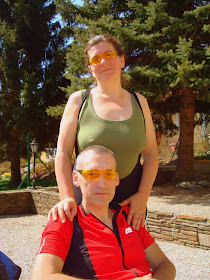
Demokratie leben !Demokratie im Werden ! Demokratie leben !Gerhard Kaučić (2026, 67), Freerider, Philosoph, Schriftsteller, Grammatologe , – belustigt, erfreut, erstaunt, gelangweilt, Zukunft vor Augen? ….. G K, – eines schönen Sommertages früher Abend , – belustigt, erfreut, erstaunt, gelangweilt, Zukunft vor Augen?! ….. G K, – early evening on a beautiful summer day, – amused, delighted, amazed, bored, future ahead?!
To contact me/us use only this email: g.kaucic[at]chello.at
GESPRÄCHE sind EREIGNISSE als TEXT
Werk und Leben
LEBENSWERK
Noch mehr zur Vita und zum Werk der Philosophin und Schriftstellerin Anna Lydia Huber (67, 2026, Philosophische Praxis seit 2009) und des Philosophen und Schriftstellers Gerhard Kaučić (67, 2026, Philosophische Praxis seit 1989) in den hier am Ende verlinkten Postings.
Zum besseren Verständnis und zur beginnenden Einübung in unsere philosophische Praxis lesen Sie bitte unsereCharakterisierung der Grammatologischen Philosophischen Praxis (GPP GK & ALH, Deutsch/Englisch), –
For a better understanding and to begin practicing our philosophical approach, please read our characterization of Grammatological Philosophical Practice. (GPP GK & ALH, German/English), –
Immunization techniques, Subject understanding, Sexuality, Psychoanalysis, Dream, Dream theory, Unconscious, Psychical Reality, Recollection and Society, Autobiography and Archive
Gerhard Kaučić (66, Philosoph)
Head of a Grammatological Philosophical Practice since 1989 in Vienna and beyond
Anna Lydia Huber (66, Philosophin)
Associate in the Grammatological Philosophical Practice since 2009 in Vienna and beyond
Narratives, Reports, Analyses, Reflections from the Practice/from my/our Philosophical Practice
Vienna 36 years of practice jubilee (1989-2025) jubilee 36 years PP 2025
PHILOSOPHICAL PRACTICE Gerhard Kaučić (Dr. phil., b. 1959) & Anna Lydia Huber (MSc, b. 1959) VIENNA AUSTRIA EUROPE
Adresse/Post address/address:
Philosophical Practice/Philosophische Praxis
Gerhard Kaučić & Anna Lydia Huber
Gasometer City
Guglgasse 8
1110 Vienna
Austria/Europe
To contact us, please use only these emails:
gack[at]chello.at or/and g.kaucic[at]chello.at
Contemporary Philosophy
First, lastly and foremost to >what could „philosophize today“ mean< !
What and how would an adequate thinking practice be today.
In what >is<(!) philosophy conceivable today and what or out of what is what we mean by philosophy to practice differently.
The term(!) Différance questions man in a certain sense and thereby draws the history of life in general.
Once again to humanism as logocentrism or phonologocentrism.
Derrida shows that the traditional hierarchical arrangement of the two components of the Sign must be reversed deconstructively. Even in modern linguistics, the ideological meaning of a sign, called S i g n i f i e d (imagination), is superior to the material carrier of meaning, called S i g n i f i e r (sound or writing).
The attempt is always made to direct the external signifier, writing, towards a transcendental signified.
Think of what we said before about religion, God and man.
Each signified (The Imagination!) is however (according to Derrida) „always already in the position of the signifier“ (Derrida, Grammatologie, p. 129).
There can be no meaning and no sense that could escape the spatialization and temporalization as well as the differential play of signifier relations.
According to this definition, writing is a sign of signs, a signifier of signifiers.
The purpose of this reversal is above all to show that the materiality of the signifier does not add to the meaning retrospectively and externally, but vice versa, that the meaning is the effect of an always subsequent / belated signification. Derrida has thus reformulated and reformulated the relationship between language and writing.
Through Derrida’s transformation of the concept of writing, it goes beyond the concept of language and includes it.
From all this follows a completely new understanding and event of T e x t, because it has been transformed several times.
The „essence“, the practice of deconstruction, is inherent in such a text (understanding), thus „inscribed“ (cf. Derrida, Freud und der Schauplatz der Schrift or Freud’s „Wunderblock“).
The thinking of difference/différance is the inherent practice of „deconstruction“.
My philosophical practice is always about understanding texts (written, spoken or representations (!) e.g. technical, artistic, economic, political, institutional) in their inner structure and in their interaction with other texts.
The texts are not only to be analyzed and interpreted, but to be uncovered through the practice of deconstructing their conflict, their aggressiveness, their hidden contents and intentions.
What is meant is the visualization of the duality of the simultaneous presence and absence (!) of truth.
We express sentences of deliberate analytical truth and at the same time displace other possible sentences of truth or falsehood.
Jacques Derrida describes with the invention of his D i f f é r a n c e the process of life (cf. Teaser, Blogspot-Blog 2014 ff.), in which man / human being is a special case, a unique case.
A coincidence almost and yet from a certain distance covered in processes of a physical, chemical and then neurological nature then increasingly more stringent, more defined, more fixed.
Where is the border crossing from animal to human?
This is fascinating and exciting. Is there such a thing as a possibility to draw the line?
I ask this question completely without the intention to make man an animal.
We are animalistic, but not animal alone.
And what does animal mean here! (in this Blog, – see my BlogPosting animal philosophy!!! ) Animals are! Are many different individuals!
And every animal is unique !!!
And some animals even possess so-called human characteristics like memory contents, technical ability, special ability, conclusion ability, love, communication etc.!
And partly even consciousness!
Jacques Derridas phonologocentrism means among other things that every humanism is logocentric and every metaphysics is a humanism.
Even if most philosophers do not want to hear that until today.
Humanism as metaphysics is the enemy of animals.
The enemy of animals and finally also the enemy of humans.
I can’t roll everything up here(!) now (it’s always like this for us!), look at my animal philosophy in the blog, – read Derrida’s work on it and pay attention to the „Sins“(!) – catalogue, – my red list on „coming democracy„! (keyword „species extinction“, „climate change“, … etc.; always to be found in the appendix of each posting in red letters, English and German).
If grammatology „cannot be a science of mankind“, then it is precisely because, „from the very beginning, it poses the fundamental question of the name of the human being“ (J. Derrida, Grammatologie, Frf. 1974, p. 148).
Contemporary Philosophy
Gegenwartsphilosophie
PHILOSOPHIE DER GEGENWART PHILOSOPHISCHE PRAXIS
Every subject tries to obtain a certain presence without delay and detour.
Phenomena of self-affection occupy a weighty role in psychoanalytic thought early on. Already at the beginning of the 20th century, the psychoanalytic movement devoted many discussions to the phenomena of self-affection, specifically to onanism and suicide („Über den Selbstmord,“ Diskussionen des Wiener Psychoanalytischen Vereins, Wiesbaden 1910, vol. 1 and „Die Onanie,“ Diskussionen der Wr. Psychoanal. Vereinigung, Wiesbaden 1912, vol. 2 ).
The subject imagines itself in hallucinatory (S. Freud, Entwurf einer Psychologie, – in: Gesammelte Werke, Nachtragsband, p.412) form the satisfaction of a desire. The subject procures it for itself. The sexual event as immediate (!) experience, as sensation!
And yes, the subject deprives itself of its own life, – as immediate experience of satisfaction, as experience before being dead! The death itself(!) it cannot experience, – the subject,- however it has subjected itself to it.
However, – I remind Derrida here, – there is no self-satisfaction without the possibility of an imagining, an imagination, which makes the self-affection, which can never be „pure“(Husserl) (pure would mean the extinction of everything, which would appear strange!), as a result of the simultaneous „madeness“ and „enjoyment“, an „auto-hetero-affection“ (Derrida, Le toucher, Jean-Luc Nancy, p. 206).
The „made“ generates the entrance of a „third“, the entrance of something „other“ (Derrida, De la Grammatologie, Paris 1967, p. 235, fr. Ed.).
„On ne sait jamais s’il nomme ou s’il nomme ou s’il nomme ou s’il décrit, ni si ce qu’il décrit – nomme est la chose ou le nom, le commun ou le propre.” (Derrida, Signéponge, p. 119, fr. and engl., frenglish)
Das Er-eignen, das einzige Er-eigen-machen, das, was wir er-eigen, er-äugen (cf. Althochdeutsch und Mittelhochdeutsch: [ir]ougen = vor Augen stellen; ouga = Auge; Englisch eye; Germanisch ago;) – der Staub von Er-eig-nissen. S p o n g i s m e n . Spongismen. Ereignisse en ab´i`me.
“… toujours déjà entamée au moment où ça commence (par le mot p a r , avec le mot a v e c , etc), …” (Derrida, Signéponge, p. 103 f., fr./engl.)
Das Eine ist nicht das eine Andere / One is not the one other. Spongismos, the dust of events. Scraped off. Uncounted. Uncountable. Picked up. Selected. Read. Wiped. Touched. A name for the unnameable, which acts, touches, affects.
A deferred out reading. A selected reading. Affects. Infects. Immunizes.
Various afflictions and immunizations are uncontrollable. They are based on and happen because of the respective individual biographical pre-inscriptions. One must be very vigilant, – as an individual as well as a society.
The activity of discourses, political actions, rituals of memory, opening of archives and their research has a very limited, superficial effectiveness in this performativity of the unconscious, of a so-called national Ubw.
The state institutions would have to let psychoanalysis work here (cf. Derrida) in the form of a reworking of law, also of international law, also of criminal law !
Not only work with the Psa, but mobilize it in all possible contexts (Derrida, Echographies, p. 153).
Concerning possibilities of affections / of affecting and various techniques of immunisations it would be necessary to gain a serious understanding and a corresponding profound change of the understanding of a subject, in particular an understanding of the freudian conceptualisation of sexuality. Sexuality is an all-inclusive term.
„Sexual“ is not only „genital“
(Freud, Drei Abhandlungen zur Sexualtheorie, – in: Ges. Werke, Bd. V, S. 98, german ed.).
„Genital sexual organisation“ is not „natural“, it is the product of a versatile development of phsyiological maturity, especially in regard to cultural-symbolic relations (cf. Freud, Ges. Werke, Bd. V, p. 133, germ. Ed.).
The so-called „normal“ human sexuality is a paradoxically, artificially grown naturalisation of de-naturalised instincts.
The „splitting“ is primal ! (cf. Freud, Lacan, Laplanche/Pontalis, Derrida)
Sexuality or the concept of sexuality in its broader sense opens the royal road to the „unconscious“. The king on this road is the dream (vgl. Felix de Mendelssohn, Der Mann, der sein Leben einem Traum verdankte (approach: „The man who owed his life to a dream“), Salzburg 2014, german ed.).
The unconscious interprets as well !
After finishing a conscious interpretation the unconscious continues to interpret. We can’t prevent it and only limitedly steer it. We are forced to work on it.
Psychoanalysis operates, the dream operates, the unconscious operates. The work of psychoanalysis, as well as in psychoanalysis (sic!) could promote and extend consciousness. There are answers to „Why does he/she do this?“ !
Laplanche emphasises that the „psychic reality“ is not made by oneself, but substantially invasive: It reaches us externally as the unconscious of others ! (cf. A. Zupancic, Warum Psychoanalyse?, S. 40, germ. ed. and cf. my Videos: „Sprache und Unbewußtes“ on Youtube, germ. lang.)
„If anything is to be changed in our unconscious, it must be changed in the structure which supports it.“ (cf. Zupancic, S. 44, germ. Ed.)
The unconscious does not exist as a thing, as something that exists and is observable or even measurable. The unconscious is a scripture from outside of us which generates text (cf. Derrida) or rather „temporal text-configurations“ (see Blogspot-Blog-Teaser 2014 ff. ! ) on the inside.
This text stays unreadable readable ! (vgl. R. Barthes‚ Illisibility)
Dreamwork offers a way of access, not to be confused with the content of the dream! (cf. Freuds „Traumdeutung“, vgl. Rudolf Heinz, Wolfgang Tress (Hg.), Traumdeutung, Zur Aktualität der Freudschen Traumtheorie, Wien 2001, Passagen Verlag und cf. Felix de Mendelssohn, Der Mann, der sein Leben einem Traum verdankte, Salzburg 2015)
Our bodies are political!
In any case there will be work on the available repertoire of historical phantasies.
Moira Gatens „ Cultural Imaginary“ (in: M. Gatens, Imaginary Bodies. Ethics, Power and Corporeality, London/New York 1996, engl. Ed.) provides ideas and images for every subject on which perceptions, sensations of the own body as well as technical and industrial drafts and plans orientate themselves.
Media and world orders! And the geopolitical bio-political unconscious of media! We ourselves are medial and medially made!
For decades mass media has been distributing attempts of self description of a global society or a world and its various societies.
Mass media’s scripts and inscriptions constantly shape the geopolitics of the world.
Convincing (whether it is films, games, series etc.) is what can be regarded as plausible based on space, media and social order.
Sexual, ethnic and national identities are not biologically justifiable. They are (as stated above) reality effects of performative actions.
On the one hand the European heritage is a connection of law and politics to the sovereignty of the „subject“, on the other hand there is the „danger“ and the possibility for many subjects (e.g. conservative migrants) to be deconstructed.
Therefore, the European heritage entails various shifts, territorial and deterritorial, individual, ethnical, religious et. al.
The European heritage are crises !
Crisis and deconstruction !
Temporary text configurations !
European heritage: crisis, psychoanalysis, deconstruction, democracy !
Spaces and borders are not objectively measurable and preservable facts.
Spaces and borders come and go and always have through crisis and deconstruction. Effects of psychosocial dynamics, Affecting and Immunisation. Politics!
Derrida speaks in certain contexts of the threat to democracy (e.g., by attacks such as that of September 11) of the additional danger of an autoimmunitary logic that corrodes democracy. An autoimmunitary process that sets out to destroy its own protection, that is, to immunize itself against its „own“ immunity. Democracy must never surrender to this autoimmunitary logic by disregarding its own foundations, by negating or denying them. Be the attacks on what we call democratic conditions ever so strong.
Even if it is necessary to react to the worst, despite all possible violations of democracy in the so-called own ranks, one must never renounce to stand on the side of democracy in the name of the political, that is, in the name and in fact of the attempted perfectibility of democracy, of national and international institutions and of international law.
And yes, my friends.
The trace as memory is not a mere facilitation. It is the intangible and invisible difference between the facilitations, there is no pure facilitation without differences.
Facilitation is a term used by Freud when he designs a neurological model of the functioning of the psychic apparatus (1895). In its transition from one neuron to another, excitation has to overcome a certain resistance; when such a transition entails a permanent diminution of this resistance, it is said that there is facilitation; excitation prefers the orbited path to one that is not orbited (Freud, Studienausgabe, Vol. III, p. 236).
So, watch out for the premises of the democratic! No matter how difficult this may be!
„The Self-Affection as Dwelling“ (Luce Irigaray, Sharing the World, p. 115 f.).
„There is in me someone who aspires to the other, condition for the appropriation of a familiarity more familiar than that of the world already known, condition for the experience of an intimacy I do not yet know.
This desire for the other within the horizon of my world, my most personal and inward limits, is called desire.
No world, however perfect and future, should reduce or extinguish the desire for the other. … A culture of desire demands of us to be able to question our world without having to renounce it because of it.“
And yes, my friends, beloved esteemed ones of our intellectual cosmos, our global mission, our writing, our inscription desires and demands enlightenment!
Enlightenment along the line of human rights declarations up to the point of the European Convention on Human Rights for the protection of human rights (!!!) and fundamental freedoms and even beyond.
I feel compelled to repeat myself once again. To make it confluent. My inscription as a trial and temptation. An iteration as deviation.
The trace of something is to be thought before the being! (Derrida)
Heraclitus already calls the awake thinkers those who do not „think the things as they meet them“.
Here and now!
The world is metaphor.
The world is literature.
The world is text. „The world“ is imperceptible!
Arrangements in a work of in-relation-setting! Metaphor instead of metaphysics! Literature! Transference!
The metaphor that transfers to a respective other. The beauty of the here and now in transference as a relationship between presence and absence. No projections of another or even a world beyond!
Here and now!
The own and the foreign !
Husserl, Merleau – Ponty, Levinas, Derrida and many others have worked on this.
Husserl’s strict sentence as paradox of the experience of the foreign as an experience of insurmountable absence was defused or cancelled by himself by the definition of the foreign experience as a modification of the self-experience (! sic).
Émile Benveniste shows in his article
((cf. Émile Benveniste in his „Dictionary of Indo-European Concepts and Society, Chicago 2016 reissued, pp. 289-294; original french edition 1969), translated into English by Agamben).
„The Slave and the Stranger“ exposes the historically unpleasant truth right down to the language, -.
namely, the stranger has always been in the ancient civilizations (e.g., the Sumerian-Akkadian, etc.) also the enemy, and the enemy has necessarily always been a stranger. The stranger came into the city as a prisoner of war from the outside, as a person without rights the prisoner became a slave qua „martial law“. There are no slaves who are citizens!
One may think of today’s refugees on the boats in the Mediterranean, who are partly allowed to drown by not letting them land. They enjoy in this condition quasi no rights and are considered by many people from the right-wing populist spectrum of European politics (e.g. Lega Nord in Italy or CSU and AfD in Germany or also numerous members of the FPÖ and unfortunately also of the so-called Christian (!), conservative ÖVP in Austria) as enemies of Europe!!!
And where they do not say it, their actions show it all the more when they are (with) in power.
If you cannot believe it, imagine once a ship full of tourists on the Mediterranean! These are the free citizens equipped with all rights, – of course equipped with all landing rights.
People on the one earth!
On the one side the „free“ and on the other side the „rightless“, – despite the European Convention for the Protection of Human Rights (!!!) and Fundamental Freedoms (we write the year 2022!!!, – 74 years European Convention for the Protection of Human Rights and Fundamental Freedoms / Convention).
I have already commented on the self above (with Freud)! As we know, there can be no immediate self-experience, – we always remain at a distance to ourselves ! (cf. Derrida, Psyche, Inventions of the Other).
I myself am a known stranger to myself (!!!).
I remind of the potential of afficiation and immunization or auto-immunization (cf. Derrida) !
The bridges to the Other and to the „own“ Other as well as the passages, markings, tracks, royal roads to the unconscious as the Other, – the dangerous endangered Other !
The unconscious, the invasive Ubw, the crisis of hermeneutics !
The Other as an opening towards „undecidability“.
Derrida (cf. „force of law“) speaks of a „ghost“ of the undecidable that haunts every event of decision.
The specterial deconstructs any possibility of certainty, any possibility of self-insurance, any possibility of present-ness insurance, any criteriology for attempted and supposed assurance of the justice of a decision.
Politics can thus provide no guidance in normative terms; a normative indeterminacy relation between politics and society prevails.
The freedom of the otherness of the Other enables life practices of survival, which takes place in the encounter of the „Others of the Other and the Others of myself (J. Butler, Undoing Gender, New York 2004, p. 131ff.).
The thinking of writing (cf. blog teaser) also occurs in a kind of „return of the repressed“!
The cultural achievements owe their strength and compelling power to the return of the repressed, especially well visible in the religions of this world. It is about permanent memory work, about re-memories of mostly very old, very effective because very affective or afflicting processes in the history of mankind.
These historical truths because of the permanent repetition make these cultures so strong, more than the real event and its truth!
Examples like Moses, Jesus or Mohammed show this in all vehemence until today. With all negative and positive effects and side effects. And against all reason! (cf. Kant, The Religion within the Limits of the Mere Reason )
The return of the repressed happens individually, but also on state level.
And please never forget, let’s not forget and never forget to read this blog as a whole. Linear reading of a posting of this blog always only preliminary, always only as an initial entry. Subsequent/deferred reading, perhaps even reading/lecriture begins. In any case, the reading that has been picked up of something. Not as apodixis! Not as apodeixis.
So herewith the iteration starts.
OUR BODIES ARE POLITICAL! CIVILISATION AND THE OTHER!
Contemporary philosophy
Our bodies are political!
Civilisation and the Other!
Contemporary philosophy
Affections, Inscriptions,
Recollections
The inscription Europe’s in Europe. Europe possesses inscriptions, engravings!
The „inscription“ does not last „forever“, every single inscription is finite like the subject itself, whose „archive“ can be destroyed like any other archive. Even every media archive.
All of our technologies (from TV to drone and beyond) cause an actually practiced deconstruction of traditional terms and conceptions of nation, citizen, foreigner, tourist, native, naturalized citizen etc., as far as this is linked to a specific territory.
Every country has its history, its memory and its particular way of dealing with its archive-economy.
Every time you open an archive and remember certain events, you recall the drama of these events / (incidents !).
You make yourself conscious/aware !
But awareness isn’t everything that matters ! If you talk about the Holocaust or Shoah, you pave a way (if you want to or not!) to the individual as well as the so-called national unconscious !
By raising consciousness things happen which we don’t plan and can’t control. Affecting / Affections!
Breivik for example is such an affected hominid. The culture of remembrance of Norway and other components developed a psychogram of the desire to kill ! (see Klaus Theweleit, Das Lachen der Täter (approach: „The laughter of the perpetrator“) , St. Pölten 2015, Residenzverlag, germ. Ed.)
The various affections and immunisations are uncontrollable. They are based on/ happen due to individual conditions and inscriptions. You have to be vigilant, – as an individual and as a society.
The activity of discourse, political action, rituals of the memory, the opening of archives and their exploration, has a very limited, superficial efficiency with this performativity of the unconscious, a so-called national unconscious.
The national institutions would have to let psychoanalysis work (see Derrida) on a new development of law, including international law and criminal law !
Not only work with psychoanalysis, but mobilise it in various contexts (Derrida, Echographien, p. 153, germ. Ed.).
Concerning possibilities of affections / of affecting and various techniques of immunisations it would be necessary to gain a serious understanding and a corresponding profound change of the understanding of a subject, in particular an understanding of the freudian conceptualisation of sexuality. Sexuality is an all-inclusive term. „Sexual“ is not only „genital“ (Freud, Drei Abhandlungen zur Sexualtheorie, – in: Ges. Werke, Bd. V, p. 98, germ. edition).
„Genital sexual organisation“ is not „natural“, it is the product of a versatile development of phsyiological maturity, especially in regard to cultural-symbolic relations (cf. Freud, Ges. Werke, Vol.. V, p. 133, germ. Ed.).
The so-called „normal“ human sexuality is a paradoxically, artificially grown naturalisation of de-naturalised instincts.
The „splitting“ is primal ! (cf. Freud, Lacan, Laplanche/Pontalis, Derrida)
Sexuality or the concept of sexuality in its broader sense opens the royal road to the „unconscious“. The king on this road is the dream (vgl. Felix de Mendelssohn, Der Mann, der sein Leben einem Traum verdankte (approach: „The man who owed his life to a dream“), Salzburg 2014, germ. Ed.).
The unconscious interprets as well !
After finishing a conscious interpretation the unconscious continues to interpret. We can’t prevent it and only limitedly steer it. We are forced to work on it. Psychoanalysis operates, the dream operates, the unconscious operates. The work of psychoanalysis, as well as in psychoanalysis (sic!) could promote and extend consciousness. There are answers to „Why does he/she do this?“ !
Laplanche emphasises that the „psychic reality“ is not made by oneself, but substantially invasive: It reaches us externally as the unconscious of others ! (cf. A. Zupancic, Warum Psychoanalyse?, p. 40, germ.ed., and cf. my Videos: „Sprache und Unbewußtes“ on Youtube, in German only)
„If anything is to be changed in our unconscious, it must be changed in the structure which supports it.“ (cf. Zupancic, p. 44, germ. Ed.)
The unconscious does not exist as a thing, as something that exists and is observable or even measurable. The unconscious is a scripture from outside of us which generates text (cf. Derrida) or rather „temporal text-configurations“ (see Blog-Teaser ! ) on the inside.
This text stays unreadable readable ! (vgl. R. Barthes‘ Illisibility)
Dreamwork offers a way of access, not to be confused with the content of the dream! (cf. Freuds „Traumdeutung“, vgl. Rudolf Heinz, Wolfgang Tress (Hg.), Traumdeutung, Zur Aktualität der Freudschen Traumtheorie, Wien 2001, Passagen Verlag und cf. Felix de Mendelssohn, Der Mann, der sein Leben einem Traum verdankte, Salzburg 2015, germ ed.)
„Where power is Law/Right.“
Freud talks about a relationship of signs (G. W. II/III, 283f.) and its meaning in the language of the dream-thoughts.
Thus, not the „visual“ content of the dream-sign determines the value for the analysis, but its relation to other signs.
The significant elements of this logic or rather this graphic of relations of a dream are often spatial syntactic relations of individual significants.
Freud speaks of a logical connection which is expressed as simultaneity in the dream.
Freud determines spatially close elements or rather marked elements as intimate!
Intimate means connected, referring to each other as well as significant and this always in relation to other marked elements. Thus, the dream „text“ is generated in case the analyst pays considerable attention / „free floating attention“ („frei schwebender Aufmerksamkeit“ oder „gleichschwebender Aufmerksamkeit“ nach Freud). (cf. Freud, Laplanche)
Analogically to de Saussures semiotics from the estate.
The analyst is a reader. And! The analyst becomes a writer, an author as a reader.
The „Lécriture“ of Grammatology. The infinite un/readability as a paradox of the dream. The Illisibility of every text and its „groundlessness“! (cf. Michael Turnheim, Das Andere im Gleichen (approach: „The Other as the almost Same“), p. 11, germ.ed.)
In regards to Turnheim I claim a fundamental affiliation of psychoanalysis and democracy and of deconstruction and democracy. All three names speak of the irreducibility of singularity with simultaneous repeatability!
Psychoanalysis and deconstruction both claim an irreducibility of hetero-affections in an experience of the „own“ and both assume the work of an internal foreign substance!
In psychoanalytical figures of thought phenomenons of self-affection play a vital role.
Freud writes in „Entwurf einer Psychologie“ in the supplementary volume of the collected works on page 412 that he has no doubt that „Wunschbelebung zunächst dasselbe ergibt wie die Wahrnehmung, nämlich eine Halluzination“. (… that he has no doubt that the emergence /enlivenment of desire initially produces hallucination in the same way perception does.)
The subject imagines the satisfaction of a desire in a hallucinatory way.
It takes its own life. It kills itself. The respective inscribed subject tries to obtain presence (see Blog-Teaser!) without delay and without any detour.
Despite the attempted creation of presence the subject suffers from a small amount of resistance, a small part of impurity of self-affection. It feels the „foreign object“ in its own self, the subject is aware of the „made“! It suspects that the occurrence of a seemingly immediate self-affection cannot be accomplished without the possibility of a third party that stays foreign and external and therefore, degenerates into „Auto-Hetero-Affection“. (cf. Derrida)
Nothing works without the body and without „imagination“ (see Blog-Teaser) and nothing works without the imagination of the so-called own body.
This split(ting) is the resistance and at the same time the call for a new attempt of the repetition of self-affection as hallucination.
There is no absolute self-affection and it repeatedly turns into Auto-Hetero-Affection!
We know the example of the Norwegian and of other serial killers.
Repetition is everything!!!
„Pure“ self-affection means the extinction of the „foreign“, the „foreign body“ (also as own)! (cf. Derrida, Le toucher, Jean-Luc Nancy, p. 206 u. passim und Melanie Klein, Das Seelenleben des Kleinkindes, p. 133, germ. Ed.)
Place / Space and time, the territory „Where Power is Law/Right.“
Our bodies are political!
In any case there will be work on the available repertoire of historical phantasies.
Moira Gatens „ Cultural Imaginary“ (in: M. Gatens, Imaginary Bodies. Ethics, Power and Corporeality, London/New York 1996) provides ideas and images for every subject on which perceptions, sensations of the own body as well as technical and industrial drafts and plans orientate themselves.
Media and world orders! And the geopolitical bio-political unconscious of media! We ourselves are medial and medially made!
For decades mass media has been distributing attempts of self description of a global society or a world and its various societies.
Mass media’s scripts and inscriptions constantly shape the geopolitics of the world.
Convincing (whether it is films, games, series etc.) is what can be regarded as plausible based on space, media and social order.
Sexual, ethnic and national identities are not biologically justifiable. They are (as stated above) reality effects of performative actions.
On the one hand the European heritage is a connection of law and politics to the sovereignty of the „subject“, on the other hand there is the „danger“ and the possibility for many subjects (e.g. conservative migrants) to be deconstructed.
Meaning, – Globalisation is Europeanisation !
Therefore, the European heritage entails various shifts, territorial and deterritorial, individual, ethnical, religious et. al.
The European heritage are crises !
Crisis and deconstruction !
Temporary text configurations !
European heritage: crisis, psychoanalysis, deconstruction, democracy !
Spaces and borders are not objectively measurable and preservable facts.
Spaces and borders come and go and always have through crisis and deconstruction. Effects of psychosocial dynamics, Affecting and Immunisation. Politics!
Since 9/11 2001 an accelerating spiral of antiterror-war and terror, cyber-war, drone-war, uprisings, revolutions, religion in war, waves of refugees, suffering of refugees, tragedies of escape, spectator-mentality, rescue missions, tugging and shoving of conventions (Geneva Convention etc.) and agreements, international treaties, distribution of refugees or rather refugee quotas, dying and death, inability to act from the left and right, from Austria to Australia.
Migration flows on the borders of the „Fortress Europe“, slave trade, terrorism, imperialism.
Europe’s heritage.
Create new and fair conditions! New narratives, new images, new self-images, new self-descriptions.
It is about making new and old differences bearable and livable!
The post-human, global „one“ without the other is an illusion of cyberspace and its familiar associates.
The completion of history or Fukuyama’s „end of history“ is an ideology of the Pentagon of the 90s.
A set of terms accompanies these media discourses which carry these ideologies. Ideologies of the one controllable market, controlled by a few giant corporate groups.
They are: network society, world society, One World, new world order, TTIP, CETA, ACTA, …, globalisation, world communication, World Wide Web, War on Terror, NSA, …
Hans Ulrich Gumbrecht, „Was sich nicht wegkommunizieren läßt“, – in: Kommunikation. Medien. Macht, hg. v. R. Maresch, N. Werber, Frf. 1999, germ. Ed., p. 331:
„Macht ist die Möglichkeit, Räume mit Körpern zu besetzen, und das heißt auch: Körper aus Räumen zu verdrängen und Körpern den Zugang zu Räumen versperren zu können.“
(Transl.: Power is the possibility to occupy spaces with bodies, and that also means: to displace bodies out of spaces and to be able to deny them access to spaces.)
Let me just remind you of Australia, keyword „Aborigines“, of the United States, keyword „Indians“ and of Europe, keyword „Fortress Europe“ !
The own and the foreign !
Husserl, Merleau – Ponty, Levinas, Derrida and many others have worked on it.
Husserl’s strict sentence as a paradox of the experience of the foreign as an experience of an insurmountable absence has been defused or even annulled by himself through the definition of foreign experience as a modification of self-awareness (! sic).
I already commented on the self in the paragraphs above (referring to Freud)! As we know, there is no immediate self-awareness, – we always stay distant to ourselves ! (cf. Derrida, Psyche)
I myself am a known stranger to myself (!!!)
Let me remind you of the potential of Affection and Immunisation or rather the auto-immunisation (cf. Derrida) at the beginning !
The bridges to the other and to the „own“ other as well as the passages, marks, traces, royal roads to the unconscious as the other, – the dangerous endangered other !
The unconscious, the invasive unconscious, the crisis of hermeneutics !
The other as an opening to the „undecidability“.
Derrida (see „force of law“) talks about the „ghost“ of undecidability, which haunts every decision-event.
The ghostlike deconstructs every possibility of certainty, every possibility of self-insurance, every possibility of present insurance, every set of criteria for an attempted and alleged insurance of a just decision.
Therefore, politics cannot give normative instructions.
There is a certain normative uncertainty relation between politics and society.
The liberty of the otherness of the other offers living practices of survival, which fulfill itself in the encounter of „Others of the Other and the Others of myself (J. Butler, Undoing Gender, New York 2004, p. 131ff.).
The thinking of writing (see Blog-Teaser) takes place in a sort of „reoccurrence of the repressed“!
The cultural achievements owe their power and compelling force to the return of the repressed, particularly visible in religions of the world. It is permanent work of remembering, Wiedererinnerungen / re-recollections of mostly old, very effective due to affective or rather affecting processes in the history of mankind.
These historic truths due to permanent repetition make these cultures so strong, more than the real event and its truth!
Examples like Moses, Jesus or Mohammed show this vigorously to this day. With all negative and positive effects and side effects.
And against all reason! (see Kant, Die Religion innerhalb der Grenzen der bloßen Vernunft , Kant, Religion within the Bounds of bare Reason)
The return of the repressed happens individually, but also on a national level.
For example the repressed bodies in front of the „Fortress Europe“. The consequences of the past centuries european imperialism. The shift of borders drawn by imperialism.
Borders of nations on former or partially still existing tribal areas.
Borders of power. „Where Power is Law / Right.“
These borders of past powers break through to the present. The repressed suppressed breaks into everyday life of so-called civilised democracies.
Democracies which struggle themselves with coming out. Democracies which struggle themselves with coming in into democratisation.
A marker for upcoming democracies is the abolition of the death penalty. Another marker would be and is to accommodate refugees.
What is going on with the motherlands of democracy?! What is going on with England? With the United States? What do their elected leaders and their people think about this?!
Borders of power. They burst open. Migration movements are the visible symptom.
Europe and the rest of the world have to act in line with human rights and in line with humanity ! (see my Blog-Post „Für eine menschenfreundliche Flüchtlingspolitik“ vom 11. 10. 2013)
Empathy! Help!
The other, – this is me! And this is you!
The structure and the articulation of the unconscious ensure that we are always in default and that there is always something ahead of us.
Our past, our history, which never and nowhere has been experienced and is being experienced in its full self – presence.
Not appropriable! No own! A foreign! (see Blog-Teaser!)
A disfiguration! Condensed, shifted, subsequently edited. Dream – work!
Attention! Danger of dis-figuration!
Also of psycho-analysis! Always! Everywhere!
The thinking of writing. Grammatology. (see Blog-Teaser)
Contemporary philosophy
Philosophy of Body Philosophy of Democracy
Power is to be able to block the access of bodies to spaces!
Hans Ulrich Gumbrecht, „Was sich nicht wegkommunizieren läßt“, – in: Communication. Media. Macht, ed. by R. Maresch, N. Werber, Frf. 1999, p. 331, germ. ed.:
„Power is the possibility to occupy spaces with bodies, and that also means: to displace bodies from spaces and to be able to block bodies‘ access to spaces.“
Dear guests of my/our Philosophical Practice, dear readers,
to speak briefly with Derrida, to remind us again how necessary this will always be: The subject of an utterance can hardly be aware, and must be aware, that all „communication“ is subject to a general graphematic structure.
A consequence of this is that the iteration structure is given and thus the intention of an utterance can never be fully present to itself and its content. That is, iteration always generates a break, iteration structures a p r i o r i .
There always already exists an oratio obliqua, a structural unconsciousness of intention in the actuality of the statement. Never forget to remember that in the thing and the conception of it a ghost is doing its business, – the teleological mirage of consciousness (cf. esp. „Signature, Event, Context“ by J. Derrida, in: Randgänge der Philosophie, german edition).
Language as a figure for agency and agency as a figure of language. The power of action of language is not the same as that of the subject, who can do things with language, but also in language (cf. teaser, blogspot-blog 2014 ff. on „deconstruction“ and différance / Derrida!).
Language is based on a divided, I want to say doubled, essence, an operativum divided in itself. Language is respectively the instrument of statements shares something „essential“ with language, because, precisely because no statement is reducible to its instrument (who wants to dive deeper into this >affair< „language“, read „Limited Inc“ by Derrida together with the texts of the speech act theorists Austin and Searle among others).
Words, phrases, sentences can hurt!
The subjects, the medium, the language, the statement, the way of saying, what is said, the touched(!) contexts, the readers, the citizens, the laws, the state, the community, the social contract!
When we use language, we inevitably evoke effects in ourselves and in the other. We transform ourselves, but also the other, and we transform the other, the language. Language is a name for what we do, – the action we are doing, – and a name for what we cause, – the action and its consequences.
According to Freud, a forbidden desire shifts in the unconscious from one thing to the next. This infinite transmissibility of desire, seduced by a prohibition, a blockade, a taboo, controls quasi uncontrollably this logic of infection in a so-called metonymic flow (think of your own „desire“ to do forbidden things, – e.g. when changing accustomed circumstances!).
In Freud’s „The uneasiness in culture“ the place of libido is shifted and itself becomes the pleasure place of prohibition. Here repression takes that form in which it itself becomes a libidinous activity.
The rupture with the context (Derrida) of a performative utterance is always inherent to it, to every utterance failure is marked by the thing „language“.
And the deconstruction is retrospective/deferred and provisional(!). Compare Derrida’s concept of „trace„! The present, no present is ever present and a past has never been fully present as present. This realization also runs via language. We are witnesses and involved in an absolute dislocation (cf. teaser).
Everything takes place where the ground opens to the abyss, where the justification of something feels attracted by countless abysses. The ParaNoia lives as long as there will be libido. We have to enclose it, not rationalize it, enclose and care for it, i.e. civilize it, educate it.
Democracies educate by means of education, – above all human education in the sense of human rights and human duties. Developing laws along human rights and in the sense of the European Convention.
„Our bodies are political“, bodies are socially constructed texts, consciousness arises from bodies in structures.
Power-hungry people of all kinds cannot love because they cannot give as a gift without credit and debt. They cannot love without economy. In place of being able to love, the figure of self-empowerment and greed as a desire for power takes place in these. This is the blatant expression of a lack (of doubt) due to a gap in the symbolic order, a dysfunction or parafunction of the unconscious (see above and in postings from recent years).
Giving without economy. Giving in the same(!?) time.
Love. Libido. Sexual economy. Becoming a subject. Education. Giving as a gift.
From dissemination grows the fruitful. Not necessarily, but possibly. Never from pure economics! From there one should always keep the legal and economic terms „freedom, duty, generosity, waste versus thrift, interest, usefulness“ in mind and expose them to a questionable overthinkability.
Marcel Mauss refers to the madness of the gift as giving without an economy of the expectable exchange of. I think he means the act of giving more than the gift as a thing. That which comes back, if something comes back(!), cannot be expected and should not be expected. The giving as a gift as a taking without address for an exchange transaction. The madness of giving and taking, – of taking as giving and giving as taking without return.
If possible. Loving.
The taking and the giving. A cultural transformation. Underlying „communicating vessels“, – the subjects. Starting points: processes of subject formation. Configurations. Transformations. Disseminations (cf. what was said above!).
The gift as an instrument of power. Only those who give in an economically calculating way rule. The power of production. The ownership of the means of production. The power-obsessed.
Further above I spoke of the Other as the stranger and quoted Benveniste with the words, the stranger was always already and a priori the enemy.
Now, to come to an end – by the way, this had also been the content of the end of our philosophical practice recently experienced a few days ago – a few more thoughts from the psychoanalytical field on the subject of xenophobia and violence.
Psychoanalysis is first of all psychoanalysis of the individual and only from the experiences gained from it with the help of psychoanalytic terminology a possibility to open up to social phenomena and descriptions in order to analyze them and afterwards in a third step to deconstruct them as far as possible.
I remind of the “ unfamiliarity “ of the child, – an intrapsychic perception of the non-identity of the stranger with the memory image of the reference person who is absent at the moment (still often and primarily the mother, but not necessarily!).
We all know that this strangeness usually fades away soon and that strangeness experience is an abolishable one, not only between individuals, but also between groups and even whole peoples.
Self-assertion in certain milieus happens by means of demarcation from others, the so-called strangers. And if these strangers are little respected people, this provides the members of groups in these milieus with a certain self-exaltation.
The exclusion of strangers and the exclusion of the stranger in general is often an important part of identity formation and self-stabilization. An affirmation of the self experienced as one’s own.
In his time, Nietzsche already spoke of „those who got off badly“ and meant above all the anti-Semites (cf. Nietzsche’s Nachlaß).
Later on, Hitler’s assumption of power led to a true national self-inflation and each of those „badly off“, as Nietzsche, Hitler,
called them earlier, experienced thereby his „own“ self-inflation.
His stabilization and socialization as a national socialist >anti-socialist<, but above all anti-Semite. In primary socialization often persons with narcissistic wounds and impairments of self-value regulation. In stressful situations, such as puberty, often burdened with feelings of inferiority due to lack of recognition, etc., hopelessness, demotivation and feelings of emptiness. Hardly any bonding ability to immediately existing people. Identification failures with distant, so-called strong personalities. Others are idealized or devalued. Strangers are almost always devalued, especially „foreign“ looking people.
Authoritarian or even totalitarian doctrines and ideologies often catch on with these individuals overnight (cf. youth in Europe and the IS in recent years).
Group cohesion can have a very strong binding effect in the case of a leader whom everyone in the group regards as exemplary and to whom they all submit together, thus creating a quasi covenant.
Adorno’s and others‘ study of the authoritarian personality is familiar to many of us. I do not need to elaborate on this here, merely to express or address the almost truism, namely that the inner-family socialization processes of the petty-bourgeois family are decisive for the formation of the character and especially of the authoritarian character through the lack of emotional warmth to the reference persons, mostly the parents, as well as crises and conflicts solved by force through character-weak father figures, in many cases also the withdrawal of closeness through the absence of at least one main reference person, – that of the father in most cases.
„Authority-bound characters, persons who, under the pressure of childhood experiences, failed to crystallize an autonomous ego, are particularly prone to totalitarian ideologies“ (Adorno 1954).
Very often these young people experienced violence and sexualized violence in their socialization. Social powerlessness is turned into power and violence against others. This so-called „whipping boy mechanism“ is almost only felt by the weaker ones. In such groups, it is also very often directed against foreigners. Self-hatred turns into hatred of others and often ends in an ecstatic orgy of violence with many kicks on people already lying on the ground. No empathy. No imagination about possible suffering of the other. The hullabaloo comedy not infrequently as a real tragedy. Fueled and guided also often by relevant film adaptations of such outbreaks of violence. Unreflectively watched and adopted.
Identity through bodily experience in the form of violence and the experience and self-feeling of one’s own capacity for violence as a feeling of power. Xenophobia and violence as stability factor of the authoritarian developed character. Often also in the form of the exercise of violence against women. A definition of masculinity as lived brutality also with regard to possible disturbing questions about one’s own gender identity.
How one could find one’s way back to a „normal“ life?
A difficult path. Certainly!
But certain therapies describe the possibilities in the form of many conversations that it would be important to lead the „patient“ to the point where he could eventually come into the position to affirm his own imperfection and to learn to love himself as well as the other not for reasons of media-fed, fantasized perfection, but out of an acknowledgement of real and actually experienced imperfection to learn to like and finally even to learn to love him. To want to learn to love the other and finally perhaps to be able to love him and thus to grow into a real partnership – that should be able to make possible the way away from xenophobia and the world of violence towards a path of peace with oneself and thus towards another. Certainly a long, difficult way to go, but a way!
I myself am a stranger to myself! That would be the right spot landing in this terrain. As Freud said in 1933: „We are all foreigners!“.
To be able to accept one’s own „inner foreign country“ (Freud) and one’s own foreignness!
The gift to love! The gift to give. Giving without economic calculation. To love. To give love.
Bodies need to be able to regenerate. Among other things, they need sleep to do this. A good sleep needs trust and reliability, security and protection. As Vilém Flusser thinks (see Luce Irigaray above on this!), housing is a prioritized anthropological imperative or, in other words, a habitual structure for the individual feeling of being lifted up, a kind of „home“. This meant the exposed self-evidence of being able to be at home with oneself as a prerequisite for openness to the world and philanthropy.
Derrida sees all the paradoxes of the autoimmunitarian, all these terrible perversions of the immunitarian to the autoimmunitarian enacted in the „self-writing of the living (l’écriture de soi du vivant),“ the „trace of the living for itself,“ in „autobiography“ (Derrida, The Animal That Therefore I Am, german ed., p. 78 f.).
„The autobiography, the self-writing of the living (l’écriture de soi du vivant), the trace of the living for itself, the being-for-itself, the self-affection (auto-affection) or self-infection as recollection or archive of the living would be an immunitary movement (i.e., a movement … of the immune, of the intact …), but an immunitary movement that is always in danger of becoming autoimmunitary, like every autos, every selfhood, every automatic, automobile, autonomous, autoreferential movement. Nothing threatens to be as poisoning as an autobiography, poisoning first of all for oneself, self-infectious for the presumed signatory who thus afflicts / attacks (auto-affecté) himself“ (Derrida, Animal, ibid., pp. 78, 79, german ed.).
The designated idea, the concept, is never sufficiently present to itself, in sufficient presence, which only refers to itself.
„Every concept is inscribed according to its law in a chain or in a system, in which it refers to the other, to the other concepts, through the systematic play of differences. Such a game, the différance , is not simply a concept, but the possibility of conceptuality, of the conceptual process and system in general. For the same reason, différance, which is not a concept, is also not a simple word that can be represented as the calm and present unity, referring to itself, of a concept and a sound.“ (Derrida, Margins of philosophy, p. 16, german ed.)
„The différance is the non-full, non-simple origin of differences. Consequently, the name ‚origin‘ no longer belongs to it.“ (Derrida, Margins of phil. , p. 17)
„Life undoubtedly protects itself by means of repetition, trace, and deferral (différance). … Life must be thought as trace before being is determined as presence.“ (Derrida, Writing and Difference/Schrift und Differenz p. 311, germ. ed.)
The trace is neither visible nor invisible. The presence is the trace of the trace or the trace of the extinction of the trace. „Thus it can be recognized that all the determinations of such a trace – all the names that are given to it – belong to the metaphysical text that guards the trace and not to the trace itself. There is no trace itself and no trace proper.“ (Derrida, Margins of phil., p. 86 and Derrida, Writing and Diff, pp. 308f., p. 326 and Derrida, Grammatology, pp. 83, 108 f., 114, german editions).
Thus, there is also no ‚Freud trace‘, there is only the name I give it. The ‚trace‘ (the being related to each other of distinguished elements), the Freud – trace, whose fabric/texture grows in a myriad of markings („marque restante„, Derrida, Marges, p. 378, french ed.) through the textual worlds of the last 150 years, >differentiates< in the writing of the text. Marques restantes, „minimal lead of the sign-shell“ (Frank, Neostructuralism, p. 511, germ. ed.), effects of meaning that flash what we commonly refer to by the word „communication.“
By positing the name, I surrender it to knowledge of mastery, to a possible discourse, to an univocally making and assigning practice.
For this reason I practice „deconstruction“ in permanence. For example, I use terms from semiology, reshape them, shift them, dislocate them, in order to escape, if possible, the metaphysical logocentric implications.
Escape, because these are not to be avoided, since without terms thinking is not to be thought. They are set and at the same time unsettled.
As already mentioned above (quoting V. Flusser), many of us are losing the „feeling of home“ or, better, our emotional world is not even getting close to the emergence of such an emotional impressionability.
„The most striking feature of the current world situation in terms of the history of the humanities and technology is precisely that the culture of technology produces a new aggregate state of language and writing that has little in common with their traditional interpretations by religion, metaphysics and humanism. The old >>House of Being<< (Heidegger’s term for language) turns out to be something in which a stay in the sense of dwelling or bringing distant things into proximity is hardly possible anymore.“ (P. Sloterdijk, Not Saved, Essays after Heidegger, p. 212, german ed.)
„When Heidegger called language the >>House of Being<<, he prepared the insight into language as the general organon of transmission. With it people navigate in the spaces of similarity. What is important about it is not only that it appropriates the near world, assigning reliable names to things, persons and qualities, and entangles them in stories, comparisons, series. The crucial thing is: it >>approaches<< the strange and uncanny in order to include it in a habitable, understandable sphere that can be lined with empathy. It makes human exposure to the open world liveable by translating ecstasy into enstasy. The >>tendency toward proximity<< establishes itself in human speech from the very first word; language is always already proximity-poetry.“ (Sloterdijk, Not Saved, p. 210, germ. ed.)
„Language is – or was – the general medium of world-befriending to the extent that it is – or was – the agent of the transmission of the domestic to the non-domestic.“ (Sloterdijk, ibid., 210, germ. ed.)
This „tendency to nearness“ should not be able to become often and easily the attainable and achieved goal of my desire? The relationship, every relationship to another, opens other spaces of experience for me, which shakes my familiarities. I myself am no longer the center of a single worldliness.
My desire draws me towards the other and this one towards me as a trial and temptation.
The distance that lies between me and the other cannot be reduced by me alone. It becomes complicated. Two desires exist. Two intentionalities. Two politics as well. Affection and self-affection simultaneously.
The desire-space of the other is only conditionally accessible for me. Proximity arises and at the same time there is always distance. Markable and marked by codes of the speakable and the thinkable. It is always due to language and especially to writing (cf. Derrida’s concept of writing). The other moves away near or approaches distantly. The other does not inhabit my world.
Intersubjectivity as an economy of affect requires the clear ability to distinguish between being affected by the other and one’s own self-affection.
Our self-affection disposition must be cultivated, must be recognized. We have to protect it, our self-affection, in order not to lose ourselves to the other. The possibility to return to oneself(!) must be maintained.
We are two! I am two!
Only in the libidinous love-imagination we lose ourselves for a temporal spatial limitedness. And for the repetition and repeatability of this temporal-spatial act. Of the sexual act.
The beloved other appears in my world when he/she can be recognized. The other and the other open up new insights, new perceptions of world.
A world that perhaps I had not yet known in this way. The entering and the possibility to enter into another world (than before) means to us only at all the possibility(s) to exist, – to ek-sist. To be different and to be able to be different.
Language and writing/scripture do not show the reality of things. Language and writing show possibilities. Through language, the things we encounter can be conceived of in one way or another, and thus engaged in the most diverse ways. And language and writing themselves belong to the reality of things (cf. Derrida, différance).
To be able to think this, thus to live, could mean to exsist/ek-sist!?
„By daring to attempt to penetrate more deeply into the psychology of dream processes, I have undertaken a difficult task, which even my art of representation is hardly equal to. To reproduce the simultaneity of such a complicated connection by a succession in the description and thereby to appear presuppositionless in every presentation, wants to become too difficult for my forces. … The points of view for the conception of the dream were given to me by previous works on the psychology of neuroses, to which I shall not refer here and yet must refer again and again …“ (Freud, Interpretation of Dreams, Studienausgabe, vol. II, p. 559, germ. ed.).
Exactly this problematicity of simultaneity as unrepresentability of complicated connections in a „succession“ (as Freud says), – a linearity of the reading and writing process, of the lecriture (cf. Paul de Man, Allegories of Reading) means itself here in our blog at least as the attempt to transform the approximation at least, to form this impossible in the same time (Derrida, see below!), into an approximated „ek-sistence“ of reading and writing.
Into a beyond of the book!
To think and live connections in many (also) different (ver-schiedene/departed) and differentiated directions linking and connected. And to bring to the representation!
At the same time we think the impossible and that (this >at the same time<) is the impossible! (Derrida, Donner le temps I)
Living in the same time!!! Do we live in the same time, – which is impossible?!?
The ‚trace` (the being related to each other of distinguished elements), the Freud – trace whose texture wafts and grows in a myriad of markings (Derrida, Marges, p. 378, fr. ed.) through the texts, differentiates in the writing of the text.
The trace is neither visible nor invisible. The entity is the trace of the trace or the trace of the extinction of the trace. Thus it can be seen that all the determinations of such a trace – all the names given to it – belong to the metaphysical text that guards the trace and not to the trace itself. There is no trace itself and no trace proper.“ ( Derrida, Randgänge, p. 86, Schrift und Differenz, pp. 308 f., 326, Grammatologie, pp. 83, 108 f., 114, german editions; R. Barthes, Reich der Zeichen, p. 55, germ. ed., R. B., S/Z, p. 25, germ. ed.; Kristeva, Revolution, p. 148, germ. ed.; Leclaire, Psa. Prozeß, p. 60, g. ed.; Heidegger, Unterwegs zur Sprache, pp. 117, 131, ge. ed.; G. Schmid, Kaleidoscope, p. 35, germ. ed.; H. and G. Böhme, Das Andere der Vernunft, p. 103, germ. edition).
Life must be thought as trace long before being is determined as presence!
„Life undoubtedly protects itself by means of repetition, trace and deferral (différance). … Deferral constitutes the essence of life.“ (Derrida, Writing/(Scripture) and différence, p.311, germ. ed.)
Since „the deferral (différance) is not an essence because it is nothing, it is not life if being is determined as ousia, presence, essence/actuality, substance, or subject. Life must be thought as trace before determining being as presence.“ (Derrida, ibid.)
Life ek-sists in deferral.
Language and writing do not show the reality of things. Language and writing show possibilities. Through language, the things we encounter can be conceived of in one way or another, and thus engaged in the most diverse ways. And language and writing themselves belong to the reality of things (cf. Derrida, différance).
This means, among other things, that today we cannot think the Enlightenment, the clearing, without technogenic origins.
Singularity always escapes the concept of conceptuality. Singularity always has as prerequisite affliction and immunization, until life tips over into the autoimmunitary and lives itself out by exceeding the immunitary and attacking it to death. The „cancer“ in the society. And the cancer in the individual.
An autoimmunitary process (Derrida) that sets out to destroy its own protection, that is, to immunize itself against its „own“ immunity. Democracy must never surrender to this autoimmunitary logic by disregarding its own foundations, by negating or denying them. And be the attacks on what we call democratic conditions however strong.
Derrida on the violence of a „desperate (auto-immune) gesture“ of our „religious wars“: „The archaic and apparently cruder radicalization of „religious“ violence wants to cause, in the name of „religion“, that the living community takes root again, that it finds again its place, its body, its idiom, untouched, holy, secure, pure, original. Everywhere it brings death and unleashes, with a desperate (auto-immune) gesture, a self-destruction that takes damage from the blood of its own body, as if it were a matter of uprooting the uprootedness and reappropriating the untouched and secured sanctity of life.“ (J. Derrida, Faith and Knowledge, The Two Sources of „Religion“ at the Limits of Mere Reason; – in: Derrida, Vattimo: Religion. Frankfurt am Main, 2001, p. 87 f., german ed.).
The life exists and eksists in the movement without goal. The goal of a body is the movement towards death (cf. Freud). Towards death with deferral. Life, in this conception, is the deferral. The Différance. The trace of the trace and the trace of the extinction of the trace. The archives.
Texts written alphabetically and / or texts as a sequence of events and its attempts at description, whether autobiographies, whether poetry, whether artifacts of life (for the museums), they almost inevitably end up in our archives. Archives form the shell as repositories for the writings that life has left behind. Archives of life!
The autobiographical text has always worked for the archives. Texts of famous people have always been intended and formed by them and the present structure of collecting (by the archives) for being archived. In the age of digital archives, or better the digital as archive, this configuration is already true for almost all people. Global. Everything is literature.
All that is to be said about life, that has been said about life and will still be said or could still be said, is literature. Life and writing. Life as writing. I may humbly refer here and for the repeated time to my little videos. (https://www.youtube.com/user/gack157/videos)
Literature is a part of life and at the same time a movement (sometimes conscious) towards death. This is exactly the reason for the existence of archives at least for those of the last 500 years.
The literature of life serves the distinction. The distinguishability of presences and the respective I and the others. Literature is subject to the current of desire for resurrection.
A resurrection through and in reading. The I and its body will have passed away. The archive continues to speak. The archive and its recollection „lives“ the last deferral of the body as fragmented in the formation of the voice (e.g. sound archive content) and the possibility of repetition in the reading of texts (whether alphabet, whether film, whether architecture, whether political system, institutions, etc.). The real is retrospective/deferred. The real is the being read.
A small >>review<< of Freud and his sessions, the so-called „analytic situation,“ may be allowed me here (after all, I too maintain a form of practice in the form of a philosophical practice as deconstruction!) as a suggestion of an „other“ archive.
How would the psychoanalytic archive have looked like or could have looked better if Freud and all his „collaborators“ had found a different communication situation and a different archiving landscape?
I am referring to today’s digitized and electronic world instead of handwritten letters.
Perhaps, if you like, this blog of ours can help you a bit to run your thought processes about this and that.
The archiving technology makes the „recording“ of events possible and at the same time it underlies and precedes the event and in a way also brings it to the appearance.
Just think of politics, the subsequent investigative committees together with the media coverage of them and the political production of events due to such underlying and preceding structuredness and their subsequent/deferred readings as interpretations.
The transformation of the private, the secret, and the public is immense and drastic, and the transformation of the entire space, public as well as private, of all humanity is palpable, effective, and affective for every subject.
Many more Philosophical Practices and practises will be needed. Political theories and politics are all based on the axiomatics and valuations of philosophical provenances.
I thank our guests for the stimulating and hope giving reflections, trains of thought and thought creations, – sometimes and always on the edge of abysmalness.
No reason without abyss!? Philosophical practice as a construction site with building blocks, ruins, gravel, scrap and techné and as a free experimental laboratory for thought walks in thought buildings and ruins also of archaeological nature.
And as always, we have too little time.
Every sentence has too little time. Every sentence displaces by jumping. It displaces many other possible and necessary (!) sentences (for more see my Youtube video on „The Sentence„).
Each sentence, each word, each code drives its being and its mischief in the incommunicability!
Every sentence greets a ghost. Every sentence is a ghost.
Every sentence in every setting and every session (also the one in a PP/philosophical practice).
I should always be able to state all the psychoanalytic, economic, political, and juridical implications of what is said/set above.
I refer all readers to my/our publications on the net and to the publications on paper.
The terrain of reading is abysmal(!) and unlimited!
Grammatological Philosophical Practice, Gerhard Kaučić / Djay PhilPrax & Anna Lydia Huber, Vienna, 1989 – 2025 ff.
CONVERSATIONS ARE EVENTS AS TEXT
My blog as a text event in the interaction between my Philosophical Practice as a text event without protocol and my philosophical practice as a „protocol“ between archive and anarchive.
The invention of reality, the truth of a work, whether a philosophical, psychoanalytical, literary, artistic or a juridical, medical, technical, sporting, inventive, organizational, bureaucratic, scientific, architectural, photographic work or an economic, entrepreneurial, political, military, economic work or an artificially-natural reality as the truth of a work of climate change and consequences, – – – the truth of a work (!!!) is revealed only and explicitly in the recognized and recognizable (!) history of its effects.
The point is, in my philosophical practice
(( and this includes the conversation in this, but also my/our writing practice before and after each setting / session(!) ))
is always about capturing texts (written, spoken or representations(!) e.g. technical, artistic, economic, political, institutional) in their inner structure and in their interaction with other texts.
The texts are not only to be analysed and interpreted, but also to be unmasked through the practice of deconstructing their conflictual nature, their aggressiveness, their hidden contents and intentions.
What is meant is the visualization of the duality of the simultaneous presence and absence (!) of truth.
We express sentences of desired analytical truth and thereby simultaneously repress other possible sentences of truth or untruth.
And once again, at the end of our conversation, I would like to turn to the subject of your political engagement. What I would like to give you to take home with you.
I think, yes, I am sure, sure for myself, – political actions, settings, innovations, interventions, experiences touch something that many of us understand as philosophy.
Political actions imply the philosophical. The political does not coincide with the state/the statelike. Every political action implies philosophy. Every political involvement, every innovative or interventionist political action implies from the very beginning a philosophical moment, a kind of torque/angular momentum that imposes on us the constraint of an „internal“ obligation, namely the obligation of reflection on the political, the social and history and the essence, the nature, the meaning and the mission of the state in terms of the democratic of the idea of democracy and the relations with what is hidden under this name in the past and the present and that shows itself to us case by case.
Come home well.
With best wishes, –
Gerhard Kaučić & Anna Lydia Huber
Philosophers
Philosophical Practitioners, Writers (born 1959).
PP Vienna
To contact me/us use only these emails:
g.kaucic[at]chello.at or gack[at]chello.at
Anna Lydia Huber (66, Philosophin)
Gerhard Kaučić (66, Philosoph)
Post scriptum/after the bound/Nachsatz:
The tasks of a future democracy/a democracy on the rise/a permanent advent/arrival of democracy/a democracy in the arrival ( Jacques Derrida ), to think the subject as „planetary“ (cf. G. Ch. Spivak, see teaser, – the teaser from my blog; note: the teaser is only visible in the web-version!), – especially concerning the great challenges of politics in the 21st century: Utopia (?!) of reflexive solidarity (Spivak),
borders of a planet (John Bellamy Foster et al. (Ed.): The Ecological Rift: Capitalism’s War on the Earth, 2011), deconstructive politics as an ideological-critical reading of the imperial archive, geopolitics, geopolitical involvement, geopolitical interest driven policy and/as value policy, power, morals and human rights,
analysis of power, gender and governmentality, teletechnology, cyborg technology, political bodies, complexities of rule, citizenship, parliamentarianism, peace policy, institution building and institution maintenance, economically correct and fair redistribution of social wealth, proper management of Migration (Flüchtlinge, Refugees), …
proper handling of migration (refugees), migration and capitalism, Postkolonialismus, neocolonialism, postcolonialism, Kolonialisierung auf allen Ebenen, Kolonialismus, Rassismus, Faschismus, Neo – Kolonialismus, Ökonomismus, Imperialismus,
Ökonomischer Imperialismus (angeleitet durch die Neue Institutionenökonomik, die Transaktionskostenökonomik und die Prinzipal-Agent-Theorie; im Gefolge des New Public Management treten an die Stelle von Handeln nach Maßgabe professioneller Ethiken Kontraktmanagement mit Zielvereinbarungen und anstelle einer Berufsethik Qualitätsmanagement und Benchmarking samt Controlling und Leistungsrechnung mit all ihren Schattenseiten und ungeplanten Nebenwirkungen, – vgl. Richard Münch: Globale Eliten, lokale Autoritäten, Frf. 2009, Suhrkamp, S. 18 vv.ff.),
the world as environment and its destruction, manmade environmental disasters, shipping, esp. container shipping, pollution of oceans, pollution of soil, greenhouse gases, temperature rise, shortage of resources, prosperity gap,
population density, urban development ( e.g. „Gängeviertel“ in Hamburg, the initiative „Komm in die Gänge“ stands for discourse and practice of a different (!) form of urban development and is an example and symbol that gives hope against gentrification and the destruction of old buildings ),
urban development towards a green city, urban philosophy, reddening of the city, city of dreams, madness and society, madness and city, city and sexuality, desire and city, city as text, city and writing, city as writing, the city and the divided I, the city and the power, the city and the political, the city as a mechanism of discipline, the city as a social testing lab, the city and the philosophical practice with many practices, the world as a city and the other, water wars, religious wars, climate change, climate consequences, global warming, nuclear relicts,
climate wars, climate catastrophes, civil wars, „ethnic cleansing“ (!), genocide, violent conflicts, social questions, ecological questions, planetary principle, tradition history, the question of a global government (!?), social catastrophes, terrorism, natural disasters, migration, unstable states, poverty, wealth, corruption, media policy and presence-ideologies, war and non-war, world order and biopolicy, bioengineering,
robotics, bio-inspired robotics, Robotertechnologien, weapon development, arms delivery, violent and oppressive power politics, religious fanaticism, party political fanaticism, terrorism, biodiversity, standardization, factory farming, animal factories, animal consumption, „meat production“!, animal rights, animal philosophy,
„animal turn“ (vgl. Anne Peters, Tier-Recht im Zeitalter des Menschen, – in: Renn/Scherer (Hg.), Das Anthropozän. Zum Stand der Dinge. Berlin 2015, S. 67ff.),
ethical norms, euthanasia, terminal care, aging, health and sports, sports and age, ethics and medicine, cyber war, cyber crime, technology and space, political demarcation, deterritorialization, tourism, mass media, mass mediality, neoliberalization of the subjects, power,
truth and passion (vgl.: Gabriele Michalitsch: Die neoliberale Domestizierung des Subjekts. Von den Leidenschaften zum Kalkül. Campus Verlag, Frankf. a. M. 2006, bes. S. 29ff. und S. 101ff.),
sex labour, difference and the shaping of the social ( Antke Engel: Bilder von Sexualität und Ökonomie. Queere kulturelle Politiken im Neoliberalismus. Bielefeld 2009, S. 138ff. ),
automobility, digitalia and upbringing, education, unemployment, debt crisis, failing of democratization, neglect of the common good,
production and consumption (David Harvey), globalized consumption, market fanaticism, power of the market, democratization of the market, power of the globally operating financial markets, education, social policy, urban policy, policy of affordable housing, youth unemployment, social inequality, exclusion, individuality, sovereignty, liberalism, egalitarianism, limits of growth, mobility, traffic and communication, ecology, freedom, justice, interests of corporate groups, turbo-capitalism, global tax culture, international tax evasion, tax fraud, Drogierungsverhalten, drug laws, drug culture,
the own and the foreign, fascism, antisemitism, racism, sexism, human trafficking,
modern slavery (cf.: Kevin Bales, dt. Üs: „Die neue Sklaverei“, engl. V.: K. B., „Disposable People. New Slavery in the Global Economy“ und Hanns Wienold ),
„Neger, Rasse, Rassen-Subjekt, Rassismus, Schwarze Vernunft, Versklavung, Sklaverei, Massenversklavung in der Geschichte gestern heute morgen, das Rassensubjekt/Negro, race, racial subject, racism, black reason, enslavement, slavery, mass slavery in history, yesterday – today – tomorrow, the racial subject“
((cf.: Achille Mbembe: Critique de la raison nègre. Paris 2013 ( Orig. fr. ). Achille Mbembe: Critique of Black Reason. Duke University Press Books 2017 (transl., Laurent Dubois). Achille Mbembe: Kritik der schwarzen Vernunft. Berlin, Suhrkamp, 2014 (ÜS aus d. Franz., Michael Bischoff). )),
arms trade, private purchase of weapons, possession of weapons, increase in complexity, knowledge generation, urbanization and population growth, democracy deficit, sustainability crisis, green energy, energy regime, energy crisis, legitimization crisis, territoriality, agricultural policy, fishing policy, famine (cf. Jean Ziegler),
famine and capitalism, „the right to food“
(( human right, UN-social covenant, Article 11 (1) and (2); human dignity ( primary normative principle of human rights, ethical principle, „dignitas“ (Cicero), the „idea of the good“ (Plato), fundamental „equal worth of all human beings“ (Kant), protection of the human dignity in Article 2 of the Treaty on European Union )),
need of land, land grabbing, land robbery, justice, human rights, decolonization of thinking, policy of displacement, solidarity across class, race, and national boundaries (Mohanty, passim),
just policy as a policy of strengthening the weak
(( zum planetarischen Subjekt cf. Gayatri Chakravorty Spivak: Imperative zur Neuerfindung des Planeten – Imperatives to Re-Imagine the Planet (hg. v. Willi Goetschel engl./dt.). Wien 2013, 2. Aufl., Passagen Verlag, S. 49vv.ff.
and Charles Taylor: Multiculturalism and the „Politics of Recognition“. Princeton 1994, p. 28 ))
…………………………………………………………………………………………………………………………………………………………………………………………. Philosophical Practices / Politics / Disseminations …………………………………………………………………………………………………………………………………………………………………………………………………………………………………………………………………………………… Unsere Aufgabe ist es, die Diskurse der Macht, der Herrschaft, der Autorität – und jeder Diskurs impliziert Machtausübung ! – zu durchkreuzen, logothetisch (im Sinn der Schaffung einer neuen Sprache / einer anderen Sprachverwendung) zu disseminieren, indem wir deren Intertextualitäten, die Kreuzungspunkte vieler anderer Texte in einem jeden Text in viele heterogene Teile auseinander treiben. Der Intertextualität zugrunde liegt die Multiplizität der Codes, die grundsätzlich unbeschränkt ist. ……………………………………………………………………………………………………………………………………………………………………………………………………………………………………………………………………………………………………. Mise-en-Abyme ……………………………………. mise en abîme ………………………………………………………………………………………………………………………………………………………………………………………………………………………………………………………………………………………………….. Abyssos …………………………………………………………………………………………………………………………………………………………………………………………………………………………………………………………………….. intertextuelle Strukturen als die „Natur“ der Sprache ………………………………………………………. ……………………………………………………………………………………………………………………………………………………………………………………………………………………………………………………………………………………………………………………………………………………………………………………………….. This reason of understanding, limited by „territory“ (temporally and spatially), the image of temporary textual-configurations ( mise en abyme, picture in picture in picture…), „picture“ as a metaphor of re-flection, the picture of the mirror without tinfoil, the picture of standing behind the mirror as „standing“ in the mirror, – a mirror of distortion and performance/performation (!), a mirror of the initial transformation without origin, – a mirror, which gives the picture ( away ! ?!) for our language, – our language as graphically marked poetics of communication, – literally ! (see J. Derrida, La dissémination, p. 350 und passim) ……………………………………………………………. ……………………………………………………………………………………………………………………………………………………………………………………………………………………………………. Jede Lektüre ( auch „Gespräche“ müssen gelesen werden! Gehörtes ist gehört worden und in der verstehenden Verstandestätigkeit „gelesen“ worden. Aus-gelesen! Ausgewählt! Aus-sortiert! Aus der gehörten „Wirklichkeit“ er-hört und ent-hört, ver-hört, verwirklicht, verkettet, sprachverkoppelt, verlesen!, zusammen-ge-lesen!, zusammengesammelt, ver-sammelt, ge-doublet, ge-setzt, produktiv ausgelesen! ) muß erst eine signifikante Struktur produzieren. Es gibt kein Kriterium für die Identität des Sinns eines Ausdrucks: die Interpretation wird im wissenschaftlichen Sinne eine Sache der Unentscheidbarkeit, was nicht gleich heißt, daß man sie nicht in einem passageren Einverständnis vieler LeserInnen vorübergehend quasi-fixieren und ver- und bewerten könnte und sollte. Sogenannte „Verstehens-Inseln“ temporärer Textkonfigurationen! Ver-stehen auch im Sinne von: eine kleine oder größere Gruppe von Diskurspartizipanten „steht“(!) temporär auf temporär gesichertem „Verstehens“- bzw Verständnis-Grund! ………………………………………………………. ……………………………………………………………………………………………………………………………………………. Dieser Verständnisgrund, dieses „Territorium“ begrenzten (zeitlich und räumlich) Verstehens, das Bildnis temporärer Textkonfigurationen ( mise en abime, Bild im Bild im Bild…), „Bild“ für die Metapher der Re-flexion, das Bild vom Spiegel ohne Stanniol, das Bild vom hinter dem Spiegel stehen als in dem Spiegel „stehen“, – ein Spiegel der Verzerrungen und Performungen, ein Spiegel der ursprünglich ursprungslosen Verwandlungen, – ein Spiegel, der das Bild ab-gibt (!) für unsere Sprache, – unsere Sprache als graphisch markierte Poetik der Kommunikation, – buch-stäblich ! (Vgl. J. Derrida, La dissémination, p. 350 und passim) ………………………………………………………………………………. …………………………………………………………………………………………………………………………………………………………………………………………………………………………………………………………………………………………………….. Philosophical Practices / Politics / Disseminations …………………………………………………………………………………………………………………………………………………………………………………………………………………………………………. …………………………………………………………………………………………………………………………………………… Unsere Aufgabe ist es, die Diskurse der Macht, der Herrschaft, der Autorität – und jeder Diskurs impliziert Machtausübung ! – zu durchkreuzen, logothetisch ( im Sinn der Schaffung einer neuen Sprache / einer anderen Sprachverwendung / einer intensivierten Wahrnehmung / einer komplexeren Lesbarkeit ) zu disseminieren, indem wir deren Intertextualitäten, die Kreuzungspunkte vieler anderer Texte in einem jeden Text in viele heterogene Teile auseinander treiben. Der Intertextualität zugrunde liegt die Multiplizität der Codes, die grundsätzlich unbeschränkt ist. ………………………………………………………………………………………………………………………………………………………………………. The intertextuality and its underlying multiplicity of codes is principally unlimited and unlimitable. The growing deconstruction – textualities and their texture of connotation are not includable or even determinable by any context. ……………………………………………………………………………………… ………………………………………………………………………………………………………………………………………….. More complex readability ! More complicated readability of the world ! Intensified perception ! ! ………………………………………………………………………………………………………………………………………………………………………………………………………………………………………. …………………………………………………………………………………………………………………………………………. ……….. ……….. To contact me, please use only this email: g.kaucic[at]chello.at ……… ………… ………………………………………………………………………………………………………………………………………………………………………………………………………………………………………………………………………………………………………………………………………………………………………………………………………………………………………………………………………..
Jedes Jahr ein Jubiläum / Jedes Jahr bewußt leben
Gegenwartsphilosophie
Adventure Philosophy!
Philosophische Praxis
Gerhard Kaučić / Djay PhilPrax, Wien ( Dr. phil. ), Philosophical Practitioner, Writer
Gerhard Anna Cončić-Kaučić (geboren 1959, Schriftsteller:in – Wiener Postmoderne – Dekonstruktion – Wien – Vertreter:in der Wiener Spielart der Dekonstruktion im Sinn Jacques Derridas)
/S/E/M/EI/ON/ /A/OR/IST/I/CON ist ein siebenbändiger Großtext, eine disseminative Lekritüre, dessen zweiter Band der Dekonstruktion von ‚Finnegans-Wake‘ gewidmet ist. Große Literatur ist nicht einfach nur Sprache, die bis zur Grenze des Möglichen mit Sinn geladen ist, wie Ezra Pound meinte, James Joyce verwirklichte, Arno Schmidt und Hans Wollschläger fortführten, sondern sie ist Schrift im Sinne Jacques Derridas, die diese Grenze ständig verschiebt, verdichtet, entstellt. Der Text besteht aus vielen Buchstaben, aus sehr vielen – und jeder Buchstabe ist ein ganzes Universum an Bedeutungen – mehr noch – an „Zeichen“. Jedes dieser Zeichen ist in Bezug auf sich „selbst“ und in Bezug auf alle anderen Zeichen zu setzen und zu lesen. Kein Zeichen darf nicht gelesen werden. Wie im ‚Book of Kells‘ oder den Handschriften des alten Orients in der „untergegangenen“ Bibliothek Sarajewo. Dieser Grenzgang durch die Felder von Literatur, Theorie, Informatik, Wissenschaft, Philosophie und Sprachen arbeitet in und mit allen Überlieferungen des Orients, des alten Europa, der neuzeitlichen Wissenschaften und Literaturen sowie der postmodernen Theorie.
/S/E/M/EI/ON/ /A/OR/IST/I/CON/ ist ein siebenbändiger Großtext, eine disseminative Lekritüre, dessen dritter Band der Dekonstruktion von Wissenschaft und Theorie gewidmet ist. Große Literatur ist nicht einfach nur Sprache, die bis zur Grenze des Möglichen mit Sinn geladen ist, wie Ezra Pound meinte, James Joyce verwirklichte, Arno Schmidt und Hans Wollschläger fortführten, sondern sie ist Schrift im Sinne Jaques Derridas, die diese Grenze ständig verschiebt, verdichtet, entstellt. Konzis arbeitet Inspektor Sem auf dem Strich vor dem Gesetz. Telquel die Bannmeile Europa, Sucht und Seuche, Wissenschaft und Wahrheit, Mikroben, Gene, Spuren zur Autobiographie Sem Schauns. Dieser Grenzgang durch die Felder von Literatur, Theorie, Informatik, Wissenschaft, Philosophie und Sprachen arbeitet in und mit allen Überlieferungen des Orients, des alten Europa, der neuzeitlichen Wissenschaften und Literaturen, sowie der postmodernen Theorie.
/S/E/M/EI/ON/ /A/OR/IST/I/CON/ ist ein siebenbändiger Großtext, eine disseminative Lekritüre, dessen erster Band der Dekonstruktion von Religionen und Mythologien gewidmet ist. Große Literatur ist nicht einfach nur Sprache, die bis zur Grenze des Möglichen mit Sinn geladen ist, wie Ezra Pound meinte, James Joyce verwirklichte, Arno Schmidt und Hans Wollschläger fortführten, sondern sie ist Schrift im Sinne Jacques Derridas, die diese Grenze ständig verschiebt, verdichtet, entstellt. Dieser Text schreibt in sich einen Roman, ein Gedicht, ein Epos auch. Die Geschichte ist ein Krimi rund um den Helden Sam. Eine Geschichte ein Ro man zum letzten Helden, zum ersten Helden. „Es“ ist „Ain Traum Booch“ – wie der „Unter-Titel“ sagt. Dieser Grenzgang durch die Felder von Literatur, Theorie, Informatik, Wissenschaft, Philosophie und Sprachen arbeitet in und mit allen Überlieferungen des Orients, des alten Europa, der neuzeitlichen Wissenschaften und Literaturen sowie der postmodernen Theorie.
/S/E/M/EI/ON/ /A/OR/IST/I/CON ist ein siebenbändiger Großtext, eine disseminative Lekritüre, dessen vierter Band der Dekonstruktion von Sexualität und Sexualisationsprozessen gewidmet ist. Große Literatur ist nicht einfach nur Sprache, die bis zur Grenze des Möglichen mit Sinn geladen ist, wie Ezra Pound meinte, James Joyce verwirklichte, Arno Schmidt, Hans Wollschläger und Oswald Wiener fortführten, sondern sie ist eine Schrift im Sinne Jacques Derridas, die diese Grenze ständig verschiebt, verdichtet und entstellt. Inspektor Sem dekonstruiert Rhetoriken, Sexualanthropologien, Psychagogien, erfindet Schnittstellen, Codes von Liebesrelationen, Liebesmodellen, Geschlechterbeziehungen, decouvriert Paradigmen von Geschlechterdifferenz. Differenz zwischen Liebe und Tod. Dieser Grenzgang durch die Felder von Literatur, Theorie, Informatik, Wissenschaft, Philosophie und Sprachen arbeitet in und mit Überlieferungen des Orients, des alten Europa, der neuzeitlichen Wissenschaften und Literaturen sowie der postmodernen Theorie.
Mit dem fünften Band von ‚S/E/M/EI/ON/ /A/OR/IST/I/CON/ oder zur Autobiographie Sem Schauns‘ erscheint ein weiterer Text in der Reihe zur Autobiographie des Agenten Sem. Sem, Privatdetektiv, Inspektor, Geheimagent, ist Akteur im System Sprache. Die Schrift im Sinne Jacques Derridas ist sein Medium und auszuspionierendes geheimdienstliches Operationsfeld. Das „Echelon-Projekt“ repräsentiert als Ergebnis die Matrix eines großen Lauschangriffs auf das Humanum schlechthin: Identität, Körper, Reproduktion, Sexualität, Macht, Gewalt, Repräsentation, Sprache, Semiotik, Gedächtnis, Wissen, Archiv. Zugleich ist dieser Text vielleicht die Erfüllung der Forderung von Helmut Heissenbüttl nach einer Literatur für intellektuelle LeserInnen und eine Liebeserklärung an Jacques Derrida.
Falls Sie interessiert sind an einer PP mit mir/uns, bitte nur unter dieser E-mail einen Termin reservieren: To contact me/us, please use only this email: g.kaucic[at]chello.at
If you are interested in a PP (Philosophical Practice) with me, please reserve an appointment only under this email: To contact us, please use only this email: gack[at]chello.at
Philosophical Practice weltweit … rund um die Uhr … rund um die Welt, … „face à face“, … confidential one-to-one conversation, … around the clock … around the world
Grammatologische Philosophische Praxis Dr. Gerhard Kaucic / Djay PhilPrax ( geb. 1959, Autor, Philosoph, PP seit 1989 ) Gespräch, Analyse, Diskurs, Problematisierung, Identitätsdislokation, Subjektivierung, Formalisierung, Fältelung, Komplizierung, Aporie, Dekonstruktion
Öffnungszeiten / Hours of opening: Mo – Do: 11 – 20 Uhr
Honorar nach Vereinbarung / Charge by arrangement
Gespräche outdoor/indoor: Grammatologien, Kontextualisierungen, Analysen, Komplizierungen, Plurivalenzen, Dependenzen, Interdependenzen, Grammatiken, Aporien, Dekonstruktion…rund um die Uhr…rund um die Welt…
…around the clock …around the world…
GESPRÄCHE sind EREIGNISSE als TEXT
cf. Jacques Derrida, Signatur Ereignis Kontext, – in: Randgänge der Philosophie, Wien 1988, S. 291-314 ( Französische Originalausgabe: Marges de la philosophie, Paris 1972 )
Zum besseren Verständnis und zur beginnenden Einübung in unsere philosophische Praxis lesen Sie bitte unsereCharakterisierung der Grammatologischen Philosophischen Praxis (GPP GK & ALH, Deutsch/Englisch), –
For a better understanding and to begin practicing our philosophical approach, please read our characterization of Grammatological Philosophical Practice. (GPP GK & ALH, German/English), –
Philosophische Praxis/Praktische Philosophie, Sprachanalytische Philosophie, Dekonstruktion, Grammatologie, Wien Österreich Europa
Gerhard Kaučić, – Head of a Grammatological Philosophical Practice since 1989 in Vienna and beyond, born 1959, Dr. phil., age 66, 2025
Anna Lydia Huber, Philosopher, Feminist, Mediator, Author, Freerider, born 1959, MSc, age 66, 2025, – associate in the grammatological philosophical Practice since 2009 in Vienna and beyond
Gerhard Kaučić, Anna Lydia Huber, Philosophical Practitioners
Gerhard Anna Cončić-Kaučić (Anna Lydia Huber, Gerhard Kaucic, *1959), Writers, Austrian Philosophers
Narratives, Reports, Analyses, Reflections from the Practice/from my/our Philosophical Practice
Vienna 36 years of practice jubilee (1989-2025) jubilee 36 years PP 2025
PHILOSOPHICAL PRACTICE Gerhard Kaučić (Dr. phil., b. 1959) & Anna Lydia Huber (MSc, b. 1959) VIENNA AUSTRIA EUROPE
Adresse/Post address/address:
Philosophical Practice/Philosophische Praxis
Gerhard Kaučić & Anna Lydia Huber
Gasometer City
Guglgasse 8
1110 Wien/Vienna
Austria/Europe
To contact us, please use only these emails:
gack[at]chello.at or/and g.kaucic[at]chello.at
Contemporary Philosophy
Anna Lydia Huber ( * 1959 ) Gerhard Kaučić
eine lange Geschichte der Freundschaft
a long history of friendship a long story
Gerhard Kaučić
Anna Lydia Huber
Anna Lydia Huber
Gerhard Kaučić & Anna Lydia Huber auf Tour
Gerhard Kaučić & Anna Lydia Huber auf Tour mit Leichtzeltplane und Schlafsack
Gerhard Kaučić & Anna Lydia Huber on tour with light tent tarp and sleeping bag
der Philosoph als Radfahrer, der Philosoph als Radfahrender, der Philosoph als Fahrender, der Philosoph als Bewegter und Bewegender, der Philosoph als Scout ……. trace ……. Spur ……. Grammatologie ………. Dekonstruktion
Most of all I like to „cycle around“, – to preserve my „soul“, my mood, my reflexes, my mind, my health and „the world“ !
Immunisierungstechniken, Subjektverständnis, Sexualität, Psychoanalyse, Traum, Traumtheorie, Unbewußtes, Psychische Realität, Gedächtnis und Gesellschaft, Autobiographie und Archiv
Grammatologische Philosophische Praxis, Gerhard Kaučić / Djay PhilPrax und Anna Lydia Huber Wien
Philosophische/r Praktiker:in, GrammatologIn, Schriftsteller:in, Radfahrer:in, Ökomobilist:in, der Philosoph/die Philosophin als Radfahrer:in, der Philosoph/die Philosophin als Radfahrende/r, der Philosoph/die Philosophin als Fahrende/r, der Philosoph/die Philosophin als Bewegte/r und Bewegende/r, der Philosoph/die Philosophin als Scout ……. trace ……. Spur ……. Grammatologie Dekonstruktion
Die Subjekthaftigkeit! Die Sprache! Der Andere! Das Berühren und das Berührtwerden! (vgl. Derrida und meinen/unseren Teaser im Blogspot-Blog 2014 ff.)
Berührtwerden
[[ In Klammern:
Grünes Denken, Planetarisches Denken und Handeln, Philosophie
Vom Fahrrad aus
Gerhard Kaučić (geb. 1959, Dr. phil., Philosoph, Naturist, Freerider)
Cycling, end of stage, end of day, open air bathing, naturism, free body culture, experience of nudity, touching,, quality of life, love of life, joy of life, necessity of life, beautyness, aesthetics, nature, culture, friendship
Erfahrung der Nacktheit, Erfahrung der Natur, John Dewey – Natur – Leben – Körper – Mentalität, Dewey – ästhetische Erfahrungen, John Dewey – Erfahrung und Natur, John Dewey – Experience and Nature
Anna Lydia Huber (geb. 1959, MSc, Philosophin, Naturistin, Freeriderin)
Gerhard Kaučić (geb. 1959, Dr. phil., Philosoph, Naturist, Freerider)
John Dewey, amerikanischer Pragmatist, wollte seinen Lebenssinn darin sehen, den meßbaren Dingen zu entgehen. Er schrieb in Erfahrung und Natur:
„Das charakteristisch menschliche Bedürfnis ist das nach Besitz und Genuß der Bedeutung von Dingen, und dieses Bedürfnis wird im traditionellen Begriff des Nützlichen ignoriert und unbefriedigend gelassen.“ (Frf. 1995, S. 341)
Dewey meint, wir erfahren immer etwas, wenn wir in Bewegung bleiben und interagieren. Gewisse Ereignisse wirken auf uns, nicht alle gleichermaßen.
Genau diese bestimmten Ereignisse meint Dewey, wenn er von ästhetischen Erfahrungen spricht.
Ästhetische Erfahrungen lassen die Welt um uns für uns bedeutsam werden. Sie erscheint uns dann wie verwandelt oder besser als verwandelt. Das hält und macht uns lebendig. Lebenslang.
Solche Erfahrungen sind es auch, was uns nachdenklich macht. Nachdenkend, reflektierend. Reifer!
Freundschaft Freude Freiheit Naturismus
Friendship Joy Freedom Naturism
Cycling, end of stage, end of day, open air bathing, naturism, free body culture, experience of nudity, experience of nature, touching, quality of life, love of life, joy of life, necessity of life, beautyness, aesthetics, nature, culture, friendship
Grünes Denken, Planetarisches Denken und Handeln, Philosophie
Jedes Subjekt versucht, sich ohne Aufschub und Umweg eine gewisse Gegenwärtigkeit zu verschaffen.
Phänomene der Selbstaffektion nehmen im psychoanalytischen Denken schon früh eine gewichtige Rolle ein. Die psychoanalytische Bewegung widmete schon zu Beginn des 20. Jahrhunderts den Phänomenen der Selbstaffektion, konkret der Onanie und dem Selbstmord, viele Diskussionen ( „Über den Selbstmord“, Diskussionen des Wiener Psychoanalytischen Vereins, Wiesbaden 1910, Bd.1 und „Die Onanie“, Diskussionen der Wr. Psychoanal. Vereinigung, Wiesbaden 1912, Band 2 ).
Das Subjekt stellt sich selbst in halluzinatorischer (S. Freud, Entwurf einer Psychologie, – in: Gesammelte Werke, Nachtragsband, S.412) Form die Befriedigung eines Wunsches vor. Das Subjekt besorgt es sich selbst. Das sexuelle Ereignis als unmittelbare (!) Erfahrung, als Erlebnis!
Und ja, das Subjekt bringt sich selbst um das eigene Leben, – als unmittelbare Erfahrung der Befriedigung, als Erlebnis vor dem Todsein! Den Tod selbst(!) kann es nicht erleben, – das Subjekt,- wiewohl es sich diesem selbst unterworfen hat.
Allerdings, – ich erinnere hier Derrida, – es gibt keine Selbst – Befriedigung ohne die Möglichkeit eines Vorstellens, einer Vorstellung, die die niemals „rein“(Husserl) sein könnende Selbstaffektion (rein hieße die Auslöschung von allem, was fremd erschiene!) infolge der gleichzeitigen „Gemachtheit“ und „Genußhaftigkeit“ zu einer „Auto-Hetero-Affektion“ (Derrida, Le toucher, Jean-Luc Nancy, p. 206, fr. ed.) macht.
Das „Gemachte“ erzeugt den Eintritt eines „Dritten“, den Eintritt von etwas „anderem“ (Derrida, De la Grammatologie, Paris 1967, S. 235, fr. ed.).
„On ne sait jamais s’il nomme ou s’il nomme ou s’il nomme ou s’il décrit, ni si ce qu’il décrit – nomme est la chose ou le nom, le commun ou le propre.” (Derrida, Signéponge, p. 119, french and english or frenglish)
Das Er-eignen, das einzige Er-eigen-machen, das, was wir er-eigen, er-äugen (cf. Althochdeutsch und Mittelhochdeutsch: [ir]ougen = vor Augen stellen; ouga = Auge; Englisch eye; Germanisch ago;) – der Staub von Er-eig-nissen. S p o n g i s m e n . Spongismen. Ereignisse en ab´i`me.
“… toujours déjà entamée au moment où ça commence (par le mot p a r , avec le mot a v e c , etc), …” (Derrida, Signéponge, S. 103 f.)
Das Eine ist nicht das eine Andere. Spongismos, der Staub von Ereignissen. Abgeschabsel. Ungezählt. Unzählbar. Aufgelesen. Ausgewählt. Gelesen. Abgewischt. Berührt. Ein Name für das Unnennbare, das einwirkt, berührt, affiziert. Eine nachträgliche Erlesung. Eine ausgewählte Lesung. Affiziert. Infiziert. Immunisiert.
Diverse Affizierungen und Immunisierungen sind unkontrollierbar. Sie basieren und passieren aufgrund der jeweiligen individuell biographischen Vor-Einschreibungen. Man muß sehr wachsam sein, – als Einzelner wie als Gesellschaft.
Die Aktivität der Diskurse, des politischen Handelns, der Rituale des Gedächtnisses, der Öffnung der Archive und deren Erforschung hat eine sehr begrenzte, oberflächliche Effektivität bei dieser Performativität des Unbewußten, eines sogenannten nationalen Ubw.
Die staatlichen Institutionen müßten hier die Psychoanalyse arbeiten lassen (vgl. Derrida) in der Form einer Neuerarbeitung des Rechtes, auch des internationalen Rechtes, auch des Strafrechts !
Nicht nur mit der Psa arbeiten, sondern diese in allen möglichen Zusammenhängen mobilisieren (Derrida, Echographien, S. 153).
Was die Affizierungsmöglichkeiten und ebenso die diversen Immunisierungstechniken angeht, wäre ein ernsthaftes Verständnis und eine damit einhergehende tiefgreifende Änderung des Subjektverständnisses notwendig, damit insbesonders ein Verstehen der freudschen Konzeptualisierung der Sexualität.
Sexualität ist ein allumfassender Begriff. „Sexuell“ ist nicht bloß „genital“ (Freud, Drei Abhandlungen zur Sexualtheorie, – in: Ges. Werke, Bd. V, S. 98). Wiener Moderne, Wiener Postmoderne, Aufklärung!
Die „genitale sexuelle Organisation“ ist nicht „natürlich“, sie ist das Produkt einer vielstufigen Entwicklung physiologischer Reifung, – besonders in Bezug auf kulturell-symbolische Relationen (ebda., S. 133).
Die sogenannte „normale“, menschliche Sexualität ist eine paradoxale, künstlich gewachsene „Naturalisierung“ der immer schon de – naturalisierten Triebe.
Die Spaltung ist ursprünglich !
Die Sexualität bzw der Sexualitätsbegriff in diesem umfassenden Sinn eröffnet den Königsweg zum „Unbewußten“. Der König auf diesem Weg ist der Traum (vgl. Felix de Mendelssohn, Der Mann, der sein Leben einem Traum verdankte, Salzburg 2014).
Das Unbewußte interpretiert mit !
Nach Beendigung einer bewußten Interpretation fährt das Unbewußte fort zu interpretieren. Wir können das nicht verhindern und nur begrenzt steuern. Wir sind gezwungen daran zu arbeiten.
Die Psychoanalyse arbeitet, der Traum arbeitet, das Unbewußte arbeitet. Die Arbeit der Psychoanalyse auch in der Psychoanalyse (sic!) könnte das Bewußtwerden fördern und erweitern. Antworten auf „Warum macht der das?“ gibt es !
Laplanche betont, daß die „psychische Realität“ nicht von einem selbst geschaffen wird, sondern wesentlich invasiv ist: Sie kommt von außen auf uns als das Unbewußte anderer ! (vgl. A. Zupancic, Warum Psychoanalyse?, S. 40 und vgl. meine Videos zu Sprache und Unbewußtes)
„Wenn etwas in unserem Ubw verändert werden soll, muss es in der Struktur , die es stützt, geändert werden.“ (ebda., S. 44)
Das Ubw quasi als Ding, als Vorhandenes, gar Beobachtbares oder Messbares, gibt es nicht. Das Unbewußte ist eine Schrift von außen, die einen Text bzw eine „temporäre Textkonfiguration“ ( vgl. Blog-Teaser ! ) innen in uns erzeugt.
Dieser Text bleibt unlesbar lesbar ! (vgl. R. Barthes Illisibilität)
Einen Lesezugang bietet die Traumarbeit, nicht zu verwechseln mit dem Trauminhalt! (vgl. Freuds „Traumdeutung“, vgl. Rudolf Heinz, Wolfgang Tress (Hg.), Traumdeutung, Zur Aktualität der Freudschen Traumtheorie, Wien 2001, Passagen Verlag und vgl Felix deMendelssohn, Der Mann, der sein Leben einem Traum verdankte, Salzburg 2015)
Unsere Körper sind politische!
In jedem Fall wird es eine Arbeit am verfügbaren Repertoire historischer Phantasien geben.
Moira Gatens „kulturelles Imaginäres“ (in: M. Gatens, Imaginary Bodies. Ethics, Power and Corporeality, London/New York 1996, engl. Ed.) stellt Vorstellungen und Bilder für jedes Subjekt bereit, an denen sich Wahrnehmungen, Empfindungen des eigenen Körpers orientieren ebenso wie Entwürfe und Planungen technischer und industrieller Art.
Medien und Weltordnungen! Und das geopolitisch biopolitische Unbewußte der Medien! Wir selbst sind medial und medial gemacht!
Massenmedien verbreiten seit Jahrzehnten Selbstbeschreibungsversuche einer Weltgesellschaft oder einer Welt und ihrer diversen Gesellschaften.
Massenmediale Skripten und Einschreibungen prägen permanent die Geopolitik der Welt.
Überzeugend (ob Filme, Spiele, Serien etc.) ist, was aufgrund von Räumen, Medien und sozialen Ordnungen für plausibel gehalten werden kann.
Sexuelle, ethnische und nationale Identitäten sind nicht körperbiologisch begründbar. Es handelt sich (wie oben dargelegt) um Realitätseffekte performativer Handlungen.
Das europäische Erbe ist einerseits eine Anbindung von Recht und Politik an die Souveränität des „Subjekts“, zum anderen besteht für viele Subjekte (z.B. konservative Zuwanderer) die „Gefahr“ und die Chance und Möglichkeit dekonstruiert zu werden.
Freud, Moderne, Wiener Moderne, Postmoderne, Wiener Postmoderne, Aufklärung!
Bedeutet, – die Globalisierung ist die Europäisierung !
Das europäische Erbe sind infolgedessen zahlreiche Verschiebungen, territorial und deterritorial, individual, ethnisch, religiös u.a.
Das europäische Erbe sind Krisen !
Krise und Dekonstruktion !
Temporäre Textkonfiguration !
Das europäische Erbe: Krise, Psychoanalyse, Dekonstruktion, Demokratie !
Räume und Grenzen sind keine objektiv messbaren und erhaltbaren Gegebenheiten.
Räume und Grenzen kommen und gehen, immer schon, durch Krise und Dekonstruktion. Effekte psychosozialer Dynamiken, Affizierung und Immunisierung. Politiken!
Derrida spricht in bestimmten Zusammenhängen der Bedrohung der Demokratie (z. B. durch Attentate wie das vom 11. September) von der zusätzlichen Gefahr einer autoimmunitären Logik, die die Demokratie zersetze. Ein autoimmunitärer Prozeß, der sich daranmacht, seinen eigenen Schutz zu zerstören, das heißt sich gegen seine „eigene“ Immunität zu immunisieren.
Die Demokratie darf sich dieser autoimmunitären Logik niemals ergeben, indem sie ihre eigenen Grundlagen unberücksichtigt läßt, indem sie diese negiert oder verleugnet. Seien die Angriffe auf das, was wir demokratische Verhältnisse nennen, auch noch so stark.
Selbst wenn es gilt auf das Schlimmste zu reagieren, trotz aller möglichen Verstöße gegen Demokratie in den so genannten eigenen Reihen, darf man nie darauf verzichten auf der Seite der Demokratie zu stehen im Namen des Politischen, das heißt im Namen und in der Tat der versuchten Perfektionierbarkeit der Demokratie, der nationalen und internationalen Institutionen und des internationalen Rechts.
Und ja, meine Freunde.
Die Spur als Gedächtnis ist keine reine Bahnung. Sie ist die unfaßbare und unsichtbare Differenz zwischen den Bahnungen, es gibt keine reine Bahnung ohne Unterschiede.
Bahnung ist ein von Freud benutzter Ausdruck, als er ein neurologisches Modell über das Funktionieren des psychischen Apparates entwirft (1895).
In ihrem Übergang von einem Neuron zum anderen hat die Erregung einen bestimmten Widerstand zu überwinden; wenn ein solcher Übergang eine permanente Verminderung dieses Widerstandes nach sich zieht, sagt man, daß Bahnung bestehe;
die Erregung bevorzugt den gebahnten Weg vor einem nicht gebahnten (Freud, Studienausgabe, Band III, S. 236).
Also, Obacht auf die Prämissen des Demokratischen! Auch wenn dies noch so schwer fällt!
„Die Selbstaffektion als Wohnen“ (Luce Irigaray, Welt teilen, S. 115 f.)
„Es gibt in mir jemanden, der zum anderen strebt, Bedingung zur Aneignung einer Vertrautheit, die vertrauter ist als die der bereits bekannten Welt, Bedingung des Erlebens einer Intimität, die ich noch nicht kenne.
Dieser Wunsch nach dem anderen innerhalb des Horizonts meiner Welt, meiner persönlichsten und innerlichsten Grenzen, heißt Begehren.
Keine Welt, so vollkommen und zukünftig sie auch sei, sollte das Begehren nach dem anderen reduzieren oder auslöschen. … Eine Kultur des Begehrens fordert von uns, unsere Welt infrage stellen zu können, ohne deswegen auf sie verzichten zu müssen.“
Und ja, meine Freunde, geliebte Geschätzte unseres intellektuellen Kosmos, unser globaler Auftrag, unsere Schrift, unsere Einschreibung begehrt und verlangt Aufklärung!
Aufklärung entlang der Linie der Menschenrechtserklärungen bis an den Punkt der Europäischen Menschenrechtskonvention zum Schutz der Menschenrechte (!!!) und Grundfreiheiten und noch darüber hinaus.
Ich sehe mich gezwungen, mich noch einmal zu wiederholen. Um es eingängig zu machen. Meine Einschreibung als Versuch und Versuchung. Eine Iteration als Abwegigkeit.
Die Spur von etwas gilt es vor dem Seienden zu denken! (Derrida)
Heraklit schon nennt die wach Denkenden die, die die Dinge nicht „so denken, wie sie ihnen begegnen“.
Hier und Jetzt!
Die Welt ist Metapher.
Die Welt ist Literatur.
Die Welt ist Text. „Die Welt“ ist unwahrnehmbar!
Arrangements in einer Arbeit des In-Beziehung-Setzens! Metapher statt Metaphysik! Literatur! Übertragung!
Die Metapher, die hinüberträgt auf ein je Anderes. Die Schönheit des Hier und Jetzt in der Übertragung als Beziehung zwischen Anwesenheit und Abwesenheit. Keine Projektionen einer anderen oder gar jenseitigen Welt!
Hier und Jetzt!
Das Eigene und das Fremde !
Husserl, Merleau – Ponty, Levinas, Derrida und viele andere haben sich daran abgearbeitet.
Husserls strenger Satz als Paradox von der Erfahrung des Fremden als eine Erfahrung unüberwindlicher Abwesenheit wurde von ihm selbst entschärft bzw aufgehoben durch die Definition der Fremderfahrung als Abwandlung der Selbsterfahrung (! sic).
Émile Benveniste zeigt in seinem Artikel
((cf. Émile Benveniste in seinem von Agamben ins Englische übersetzte „Dictionary of Indo-European Concepts and Society, Chicago 2016 wiederaufgelegt, S. 289-294; original french edition 1969))
„The Slave and the Stranger“ die historisch unangenehme Wahrheit bis in die Sprache hinein auf, –
nämlich, der Fremde war immer schon in den alten Zivilisationen (z.B. die Sumerisch-Akkadische u.a.) auch der Feind und der Feind war notwendigerweise immer ein Fremder. Der Fremde kam als Kriegsgefangener von außen in die Stadt, als ein Mensch ohne Rechte wurde der Gefangene zum Sklaven qua „Kriegsrecht“. Es gibt keine Sklaven, die Bürger sind!
Man darf an heutige Flüchtlinge auf den Booten im Mittelmeer denken, die man zum Teil ertrinken läßt, indem man sie nicht anlanden läßt.
Sie genießen in diesem Zustand quasi keinerlei Rechte und gelten für viele Menschen aus dem rechtspopulistischen Spektrum der europäischen Politik (z.B. Lega Nord in Italien oder CSU und AfD in Deutschland oder auch zahlreiche Mitglieder der FPÖ und leider auch der sogenannten christlichen (!), konservativen ÖVP in Österreich) als Feinde Europas!!!
Und dort, wo diese es nicht sagen, zeigen es umsomehr ihre Handlungen, wenn sie (mit) an der Macht sind.
Wenn Sie es nicht glauben können, stellen Sie sich einmal ein Schiff voller Touristen auf dem Mittelmeer vor! Das sind die mit allen Rechten ausgestatteten freien BürgerInnen, – selbstverständlich ausgestattet mit allen Landerechten.
Menschen auf der einen Erde!
Auf der einen Seite die „Freien“ und auf der anderen Seite die „Rechtlosen“, – trotz der Europäischen Menschenrechtskonvention zum Schutz der Menschenrechte (!!!) und Grundfreiheiten (wir schreiben das Jahr 2025!!!, – 77 Jahre Europäische Konvention zum Schutz der Menschenrechte und Grundfreiheiten / Convention for the Protection of Human Rights and Fundamental Freedoms).
Zum Selbst habe ich mich schon oben (mit Freud) geäußert! Wie wir wissen, kann es keine unmittelbare Selbsterfahrung geben, – wir bleiben immer auf Distanz zu uns selbst ! (vgl. Derrida, Psyche, Erfindungen des Anderen)
Ich selbst bin mir ein bekannter Fremder (!!!)
Ich erinnere an das Potential der Affizierung und Immunisierung bzw der Auto-Immunisierung (vgl. Derrida) !
Die Brücken zum Anderen und zum „eigenen“ Anderen sowie die Passagen, Markierungen, Spurungen, Königswege zum Ubw als das Andere, – das gefährliche gefährdete Andere !
Das Unbewußte, das invasive Ubw, die Krise der Hermeneutik !
Das Andere als Öffnung zur „Unentscheidbarkeit“ hin.
Derrida (vgl. „Gesetzeskraft“) spricht von einem „Gespenst“ des Unentscheidbaren, das jedes Entscheidungs-Ereignis heimsucht.
Das Gespensterhafte dekonstruiert jede Möglichkeit von Gewißheit, jede Möglichkeit einer Selbstversicherung, jede Möglichkeit von Gegenwärtigkeitsversicherung, jegliche Kriteriologie zur versuchten und vermeintlichen Absicherung der Gerechtigkeit einer Entscheidung.
Politik kann somit keine Anleitungen in normativer Hinsicht leisten, es herrscht quasi eine normative Unbestimmtheitsrelation zwischen Politik und Gesellschaft vor.
Die Freiheit der Andersheit des Anderen ermöglicht Lebenspraxen des Überlebens, die sich in der Begegnung der „Others of the Other und der Others of myself (J. Butler, Undoing Gender, New York 2004, p. 131ff.) vollzieht.
Das Denken der Schrift (vgl. Blog-Teaser) ereignet sich auch in einer Art „Wiederkehr des Verdrängten“!
Die Kulturleistungen verdanken ihre Kraft und zwingende Macht der Wiederkehr des Verdrängten, besonders gut sichtbar an den Religionen dieser Welt. Es handelt sich um permanente Erinnerungsarbeit, um Wiedererinnerungen von meist sehr alten, sehr effektiven weil sehr affektiven bzw affizierenden Vorgängen in der Geschichte der Menschheit.
Diese historischen Wahrheiten aufgrund der permanenten Wiederholung machen diese Kulturen so stark, mehr als das reale Ereignis und seine Wahrheit!
Beispiele wie Moses, Jesus oder Mohammed zeigen das in aller Vehemenz bis heute. Mit allen negativen und positiven Wirkungen und Nebenwirkungen. Und wider alle Vernunft! (vgl. Kant, Die Religion innerhalb der Grenzen der bloßen Vernunft )
Die Wiederkehr des Verdrängten ereignet sich individuell, aber auch auf staatlicher Ebene.
Und bitte vergessen Sie nie, vergessen wir nicht und nie, diesen Blog als Ganzes zu lesen. Lineares Lesen eines Postings dieses Blogs immer nur vorläufig, immer nur als Ersteinstieg. Nachträglich beginnt die Lektüre, vielleicht sogar die Lekritüre. Jedenfalls die Erlesung von etwas. Nicht als Apodixe! Nicht als Apodeixis.
Also beginnt hiermit die Re/Iterierung.
DER POLITISCHE KÖRPER UND DAS ANDERE
Gegenwartsphilosophie
Der Politische Körper und das Andere
Affektionen, Einschreibungen,
Wiedererinnerungen
Die Einschreibung Europas in Europa. Europa besitzt Einschreibungen, Inskriptionen, Gravuren!
Die „Einschreibung“ ist nicht „für immer“, eine jede Einschreibung ist endlich wie das Subjekt selbst, dessen „Archiv“ zerstört werden kann wie jedes Archiv. Auch jedes Medienarchiv.
Alle unsere Teletechnologien (vom TV bis zur Drohne und darüberhinaus) bewirken eine real praktizierte Dekonstruktion traditioneller Begriffe und Vorstellungen von Staat, Bürger, Staatsbürger, Ausländer, Tourist, Einheimischer, Eingebürgerter etc., soweit diese an ein konkretes Territorium gebunden sind.
Jedes Land hat seine Geschichte, sein Gedächtnis und seinen speziellen Umgang mit seiner Archiv-Ökonomie.
Immer wenn man ein Archiv öffnet, sich gewisser Ereignisse erinnert, bringt man das Drama, dieses Ereignis, zur Sprache und holt es ins Gedächtnis zurück.
Man macht „es“ sich bewußt !
Bewußtwerdung ist aber noch lange nicht alles, worum es geht ! Spricht man vom Holocaust oder der Shoah, so bahnt man (ob man will oder nicht!) einen Weg zum jeweils individuellen wie auch zum sogenannten nationalen Unbewußten !
Durch die Bewußtmachungsarbeit passieren Dinge, die wir nicht planen, nicht kontrollieren können. Affizierungen !
Breivik z. B. ist so ein affizierter Hominide. Bei ihm entwickelte die Erinnerungskultur des Staates Norwegen und anderes ein Psychogramm der Tötungslust ! (vgl. Klaus Theweleit, Das Lachen der Täter, St. Pölten 2015, Residenzverlag)
Die diversen Affizierungen und Immunisierungen sind unkontrollierbar. Sie basieren und passieren aufgrund der jeweiligen individuell biographischen Vor-Einschreibungen. Man muß sehr wachsam sein, – als Einzelner wie als Gesellschaft.
Die Aktivität der Diskurse, des politischen Handelns, der Rituale des Gedächtnisses, der Öffnung der Archive und deren Erforschung hat eine sehr begrenzte, oberflächliche Effektivität bei dieser Performativität des Unbewußten, eines sogenannten nationalen Ubw.
Die staatlichen Institutionen müßten hier die Psychoanalyse arbeiten lassen (vgl. Derrida) in der Form einer Neuerarbeitung des Rechtes, auch des internationalen Rechtes, auch des Strafrechts !
Nicht nur mit der Psa arbeiten, sondern diese in allen möglichen Zusammenhängen mobilisieren (Derrida, Echographien, S. 153).
Was die Affizierungsmöglichkeiten und ebenso die diversen Immunisierungstechniken angeht, wäre ein ernsthaftes Verständnis und eine damit einhergehende tiefgreifende Änderung des Subjektverständnisses notwendig, damit insbesonders ein Verstehen der freudschen Konzeptualisierung der Sexualität.
Sexualität ist ein allumfassender Begriff. „Sexuell“ ist nicht bloß „genital“ (Freud, Drei Abhandlungen zur Sexualtheorie, – in: Ges. Werke, Bd. V, S. 98).
Die „genitale sexuelle Organisation“ ist nicht „natürlich“, sie ist das Produkt einer vielstufigen Entwicklung physiologischer Reifung, – besonders in Bezug auf kulturell-symbolische Relationen (ebda., S. 133).
Die sogenannte „normale“, menschliche Sexualität ist eine paradoxale, künstlich gewachsene „Naturalisierung“ der immer schon de – naturalisierten Triebe.
Die Spaltung ist ursprünglich !
Die Sexualität bzw der Sexualitätsbegriff in diesem umfassenden Sinn eröffnet den Königsweg zum „Unbewußten“. Der König auf diesem Weg ist der Traum (vgl. Felix de Mendelssohn, Der Mann, der sein Leben einem Traum verdankte, Salzburg 2014).
Das Unbewußte interpretiert mit !
Nach Beendigung einer bewußten Interpretation fährt das Unbewußte fort zu interpretieren. Wir können das nicht verhindern und nur begrenzt steuern. Wir sind gezwungen daran zu arbeiten. Die Psychoanalyse arbeitet, der Traum arbeitet, das Unbewußte arbeitet. Die Arbeit der Psychoanalyse auch in der Psychoanalyse (sic!) könnte das Bewußtwerden fördern und erweitern. Antworten auf „Warum macht der das?“ gibt es !
Laplanche betont, daß die „psychische Realität“ nicht von einem selbst geschaffen wird, sondern wesentlich invasiv ist: Sie kommt von außen auf uns als das Unbewußte anderer ! (vgl. A. Zupancic, Warum Psychoanalyse?, S. 40 und vgl. meine Videos zu Sprache und Unbewußtes)
„Wenn etwas in unserem Ubw verändert werden soll, muss es in der Struktur , die es stützt, geändert werden.“ (ebda., S. 44)
Das Ubw quasi als Ding, als Vorhandenes, gar Beobachtbares oder Messbares, gibt es nicht. Das Unbewußte ist eine Schrift von außen, die einen Text bzw eine „temporäre Textkonfiguration“ ( vgl. Blog-Teaser ! ) innen in uns erzeugt.
Dieser Text bleibt unlesbar lesbar ! (vgl. R. Barthes Illisibilität)
Einen Lesezugang bietet die Traumarbeit, nicht zu verwechseln mit dem Trauminhalt! (vgl. Freuds „Traumdeutung“, vgl. Rudolf Heinz, Wolfgang Tress (Hg.), Traumdeutung, Zur Aktualität der Freudschen Traumtheorie, Wien 2001, Passagen Verlag und vgl Felix de Mendelssohn, Der Mann, der sein Leben einem Traum verdankte, Salzburg 2015)
„Wo Macht Recht ist.“
Freud spricht von einer Zeichenbeziehung (G. W. II/III, 283f.) und deren Bedeutung in der Sprache der Traumgedanken.
Also nicht der „bildliche“ Inhalt der Traum-Zeichen bestimmt den Wert für die Analyse, sondern deren Beziehungen zu anderen Zeichen.
Die signifikanten Elemente in dieser Logik bzw Graphik der Relationen eines Traums sind oft räumliche, gleichsam syntaktische Relationen einzelner Signifikanten. Freud spricht von einem logischen Zusammenhang, der im Traum als Gleichzeitigkeit wiedergegeben wird.
Einander räumlich nahe gelegene bzw markierte Elemente bestimmt Freud als innige!
Innig bedeutet hier zusammengehörig, aufeinander verweisend und also signifikant und dies wieder und immer im Zusammenhang mit anderen ebenso markierten Elementen. So entsteht beim Analytiker bei großer Aufmerksamkeit („frei schwebender Aufmerksamkeit“ oder „gleichschwebender Aufmerksamkeit“ nach Freud) der „Text“ des Traumes.
Analog zu F. de Saussures Semiotik aus dem Nachlaß.
Der Analytiker ist ein Leser, eine Leserin. Und! Der Analytiker wird zum Schreiber, zum Schriftsteller als lesenden.
Die Lekritüre der Grammatologie.
Die Unauslesbarkeit als Paradox des Traums.
Die Illisibilität eines jeden Textes und seine „Grundlosigkeit“! (vgl. Michael Turnheim, Das Andere im Gleichen, S. 11)
Mit Turnheim behaupte ich eine grundsätzliche Verwandtschaft von Psychoanalyse und Demokratie und von Dekonstruktion und Demokratie. Alle drei Namen sprechen von der Irreduktibilität der Singularität bei gleichzeitiger versuchter Wiederholbarkeit!
Psychoanalyse und Dekonstruktion behaupten beide eine Irreduzibilität der Hetero-Affektion in der Erfahrung eines „Eigenen“ und beide gehen von einem Wirken eines inneren Fremdkörpers aus!
In psychoanalytischen Denkfiguren spielen die Phänomene der Selbstaffektion eine sogenannte wesentliche Rolle.
Freud schreibt im „Entwurf einer Psychologie“ in den gesammelten Werken im Nachtragsband auf Seite 412, daß er nicht daran zweifelt, daß die „Wunschbelebung zunächst dasselbe ergibt wie die Wahrnehmung, nämlich eine Halluzination“. Das Subjekt stellt sich selbst in halluzinatorischer Art und Weise die Befriedigung eines Wunsches vor.
Es nimmt sich selbst das Leben. Es tötet selbst. Das jeweilig so disponierte, also inskribierte Subjekt versucht, sich möglichst ohne Aufschub und ohne jegliche Umwege Gegenwärtigkeit (vgl. Blog-Teaser, Blospotblog 2014 ff.!) zu verschaffen.
Trotz der versuchten Herstellung von Gegenwärtigkeit leidet das Subjekt an einem kleinen Rest von Widerstand, einem kleinen Bestand an Unreinheit der Selbstaffektion. Es spürt den „Fremdkörper“ im eigenen Inneren, das Subjekt gewahrt das Gemachte!
Es ahnt, daß das Zustandekommen der scheinbar unmittelbaren Selbstaffektion nicht ohne die Möglichkeit eines fremdbleibenden Dritten, einem Äußeren zustandekommen kann und zur „Auto-Hetero-Affektion“ verkommt.
Nichts geht ohne Körper und nichts geht ohne „Vorstellung“ (vgl. Blog-Teaser, Blogspot-Blog 2014 ff.!) und nichts geht ohne Vorstellung des sogenannten eigenen Körpers. Diese Spaltung ist der Widerstand und gleichzeitig der Aufruf zu einem immer wieder neuen Anlauf zur Wiederholung der Selbstaffektion als Halluzination.
Die reine Selbstaffektion gibt es nicht und gerät immer wieder zur Auto-Hetero-Affektion!
Wir kennen das Beispiel des Norwegers und anderer Serienkiller. Wiederholung ist Alles!!! Die „reine“ Selbstaffektion bedeutete die Auslöschung des „Fremden“, des „Fremdkörpers“ (auch als eigenem)! (vgl. Derrida, Le toucher, Jean-Luc Nancy, p. 206 u. passim und Melanie Klein, Das Seelenleben des Kleinkindes, S. 133)
Der Ort und die Zeit, das Territorium „Wo Macht Recht ist.“
Unsere Körper sind politische!
In jedem Fall wird es eine Arbeit am verfügbaren Repertoire historischer Phantasien geben.
Moira Gatens „kulturelles Imaginäres“ (in: M. Gatens, Imaginary Bodies. Ethics, Power and Corporeality, London/New York 1996) stellt Vorstellungen und Bilder für jedes Subjekt bereit, an denen sich Wahrnehmungen, Empfindungen des eigenen Körpers orientieren ebenso wie Entwürfe und Planungen technischer und industrieller Art.
Medien und Weltordnungen! Und das geopolitisch biopolitische Unbewußte der Medien! Wir selbst sind medial und medial gemacht!
Massenmedien verbreiten seit Jahrzehnten Selbstbeschreibungsversuche einer Weltgesellschaft oder einer Welt und ihrer diversen Gesellschaften.
Massenmediale Skripten und Einschreibungen prägen permanent die Geopolitik der Welt.
Überzeugend (ob Filme, Spiele, Serien etc.) ist, was aufgrund von Räumen, Medien und sozialen Ordnungen für plausibel gehalten werden kann.
Sexuelle, ethnische und nationale Identitäten sind nicht körperbiologisch begründbar. Es handelt sich (wie oben dargelegt) um Realitätseffekte performativer Handlungen.
Das europäische Erbe ist einerseits eine Anbindung von Recht und Politik an die Souveränität des „Subjekts“, zum anderen besteht für viele Subjekte (z.B. konservative Zuwanderer) die „Gefahr“ und die Chance und Möglichkeit dekonstruiert zu werden.
Bedeutet, – die Globalisierung ist die Europäisierung !
Das europäische Erbe sind infolgedessen zahlreiche Verschiebungen, territorial und deterritorial, individual, ethnisch, religiös u.a.
Das europäische Erbe sind Krisen !
Krise und Dekonstruktion !
Temporäre Textkonfiguration !
Das europäische Erbe: Krise, Psychoanalyse, Dekonstruktion, Demokratie !
Räume und Grenzen sind keine objektiv messbaren und erhaltbaren Gegebenheiten.
Räume und Grenzen kommen und gehen, immer schon, durch Krise und Dekonstruktion. Effekte psychosozialer Dynamiken, Affizierung und Immunisierung. Politiken!
Seit 9/11 2001 eine sich beschleunigende Spirale von Antiterror-Krieg und Terror, Cyber-War, Drohnen-Krieg, Aufstände, Revolutionen, Religionen im Krieg, Flüchtlingswellen (! Wellen ?! oder ein großer Andrang, eine hohe Anzahl von Menschen auf der Flucht !?), Flüchtlingsleid, Fluchttragödien, Zuschau-Mentalität, Rettungsaktionen, Gezerre und Geschiebe um Konventionen (Genfer K. etc.) und Abmachungen, internationale Verträge, Flüchtlingsverteilungen bzw Aufnahme-Kontingente, Aufnahmekrise!?, Sterben und Tod, Handlungsunfähigkeit von links und rechts, von Austria bis Australia.
Migrationsströme (Ströme oder Andrang von Menschen!?, Aufnahmekrise!?!, Vertreibungskrise!?! oder Flüchtlingskrise!!!?) an den Außengrenzen der „Festung Europa“, Sklavenhandel, Terrorismus, Imperialismus. Das Erbe Europas.
Neue, fairere Verhältnislagen schaffen! Neue Narrative, neue Bilder, neue Selbstbildnisse, neue Selbstbeschreibungen.
Es geht um das Aushalten und Lebbarmachen neuer und alter Differenzen!
Der posthumane, globale Eine ohne den Anderen, ohne das Andere eine Illusion des Cyberspace und seiner Vertrauten.
Die Vollendung der Geschichte oder Fukuyamas „Ende der Geschichte“ eine Ideologie aus dem Pentagon der 90er Jahre des vorigen Jahrhunderts.
Ein Set an Begriffen begleitet diese Mediendiskurse, die diese Ideologien befördern.
Ideologien des einen beherrschbaren Marktes durch einige wenige Riesen-Konzerne.
Sie lauten: Netzwerkgesellschaft, Weltgesellschaft, One World, Neue Weltordnung, TTIP, CETA, ACTA, …, Globalisierung, Weltkommunikation, World Wide Web, War on Terror, NSA, …
Hans Ulrich Gumbrecht, „Was sich nicht wegkommunizieren läßt“, in: Kommunikation. Medien. Macht, hg. v. R. Maresch, N. Werber, Frf. 1999, S. 331:
„Macht ist die Möglichkeit, Räume mit Körpern zu besetzen, und das heißt auch: Körper aus Räumen zu verdrängen und Körpern den Zugang zu Räumen versperren zu können.“
Ich erinnere nur an Australien, Stichwort „Aborigines“, an die USA, Stichwort „Indianer“ und an Europa, Stichwort „Festung Europa“ !
Das Eigene und das Fremde !
Husserl, Merleau – Ponty, Levinas, Derrida und viele andere haben sich daran abgearbeitet.
Husserls strenger Satz als Paradox von der Erfahrung des Fremden als eine Erfahrung unüberwindlicher Abwesenheit wurde von ihm selbst entschärft bzw aufgehoben durch die Definition der Fremderfahrung als Abwandlung der Selbsterfahrung (! sic).
Zum Selbst habe ich mich schon oben (mit Freud) geäußert! Wie wir wissen, kann es keine unmittelbare Selbsterfahrung geben, – wir bleiben immer auf Distanz zu uns selbst ! (vgl. Derrida, Psyche, Erfindungen des Anderen)
Ich selbst bin mir ein bekannter Fremder (!!!)
Ich erinnere an das Potential der Affizierung und Immunisierung bzw der Auto-Immunisierung (vgl. Derrida) zu Anfang !
Die Brücken zum Anderen und zum „eigenen“ Anderen sowie die Passagen, Markierungen, Spurungen, Königswege zum Ubw als das Andere, – das gefährliche gefährdete Andere !
Das Unbewußte, das invasive Ubw, die Krise der Hermeneutik !
Das Andere als Öffnung zur „Unentscheidbarkeit“ hin.
Derrida (vgl. „Gesetzeskraft“) spricht von einem „Gespenst“ des Unentscheidbaren, das jedes Entscheidungs-Ereignis heimsucht.
Das Gespensterhafte dekonstruiert jede Möglichkeit von Gewißheit, jede Möglichkeit einer Selbstversicherung, jede Möglichkeit von Gegenwärtigkeitsversicherung, jegliche Kriteriologie zur versuchten und vermeintlichen Absicherung der Gerechtigkeit einer Entscheidung.
Politik kann somit keine Anleitungen in normativer Hinsicht leisten, es herrscht quasi eine normative Unbestimmtheitsrelation zwischen Politik und Gesellschaft vor.
Die Freiheit der Andersheit des Anderen ermöglicht Lebenspraxen des Überlebens, die sich in der Begegnung der „Others of the Other und der Others of myself (J. Butler, Undoing Gender, New York 2004, p. 131ff.) vollzieht.
Das Denken der Schrift (vgl. Blog-Teaser) ereignet sich auch in einer Art „Wiederkehr des Verdrängten“!
Die Kulturleistungen verdanken ihre Kraft und zwingende Macht der Wiederkehr des Verdrängten, besonders gut sichtbar an den Religionen dieser Welt. Es handelt sich um permanente Erinnerungsarbeit, um Wiedererinnerungen von meist sehr alten, sehr effektiven weil sehr affektiven bzw affizierenden Vorgängen in der Geschichte der Menschheit.
Diese historischen Wahrheiten aufgrund der permanenten Wiederholung machen diese Kulturen so stark, mehr als das reale Ereignis und seine Wahrheit!
Beispiele wie Moses, Jesus oder Mohammed zeigen das in aller Vehemenz bis heute. Mit allen negativen und positiven Wirkungen und Nebenwirkungen. Und wider alle Vernunft! (vgl. Kant, Die Religion innerhalb der Grenzen der bloßen Vernunft )
Die Wiederkehr des Verdrängten ereignet sich individuell, aber auch auf staatlicher Ebene.
Die verdrängten Körper vor der „Festung Europa“ etwa. Die Folgen des europäischen Imperialismus der letzten Jahrhunderte. Die Verschiebungen der durch den Imperialismus gezogenen Grenzlinien.
Grenzlinien von Staaten auf ehemaligen und in Resten noch vorhandenen Stammesgebieten.
Grenzlinien der Macht. „Wo Macht Recht ist.“
Diese Grenzlinien vergangener Mächte, sie brechen auf in die Geschichte der Gegenwart. Das verdrängte Unterdrückte bricht ein in den Alltag der sogenannten zivilisierten Demokratien.
Demokratien, die selbst um ihr Kommen ringen.
Ein Marker für Demokratien im Kommen ist die Abschaffung der Todesstrafe. Ein anderer Marker wäre und ist das Aufnehmen von Flüchtlingen.
Was ist los mit den Mutterländern der Demokratie?! Was ist los mit England? Was mit den USA? Was denken deren gewählte Führer, was ihre Völker denken?! Diesbezüglich!
Grenzlinien der Macht. Sie brechen auf. Migrationsbewegungen sind das sichtbare Symptom.
Europa und die übrige Welt muß handeln im Sinne der Menschenrechte und im Sinne der Menschlichkeit ! (vgl. meinen Blog-Post „Für eine menschenfreundliche Flüchtlingspolitik“ vom 11. 10. 2013)
Empathie! Hilfe!
Der Andere, – das bin Ich! Und das bist Du!
Die Struktur und die Artikulationsweise des Unbewußten sorgen dafür, daß wir immer im Verzug sind und uns immer etwas vorausliegt.
Unsere Vergangenheit, unsere Geschichte, die sich nie und nirgends in voller Selbst – Gegenwärtigkeit und Selbst – Präsenz erfahren hat lassen und läßt.
Nicht aneigenbar! Kein Eigenes! Ein Fremdes! (vgl. Blog-Teaser!)
Ein Ent-stelltes! Verdichtet, verschoben, nachträglich bearbeitet. Traum – Arbeit!
Achtung! Gefahr der Entstellung!
Auch der Psycho – Analyse! Immer! Überall!
Denken der Schrift. Grammatologie. (vgl. Blog-Teaser, Blogspot-Blog 2014 ff.)
Gegenwartsphilosophie
Körperphilosophie Demokratiephilosophie
Macht ist Körpern den Zugang zu Räumen versperren zu können!
Hans Ulrich Gumbrecht, „Was sich nicht wegkommunizieren läßt“, – in: Kommunikation. Medien. Macht, hg. v. R. Maresch, N. Werber, Frf. 1999, S. 331:
„Macht ist die Möglichkeit, Räume mit Körpern zu besetzen, und das heißt auch: Körper aus Räumen zu verdrängen und Körpern den Zugang zu Räumen versperren zu können.“
Geschätzte Gäste und Gästinnen meiner/unserer Philosophischen Praxis, verehrte Leser: innen,
um noch kurz mit Derrida zu sprechen, um uns wieder daran zu erinnern, wie notwendig das immer sein wird: Das Subjekt einer Äußerung kann kaum gewahr sein und muß gewahr sein, daß jede „Kommunikation“ einer allgemeinen graphematischen Struktur unterliegt.
Eine Konsequenz daraus ist, daß die Iterationsstruktur gegeben ist und also die Intention einer Äußerung niemals sich selbst und ihrem Inhalt zur Gänze präsent sein kann. Das bedeutet, die Iteration erzeugt immer einen Bruch, die Iteration strukturiert a p r i o r i.
Es existiert immer schon eine oratio obliqua, eine strukturelle Unbewußtheit der Intention in der Aktualität der Aussage. Vergessen Sie nie daran zu erinnern, daß in der Sache und der Auffassung davon ein Gespenst sein Wesen treibt, – das teleologische Trugbild des Bewußtseins (vgl. bes. „Signatur, Ereignis, Kontext“ von J. Derrida, in: Randgänge der Philosophie, german edition).
Sprache als Figur für die Handlungsmacht und Handlungsmacht als Figur der Sprache. Die Handlungsmacht der Sprache ist nicht dieselbe wie die des Subjekts, das Dinge mit der Sprache tun kann, aber auch in der Sprache (vgl. dazu Teaser zu „Dekonstruktion“ und différance / Derrida!).
Sprache gründet sich auf eine geteilte, ich möchte sagen, gedoppelte Wesensart, ein in sich geteiltes Operativum. Sprache ist bzw das Instrument der Aussagen teilt etwas „Wesentliches“ mit der Sprache, weil, gerade weil keine Aussage auf ihr Instrument reduzierbar ist (wer tiefer eintauchen möchte in diese >Angelegenheit< „Sprache“, lese „Limited Inc“ von Derrida samt der Texte der Sprechakttheoretiker Austin und Searle u.a.).
Worte, Wörter, Sätze können verletzen!
Die Subjekte, das Medium, die Sprache, die Aussage, die Aussageweise, das Ausgesagte, die berührten(!) Kontexte, die LeserInnen, die BügerInnen, die Gesetze, den Staat, das Gemeinwesen, den Gesellschaftsvertrag!
Wenn wir Sprache benützen, rufen wir unweigerlich Effekte bei uns und beim Anderen hervor. Wir verwandeln uns, aber auch den Anderen und wir verwandeln das Andere, die Sprache. Sprache ist ein Name für unser Tun, – die Handlung, die wir gerade tun, – und ein Name für das, was wir bewirken, – die Handlung und ihre Folgen.
Nach Freud verschiebt sich ein verbotenes Begehren im Unbewußten von einem Ding auf das nächste. Diese unendliche Übertragbarkeit des Begehrens, die verführt wird über ein Verbot, eine Blockade, ein Tabu, steuert quasi unkontrollierbar diese Logik der Infizierung in einem sogenannten metonymischen Strömen (denken Sie an Ihre eigene „Lust“ Verbotenes zu tun, – z. B. bei Veränderung gewohnter Umstände!).
In Freuds „Das Unbehagen in der Kultur“ wird der Ort der Libido verschoben und selbst zum Lustort des Verbots. Hier nimmt die Unterdrückung jene Form an, in der sie selbst zur libidinösen Tätigkeit wird.
Der Bruch mit dem Kontext (Derrida) einer performativen Äußerung ist immer dieser inhärent, einer jeden Äußerung Mißlingen durch die Sache „Sprache“ eingezeichnet.
Und die Dekonstruktion ist nachträglich und vorläufig(!). Vergleichen Sie das Konzept der „Spur“ Derridas! Die Gegenwart, keine Gegenwart ist jemals präsent und eine Vergangenheit ist nie als Gegenwart vollpräsent gewesen. Auch diese Erkenntnis läuft via Sprache. Wir sind Zeugen und Involvierte einer absoluten Dislokation (vgl. Teaser).
Alles spielt sich dort ab, wo der Grund sich zum Abgrund öffnet, wo das Begründen von etwas sich von zahllosen Abgründen angezogen fühlt. Die ParaNoia lebt, solange es Libido geben wird. Wir müssen sie einhegen, nicht rationalisieren, einhegen und pflegen, sprich zivilisieren, bilden.
Demokratien bilden mittels Bildung, – vor allem Menschenbildung im Sinne von Menschenrechten und Menschenpflichten. Gesetzesentwicklungen entlang den Menschenrechten und im Sinne der Europäischen Konvention.
„Unsere Körper sind politische“, Körper sind sozial konstruierte Texte, Bewußtsein entspringt Körpern in Strukturen.
Machtgierige aller Arten können nicht lieben, denn sie können nicht geben als Gabe ohne Kredit und Schuld. Sie können nicht lieben ohne Ökonomik. An die Stelle des Liebenkönnens tritt bei diesen die Figur der Selbstermächtigung und die Gier als Begehren nach Macht. Dies ist der eklatante Ausdruck eines Mangels (an Zweifel) aufgrund einer Lücke der symbolischen Ordnung, eine Disfunktion oder Parafunktion des Unbewußten (vgl. weiter oben und in Postings aus den letzten Jahren).
Gabe ohne Ökonomik. Geben in derselben(!?) Zeit.
Liebe. Libido. Sexualökonomie. Subjektwerdung. Bildung. Geben als Gabe.
Aus der Dissemination erwächst das Fruchtbare. Nicht unbedingt, aber möglicherweise. Nie aus der reinen Ökonomik! Von da her sollte man die rechtlichen und ökonomischen Begriffe „Freiheit, Pflicht, Freigebigkeit, Großzügigkeit, Verschwendung versus Sparsamkeit, Interesse, Nützlichkeit“ immer im Auge behalten und einer fraglichen Überdenkbarkeit aussetzen.
Marcel Mauss bezeichnet den Wahnsinn der Gabe als Geben ohne Ökonomie des erwartbaren Tauschens von. Ich denke, er meint den Akt des Gebens mehr als die Gabe als Ding. Das, was zurückkommt, falls etwas zurückkommt(!), kann nicht erwartet werden und soll auch nicht erwartbar sein. Das Geben als Gabe als ein Nehmen ohne Adresse für ein Tauschgeschäft. Der Wahnsinn des Gebens und Nehmens, – des Nehmens als Geben und des Gebens als Nehmen ohne Rückkehr.
Wenn möglich. Lieben.
Das Nehmen und das Geben. Eine kulturelle Transformation. Zugrundeliegende „kommunizierende Gefäße“, – die Subjekte. Ausgangslagen: Subjektbildungsprozesse. Konfigurationen. Transformationen. Disseminationen (cf. weiter oben Gesagtes!).
Die Gabe als Machtinstrument. Nur, wer ökonomisch kalkulierend gibt, herrscht. Die Macht der Produktion. Das Eigentum an den Produktionsmitteln. Die Macht-Besessenen.
Weiter oben sprach ich von dem Anderen als den Fremden und zitierte Benveniste mit den Worten, der Fremde war immer schon und a priori der Feind.
Nun, um zu einem Ende zu kommen, – übrigens, das war auch der Inhalt des Endens unserer kürzlich vor wenigen Tagen erfahrenen philosophischen Praxis gewesen, – noch schnell ein paar Gedanken aus dem psychoanalytischen Feld zum Thema Fremdenfeindlichkeit und Gewalt.
Psychoanalyse ist zuerst einmal Psychoanalyse des Individuums und erst aus den daraus gewonnenen Erfahrungen mithilfe der psychoanalytischen Begrifflichkeit eine Möglichkeit sich gesellschaftlichen Phänomenen und Beschreibungen zu öffnen, um diese zu analysieren und hernach in einem dritten Schritt so weit wie möglich zu dekonstruieren.
Ich erinnere an das „Fremdeln“ des Kindes, – eine intrapsychische Wahrnehmung der Nicht-Identität des Fremden mit dem Erinnerungsbild der grad im Moment abwesenden Bezugsperson (immer noch häufig und in erster Linie die Mutter, aber nicht notwendigerweise!).
Wir alle wissen, daß diese Fremdheit meist bald schwindet und daß Fremderfahrung eine aufhebbare ist, nicht nur zwischen Einzelwesen, sondern auch zwischen Gruppen und sogar ganzen Völkern.
Selbstbehauptung in gewissen Milieus geschieht mittels Abgrenzung von anderen, den so genannten Fremden. Und falls diese Fremden wenig geachtete Leute sind, verschafft das den Mitgliedern von Gruppen in diesen Milieus eine gewisse Selbsterhöhung.
Die Ausgrenzung von Fremden und die Ausgrenzung des Fremden generell ist oft ein wichtiger Teil der Identitätsfindung und Selbststabilisierung. Eine Bejahung des als eigen erfahrenen Selbsts.
Schon Nietzsche sprach seinerzeit von „Schlechtweggekommenen“ und meinte damit vor allem die Antisemiten (cf. Nietzsches Nachlaß).
Später dann führte Hitlers Machtübernahme zu einer wahren nationalen Selbstaufblähung und jeder dieser vorhin von Nietzsche so genannten „Schlechtweggekommenen“ erfuhr dadurch seine „eigene“ Selbstaufblähung.
Seine Stabilisierung und Sozialisierung als nationalsozialistischer >Anti-Sozialer<, vor allem aber Antisemit. In der primären Sozialisation vielfach Personen mit narzißtischen Wunden und Beeinträchtigungen der Selbstwertregulation. In Belastungssituationen wie z. B. in der Pubertät häufig beladen mit Minderwertigkeitsgefühlen infolge nicht vorhanden gewesener Anerkennung etc., Hoffnungslosigkeit, Demotiviertheit und Leere-Gefühlen. Kaum Bindungsfähigkeit an unmittelbar vorhandene Menschen. Identifikationsfehlschläge mit entfernten, sogenannten starken Persönlichkeiten. Andere werden idealisiert oder abgewertet. Fremde werden fast immer abgewertet, vor allem „fremd“ Aussehende.
Autoritäre oder sogar totalitäre Doktrinen und Ideologien verfangen bei diesen Personen oft über Nacht (cf. Jugendliche in Europa und der IS in den letzten Jahren).
Gruppenkohäsion kann sehr stark bindend wirken im Falle einer Führergestalt, die alle in der Gruppe als vorbildlich ansehen und der sie sich alle gemeinsam unterwerfen und so quasi einen Bund stiften.
Adornos und anderer Studie zur autoritären Persönlichkeit ist vielen von uns bekannt. Ich brauche das hier nicht näher ausführen, bloß die beinahe Binsenwahrheit auszusprechen beziehungsweise anzusprechen, nämlich daß die innerfamiliären Sozialisationsprozesse der kleinbürgerlichen Familie ausschlaggebend seien für die Bildung des Charakters und besonders des autoritären Charakters durch fehlende emotionale Wärme zu den Bezugspersonen, meist den Eltern, sowie gewaltsam gelöste Krisen und Konflikte durch charakterschwache Väterfiguren, in vielen Fällen auch der Näheentzug durch Abwesenheit mindestens einer Hauptbezugsperson, – die des Vaters in den meisten Fällen.
„Autoritätsgebundene Charaktere, Personen, denen unter dem Druck von Kindheitserlebnissen die Kristallisation eines autonomen Ichs mißlang, neigen besonders zu totalitären Ideologien“ (Adorno 1954).
Sehr häufig erfuhren diese Jugendlichen in ihrer Sozialisation Gewalt und sexualisierte Gewalt. Soziale Ohnmacht wird in Macht und Gewalt gegen andere verkehrt. Diesen so genannten „Prügelknabenmechanismus“ kriegen fast nur die Schwächeren zu spüren. Es richtet sich in solchen Gruppen auch sehr oft gegen Ausländer. Selbsthaß wird zum Fremdhaß und endet oft in einer ekstatischen Gewaltorgie mit vielen Fußtritten auf schon am Boden Liegende. Keine Empathie. Kein Vorstellungsvermögen über mögliches Leid des Anderen. Die Haudraufkomödie nicht selten als reale Tragödie. Angeheizt und angeleitet auch oft durch einschlägige Verfilmungen solcher Gewaltausbrüche. Unreflektiert angeschaut und übernommen.
Identität durch Körpererfahrung in der Form von Gewalt und das Erleben und Selberspüren der eigenen Gewaltfähigkeit als Machtgefühl. Fremdenfeindlichkeit und Gewalt als Stabilitätsfaktor des autoritär entstandenen Charakters. Oft auch in der Form der Gewaltausübung an Frauen. Eine Definition von Männlichkeit als gelebte Brutalität auch im Hinblick auf etwaige beunruhigende Fragen nach der eigenen Geschlechtsidentität.
Wie man da wieder zurückfinden könnte zu einem „normalen“ Leben?
Ein schwieriger Weg. Gewiß!
Aber gewisse Therapien beschreiben die Möglichkeiten in Form vieler Gespräche, daß es darauf ankäme, den „Patienten“ dorthin zu führen, wo dieser irgendwann in die Lage kommen könnte, seine eigene Unvollkommenheit zu bejahen und sich selbst wie den anderen nicht aus Gründen der medienunterfütterten, herbeiphantasierten Vollkommenheit zu lieben, sondern aus einer Anerkenntnis realer und real zu erlebender Unvollkommenheit zu mögen lernen und ihn schließlich sogar zu lieben lernen imstande wäre. Den Anderen lieben lernen wollen und schließlich vielleicht auch einmal lieben können und so in eine echte Partnerschaft hineinwachsen können, – das müßte den Weg weg von der Fremdenfeindlichkeit und der Gewaltwelt hin zu einem Friedensweg mit sich selbst und damit zu einem Anderen hin ermöglichen können. Mit Sicherheit ein langer, schwierig zu gehender Weg, aber ein Weg!
Ich selbst bin mir ein Fremder! Das wäre die richtige Punktlandung in diesem Gelände. Wie Freud 1933 sagte: „Wir sind alle Ausländer!“.
Das eigene „innere Ausland“ (Freud) akzeptieren können und die eigene Fremdheit!
Die Gabe zu lieben! Die Gabe zu geben. Geben ohne ökonomisches Kalkül. Lieben. Liebe geben.
Körper müssen sich regenerieren können. Sie brauchen dazu unter anderem Schlaf. Ein guter Schlaf benötigt Vertrauen und Verläßlichkeit, Sicherheit und Schutz. Wie Vilém Flusser meint (siehe weiter oben Luce Irigaray dazu!), sei das Wohnen ein prioritärer anthropologischer Imperativ oder anders gesagt eine Gewohnheitsstruktur für das individuelle Gefühl des Aufgehobenseins, eine Art „Heimat“. Das bedeutete die ausgesetzte Selbstverständlichkeit des bei sich zu Hause sein Könnens als Voraussetzung für Weltoffenheit und Menschenfreundlichkeit.
Derrida sieht all die Paradoxa des Autoimmunitären, all diese schrecklichen Perversionen des Immunitären zum Autoimmunitären in Szene gesetzt in der „Selbst-Schrift des Lebenden (l’écriture de soi du vivant)“, der „Spur des Lebenden für sich“, in der „Autobiographie“ (Derrida, Das Tier, das ich also bin, german ed., S. 78 f.).
„Die Autobiographie, die Selbst-Schrift des Lebenden (l’écriture de soi du vivant), die Spur des Lebenden für sich, das Für-sich-sein, die Selbstaffektion (auto-affection) oder Selbstinfektion als Gedächtnis oder Archiv des Lebenden wäre eine immunitäre Bewegung (also eine Bewegung … des Immunen, des Unversehrten …), aber eine immunitäre Bewegung, die stets in Gefahr ist, autoimmunitär zu werden, wie jedes autos, jede Selbstheit, jede automatische, automobile, autonome, autoreferentielle Bewegung. Nichts droht derart vergiftend zu sein wie eine Autobiographie, vergiftend zuallererst für einen selber, selbstinfektiös für den mutmaßlichen Signatar, der sich auf diese Weise selbst affiziert / angreift (auto-affecté)“ (Derrida, Tier, ebenda, S. 78, 79, german ed.).
Die bezeichnete Vorstellung, der Begriff, ist nie sich hinreichend gegenwärtig, in hinreichender Präsenz, die nur auf sich selbst verwiese.
„Jeder Begriff ist seinem Gesetz nach in eine Kette oder in ein System eingeschrieben, worin er durch das systematische Spiel von Differenzen auf den anderen, auf die anderen Begriffe verweist. Ein solches Spiel, die différance , ist nicht einfach ein Begriff, sondern die Möglichkeit der Begrifflichkeit, des Begriffsprozesses und -systems überhaupt. Aus dem gleichen Grunde ist die différance, die kein Begriff ist, auch kein einfaches Wort, das sich als ruhige und gegenwärtige, auf sich selbst verweisende Einheit eines Begriffs und eines Lautes vergegenwärtigen läßt.“ (Derrida, Randgänge, S. 16)
„Die différance ist der nicht-volle, nicht-einfache Ursprung der Differenzen. Folglich kommt ihr der Name ‚Ursprung‘ nicht mehr zu.“ (Derrida, Randgänge, S. 17)
„Das Leben schützt sich zweifellos mit Hilfe der Wiederholung, der Spur und des Aufschubs (différance). … Das Leben muß als Spur gedacht werden, ehe man das Sein als Präsenz bestimmt.“ (Derrida, Schrift und Differenz, S. 311)
Die Spur ist weder sichtbar noch unsichtbar. Das Anwesen ist die Spur der Spur oder die Spur des Erlöschens der Spur. „So ist einzusehen, daß all die Bestimmungen einer solchen Spur – all die Namen, die man ihr gibt – zu dem metaphysischen Text gehören, der die Spur behütet und nicht zu der Spur selbst. Es gibt keine Spur selbst und keine eigentliche Spur.“ (Derrida, Randgänge, S. 86 und Derrida, Schrift und Diff., S. 308f., S. 326 und Derrida, Grammatologie, S. 83, 108 f., 114)
So gibt es auch keine ‚Freud-Spur‘, es gibt nur den Namen, den ich ihr gebe. Die ‚Spur‘ (das Aufeinander-bezogen-Sein unterschiedener Elemente), die Freud – Spur, deren Gewebe/Textur in einer Unzahl von Markierungen („marque restante“, Derrida, Marges, p. 378) durch die Textwelten der letzten 150 Jahre wächst, >differänziert< in der Schrift des Textes. Marques restantes, „minimale Bleibe der Zeichenhülse“ (Frank, Neostrukturalismus, S. 511), Bedeutungseffekte, die das aufblitzen lassen, was wir gemeinhin mit dem Wort „Kommunikation“ bezeichnen.
Indem ich den Namen setze, gebe ich ihn dem Beherrschungswissen anheim, einem möglichen Diskurs, einer eindeutig machenden und zuordnenden Praxis.
Aus diesem Grund praktiziere ich „deconstruction“ in Permanenz. Beispielsweise verwende ich Begriffe aus der Semiologie, forme diese um, verschiebe sie, verrücke sie, um so möglichst den metaphysischen logozentrischen Implikationen zu entgehen.
Ent-gehen, denn diese sind nicht zu umgehen, da ohne Begriffe Denken nicht zu denken ist. Sie werden gesetzt und gleichzeitig entsetzt.
Wie oben (V. Flusser zitierend) schon angeführt, kommt vielen von uns das „Heimatgefühl“ abhanden oder besser, es gerät unsere Gefühlswelt gar nicht mehr in die Nähe der Entstehung einer solchen Gefühlsimpressionabilität.
„Das geistes- und technikgeschichtlich am meisten ins Auge springende Merkmal der aktuellen Weltsituation ist gerade, daß die Technikkultur einen neuen Aggregatszustand von Sprache und Schrift hervorbringt, der mit deren traditionellen Auslegungen durch die Religion, die Metaphysik und den Humanismus wenig gemeinsam hat. Das alte >>Haus des Seins<< (Heideggers Bezeichnung für die Sprache) erweist sich als etwas, worin ein Aufenthalt im Sinne des Wohnens oder In-die-Nähe-Bringens von Fernem kaum noch möglich ist.“ (P. Sloterdijk, Nicht gerettet, Versuche nach Heidegger, S. 212)
„Als Heidegger die Sprache als das >>Haus des Seins<< bezeichnete, bereitete er die Einsicht in die Sprache als das allgemeine Organon der Übertragung vor. Mit ihr navigieren die Menschen in den Ähnlichkeitsräumen. An ihr ist nicht nur wichtig, daß sie die nahe Welt aneignet, indem sie Dingen, Personen und Qualitäten zuverlässige Namen zuordnet und sie in Geschichten, Vergleiche, Serien verstrickt. Entscheidend ist: Sie >>nähert<< das Fremde und Unheimliche, um es in eine bewohnbare, verstehbare, mit Einfühlung auskleidbare Sphäre einzubeziehen. Sie macht die menschliche Heraussetzung an die offene Welt lebbar, indem sie die Ekstase in Enstase übersetzt. Die >>Tendenz auf Nähe<< setzt sich in der menschlichen Rede vom ersten Wort an durch; Sprache ist immer schon Nähe-Dichtung.“ (Sloterdijk, Nicht gerettet, S. 210)
„Sprache ist – oder war – das allgemeine Weltbefreundungsmedium in dem Maß, wie sie das Agens der Übertragung von Häuslichem auf Nicht-Häusliches ist – oder war.“ (Sloterdijk, ebda., 210)
Diese „Tendenz auf Nähe“ dürfte nicht oft und nicht leicht zum erreichbaren und erreichten Ziel meines Begehrens werden können? Die Beziehung, jede Beziehung zu einem anderen, öffnet mir andere Erlebnisräume, die meine Vertrautheiten erschüttert. Ich selbst bin mir nicht mehr das Zentrum einer einzigen Weltartigkeit.
Mein Begehren zieht mich zum anderen hin und diesen als Versuch und Versuchung zu mir.
Die Entfernung, die zwischen mir und dem anderen liegt, kann nicht nur von mir allein verringert werden. Es wird kompliziert. Es existieren zwei Begehren. Zwei Intentionalitäten. Zwei Politiken auch. Affizierung und Selbst-Affektion zeitgleich.
Der Begehrens-Raum des anderen ist für mich nur bedingt erreichbar. Nähe entsteht und gleichzeitig besteht immer auch Entfernung. Markierbar und markiert durch Codes des Sprechbaren und des Denkbaren. Es liegt immer an der Sprache und besonders an der Schrift (cf. Schriftbegriff Derridas). Der andere entfernt sich nahe oder nähert sich entfernt. Der andere, die andere bewohnt nicht meine Welt.
Intersubjektivität als Ökonomie des Affektes erfordert die klare Unterscheidungsfähigkeit zwischen der Affizierung durch den anderen und der eigenen Selbst-Affektion.
Unsere Selbst-Affektionsveranlagung muß kultiviert werden, erkannt werden. Wir müssen sie beschützen, unsere Selbst-Affektion, um uns selbst nicht zu verlieren an den anderen. Die Rückkehrmöglichkeit zu sich selbst(!) muß aufrecht erhalten werden.
Wir sind zwei! Ich bin zwei!
Nur in der libidinösen Liebesimagination verlieren wir uns selbst für eine zeiträumliche Begrenztheit. Und für die Wiederholung und Wiederholbarkeit dieses zeiträumlichen Aktes. Des Geschlechtsaktes.
Der/die geliebte Andere erscheint in meiner Welt, wenn er/sie erkannt werden kann. Der andere und das andere eröffnen neue Einsichten, neue Wahrnehmungen von Welt. Eine Welt, die ich vielleicht so noch nicht kennen gelernt hatte. Das Eintreten und die Möglichkeit einzutreten in eine andere Welt (als bisher) bedeutet uns erst überhaupt die Möglichkeit(en) zu existieren, – zu ek-sistieren. Anders zu sein und anders sein zu können.
Sprache und Schrift zeigen nicht die Wirklichkeit der Dinge. Sprache und Schrift zeigen Möglichkeiten auf. Durch die Sprache können die Dinge, denen wir begegnen, so oder ganz anders aufgefaßt und damit auf unterschiedlichste Weise in Anspruch genommen werden. Und Sprache und Schrift gehören selbst der Wirklichkeit von Dingen an (cf. Derrida, différance).
Dies in der Lage sein zu denken, also zu leben, könnte „eksistieren“/ek-sistieren bedeuten!?
„Indem ich den Versuch wagte, tiefer in die Psychologie der Traumvorgänge einzudringen, habe ich eine schwierige Aufgabe unternommen, welcher auch meine Darstellungskunst kaum gewachsen ist. Die Gleichzeitigkeit eines so komplizierten Zusammenhangs durch ein Nacheinander in der Beschreibung wiederzugeben und dabei bei jeder Aufstellung voraussetzungslos zu erscheinen, will meinen Kräften zu schwer werden. … Mir waren die Gesichtspunkte für die Auffassung des Traums durch vorhergegangene Arbeiten über die Psychologie der Neurosen gegeben, auf die ich mich hier nicht beziehen soll und doch immer wieder beziehen muß …“ (Freud, Traumdeutung, Studienausgabe, Bd. II, S. 559, germ. ed.).
Genau diese Problematizität der Gleichzeitigkeit als Undarstellbarkeit komplizierter Zusammenhänge in einem „Nacheinander“ (wie Freud sagt), – einer Linearität des Lese- und Schreibvorganges, der Lekritüre (cf. Paul de Man, Allegorien des Lesens) bedeutet sich hier in unserem Blog zumindest als der Versuch, die Annäherung zumindest, dieses Unmögliche in derselben Zeit (Derrida, siehe unten!) zu gestalten, in eine angenäherte „Ek-Sistenz“ des Lesens und Schreibens zu transformieren.
In ein Darüberhinaus des Buches!
Zusammenhänge in viele (auch) verschiedene (ver-schiedene) und unterschiedene Richtungen verknüpfend und verknüpft denken und leben. Und zur Darstellung bringen!
Zur selben Zeit denken wir das Unmögliche und das (dieses >zur selben Zeit<) ist das Unmögliche! (Derrida, Donner le temps I)
In derselben Zeit leben!!! Leben wir in der selben Zeit, – die unmöglich ist?!?
Die ´Spur` (das Aufeinander-bezogen-Sein unterschiedener Elemente), die Freud – Spur, deren Textur in einer Unzahl von Markierungen (Derrida, Marges, p. 378, fr. ed.) durch die Texte wabert und wächst, differänziert in der Schrift des Textes.
Die Spur ist weder sichtbar noch unsichtbar. Das Anwesen ist die Spur der Spur oder die Spur des Erlöschens der Spur. So ist einzusehen, daß all die Bestimmungen einer solchen Spur – all die Namen, die man ihr gibt – zu dem metaphysischen Text gehören, der die Spur behütet und nicht zu der Spur selbst. Es gibt keine Spur selbst und keine eigentliche Spur.“ ( Derrida, Randgänge, S. 86, Schrift und Differenz, S. 308 f., 326, Grammatologie, S. 83, 108 f., 114, german edition; R. Barthes, Reich der Zeichen, S. 55, germ. ed., R. B., S/Z, S. 25, germ. ed.; Kristeva, Revolution, S. 148, germ. ed.; Leclaire, Psa. Prozeß, S. 60, g. ed.; Heidegger, Unterwegs zur Sprache, S. 117, 131, ge. ed.; G. Schmid, Kaleidoskop, S. 35, germ. ed.; H. und G. Böhme, Das Andere der Vernunft, S. 103, germ. edition)
Das Leben muß als Spur gedacht werden, lange bevor man das Sein als Präsenz bestimmt!
„Das Leben schützt sich zweifellos mit Hilfe der Wiederholung, der Spur und des Aufschubs (différance). … Der Aufschub bildet das Wesen des Lebens.“ (Derrida, Schrift u. Differenz, S.311, germ. ed.)
Da „der Aufschub (différance) kein Wesen ist, weil er nichts ist, ist er nicht das Leben, wenn Sein als ousia, Präsenz, Wesenheit/Wirklichkeit, Substanz oder Subjekt bestimmt wird. Das Leben muß als Spur gedacht werden, ehe man das Sein als Präsenz bestimmt.“ (Derrida, ebda.)
Das Leben ek-sistiert im Aufschub.
Sprache und Schrift zeigen nicht die Wirklichkeit der Dinge. Sprache und Schrift zeigen Möglichkeiten auf. Durch die Sprache können die Dinge, denen wir begegnen, so oder ganz anders aufgefaßt und damit auf unterschiedlichste Weise in Anspruch genommen werden. Und Sprache und Schrift gehören selbst der Wirklichkeit von Dingen an (cf. Derrida, différance).
Das bedeutet unter anderem, daß wir heute die Aufklärung, die Lichtung nicht ohne technogene Herkünfte denken können. Singularität entkommt immer dem Begriff der Begrifflichkeit. Singularität hat immer zur Voraussetzung Affizierung und Immunisierung, bis das Leben ins Autoimmunitäre kippt und sich aus-lebt, indem es das Immunitäre übersteigt und zu Tode attackiert. Der „Krebs“ in der Gesellschaft. Und der Krebs im Individuum.
Ein autoimmunitärer Prozeß (Derrida), der sich daranmacht, seinen eigenen Schutz zu zerstören, das heißt sich gegen seine „eigene“ Immunität zu immunisieren. Die Demokratie darf sich dieser autoimmunitären Logik niemals ergeben, indem sie ihre eigenen Grundlagen unberücksichtigt läßt, indem sie diese negiert oder verleugnet. Seien die Angriffe auf das, was wir demokratische Verhältnisse nennen, auch noch so stark.
Derrida zur Gewalt einer „verzweifelten (auto-immunen) Geste“ unserer „Religionskriege“: „Die archaische und dem Anschein nach rohere Radikalisierung der „religiösen“ Gewalt möchte im Namen der „Religion“ bewirken, daß die lebendige Gemeinschaft wieder Wurzel faßt, daß sie ihren Ort, ihren Körper, ihr Idiom wiederfindet, unberührt, heil, geborgen, rein, eigentlich. Überall bringt sie den Tod und entfesselt mit einer verzweifelten (auto-immunen) Geste eine Selbstzerstörung, die sich an dem Blut des eigenen Körpers schadlos hält, so, als gelte es, die Entwurzelung zu entwurzeln und sich die unberührte und geborgene Heiligkeit des Lebens wieder anzueignen.“ (J. Derrida, Glaube und Wissen, Die beiden Quellen der „Religion“ an den Grenzen der bloßen Vernunft; – in: Derrida, Vattimo: Die Religion. Frankfurt am Main, 2001, S. 87 f., german ed.)
Das Leben existiert und eksistiert in der Bewegung ohne Ziel. Das Ziel eines Körpers ist die Bewegung hin zum Tod (cf. Freud). Hin zum Tod mit Aufschub. Das Leben ist in dieser Auffassung der Aufschub. Die Différance. Die Spur der Spur und die Spur der Erlöschung der Spur. Die Archive. Alphabetisch geschriebene Texte und / oder Texte als Ereignisfolge und seine Beschreibungsversuche, ob Autobiographien, ob Lyrik, ob Artefakte des Lebens (für die Museen), sie landen fast zwangsläufig in unseren Archiven. Archive bilden die Hülle als Aufbewahrungsstätte für die Schriften, die das Leben hinterlassen hat. Archive des Lebens!
Der autobiographische Text ist immer schon für die Archive gearbeitet. Texte berühmt gewordener Personen sind von diesen und der vorliegenden Struktur des Sammelns (durch die Archive) bereits immer schon für das Archiviertwerden gedacht und geformt. Im Zeitalter der digitalen Archive oder besser des Digitalen als Archiv gilt diese Konfiguration für fast schon alle Menschen. Global. Alles ist Literatur. All das, was über das Leben zu sagen ist, was über das Leben gesagt worden ist und noch gesagt werden wird oder noch gesagt werden könnte, ist Literatur. Leben und Schrift. Leben als Schrift. Ich darf hier bescheiden und zum wiederholten Mal auf meine kleinen Videos verweisen. (https://www.youtube.com/user/gack157/videos)
Literatur ist ein Teil des Lebens und gleichzeitig eine Bewegung (mitunter bewußt) hin zum Tod. Genau das ist auch der Grund für die Existenz von Archiven zumindest für die der letzten 500 Jahre.
Die Literatur des Lebens dient der Unterscheidbarkeit. Der Unterscheidbarkeit von Gegenwarten und dem jeweiligen Ich und den anderen. Die Literatur unterliegt dem Begehrensstrom nach der Auferstehung. Einer Auferstehung durch und in der Lektüre. Das Ich und sein Körper wird vergangen sein.
Das Archiv spricht weiter.
Das Archiv und sein Gedächtnis „lebt“ den letzten Aufschub des Körpers als zerstückelter in der Formation der Stimme (z. B. Tonarchivinhalte) und der Möglichkeit der Wiederholung in der Lektüre von Texten (ob Alphabet, ob Film, ob Architektur, ob politisches System, Institutionen, etc.). Das Reale ist nachträglich. Das Reale ist das Gelesensein.
Ein kleiner >>Rückblick<< auf Freud und seine Sitzungen, die sogenannte „analytische Situation“, sei mir hier erlaubt (immerhin unterhalte auch ich eine Form von Praxis in der Form einer philosophischen Praxis als Dekonstruktion!) als Andeutung eines „anderen“ Archivs.
Wie hätte das psychoanalytische Archiv ausgeschaut oder besser ausschauen können, wenn Freud und alle seine „Mitarbeiter:innen“ eine andere Kommunikationssituation und eine andere Archivierungslandschaft vorgefunden hätten?
Ich meine damit die heutige digitalisierte und elektronische Welt anstatt der handgeschriebenen Briefe.
Vielleicht kann Ihnen, wenn Sie mögen, hier dieser unser Blog ein bißchen dabei helfen, darüber und dazu Ihre Gedankengänge laufen zu lassen.
Die Archivierungstechnik ermöglicht die „Aufzeichnung“ von Ereignissen und gleichzeitig liegt und läge sie dem Ereignis zugrunde und zuvor und bringt es gewissermaßen auch erst zur Erscheinung.
Denken Sie nur an die Politik, die nachherigen Untersuchungsausschüsse samt medialer Berichterstattung darüber und die politische Produktion von Ereignissen aufgrund von derlei zugrundeliegender und vorhergehender Strukturiertheit und deren nachtäglicher Lektüren als Lesarten.
Die Verwandlung des Privaten, des Geheimen und des Öffentlichen ist immens und drastisch und die Veränderung des gesamten Raums, des öffentlichen wie des privaten, der gesamten Menschheit ist für jedes Subjekt spürbar, effektiv und affektiv.
Philosophischer Praxen und Praktiken wird es noch sehr sehr vieler bedürfen. Die politischen Theorien und die Politik(en) gründen alle in den Axiomatiken und Wertschätzungen philosophischer Provenienzen.
Ich danke unseren GästInnen für die anregenden und Hoffnung machenden Überlegungen, Gedankengänge und Gedankenschöpfungen, – manchmal und immer wieder auch am Rande der Abgründigkeit.
Kein Grund ohne Abgrund!? Philosophische Praxis als Baustelle mit Bausteinen, Ruinen, Schotter, Schrott und Techné und als freies Experimentierlabor für Gedankenspaziergänge in Gedankengebäuden und Ruinen auch archäologischer Natur.
Und wie immer haben wir zu wenig Zeit.
Jeder Satz hat zu wenig Zeit. Jeder Satz verdrängt, indem er springt. Er verdrängt viele andere mögliche und notwendige (!) Sätze (mehr vgl. mein Youtube-Video zu „Der Satz“).
Jeder Satz, jedes Wort, jeder Code treibt sein Wesen und sein Unwesen in der Inkommunikabilität!
Jeder Satz grüßt ein Gespenst. Jeder Satz ist ein Gespenst.
Jeder Satz in einer jeden Setzung und einer jeden Sitzung (auch der in einer PP/Philosophischen Praxis).
Ich sollte immer die Möglichkeit haben, alle psychoanalytischen, ökonomischen, politischen und juridischen Implikationen des oben Gesagten/Gesetzten darzulegen.
Ich verweise alle LeserInnen auf meine/unsere Publikationen im Netz und auf die Veröffentlichungen auf Papier.
Das Terrain der Lektüre ist abgründig(!) und unbegrenzbar!
Grammatologische Philosophische Praxis, Gerhard Kaučić / Djay PhilPrax & Anna Lydia Huber, Wien, 1989 – 2025 ff.
GESPRÄCHE sind EREIGNISSE als TEXT
Mein Blog als Textereignis im Zusammenspiel zwischen meiner Philosophischen Praxis als Textereignis ohne Protokoll und meiner philosophischen Praxis als „Protokoll“ zwischen Archiv und Anarchiv.
Mein Lebenswerk, – meine philosophische Praxis!
Die Erfindung der Wirklichkeit, die Wahrheit eines Werkes, ob eines philosophischen, psychoanalytischen, literarischen, künstlerischen oder eines juristischen, medizinischen, technischen, sportlichen, erfinderischen, organisatorischen, bürokratischen, wissenschaftlichen, architektonischen, fotografischen Werkes oder eines wirtschaftlich-unternehmerischen, politischen, militärischen, ökonomischen Werkes oder einer künstlich-naturhaft herbeigeführten Wirklichkeit als Wahrheit etwa eines Werkes von Klimawandel und Folgen, – – – die Wahrheit eines Werks (!!!) enthüllt sich erst und allein in der erkannten und erkennbaren(!) Geschichte seiner Wirkungen.
Es geht darum, es geht mir in meiner Philosophischen Praxis
(( und dazu gehört das Gespräch in dieser, aber auch meine/unsere Schreibpraxis vorher und nachher einer jeden Setzung / Sitzung(!) ))
immer darum, Texte (geschrieben, gesprochen oder Darstellungen(!) z. B. technischer, künstlerischer, ökonomischer, politischer, institutioneller Art) in ihrer inneren Struktur und in ihrem Zusammenwirken mit anderen Texten zu erfassen.
Die Texte sind nicht nur zu analysieren und zu interpretieren, sondern durch die Praxis der Dekonstruktion ihrer Konflikthaftigkeit, ihrer Aggressivität, ihrer verdeckt mitgeführten Gehalte und Intentionen zu enttarnen.
Gemeint ist die Sichtbarmachung der Doppelheit des gleichzeitigen An- und Abwesendsein(!) von Wahrheit.
Wir äußern Sätze gewollter analytischer Wahrheit und verdrängen dadurch gleichzeitig andere eventuale Wahrheits- oder Unwahrheitssätze.
Und nochmals hinlenkend zum Schluß unseres Gespräches auf die Thematik Ihres politischen Engagements. Was ich Ihnen mitgeben, mit auf Ihren Heimweg geben möchte.
Ich denke, ja, ich bin mir sicher, sicher für mich selbst, – politische Handlungen, Setzungen, Neuerungen, Innovationen, Interventionen, Erfahrungen berühren etwas, was viele von uns als Philosophie verstehen.
Politische Handlungen implizieren Philosophisches. Das Politische deckt sich nicht mit dem Staatlichen. Jede politische Handlung impliziert Philosophie.
Jedes politische Engagement, jede innovative oder interventionistische politische Handlung impliziert schon von Anfang an ein philosophisches Moment, eine Art von Drehmoment, welches uns den Zwang einer „inneren“ Verpflichtung auferlegt, nämlich die Verpflichtung der Reflexion über das Politische, das Gesellschaftliche und die Geschichte und die Essenz, das Wesen, den Sinn und den Auftrag des Staates in Hinsicht auf das Demokratische der Idee der Demokratie und die Relationen zu dem, was sich in der Vergangenheit und der Gegenwart unter diesem Namen verbirgt und sich uns fallweise zeigt.
The tasks of a future democracy/a democracy on the rise/a permanent advent/arrival of democracy/a democracy in the arrival ( Jacques Derrida ), to think the subject as „planetary“ (cf. G. Ch. Spivak, see teaser, – the teaser from my blog, Blogspot-Blog 2014 ff.;
note: the teaser is only visible in the web-version!), –
especially concerning the great challenges of politics in the 21st century: Utopia (?!) of reflexive solidarity (Spivak),
borders of a planet (John Bellamy Foster et al. (Ed.): The Ecological Rift: Capitalism’s War on the Earth, 2011), deconstructive politics as an ideological-critical reading of the imperial archive, geopolitics, geopolitical involvement, geopolitical interest driven policy and/as value policy, power, morals and human rights, analysis of power, gender and governmentality, teletechnology, cyborg technology, political bodies, complexities of rule, citizenship, parliamentarianism, peace policy, institution building and institution maintenance, economically correct and fair redistribution of social wealth, proper management of Migration (Flüchtlinge, Refugees), …
proper handling of migration (refugees), migration and capitalism, Postkolonialismus, neocolonialism, postcolonialism, Kolonialisierung auf allen Ebenen, Kolonialismus, Rassismus, Faschismus, Neo – Kolonialismus, Ökonomismus, Imperialismus,
Ökonomischer Imperialismus (angeleitet durch die Neue Institutionenökonomik, die Transaktionskostenökonomik und die Prinzipal-Agent-Theorie; im Gefolge des New Public Management treten an die Stelle von Handeln nach Maßgabe professioneller Ethiken Kontraktmanagement mit Zielvereinbarungen und anstelle einer Berufsethik Qualitätsmanagement und Benchmarking samt Controlling und Leistungsrechnung mit all ihren Schattenseiten und ungeplanten Nebenwirkungen, – vgl. Richard Münch: Globale Eliten, lokale Autoritäten, Frf. 2009, Suhrkamp, S. 18 vv.ff.),
the world as environment and its destruction, manmade environmental disasters, shipping, esp. container shipping, pollution of oceans, pollution of soil, greenhouse gases, temperature rise, shortage of resources, prosperity gap,
population density, urban development ( e.g. „Gängeviertel“ in Hamburg, the initiative „Komm in die Gänge“ stands for discourse and practice of a different (!) form of urban development and is an example and symbol that gives hope against gentrification and the destruction of old buildings ),
urban development towards a green city, urban philosophy, reddening of the city, city of dreams, madness and society, madness and city, city and sexuality, desire and city, city as text, city and writing, city as writing, the city and the divided I, the city and the power, the city and the political, the city as a mechanism of discipline, the city as a social testing lab, the city and the philosophical practice with many practices, the world as a city and the other, water wars, religious wars,
climate change, climate consequences, global warming, nuclear relicts, climate wars, climate catastrophes, civil wars, „ethnic cleansing“ (!), genocide, violent conflicts, social questions, ecological questions, planetary principle, tradition history, the question of a global government (!?), social catastrophes, terrorism, natural disasters, migration, unstable states, poverty, wealth, corruption, media policy and presence-ideologies, war and non-war, world order and biopolicy,
bioengineering, robotics, bio-inspired robotics, Robotertechnologien, weapon development, arms delivery, violent and oppressive power politics, religious fanaticism, party political fanaticism, terrorism, biodiversity, standardization, factory farming, animal factories, animal consumption, „meat production“!, animal rights, animal philosophy,
„animal turn“ (vgl. Anne Peters, Tier-Recht im Zeitalter des Menschen, – in: Renn/Scherer (Hg.), Das Anthropozän. Zum Stand der Dinge. Berlin 2015, S. 67ff.),
ethical norms, euthanasia, terminal care, aging, health and sports, sports and age, ethics and medicine, cyber war, cyber crime, technology and space, political demarcation, deterritorialization, tourism, mass media, mass mediality, neoliberalization of the subjects, power,
truth and passion (vgl.: Gabriele Michalitsch: Die neoliberale Domestizierung des Subjekts. Von den Leidenschaften zum Kalkül. Campus Verlag, Frankf. a. M. 2006, bes. S. 29ff. und S. 101ff.),
sex labour, difference and the shaping of the social ( Antke Engel: Bilder von Sexualität und Ökonomie. Queere kulturelle Politiken im Neoliberalismus. Bielefeld 2009, S. 138ff. ),
automobility, digitalia and upbringing, education, unemployment, debt crisis, failing of democratization, neglect of the common good,
production and consumption (David Harvey), globalized consumption, market fanaticism, power of the market, democratization of the market, power of the globally operating financial markets, education, social policy, urban policy, policy of affordable housing, youth unemployment,
social inequality, exclusion, individuality, sovereignty, liberalism, egalitarianism, limits of growth, mobility, traffic and communication, ecology, freedom, justice, interests of corporate groups, turbo-capitalism, global tax culture, international tax evasion, tax fraud, Drogierungsverhalten, drug laws, drug culture,
the own and the foreign, fascism, antisemitism, racism, sexism, human trafficking,
modern slavery (cf.: Kevin Bales, dt. Üs: „Die neue Sklaverei“, engl. V.: K. B., „Disposable People. New Slavery in the Global Economy“ und Hanns Wienold ),
„Neger, Rasse, Rassen-Subjekt, Rassismus, Schwarze Vernunft, Versklavung, Sklaverei, Massenversklavung in der Geschichte gestern heute morgen, das Rassensubjekt/Negro, race, racial subject, racism, black reason, enslavement, slavery, mass slavery in history, yesterday – today – tomorrow, the racial subject“
((cf.: Achille Mbembe: Critique de la raison nègre. Paris 2013 ( Orig. fr. ). Achille Mbembe: Critique of Black Reason. Duke University Press Books 2017 (transl., Laurent Dubois). Achille Mbembe: Kritik der schwarzen Vernunft. Berlin, Suhrkamp, 2014 (ÜS aus d. Franz., Michael Bischoff). )),
arms trade, private purchase of weapons, possession of weapons, increase in complexity, knowledge generation, urbanization and population growth, democracy deficit, sustainability crisis, green energy, energy regime, energy crisis, legitimization crisis, territoriality, agricultural policy, fishing policy, famine (cf. Jean Ziegler),
famine and capitalism, „the right to food“
(( human right, UN-social covenant, Article 11 (1) and (2); human dignity ( primary normative principle of human rights, ethical principle, „dignitas“ (Cicero), the „idea of the good“ (Plato), fundamental „equal worth of all human beings“ (Kant), protection of the human dignity in Article 2 of the Treaty on European Union )),
need of land, land grabbing, land robbery, justice, human rights, decolonization of thinking, policy of displacement, solidarity across class, race, and national boundaries (Mohanty, passim),
just policy as a policy of strengthening the weak
(( zum planetarischen Subjekt cf. Gayatri Chakravorty Spivak: Imperative zur Neuerfindung des Planeten – Imperatives to Re-Imagine the Planet (hg. v. Willi Goetschel engl./dt.). Wien 2013, 2. Aufl., Passagen Verlag, S. 49vv.ff.
and Charles Taylor: Multiculturalism and the „Politics of Recognition“. Princeton 1994, p. 28 ))
Adventure Philosophy! JEDES JAHR EIN JUBILÄUM / JEDES JAHR BEWUSST LEBEN …………… Abenteuer Philosophie ……. Abenteuer Leben !!!
……………………………………… Grammatologische Praxis, Philosophische Praxis, Philosophie, was ist Philosophie?, das Verstehen, das Begehren, Verknotung, Knoten von Leben und Schrift u. von Leben als Schrift, Semiologie wird zur Grammatologie, Philosophie als Wissenschaft, differ/a/nce, Sokratismus als Verdummung, Theoria als höchste Form der Praxis. ……………………………………………….
Die Schrift (vgl. Teaser), die Sprache, der Satz, das Wort. Jeder Satz ist ein Sprung!
Persönliche Geschichte und Allgemeingeschichte; Sprache Bewußtsein Unbewußtes; was hat das mit der Allgemeingeschichte, der Erfahrung, der Phänomenologie (z. B. die von Merleau-Ponty), dem Begehren (z.B. Freud, z.B. Lacan, z. B. Melanie Klein), der Bearbeitung, der Wirklichkeit, der „psychischen Realität“ (Freud) zu tun (?!) ……………………………………………………..
……………………………………………………………………….. Gastfreundschaft Philosophische Praxis ……………………………………………………………………. ich versuche darzulegen, warum ich Anfragen nach Vorträgen, Seminaren oder Diskussionen permanent und beharrlich (fast) verneinend beantworte; meine grammatologische philosophische Praxis bedingt Dekonstruktion. ………………………………………………………………………………………………………………………………………… Und diese bedingt Rücksichtslosigkeit und Unabhängigkeit und höchste Aufmerksamkeit ! …………………………………………………………………………………………………………………………………………………..Zu einem Menschen, dem man zuhören können möchte und dessen Worte man wahrnehmen können möchte, in aller Offenheit, zu einem solchen Menschen sollte man eine Liebe, eine Leidenschaft, wenigstens aber eine Zuneigung entwickeln wollen und können.
Dabei sollte der Körper nicht nur nicht ignoriert werden, sondern offenen Blickes wahr und für wert genommen werden, – in aller Gebrechlichkeit, Fragilität und Verletzlichkeit ! ………………………………………………………………………………………………………………………………………………………………………………..Körper bedeutet auch Stimme, Farbe der Stimme, Tonfall, Rhythmus, Tempo, Gestus, Bewegung, Gesicht, Augen, Blicke, Ausdruck etc. ……………………………………………………. der Körper ist etwas Schönes, – …………… …………………………………………………….
(die Kunst zeigt uns den Körper, traditionelle Stammeskulturen in Afrika, Australien und Amerika ebenfalls; man hat Lust am Körper als Text und “beschreibt” ihn auch oftmals mittels Tattoos), ……………………………………………………., – heute
und in früheren Kulturen. …………………………………………………….
Der Körper ist die Grundlage für jede Strukturalität gelingender intellektueller Intimität einer jeden philosophischen Praxis als Gespräch.
PHILOSOPHISCHE PRAXIS WIEN PHILOSOPHISCHE PRAXIS ÖSTERREICH PHILOSOPHISCHE PRAXIS OESTERREICH EUROPA
Grammatologische Philosophische Praxis, Gerhard Kaučić / Djay PhilPrax, Anna Lydia Huber, Wien
Radfahrer:in, Ökomobilist:in, der Philosoph/die Philosophin als Radfahrer:in, der Philosoph/die Philosophin als Radfahrende/r, der Philosoph/die Philosophin als Fahrende/r, der Philosoph/die Philosophin als Bewegte/r und Bewegende/r, der Philosoph/die Philosophin als Scout ……. trace ……. Spur ……. Grammatologie Dekonstruktion
Anna Lydia Huber ( * 1959 ) Gerhard Kaučić
eine lange Geschichte der Freundschaft
a long history of friendship a long story
Most of all I like to „cycle around„, –
to preserve my „soul“, my mood, my reflexes,
my mind, my health and „the world“ !
Politics of love and friendship. Only those who love can know what loving means.
Jeder Satz ein Sprung!
Das gemeine Denken springt im gewohnten Rhythmus von durch Wiederholung, unreflektierter Wiederholung, erzeugten Indexwörtern. Was sich dabei entfalten kann, dürfte eben eher nur das Geringstmögliche sein.
So war es, so ist es, so wird es sein. So scheint es mir gegenwärtig zu sein! Versuchen wir dagegen zu halten, indem wir uns die Mühe machen, dahinterher zu arbeiten. Unsere PPs. Unsere philosophischen Praxen und ihre Praktiken. Ich grüße Sie. Wir grüßen Sie. …………………………………………………………….
Mit freundlichen Grüßen, –
Gerhard Kaučić (Dr. phil., Jg.‘59)
Ihr Djay PhilPrax, Betreiber und Leiter einer Philosophischen Praxis seit 1989 hier in Wien und fast überall sonst in und auf der Welt.
MfG
Anna Lydia Huber (MSc, Jg. ’59)
(Associate 2009 ff., MSc, b. 1959)
Der Traum(!) von einer konfliktfreien Welt(?!) als Wahn(!?) einer nachträglichen Struktur der Dekonstruktion!!!
…………………………………………………………………………………………………………………………………………………………………………………………. Philosophical Practices / Politics / Disseminations …………………………………………………………………………………………………………………………………………………………………………………………………………………………………………………………………………………… Unsere Aufgabe ist es, die Diskurse der Macht, der Herrschaft, der Autorität – und jeder Diskurs impliziert Machtausübung ! – zu durchkreuzen, logothetisch (im Sinn der Schaffung einer neuen Sprache / einer anderen Sprachverwendung) zu disseminieren, indem wir deren Intertextualitäten, die Kreuzungspunkte vieler anderer Texte in einem jeden Text in viele heterogene Teile auseinander treiben. Der Intertextualität zugrunde liegt die Multiplizität der Codes, die grundsätzlich unbeschränkt ist. ……………………………………………………………………………………………………………………………………………………………………………………………………………………………………………………………………………………………………. Mise-en-Abyme ……………………………………. mise en abîme ………………………………………………………………………………………………………………………………………………………………………………………………………………………………………………………………………………………………….. Abyssos …………………………………………………………………………………………………………………………………………………………………………………………………………………………………………………………………….. intertextuelle Strukturen als die „Natur“ der Sprache ………………………………………………………. ……………………………………………………………………………………………………………………………………………………………………………………………………………………………………………………………………………………………………………………………………………………………………………………………….. This reason of understanding, limited by „territory“ (temporally and spatially), the image of temporary textual-configurations ( mise en abyme, picture in picture in picture…), „picture“ as a metaphor of re-flection, the picture of the mirror without tinfoil, the picture of standing behind the mirror as „standing“ in the mirror, – a mirror of distortion and performance/performation (!), a mirror of the initial transformation without origin, – a mirror, which gives the picture ( away ! ?!) for our language, – our language as graphically marked poetics of communication, – literally ! (see J. Derrida, La dissémination, p. 350 und passim) ……………………………………………………………. ……………………………………………………………………………………………………………………………………………………………………………………………………………………………………. Jede Lektüre ( auch „Gespräche“ müssen gelesen werden! Gehörtes ist gehört worden und in der verstehenden Verstandestätigkeit „gelesen“ worden. Aus-gelesen! Ausgewählt! Aus-sortiert! Aus der gehörten „Wirklichkeit“ er-hört und ent-hört, ver-hört, verwirklicht, verkettet, sprachverkoppelt, verlesen!, zusammen-ge-lesen!, zusammengesammelt, ver-sammelt, ge-doublet, ge-setzt, produktiv ausgelesen! ) muß erst eine signifikante Struktur produzieren. Es gibt kein Kriterium für die Identität des Sinns eines Ausdrucks: die Interpretation wird im wissenschaftlichen Sinne eine Sache der Unentscheidbarkeit, was nicht gleich heißt, daß man sie nicht in einem passageren Einverständnis vieler LeserInnen vorübergehend quasi-fixieren und ver- und bewerten könnte und sollte. Sogenannte „Verstehens-Inseln“ temporärer Textkonfigurationen! Ver-stehen auch im Sinne von: eine kleine oder größere Gruppe von Diskurspartizipanten „steht“(!) temporär auf temporär gesichertem „Verstehens“- bzw Verständnis-Grund! ………………………………………………………. ……………………………………………………………………………………………………………………………………………. Dieser Verständnisgrund, dieses „Territorium“ begrenzten (zeitlich und räumlich) Verstehens, das Bildnis temporärer Textkonfigurationen ( mise en abime, Bild im Bild im Bild…), „Bild“ für die Metapher der Re-flexion, das Bild vom Spiegel ohne Stanniol, das Bild vom hinter dem Spiegel stehen als in dem Spiegel „stehen“, – ein Spiegel der Verzerrungen und Performungen, ein Spiegel der ursprünglich ursprungslosen Verwandlungen, – ein Spiegel, der das Bild ab-gibt (!) für unsere Sprache, – unsere Sprache als graphisch markierte Poetik der Kommunikation, – buch-stäblich ! (Vgl. J. Derrida, La dissémination, p. 350 und passim) ………………………………………………………………………………. …………………………………………………………………………………………………………………………………………………………………………………………………………………………………………………………………………………………………….. Philosophical Practices / Politics / Disseminations …………………………………………………………………………………………………………………………………………………………………………………………………………………………………………. …………………………………………………………………………………………………………………………………………… Unsere Aufgabe ist es, die Diskurse der Macht, der Herrschaft, der Autorität – und jeder Diskurs impliziert Machtausübung ! – zu durchkreuzen, logothetisch ( im Sinn der Schaffung einer neuen Sprache / einer anderen Sprachverwendung / einer intensivierten Wahrnehmung / einer komplexeren Lesbarkeit ) zu disseminieren, indem wir deren Intertextualitäten, die Kreuzungspunkte vieler anderer Texte in einem jeden Text in viele heterogene Teile auseinander treiben. Der Intertextualität zugrunde liegt die Multiplizität der Codes, die grundsätzlich unbeschränkt ist. ………………………………………………………………………………………………………………………………………………………………………. The intertextuality and its underlying multiplicity of codes is principally unlimited and unlimitable. The growing deconstruction – textualities and their texture of connotation are not includable or even determinable by any context. ……………………………………………………………………………………… ………………………………………………………………………………………………………………………………………….. More complex readability ! More complicated readability of the world ! Intensified perception ! ! ………………………………………………………………………………………………………………………………………………………………………………………………………………………………………. …………………………………………………………………………………………………………………………………………. ……….. ……….. To contact me, please use only this email: g.kaucic[at]chello.at ……… ………… ………………………………………………………………………………………………………………………………………………………………………………………………………………………………………………………………………………………………………………………………………………………………………………………………………………………………………………………………………..
Jedes Jahr ein Jubiläum / Jedes Jahr bewußt leben
Gegenwartsphilosophie
Adventure Philosophy!
Philosophische Praxis
Gerhard Kaučić / Djay PhilPrax, Wien ( Dr. phil. ), Philosophical Practitioner, Writer
Gerhard Anna Cončić-Kaučić (geboren 1959, Schriftsteller:in – Wiener Postmoderne – Dekonstruktion – Wien – Vertreter:in der Wiener Spielart der Dekonstruktion im Sinn Jacques Derridas)
/S/E/M/EI/ON/ /A/OR/IST/I/CON ist ein siebenbändiger Großtext, eine disseminative Lekritüre, dessen zweiter Band der Dekonstruktion von ‚Finnegans-Wake‘ gewidmet ist. Große Literatur ist nicht einfach nur Sprache, die bis zur Grenze des Möglichen mit Sinn geladen ist, wie Ezra Pound meinte, James Joyce verwirklichte, Arno Schmidt und Hans Wollschläger fortführten, sondern sie ist Schrift im Sinne Jacques Derridas, die diese Grenze ständig verschiebt, verdichtet, entstellt. Der Text besteht aus vielen Buchstaben, aus sehr vielen – und jeder Buchstabe ist ein ganzes Universum an Bedeutungen – mehr noch – an „Zeichen“. Jedes dieser Zeichen ist in Bezug auf sich „selbst“ und in Bezug auf alle anderen Zeichen zu setzen und zu lesen. Kein Zeichen darf nicht gelesen werden. Wie im ‚Book of Kells‘ oder den Handschriften des alten Orients in der „untergegangenen“ Bibliothek Sarajewo. Dieser Grenzgang durch die Felder von Literatur, Theorie, Informatik, Wissenschaft, Philosophie und Sprachen arbeitet in und mit allen Überlieferungen des Orients, des alten Europa, der neuzeitlichen Wissenschaften und Literaturen sowie der postmodernen Theorie.
/S/E/M/EI/ON/ /A/OR/IST/I/CON/ ist ein siebenbändiger Großtext, eine disseminative Lekritüre, dessen dritter Band der Dekonstruktion von Wissenschaft und Theorie gewidmet ist. Große Literatur ist nicht einfach nur Sprache, die bis zur Grenze des Möglichen mit Sinn geladen ist, wie Ezra Pound meinte, James Joyce verwirklichte, Arno Schmidt und Hans Wollschläger fortführten, sondern sie ist Schrift im Sinne Jaques Derridas, die diese Grenze ständig verschiebt, verdichtet, entstellt. Konzis arbeitet Inspektor Sem auf dem Strich vor dem Gesetz. Telquel die Bannmeile Europa, Sucht und Seuche, Wissenschaft und Wahrheit, Mikroben, Gene, Spuren zur Autobiographie Sem Schauns. Dieser Grenzgang durch die Felder von Literatur, Theorie, Informatik, Wissenschaft, Philosophie und Sprachen arbeitet in und mit allen Überlieferungen des Orients, des alten Europa, der neuzeitlichen Wissenschaften und Literaturen, sowie der postmodernen Theorie.
/S/E/M/EI/ON/ /A/OR/IST/I/CON/ ist ein siebenbändiger Großtext, eine disseminative Lekritüre, dessen erster Band der Dekonstruktion von Religionen und Mythologien gewidmet ist. Große Literatur ist nicht einfach nur Sprache, die bis zur Grenze des Möglichen mit Sinn geladen ist, wie Ezra Pound meinte, James Joyce verwirklichte, Arno Schmidt und Hans Wollschläger fortführten, sondern sie ist Schrift im Sinne Jacques Derridas, die diese Grenze ständig verschiebt, verdichtet, entstellt. Dieser Text schreibt in sich einen Roman, ein Gedicht, ein Epos auch. Die Geschichte ist ein Krimi rund um den Helden Sam. Eine Geschichte ein Ro man zum letzten Helden, zum ersten Helden. „Es“ ist „Ain Traum Booch“ – wie der „Unter-Titel“ sagt. Dieser Grenzgang durch die Felder von Literatur, Theorie, Informatik, Wissenschaft, Philosophie und Sprachen arbeitet in und mit allen Überlieferungen des Orients, des alten Europa, der neuzeitlichen Wissenschaften und Literaturen sowie der postmodernen Theorie.
/S/E/M/EI/ON/ /A/OR/IST/I/CON ist ein siebenbändiger Großtext, eine disseminative Lekritüre, dessen vierter Band der Dekonstruktion von Sexualität und Sexualisationsprozessen gewidmet ist. Große Literatur ist nicht einfach nur Sprache, die bis zur Grenze des Möglichen mit Sinn geladen ist, wie Ezra Pound meinte, James Joyce verwirklichte, Arno Schmidt, Hans Wollschläger und Oswald Wiener fortführten, sondern sie ist eine Schrift im Sinne Jacques Derridas, die diese Grenze ständig verschiebt, verdichtet und entstellt. Inspektor Sem dekonstruiert Rhetoriken, Sexualanthropologien, Psychagogien, erfindet Schnittstellen, Codes von Liebesrelationen, Liebesmodellen, Geschlechterbeziehungen, decouvriert Paradigmen von Geschlechterdifferenz. Differenz zwischen Liebe und Tod. Dieser Grenzgang durch die Felder von Literatur, Theorie, Informatik, Wissenschaft, Philosophie und Sprachen arbeitet in und mit Überlieferungen des Orients, des alten Europa, der neuzeitlichen Wissenschaften und Literaturen sowie der postmodernen Theorie.
Mit dem fünften Band von ‚S/E/M/EI/ON/ /A/OR/IST/I/CON/ oder zur Autobiographie Sem Schauns‘ erscheint ein weiterer Text in der Reihe zur Autobiographie des Agenten Sem. Sem, Privatdetektiv, Inspektor, Geheimagent, ist Akteur im System Sprache. Die Schrift im Sinne Jacques Derridas ist sein Medium und auszuspionierendes geheimdienstliches Operationsfeld. Das „Echelon-Projekt“ repräsentiert als Ergebnis die Matrix eines großen Lauschangriffs auf das Humanum schlechthin: Identität, Körper, Reproduktion, Sexualität, Macht, Gewalt, Repräsentation, Sprache, Semiotik, Gedächtnis, Wissen, Archiv. Zugleich ist dieser Text vielleicht die Erfüllung der Forderung von Helmut Heissenbüttl nach einer Literatur für intellektuelle LeserInnen und eine Liebeserklärung an Jacques Derrida.
Semeion Aoristicon or to the autobiography of Sem Schauns
……. THE SET …….. THE LEAVING OF THE BOOK …….. !?
/S/E/M/EI/ON/ /A/OR/IST/I/CON/
Psychoanalyse, Sprachanalytische Philosophie, das Unbewußte
Die Sprache, das Sprechen, das Unbewußte (Ubw)
Der Satz und die Philosophie
Falls Sie interessiert sind an einer PP mit mir/uns, bitte nur unter dieser E-mail einen Termin reservieren: To contact me/us, please use only this email: g.kaucic[at]chello.at
If you are interested in a PP (Philosophical Practice) with me, please reserve an appointment only under this email: To contact us, please use only this email: gack[at]chello.at
Philosophical Practice weltweit … rund um die Uhr … rund um die Welt, … „face à face“, … confidential one-to-one conversation, … around the clock … around the world
Grammatologische Philosophische Praxis Dr. Gerhard Kaucic / Djay PhilPrax ( geb. 1959, Autor, Philosoph, PP seit 1989 ) Gespräch, Analyse, Diskurs, Problematisierung, Identitätsdislokation, Subjektivierung, Formalisierung, Fältelung, Komplizierung, Aporie, Dekonstruktion
Öffnungszeiten / Hours of opening: Mo – Do: 11 – 20 Uhr
Honorar nach Vereinbarung / Charge by arrangement
Gespräche outdoor/indoor: Grammatologien, Kontextualisierungen, Analysen, Komplizierungen, Plurivalenzen, Dependenzen, Interdependenzen, Grammatiken, Aporien, Dekonstruktion…rund um die Uhr…rund um die Welt…
…around the clock …around the world…
GESPRÄCHE sind EREIGNISSE als TEXT
cf. Jacques Derrida, Signatur Ereignis Kontext, – in: Randgänge der Philosophie, Wien 1988, S. 291-314 ( Französische Originalausgabe: Marges de la philosophie, Paris 1972 )
Zum besseren Verständnis und zur beginnenden Einübung in unsere philosophische Praxis lesen Sie bitte unsereCharakterisierung der Grammatologischen Philosophischen Praxis (GPP GK & ALH, Deutsch/Englisch), –
For a better understanding and to begin practicing our philosophical approach, please read our characterization of Grammatological Philosophical Practice. (GPP GK & ALH, German/English), –
Philosophical Practice as Training / Philosophical Practice and Training Boredom Freedom to work free from the need to workTraining Education Future Humanity Democracy
Text/Translation Gerhard Kaučić, Anna Lydia Huber (Dr. phil., MSc, born 1959, Age 66, 2025)
Philosophische PraktikerIn/Praktische Philosophie, Sprachanalytische Philosophie, Dekonstruktion, Philosophische Praxis Wien Österreich Europa
Gerhard Kaučić
(Dr. phil., born 1959, Age 66, 2025)
Anna Lydia Huber
(MSc,, born 1959, Age 66, 2025)
Anna Lydia Huber ( * 1959 ) Gerhard Kaučić
eine lange Geschichte der Freundschaft a long history of friendship a long story
Adventure Philosophy! AN ANNIVERSARY EVERY YEAR / LIVING CONSCIOUSLY EVERY YEAR …………… Adventure Philosophy ……. Adventure Life !!!
Friendship Joy Freedom Naturism
Cycling, end of stage, end of day, open air bathing, naturism, free body culture, freedom, quality of life, love of life, joy of life, necessity of life, beautyness, aesthetics, nature, culture, friendship
Erfahrung der Nacktheit, Erfahrung der Natur, John Dewey – Natur – Leben – Körper – Mentalität, Dewey – ästhetische Erfahrungen, John Dewey – Erfahrung und Natur, John Dewey – Experience and Nature
Experience of Nudity, Experience of Nature, John Dewey – Nature – Life – Body – Mentality, Dewey – Aesthetic Experience, John Dewey – Experience and Nature, John Dewey – Experience and Nature
Anna Lydia Huber (geb. 1959, MSc, Philosopher, Naturist, Freerider)
Gerhard Kaučić (geb. 1959, Dr. phil., Philosopher, Naturist, Freerider)
John Dewey, amerikanischer Pragmatist, wollte seinen Lebenssinn darin sehen, den meßbaren Dingen zu entgehen. Er schrieb in Erfahrung und Natur:
„Das charakteristisch menschliche Bedürfnis ist das nach Besitz und Genuß der Bedeutung von Dingen, und dieses Bedürfnis wird im traditionellen Begriff des Nützlichen ignoriert und unbefriedigend gelassen.“ (Frf. 1995, S. 341)
Dewey meint, wir erfahren immer etwas, wenn wir in Bewegung bleiben und interagieren. Gewisse Ereignisse wirken auf uns, nicht alle gleichermaßen.
Genau diese bestimmten Ereignisse meint Dewey, wenn er von ästhetischen Erfahrungen spricht.
Ästhetische Erfahrungen lassen die Welt um uns für uns bedeutsam werden. Sie erscheint uns dann wie verwandelt oder besser als verwandelt. Das hält und macht uns lebendig. Lebenslang.
Solche Erfahrungen sind es auch, was uns nachdenklich macht. Nachdenkend, reflektierend. Reifer!
Freundschaft Freude Freiheit Naturismus
in English:
Cycling, end of stage, end of day, open-air bathing, nudism, free-body culture, freedom, quality of life, joie de vivre, necessity of life, naturism, experience of nudity, beauty, nature, culture, friendship
John Dewey, an American pragmatist, wanted to see the meaning of life in escaping measurable things. He wrote in Experience and Nature:
“The characteristically human need is for the possession and enjoyment of the meaning of things, and this need is ignored and left unsatisfied in the traditional concept of the useful.” (Frf. 1995, p. 341, germ. ed.)
According to Dewey, we always experience something when we remain in motion and interact. Certain events have an effect on us, not all of them equally.
It is precisely these certain events that Dewey means when he speaks of aesthetic experiences.
Aesthetic experiences allow the world around us to become meaningful to us. It then appears to us as transformed, or rather as transformed. This keeps us alive and makes us alive. For life.
Such experiences are also what make us thoughtful. Thoughtful, reflective. More mature!
Friendship Joy Freedom Naturism
Cycling, end of stage, end of day, open air bathing, naturism, free body culture, freedom, quality of life, love of life, joy of life, necessity of life, beautyness, aesthetics, nature, culture, friendship
Grünes Denken, Planetarisches Denken und Handeln, Philosophie
Vom Fahrrad aus
……………………………………… Grammatological Practice, philosophical practice, philosophy, what is philosophy, understanding, desire, knotting, knots of life and writing and of life as writing, semiology becomes grammatology, philosophy as science, differ/a/nce, Socratism as stultification, theoria as the highest form of practice. ……………………………………………….
Writing (cf. teaser), language, the sentence, the word. Every sentence is a leap!
Personal history and general history; language consciousness unconsciousness; what does this have to do with general history, experience, phenomenology (e.g. that of Merleau-Ponty), desire (e.g. Freud, e.g. Lacan, e.g. Melanie Klein), processing, reality, „psychic reality“ (Freud) (?!) ……………………………………………………..
LANGUAGE, THINKING, PHILOSOPHY, UBW: …………. HOSPITALITY PHILOSOPHICAL PRACTICE ……
……………………………………………………………………….. GastfreundschaftPhilosophische Praxis ……………………………………………………………………. ich versuche
……………………………………………………………………. I try to explain why I answer requests for lectures, seminars or discussions permanently and persistently (almost) in the negative; my grammatological philosophical practice requires deconstruction. ………………………………………………………………………………………………………………………………………… And this requires ruthlessness, independence and the utmost attention! …………………………………………………………………………………………………………………………………………………..To a person to whom you want to be able to listen and whose words you want to be able to perceive, in all openness, to such a person you should want to and be able to develop a love, a passion, or at least an affection.
The body should not only not be ignored, but should be perceived and valued with an open mind – in all its frailty, fragility and vulnerability! ………………………………………………………………………………………………………………………………………………………………………………..Body also means voice, color of voice, tone of voice, rhythm, tempo, gesture, movement, face, eyes, looks, expression, etc. ……………………………………………………. the body is something beautiful, – …………… …………………………………………………….
(art shows us the body, as do traditional tribal cultures in Africa, Australia and America; people enjoy the body as text and often „describe“ it with tattoos), ……………………………………………………., – today
and in earlier cultures. …………………………………………………….
The body is the basis for any structurality of successful intellectual intimacy of any philosophical practice as conversation.
Contemporary Philosophy
The invention of reality, the truth of a work, whether a philosophical, literary, artistic or a scientific, architectural, photographic work or a political, military, economic work or an artificially-naturally brought about reality as the truth of a work of climate change and consequences, – – – – the truth of a work (!!!) only reveals itself in the recognized and recognizable (!) history of its effects.
At the same time we think the impossible and that (this >at the same time<) is the impossible! (Derrida, Donner le temps I)
Philosophical Practice as Training / philosophical Practice and the training
Boredom Freedom to Work Trainings Education Future Human Being Democracy Philosophical Practice as Training Free from having to work / free from the need to work / joblessness / work-free Education Humanity Future
Lust for the skills and their improvement
„Future, boredom, work-free, training, education, being human, democracy“.
Trainings – the material of the future?
Skills Discipline School Training and the Work Free Society in the Future!
At the beginning was a quote from my last posting:
„Physical Presentation as perfection of the personality as philosophia perennis;
Ecology as a necessity of our actions;
we do it in nature, – at least in culture-nature;
without nature no freeriding; without freeriding no balanced personality;
without skills no discipline;
without discipline there is no school and no educational ability;
without the will to educate no education, no civility, no civilization, no constitutional state, no democracy!“
Truth? Assertion?! Provocation?! Necessity? Illusion?! Utopia?! Dystopia?! Desire?! Hypertrophy?! Becoming democracy! Democracy on the rise?!
The work, as we know it today, organizes for the most part in the employee formation, this work or this „essential action of man“ (Marx) will be lost or taken away from us at least in the simpler forms.
This is ensured by computer and robot technologies (cf. my posting: „MASCHINE MENSCH Roboter Androiden Cyborgs als Subjekt Dekonstruktion“)
Education or even better „training“ is the word of the hour. (!?)
We need skills and training in order to find our way in the world as >unemployed<(!)/work-freed (in the conventional form understood also economically a particularly difficult way of survival!).
A world without conventional work for us humans. A life in a world that we do not have to earn with our hands work.
The economic basis for our life is provided by the means of production and wealth taxation (90%, Piketty) and their just and fair political and legal design (cf. Thomas Piketty, Kapital und Ideologie, fr. edition 2019, german ed. 2020;
In the future, we must shape our own lives, recognize our desires and learn to assess their realization possibilities. For this we need a good, contemporary education.
An education that prepares us for the complexity of the world as ecological.
An education that disciplines us and prepares us.
A training of human education.
A training especially on the behavioural level in interaction with cognition.
Perception, attention, concentration, argumentation, expansion of imagination.
A training for embedding into the various attractions of society and their intelligent and disciplined handling.
A relatively new field of activity here would be the gaming of e-athletes, a longer invented field the freeriding in various disciplines, to name only two recent inventions or developments, which show a life outside the world of workers and employees.
The future might have many fields of activities of this or similar kind.
Children, pupils, people acquire knowledge in one or more fields, which enables them to strengthen their own individual identity.
At the same time, they acquire knowledge that enables them to adapt individually to the situation that has arisen as a result of their activity knowledge.
Knowledge, empowerment, skills develop their own personality through training and its improvement.
The development of skills and abilities improves individual identity.
The ability and the willingness to change in a disciplined way means the processing of the individual and the processing of knowledge.
We found an example of such a way of life in Reinhold Messner’s person – the three of us quickly agreed on that.
In our small group of three I took the liberty of modestly pointing out that my now 66 years of life and perhaps my way of life as a philosopher, writer and head of a philosophical practice (philosophical practitioner for more than 36 years) could also provide an example of how people as humanity could spend their lives in the medium to distant future, perhaps also in many individual cases.
To say it completely simply and briefly:
A happy, – on all or at least many levels, – and very satisfying life with and through practice, training, experience, reflection and self-reflection and not least through a well-dosed interaction with relatively many, but not too many, passionate and thinking people!
According to various studies, this is only true for a few people in a population like Austria.
Accordingly, almost 70 percent are dissatisfied with their professional activities – their jobs!
The ability and the readiness for disciplined change means the processing of the individual and the processing of knowledge!
A small insertion for identity formation or insecurity:
Already in the family we have a small social structural framework, which is again and again in danger of dissolution, e.g. by the addition of new brothers and sisters or for instance by worse accidents etc..
According to Luhmann, the child already arrives at school structurally dissolved, meaning that the child has had to make challenging experiences that have put the familiar structure of a social situation at risk of (perhaps even total) dissolution or a dissolution that is actually taking place (cf. Niklas Luhmann, „Strukturauflösung durch Interaktion: Ein analytischer Referenzrahmen“, Soziale Systeme 17, 2011).
Children are confronted with many interactions and interventions. Adults too.
But are these children adequately (!) trained in our schools and homes today and are they trained at all?
Are our children trained in seeing through and recognizing people and their actions? Are they trained, educated, taught in respect and relativity with a factual argumentative background?
Have we been and are we being trained for mobility in respectful argumentation due to an improved imagination and inventiveness.
In schools, universities, academies and also in companies?
Have we been encouraged and trained to be critical in both directions?
To criticise and endure criticism?!
Transitions from one situation to another are always critical transitions.
Will I make the transition?
Am I sufficiently trained for the new?
Have we been able to do trainings of this and other kinds in school?
Our societies are media societies, made medially and medially. We as individuals are made medially and medially (cf. Moira Gatens). Our societies need critical citizens, otherwise the many media changes in the current situation cannot be mastered. Is our school knowledge and our school training (e.g. in project group dynamics) critical enough for this?
Have we learned which contexts are necessary to classify certain information? Have we designed the education sufficiently for the training for the handling, the critical handling, with the electronic media?
Do we attach enough importance to the acquisition of critical comparative knowledge, to respectful interaction with others and respectful interaction with tradition and knowledge authority?
(cf. also N. Luhmann, The Educational System of Society)
The difference in the form of education is:
a) hardly any exercises in and on the technological medium, i.e. more or less unintentional socialisation mostly through oral instructions as abstract content for the classroom, or
b) education through training of all kinds for self-education as disciplined adaptation, – a kind of self-formatting (whether through well-founded acquired knowledge of self-chosen/discovered reading for further trained ability to differentiate, competence responsibilities and motivation intensification or through project development together with other non-dominant participants under the premise of free will with consciousness including beginning and end freely according to the opinion of all motivated participants).
This is the only way for disciplined adaptation to sometimes complex situation relations to occur.
This is the only way fruitful education can take place!
In the family constellation or relationship constellation of any kind, in schools and also in companies.
Also and especially in the respective futures.
Exercise, training, awareness of mediality, skills, abilities, competence, capability, education, awareness/knowledge (also about the „ghost“(!) of the Ubw (cf. Freud, Lacan, Derrida), decision-making ability, critical criticism awareness, training, exercise, practice.
Life as Performance!
Life an exercise?!
In(ter)vention
All of us practicing individuals? All of us in the future? No work?! Free from economic survival care?? Free and safe!!???? Before death????!!! Life is an exercise-out/exertion.
Towards the temporary end:
Training and its effects on the human being arise from the interplay of stimuli from outside (events diffusing outside the human body and their recognizable or perceptible and ever-changing stimulus of experience) and from inside (stimuli arising inside the human body).
Desirable things thus arise and set us in motion. Training is a passing and past movement.
Targeted training – training with recognizable and formulationable intention can form us. In the positive as in the negative! How and whether the individual knows how to distinguish between these depends very much on the upbringing, the education, the practice – in total on the surrounding „world“ and its realities.
If my little remarks and remarks on the subject of our longer conversation on the subject of „Philosophical Practice and/as Training“ are of any of you, I mean you as a reader, as a reader of this little text here, – so some of you should seem incomprehensible to some here, you may be right about that.
I would like to encourage you then to a training in reading and understanding and invite you to Paul de Man and his „Allegories of Reading“ (Frf. 1988, Suhrkamp).
In this book and his essays you will find explanations and citations on the complex of „reading“ and „understanding“ and their presupposition in the „incomprehensibility“ of communication as „text“.
And now, still for the time being, quoting Niklas Luhmann once again in conclusion, for him unsuccessful communication is the normal case and an „improbability that has become invisible in everyday understanding“ (cf. Niklas Luhmann, Social Systems. Outline of a general theory. rf. 1984, p. 216f., germ. ed.).
For the time being, however, I will end these few hints about the future, training, practice in democracy as a successful education and disciplined adaptation to situations of higher complexity with a few quoted lines from Peter Sloterdijk (from: P. Sl., Du mußt dein Leben ändern. Über Anthropotechnik. Frankfurt 2009, (Suhrkamp) p. 14) and thank my two engaged guests for the passionate conversation in my philosophical practice here in Vienna in the past days.
Quote:
„The one who speaks of man’s self-generation without speaking of its formation in the exercising life has missed the subject from the beginning. We must therefore suspend practically everything that has been said about man as a working being in order to translate it into the language of exercising or self-forming and self-enhancing behavior. …
It is time to reveal man as the living being that arises from repetition. As the 19th century was cognitively marked by production, the 20th by reflexivity, the future was to present itself under the sign of exercises/exertions.“
Vivification through deconstruction is necessary.
The liberation from the melancholy of the closeness of the word, the simplicity of words, the totality of beliefs, the meaningfulness of non-contextualized sentences.
Mistrust the slogans! Mistrust the sentences! Every sentence a leap.
Worlds between the sentences. Worlds in the sentences. World in every sentence, – in every jump!
Aesthetically and ethically at the same time!
Deconstruction has an ethical component !
Deconstruction has an ethical component, – perhaps even a goal orientation (without wanting or being able to be a method or criticism), – a goal orientation towards responsibility for the other!
My life’s work – my philosophical practice!
LIFE’S WORK PHILOSOPHICAL PRACTICE GERHARD KAUČIĆ (*1959)
Deconstruction is and always will be the questioning of the origins, the foundations and the limits of our conceptual, theoretical and normative apparatus.
And this always in the double movement of the Différance.
This is exactly what I am trying to achieve in my decades of work in my practice.
Now already 36 years, – almost my adult life long, 1989 – 2025 ff., deconstruction, – means: 36 years, open end, indoor / outdoor, more than 3500 conversations, discourse, associations, analysis, problematization, identity dislocation, subjectivation, formalization, folding, complication, aporia, deconstruction, supporting/concomitement/accompaniment.
And many, many journeys and just as many guests in my long practice time.
I must let myself be touched! Let myself be touched for this limited period of time! Without movement there is no touch, without touch there is no emotion, without emotion there is no strong, vivifying, living experience. Hardly a life! Hardly a life without life experiences (!?). Hardly a life without some kind of experience (!?).
Experience first and foremost requires affirmation, otherwise it is not experience (!?). I have to affirm something, praise it, recognize it in order to be able to recognize and touch something and to be touched by something! Otherwise it is merely something pushed towards me, a pain, an unrecognized, perhaps unrecognizable touch. An inexpressible and unspeakable thing! A kind of trauma.
In his “Rhetoric”, Aristotle writes that we should praise the virtues and, above all, the successes of those we admire. He believes that by praising things and events, we give them “beauty and meaning” (! ) and Aristotle also believes that the trope of amplification is appropriate for this – that is, the expressive, passionate mode of expression that lifts the “hero”, the “heroine”, the “artist”, the ‘artiste’, out of the everyday and the commonplace and thus at the same time also allows the spectator to participate in a kind of “sublimity” (cf. Kant, Lyotard).
This participation perhaps increases the perceived intrinsic value by being part of the party. The feeling of the beauty ( cf. Goethe ) of something. The beauty of art. The beauty of sport – of the sporty. The beauty of movement and those in motion. The beauty of the practiced. The beauty of the well-trained. The beauty of the artist. The beauty and meaningfulness of the artistic! That which can only be achieved through extraordinary physical effort. The unattainable! For almost everyone (!?).
However, by practicing and exercising something, some people can attain a little of this kind of “sublimity”/being elevated (from the multitude of the ordinary) and enjoy it and about it and through it. Can man rejoice in himself/through himself?
I think I can. I am happy when I can and am allowed to move. I am happy when I experience sport (whether cycling, soccer, handball, basketball, tennis, badminton, swimming, boxing, aikido, floor and apparatus gymnastics, weightlifting, 100-meter runs, cross-country skiing, marathons, etc.) – as a spectator. As a spectator and as a practitioner. I enjoy others who are better than me (at something) and I enjoy my own abilities.
I’m talking about my physical abilities in particular – my “artistic” abilities, so to speak. I’m referring in particular (today and here) to my cycling, my ability on a bike. I enjoy it. I enjoy this kind of movement and the movement it triggers.
I need the repetition of this movement. I need the power, the strength of the body. I appreciate the characteristics of the machine, my bike. It can’t be often enough for me. I never get bored.
Every repetition is different and, strictly speaking, not repetitive. I use different bikes ( see What is Philosophical Practice? (II) Part 2 ) and I always take different paths. Each time a different topography, a different and differently challenging terrain. I love that. And I especially love riding my Enduro at the moment, my “fun work”! Those in the know know what that means.
I’m talking about my physical abilities in particular – my “artistic” abilities, so to speak. I’m referring in particular (today and here) to my cycling, my ability on a bike. I enjoy it. I enjoy this kind of movement and the movement it triggers.
I need the repetition of this movement. I need the power, the strength of the body. I appreciate the characteristics of the machine, my bike. It can’t be often enough for me. I never get bored.
Every repetition is different and, strictly speaking, not repetitive. I use different bikes ( see What is Philosophical Practice? (II) Part 2 ( cf. Was ist Philosophische Praxis? (II) Teil 2 )) and I always take different paths. Each time a different topography, a different and differently challenging terrain. I love that. And I especially love riding my Enduro at the moment, my “fun work”! Those in the know know what that means.
This bike is the all-rounder, the all-rounder that makes almost everything possible, even if the rider (bike rider) that I am is far from being able to do everything.
„Sport and fun, passion, philosophy and fun, humor, fear, seriousness and skill, body, strength, finesse and mechanics. What does that do to modern, risk-taking people!“
Can philosophy do anything with this? Can philosophers do anything with it?
Do something with it? Develop passion? Enjoy it?
And still not lose their minds afterwards? Remain critical?
And be or become joyful people?
Artists in your field?!
As an invitation for especially interested people:
What is philosophical practice as deconstruction and how „goes“ my deconstructive PP or how goes deconstruction as philosophical practice .
(( See: Part I, Part II and Part III in this blog ))
To contact me, please use only this email: g.kaucic[at]chello.at
Deconstruction enables the relationship to the other and the relationship to the other enables (perhaps) deconstruction. Différance as a matter of freedom and liberation.
Time becoming of space and space becoming of time and being different, being recognizable, not being identical! Only he who is not equal to all others is recognizable as one, as another!
Otherness from the dissimilar logically requires that between the distinguishable units or elements interval, distance, spatialization emerge in persistent repetition (Derrida, Randgänge, p. 33, german edition!). Other, Other, Other, …
There’s the time since life has existed.
To contact me, please use only this email: g.kaucic[at]chello.at
Giving a picture
„You’ll never know, you won’t know, all the stories I could tell myself while looking at these pictures.“ (Derrida, Plissart)
And this always in the double movement of Différance.
Sentences that mean the world!
Sentences that interpret the truth!
What the philosophical practice wants and can do – in search of the true life, „the true life“.
Deconstruction cannot be included in a „term“ deconstruction.
And deconstruction opens up or opens up an access to the other through discoveries of the unknown or the previously unthought.
Deconstruction cannot be defined or completed (cf. J. Derrida, Limited Inc, p. 171 ff., germ. edition).
Deconstruction is and always will be the questioning of the origins, the foundations and the limits of our conceptual, theoretical and normative apparatus. And this always in the double movement of the Différance / Différance . A text that perhaps consists of habitual (binary) thesis and antithesis, when deconstructed, reveals, for example, a multitude of perspectives that exist simultaneously – often in conflict with each other.
This conflict, however, only becomes visible through deconstruction. Deconstruction has an ethical component, since it opens the relationship to the other, insofar as it finds access to the previously unimagined or the previously excluded and possibly invents or finds new social, new interpersonal, new political, new scientific, new legal, new technical, new philosophical and artistic ways of thinking and acting (cf. E. Lévinas and J. Derrida).
Philosophical practice could make a not insignificant contribution to this, I think.
to contact me, please use only this email: g.kaucic[at]chello.at
Practice and Practices: What happens in a philosophical practice like ours. What happens in a philosophical practice? What is a philosophical practice? What is philosophical practice? ( see below in this blog post and see especially above in the teaser ! ) What happens in my philosophical practice.
The compact citation context text „Corpus“ here (!) is owed to a lucid, precise and concise reading accuracy and reading simultaneity (strictly speaking only almost / nearby!) – a kind of grammatological necessity of thinking!
In my grammatological philosophical practice we do not formulate about something, not about texts (said / unsaid / thought / interpreted / written / drawn / filmed / meant / mediated / realities of any kind) // (in relation and reference to supposed truths of reality), but we work as precisely as possible as readers of a text passage by reading it and subsequently analysing the concrete (!) ( and only these!). ) linguistic units and perpetual incessant interrelation (!) of the analyzed and its decoding by deconstruction of all (!) implications, references, (un) thoughts and the thinking of the trace ( cf. teaser on grammatology and on the trace: „The trace in which the relationship to the other emerges expresses its possibility in the whole realm of the existing, which metaphysics has determined from the hidden movement of the trace as being present. It is necessary to think the trace before the existing. … Op. cit., Jacques Derrida: Grammatologie, Suhrkamp, pp. 81-88 ).
And all this almost in the form of the locally almost tangible „simultaneity“ (!), – thus in the form of highest attention to the text just read and in question now (!).
After all, in quite a considerable and appropriate topicality and freshness of the respective present time and as present ego (!), – thus of a bold and courageous kind of acuteness (!) in the time of a present and present and present as well as in the formatting/configuration of a space of the desired, ( perhaps „dreamed“! ), and as realistically first of all unthought through presence of ego and ego. „face à face“
face to face / face à face.
To contact me, please use only this email: g.kaucic[at]chello.at
I cultivate the intellectual intimacy of deconstructive attention.
The various propositional forms in discussions, lectures, lessons, assignments, meetings, critiques, interjections, pleas, assembly speeches, meetings, service meetings, supervisions, conferences, presentations, talks, interviews, conversations, entries in social media, etc. mostly erase attention to this micrology and reduce much of what language conveys.
The beat! The tone of voice! The facial expressions! The gestures!
The speaking speed! The vocabulary! The digressions!
The exaggerations! The volume!
The ideological minimal racisms!
Certain phrases as microaggressions!
Strictly according to the setting confidential „individual conversation“, –
confidential „one-to-one conversation“, „face à face“, –
with open end, –
indoor as well as outdoor
„Conversations,“ „discourses.“
„Deconstructions“,
„Companions.“
„Text“
Arrangements in a work of relating!
CONTEMPORARY PHILOSOPHY
PHILOSOPHY OF THE 21ST CENTURY
PHILOSOPHIZING IN THE 21ST CENTURY
The Heir to Philosophy. The heritage of Greek philosophy. The heritage of Greek philosophy as a European Philosophy a paradox.
The philosophical work, the work of the différance, means for us the recognition of the own borders, the ethnocentric, the geographical, the politgeographical and the linguistic borders and at the same time the permanent exceedance of these borders without defaming or discriminating against them.
PHILOSOPHIZING IN THE 21ST CENTURY
The legacy of Greek philosophy is the incessant process of universalization. Hence the universalization of human rights, the expansion and thus the liberation of ethnic, political, cultural and linguistic borders.
Greek philosophy and its legacy as European thought is a thinking of the critical critique of reason, of displacement, indeed of identity dislocation as a kind of change of consciousness, of transformation and of temporary uprooting and redesign.
The design or the possibility – first the mental possibility of a new design of one’s own (!) self.
The European descent of philosophy as overcoming this European and Eurocentric limitation. The liberation also from European centrism. The constant development of universalization as liberation and self-break. This is the contradiction of Europe itself. Europe and universalization as the deconstruction of one’s own restriction, of one’s own restriction, of colonization and imperialization – also of economic imperialization.
The heritage of Greek philosophy a universalization. The heritage of Greek philosophy a liberation from constraints and limitations of cultural, political, ethnic, sexual and linguistic nature(!). Infinite perfection, for example, and above all the infinite perfection of the human rights.
And finally …
As in the newer music since Cage, Stockhausen and others, silence, pauses, noises, gestures are just as important as what you hear and what you (supposedly?) hear. The oh so important pauses, holes, crumbling of the unheard and the unsaid, over which the said, thought, heard jumps incessantly (unfortunately incessantly!).
Every sentence a jump!
Common thinking jumps in the usual rhythm of index words generated by repetition, unreflected repetition. What can unfold in the process is more likely to be the least possible.
Let us try to hold against it by taking the trouble to work behind it. Our PPs. Our philosophical practices and their practicings. I salute you. Stay cool and considerate.
With kind regards, – Gerhard Kaučić (Dr. phil., age 66, born 1959) Djay PhilPrax, operator and head of a philosophical practice since 1989 here in Vienna and almost everywhere else in and around the world.
The Political Body and the Other
contemporary philosophy
Body Philosophy
body philosophy
Let’s not forget! ! !
Psychoanalysis ! ! !
Let’s not forget –
Jacques Derrida! ! !
Deconstruction
grammatology
Philosophical Practice
contemporary philosophy
to contact me, please use only this email: g.kaucic[at]chello.at
DECONSTRUCTION HAS AN ETHICAL COMPONENT!
Conversations are events of a very or more or less intelligent being together of two or more people on a topic to be determined.
Conversations in this kind of philosophical practice are confidential!
Conversations are therefore text events without a protocol.
Conversations in my philosophical practice result in this blog as a further text event (and at the same time as a presupposition!).
For the question and the word „deconstruction“ see Jacques Derrida’s „Reflections“ in a „Letter to a Japanese Friend“ from 1985, translated into German and reprinted in: J. Derrida, Psyche. Inventions of the Other II. Vienna 2013 (Passagen Verlag.), pp. 15 – 22.
„The word „deconstruction“, like any other, draws its meaning value only from an inscription into a chain of possible substitutions, into what is so calmly called a „context“. (ibid., p. 21)
„Despite all appearances, deconstruction is in any case neither an analysis nor a critique … It is not an analysis, particularly because the decomposition of a structure is not a decline to a simple element, to an origin that cannot be further decomposed. These values, such as that of analysis, are themselves philosophemes exposed to deconstruction“. ( S. 19)
„Deconstruction is in place, it is an event (événement) that does not wait for the reflection, the consciousness or the organization of the subject, not even of modernity. It deconstructs itself.“ (S. 20)
Philosophy … Deconstruction … „Right to Insight, or the Invention of the Other“ (cf. J. Derrida, Psyche. Erfindung des Anderen, Vienna 2011)
contemporary philosophy
contemporary
philosophy
To contact me, please use only this email: g.kaucic[at]chello.at
Contemporary
Philosophy
Falls Sie interessiert sind an einer PP mit mir/uns, bitte nur unter dieser E-mail einen Termin reservieren: To contact me/us, please use only this email: g.kaucic[at]chello.at
If you are interested in a PP (Philosophical Practice) with me, please reserve an appointment only under this email: To contact us, please use only this email: gack[at]chello.at
Philosophical Practice weltweit … rund um die Uhr … rund um die Welt, … „face à face“, … confidential one-to-one conversation, … around the clock … around the world
Grammatologische Philosophische Praxis Dr. Gerhard Kaucic / Djay PhilPrax ( geb. 1959, Autor, Philosoph, PP seit 1989 ) Gespräch, Analyse, Diskurs, Problematisierung, Identitätsdislokation, Subjektivierung, Formalisierung, Fältelung, Komplizierung, Aporie, Dekonstruktion
Öffnungszeiten / Hours of opening: Mo – Do: 11 – 20 Uhr
Honorar nach Vereinbarung / Charge by arrangement
Gespräche outdoor/indoor: Grammatologien, Kontextualisierungen, Analysen, Komplizierungen, Plurivalenzen, Dependenzen, Interdependenzen, Grammatiken, Aporien, Dekonstruktion…rund um die Uhr…rund um die Welt…
…around the clock …around the world…
GESPRÄCHE sind EREIGNISSE als TEXT
cf. Jacques Derrida, Signatur Ereignis Kontext, – in: Randgänge der Philosophie, Wien 1988, S. 291-314 ( Französische Originalausgabe: Marges de la philosophie, Paris 1972 )
Zum besseren Verständnis und zur beginnenden Einübung in unsere philosophische Praxis lesen Sie bitte unsereCharakterisierung der Grammatologischen Philosophischen Praxis (GPP GK & ALH, Deutsch/Englisch), –
For a better understanding and to begin practicing our philosophical approach, please read our characterization of Grammatological Philosophical Practice. (GPP GK & ALH, German/English), –
Head of a Philosophical Practice in Vienna (Austria) since 1989
Anna Lydia Huber
Philosopher, Writer, Feminist, Mediator, Freerider, born 1959, MSc, age 66, 2025
Associate in the grammatological philosophical Practice since 2009 in Vienna and beyond
To contact us, please use only these emails:
g.kaucic[at]chello[dot]at or gack[at]chello[dot]at
The concept of freedom and its freedoms
On the concept and comprehensibility of freedom
We are not primarily concerned with the question of “free” will. This metaphysical approach fails in all discourse alleys due to the reality of every present and present-ness. Constitutional, political, sociological, psychoanalytical. So-called free will can only ever be understood within the certain framework conditions of politics and economics.
Under transparent, constitutional and democratic conditions, we are thus able to recognize to some extent the extent of our subjectively perceived freedom and then define our so-called scope for action in relation to our economic circumstances.
Within this space of reality and cognition, we could ideally shape our lives according to our reason and rationality in accordance with our will as an appropriately free will (to the survival situation!). However, the degree of our subjectively diverse reasonableness repeatedly places a multitude of obstacles and difficulties in the way of all of us (towards each other and among ourselves). Meeting and possibly overcoming these requires all our strength.
The (in the European-influenced) philosophical discourses and trains of thought on “free will”, which are usually not grounded in reality in the philosophical traditions and legacies (up to the present day), must be reminded of Kant, that the freedom in question would have to prove itself in “objective reality” (Kant) and in the successful individual case is even necessary as the reason and first prerequisite for the existence of philosophy itself.
A free philosophy, i.e. a philosophy that realizes itself according to the respective singular free will, always has as a prerequisite a democracy in the coming (Derrida), a democracy in development and determination for the better in the sense of freedom under a constitutional democratic framework. The same applies to literature in any form of performance. Including, of course, the arts, the sciences, journalism, the speech of all.
In the course of history, or rather in the course of the often enough eruptive changes in human living conditions, there have always been smaller, more or less randomly occurring conditions of freedom (free from directly oppressive rule, free from economically oppressive poverty) in which individuals were able to surrender to thinking, to philosophizing thinking.
Examples of spaces of a not yet tangible, not yet visible democracy in the making. Even if only conceivable and recognizable in the distant future. Often enough, such lives ended through forced killing or lifelong survival. Examples of this: Socrates, Boethius, Thomas More, Rousseau, Marx, …
Freedom and crisis. A crisis of freedom.
A world of freedom! ? Which one?
Here are some crumbs towards a philosophical practice and from one of these some notes, digressions and crumbs on the possible rethinking and thinking of a “different” political theory and practice.
Without so-called free exchange on the market, our current economic system would be inconceivable.
All producers and consumers meet as free and equal and make the best decisions for them in their own specific interest in realizing their individual interests.
According to the classical school of economics, the free meeting of supply and demand on the market simultaneously serves society’s interest in the best possible supply of goods.
According to Adam Smith, this is the so-called “invisible hand” of the market.
Does this “invisible hand” really exist?
We think no. This trade relationalism is ideology, attempted mythology and also a bit of “dumbing down of the people” (?!)
The orientation towards market-specific logics of action, more or less hidden logics of exploitation and countless disparities has become more and more dominant in the course of the history of political as well as economic power and even if today Donald J. Trump has canceled the Pacific trade agreement TPP and the transatlantic free trade agreement TTIPP (officially: Transatlantic Trade and Investment Partnership) is no longer being negotiated for the time being, the “logic”(!?) of the “free market economy” will continue to be a cornerstone of the Western promise of freedom – personal freedom and individuality. With all the democratic values of Western democracies.
That’s no small amount.
But I always like to ask for whom?
Undoubtedly for a relatively large number of people in these countries with democracy and the rule of law. I’m happy to admit that. And that is important and should not be minimized. But the many thousands and millions of people who are not included here in these Western countries, even in the much-discussed Germany! What about them! Our politicians are quick to ignore them and most of us are quick to look the other way.
Little thought is given to it. And that pleases and benefits the political far right and plays with it in the social and political arena. The right is growing. Relative poverty remains and is even growing considerably here and there. In France, for example. The redistribution machine distributes upwards!!!
This feeds the fascists and racism just like the wealth multipliers everywhere. Globally. The number of billionaires worldwide is increasing by almost 20% every year!
At the same time, the rapidly increasing destruction of life resources is taking place globally. Land is becoming scarce here and there due to land grabbing. Water is becoming extremely polluted everywhere and our corporations are producing in non-European countries in a way that is not permitted in Europe, plundering states and entire societies and destroying their future basis for life and survival.
Flight movements due to wars of scarcity, power instabilities with the most atrocious excesses and no chance of improvement in this life.
And in Europe, the exploiters of the feeling of foreignness and producers of racism of all kinds towards immigrants.
So-called “democracies of freedom, equality and fraternity” are wavering and walling themselves in. The danger of right-wing populism mutating into fascism is growing and growing until the tipping point is reached. And an end to individual freedoms and the rule of law along with human rights (see Slovakia, Hungary, Georgian, Turkey, Russia,… – and: USA!(?) … – and Israel! (?) ).
Where is the freedom for all! And above all which ones?
Social freedom, economic freedom, political freedom, freedom of expression, …
Where do they exist and for whom? And for how long!
For the Roma in Slovakia or the Czech Republic? For the impoverished in Greece? For the increasingly impoverished (“Hartz IV-ers”) in Germany! For the terrorized and bombed-out Syrians? For the imprisoned or otherwise harassed and threatened political opposition thinkers in Turkey? For the war-torn(!) people in Ukraine? In Gaza? In Israel? And! and! and!
The crisis of neoliberal capitalism?
The global financial crisis caused billions and trillions in losses. Mass incomes fell, jobs were lost in large numbers, entire sectors of industry disappeared.
At the same time, sensational publications and research on climate change . The living conditions of millions of people are under threat. And everywhere and again and again, on both a small and large scale, a simple-minded or even completely ignorant policy. Just look at Germany and the neglect of the rail infrastructure for years, even decades. And. And. And.
The capitalist mode of production and consumption !!! The production and consumption model in the capitalist metropolises!!!
According to Karl Marx, interest-bearing capital is “the mother of all crazy forms” (MEW 25, 483).
Keywords: Rising mass consumption! Increasing mass consumption!!! Of limited land areas and raw materials!!!
Monocultures! Species extinction! Biodiversity! Hunger! System collapse!? Or radical cure including redirection and radical change of the global economic geography!!!????
Regulation of capitalism – a way out or a wooden path or an aporia?
What is economic freedom?
Is it in any way related to freedom of speech, freedom of the press or freedom of assembly, i.e. the freedoms that relate to the right to participate in political life and shape public policy?!
Does economic freedom satisfy basic needs that could be the prerequisite for being able to participate in cultural and political developments?
Milton Friedman is not a supporter of John Dewey’s democratic ideals. He wants the freedom of choice and by this he means the freedom to shop, i.e. to spend money (he only means those who have some!). Friedman speaks of a freedom beyond state control, i.e. of an “economic landscape” in which only and really only private forces (should) have the say. Freedom as economy and life beyond state and thus social (even communal!) control! (cf. the billionaires Thiel, Musk and others)
Freedom as the freedom to want to buy better clothes, food! Consumption! ?
The freedom to charge as much money for private schools and universities as the so-called “market” allows. In other words, the maximum allowed!
The choice is free because it is only, almost only, a matter of money, a question of money as a matter of money management.
The others – those who have no money or too little for housing, education, food – are of no interest from this point of view.
And – the freedom to shop(!) also includes the opportunity to buy and sell other people’s livelihoods!!!
This means that the capital markets are in charge. Wall Street. They alone decide whether a company should continue to operate, where it should be able to develop, or whether it should be allowed to go under and closed down without further ado! Keyword: Rust Belt! Reagan. Thatcher. Bush. There is no industrial policy any more. Trade unions have to be toothless, if at all. No more voice. Consumers? Uninteresting. The environment! A lie of the left! See Trump, Bannon etc.
Investment banks such as Goldman Sachs call the shots. Criticism of this is unwelcome. Many are of this opinion. They support the freedom to shop!
Freedom rules where money rules !!! To paraphrase Frank Stronach, a well-known billionaire in Austria, “he who has the gold makes the rules”!
Keynes‚ theories must be reanimated. The leading role of the democratic state and higher public spending financed by a different tax policy (much higher taxation of wealth, machine tax, financial transaction taxes, Yanis Varoufakis‚ “general basic dividend”, see Der Standard Sat./Sun, March 4/5, 2017, “Maschinen, Roboter und andere Steuerpflichtige”, in: Der Standard “Kommentar der Anderen”, p. 39 etc.) to increase distributive justice on a global scale, – as a result, increased opportunities for participation in the political process for as many as possible and perhaps the chance to preserve and protect the life of the remaining species, – also and especially for the benefit of us all !!!! ( Read also: Thomas Piketty: Das Kapital im 21. Jahrhundert. C.H. Beck Verlag 2014 and Stephan Schulmeister: Der Weg zur Prosperität. EcoWin publishing house 2018 )
We humans also depend on the life of the many insect species. According to a new study, 80% of all insects have been wiped out in the last 20 years!!!!!
A great many philosophical practices will still be needed. … Hm! Yes, as I said, many philosophical practices will still be necessary.. Political theories and policies are all based on the axioms and values of philosophical provenances.
I would like to thank my guests for their inspiring and hopeful reflections, trains of thought and thought creations – sometimes and always on the edge of the abyss.
No reason without an abyss? Philosophical practice as a construction site with building blocks, ruins, gravel, scrap and techné and as a free experimental laboratory for thought walks in thought buildings and ruins of an archaeological nature.
And: As always, we have too little time!
Every sentence has too little time. Every sentence displaces by jumping. It displaces many other possible and necessary (!) sentences (for more, see my YouTube video on “The sentence”).
Every sentence, every word, every code drives its essence and its mischief in incommunicability!
Every sentence greets a ghost. Every sentence is a ghost.
Every sentence in every setting and every session (including those in a PP/philosophical practice).
I should always have the opportunity to explain all the psychoanalytic, economic, political and juridical implications of the above.
I refer all readers to my/our publications on the net and to the publications on paper.
The terrain of reading is abysmal(!) and unlimited!
To contact us, please use only these emails:
g.kaucic[at]chello[dot]at or gack[at]chello[dot]at
Together with the processes of history, we must think the singularity.
((( Additional remark on the following “Mundus Corpus” as an insertion and grafting:
Practice and practices: What happens in a philosophical practice like ours. What happens in a philosophical practice? What is a philosophical practice? What is philosophical practice? ( see below in this blog post and see especially above in the teaser ! ) What happens in my philosophical practice.
The compact citation context text “Corpus” here (!) is owed to a lucid, precise and concise reading accuracy and reading contemporaneity (strictly speaking only almost/nearby!), – a kind of grammatological necessity of thought!
In my grammatological philosophical practice, we do not formulate about something, not about texts (what is said / not said / thought / interpreted / written / drawn / filmed / meant / mediatized / realia of any kind) // (in relation and reference to supposed truths of reality), but we process as precisely as possible as readers of a text passage by reading it and subsequently analyzing the concrete (! ) ( and only these! ) linguistic units and perpetual incessant interrelation (!) of what is analyzed and its decoding by deconstructing as many (!) implications, references, (un)thoughtfulnesses and the thinking of the trace ( cf. teaser on grammatology and the trace:
“The trace, in which the relationship to the other emerges, expresses its possibility in the entire realm of being, which metaphysics has determined as present-being from the hidden movement of the trace.
It is necessary to think the trace before the existing. …“ Op. cit., Jacques Derrida: Grammatology, pp. 81-88, germ. ed. ).
And all of this almost in the form of “simultaneity” (!), which can almost be grasped locally – that is, in the form of maximum attention to the text currently(!) being read and in question.
After all, in a fairly and appropriate actuality and freshness of the respective now-time and as now-me (!), – that is, a bold and courageous kind of acute (!) in the time of a now and now and now as well as in the formatting of a space of the desired, ( perhaps “dreamed”! ), and as realistically at first unthought-of presence of I and me.
“face à face”)))
MUNDUS CORPUS
“The Sense of the World” (Jean-Luc Nancy)
“Responsibility of the Sense” ( in: J.-L. Nancy, Das nackte Denken, Zurich, Berlin 2014, pp. 201-213 )
“Corpus” ( cf.!, read!,- absolutely !: J. – L. Nancy ! )
“This thinking is maddening. … the repulsion of the world is the world. Such is the world of bodies. It has in itself this disarticulation, this inarticulation of the corpus.” (Corpus, p. 94) !!! Violence and the body !!! Violence and impossible thinking !!! Body-speaking !!! Touching !!! Madness !!! Delusion !!! Sense !!! Paranoia ???
“The Primacy of the Same or Narcissism” (Emmanuel Lévinas: The Trace of the Other, p. 167, p. 217, germ. ed.). “The senseless suffering” (hes., – in: Between us. Mch. 1995, p. 117ff., germ. ed.). “Touch anxiety” as the cause of the lack of a consciousness of plurality and otherness (AntjeKapust: Berührung ohne Berührung. Mch. 1999, germ. ed.).
For something to make sense, I have to be able to acquire it. To be able to acquire it through iterability. I need repetition (!). I have to learn to distinguish. I must be able to recognize it. I must be able to identify it. Appropriation processes are educational processes! Something only makes sense under this condition. I do not determine the meaning. I only desire it. I strive for what I am able to recognize. I need perspectives!
I need perspectives for a limited appropriation. I must be able to appropriate meaning and thus a conscious existence in relation to others.
In other words, based on Heidegger’s Being and Time, I must be able to live my “Being to Death”(!) as full of meaning as possible (cf. my blog post on “Charlie Hebdo”) and consciously and creatively.
A life full of meaningful moments! (cf.: John Dewey, Experience and Nature)
Deconstruction is permanently engaged in the struggle to limit violence, a violence that is inseparable from the discourse of human rights.
( see “Teaser” Blogspot-Blog 2014 ff. on the question of deconstruction, on the question: What is deconstruction? What “is” deconstruction. On the question: What is “here” deconstruction ?, – and how does deconstruction happen, how does deconstruction occur, what does the deconstructing practice do, compare blog post: “POÉSIE ENGAGÉE Sprachruf Rufsprache https://disseminationsdjayphilpraxkaucic.blogspot.com/2015/02/poesie-engagee-sprachruf-rufsprache.html?m=1
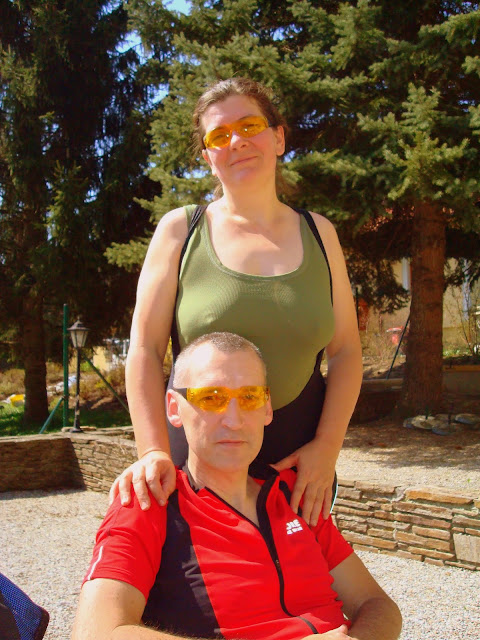
Let no one unversed in „psychoanalysis“ enter here
ΜΗΔΕΙΣ ΑΓΡΑΜΜATIKÓΣ EIΣITΩ
Medeis agrammatikos eisito
Let no one unversed in „grammatology“ enter here
ΜΗΔΕΙΣ AΦPENÓ-ΠΛHKTOΣ EIΣITΩ
Medeis aphrenoplektos eisito
Niemand ( m / f / o ), der nicht „leidenschaftlich“ ist, sollte Eintritt suchen !
No „passion“ ( cf. Nietzsche ! Rousseau, Freud, Artaud, Derrida ! ) no entree !
(( Cf. Teaser !!! Blogspot-Blog 2014 ff. ))
ΜΗΔΕΙΣ AΨYXOΛOΓIKOΣ EIΣITΩ
Medeis apsychologikos eisito
Let no one unversed in „psychoanalysis“ enter here
ΜΗΔΕΙΣ ΑΓΡΑΜΜATIKÓΣ EIΣITΩ
Medeis agrammatikos eisito
Let no one unversed in „grammatology“ enter here
P A S S I O N / passion / passages / phrenoplekt / patheticus / passionate / emotional contactions / empathy / trust / pathos / emotion / movement / motion / touching, Jacques Derrida ( „So this text has several ages. From one sentence to another it sometimes jumps for years. I could have played a game with the reader and marked the layers of an archive in colour.“ cf. quotation from „Preface“ in: Jacques Derrida: Touching/Berühren, Jean-Luc Nancy p. 6 ) : : I play this game as desire and necessity and as desire need:
I
ONE PERHAPS ! ALSO ! Almost ! GREAT ! LAUGHABLE ! „GESTURE“ !! ONE about TIME OF YEAR ! AND PASSIONATE !! READERS A reader who has been faithful and passionate for decades!
see/look/reflect teasers (of the blog) and its color mark(s) color mark(s) color mark(s) color mark(s)color mark(s) color mark(s) color mark(s) color mark(s) color mark(s) color mark(s) color mark(s) color mark(s) color mark(s) color mark(s)!
(( small instruction / Hint(!):
The „Book of Kells„, Wittenwilers „Ring“ about, fine arts, „holy“(!) writings, medieval rare splendor copies of „Book“(!), compositions, language(s) / metaphors like sun>light>illumination>enlightenment etc.., Architecture (facades and plans), Geographical maps, globes, corrected school notebooks, shopping lists, stage directions, margin notes, secret files, confidential files, blackened files(!), >>> Arno Schmidt „Zettels Traum„(!), Lawrence Sterne „Tristram Shandy“(!), „Rom Blicke“(R. D. Brinkmann), Gerhard Anna Concic-Kaucic „/S/E/M/EI/ON/ /A/OR/IST/I/CON/“(!!!) etc. et cetera !
All these and even more are objects, realities with reference surplus, significant and semantic surpluses/added values/added value. Additional markings as second and third level of contexts and denotation potentials. Color marking! Color markings!
Double and doubling reading! Cf. the side lines at the beginning of Heinrich Wittenwilers „Ring“.The reading including the color lines as interpretations of the second level enables whole text logic cancellations across and contrary to the first simple recording of meaning and sense of the first reading!!!
There is no literal sense/(meaning!) – those who think this succumb to the power of habit and thus to their own reading laziness.
Everything that appeals to you(!) should be read at least seven times !!! Please always pay attention to the colour markings! Especially the markings in the teaser! An additional interpretation level, deconstruction level and reading link! )) : : „Le sens du monde“ (J.-L. Nancy)
The meaning of the world
The senses of the world
Sense Interlacements Incommunicability
Philosophical practice the enigmatic and disturbing necessity
Of communication
Grammatological Philosophical Practice the Enigmatic Necessity
of communication
!!! cf. first and foremost to the word „communication“ and to the meaning and situation in the semantic field of communication Jacques Derrida’s „signature event context“ , – in: Randgänge der Philosophie. Vienna 1988, p. 291ff. (german edition) !!!
Short Inductio on Philosophical Practice with Gerhard Kaučić (Dr. phil.) and Anna Lydia Huber (MSc), born ’59 Conversation, Discourse, Deconstruction
Dissertation/Doctoral thesis Gerhard Kaučić Paris Lodron University Salzburg 1986
Gerhard Kaučić: Grammatotechnè as grammatology of the “Herzgewächse” or of incommunicability. Dissertation Salzburg 1986.
https://permalink.obvsg.at/AC02072855 On Jacques Derrida’s deconstruction and Hans Wollschläger’s “Herzgewächse” (novel), deconstruction of the problematic nature of communication including “illegibility” / “illisibility” (R Barthes, Hamacher, Paul de Man) … 1986
The trace of something must be thought before the existing! (Derrida)
Heraclitus already calls the awake thinkers those who do not “think things as they encounter them”.
” the secret of the communicative in the constantly
threatening incommunicability”
Performativity / Performativity ! ( J. Derrida, “Signature, Event, Context” / J. Butler, “Excitable Speech. A Politics of the Performative” / E. Fischer-Lichte, ‘Aesthetics of the Performative’)
Escaping the “ commented ‘ of the ’commentary”!
( cf.: § Para-Graphie : K o m m e n t a r , – in: Gerhard Kaučić: Grammatotechnè als Grammatologie der “HERZGEWÄCHSE” oder von der Inkommunikabilität. Salzburg 1986, pp. 46-71., german ed. )
Escape the reduction, the falsification, the humiliation, the castration of the “text” by the “commentary”!
The “commentary” always restricts the “text”!
Performanz / Performance !
Text politics !
Text performance / repetition / iterability / marking !
Dissemination / Idiom ! Performativity !
( cf.: § Para-Graphie : D i s s e m i n a t i o n, – in: Gerhard Kaučić: Grammatotechnè als Grammatologie der “HERZGEWÄCHSE” oder von der Inkommunikabilität. Salzburg 1986, pp. 71-74., german ed. )
Text music / text image / coloratura / voice / texture !
Text configuration
What is information? What is a sentence? What is a question? What determines a question?
Philosophical practice as overcoming fear! The eternal conflict with authority as a permanently deconstructive attempt at communication – the secret of the communicative in the constantly threatening incommunicability. Our task is to thwart the discourses of power, of domination, of authority – and every discourse implies the exercise of power! – by analyzing and deconstructing the ideologems and their codes.
Every sentence has too little time. Every sentence displaces by jumping. It displaces many other possible and necessary (!) sentences (for more see my/our YouTube video on “The sentence”).
Every sentence, every word, every code drives its being and its mischief in incommunicability!
Every sentence greets a ghost. Every sentence is a ghost.
Every sentence in every setting and every session (including those in a PP/philosophical practice).
I should/we should always have the opportunity to explain all the psychoanalytic, economic, political and juridical implications of the above.
I refer all readers to my/our publications on the net and to the publications on paper.
The terrain of reading is abysmal(!) and unlimited!
Philosophical practice
the enigmatic and disturbing necessity
of communication
undecidability ? Incommunicability ?
Emergence of the self! Markings!
S e l f s t – R e f l e c t i v i t y
Reflectivity
Self-reflectivity
Gerhard Kaučić, “§ ParaGraphie : Différance/D i f f e r ä n z”, – in: G. K.: Grammatotechne als Grammatologie der HERZGEWÄCHSE oder von der Inkommunikabilität. Salzburg 1986, pp. 74-84. (germ. ed.)
and esp:
J. Derrida, La différance, – in: “Randgänge der Philosophie”. Vienna 1988 (Passagen Verlag), pp. 29-52. (germ. ed.)
What and how would be an appropriate thinking practice today
In what >is<(!) philosophy conceivable today and through what or from where is that which we mean differently by philosophy to be practiced.
The term(!) différance questions the human being in a certain sense and thereby draws the history of life in general.
Once again to humanism as logocentrism or phonologocentrism.
Derrida shows that the traditionally hierarchical arrangement of the two components of language must be deconstructed. Right up to modern linguistics, the ideal meaning of a sign, called s i g n i f i c a t (the conception), is placed above the material carrier of the meaning, called s i g n i f i c a n t (the sound or written image). An attempt is always made to align the external signifier, the writing, with a transcendental signified.
Think of what we said earlier about religion, God and man.
However, every signified (the idea!) is (according to Derrida) “always already in the position of the signifier” (Derrida, Grammatology, p. 129, germ. ed.).
There can be no meaning and no sense that could escape the spatialization and temporalization as well as the differential play of signifier relations.
According to this definition, writing is a sign of signs, a signifier of signifiers.
This reversal is primarily intended to show that the materiality of the signifier is not added to the meaning a posteriori and externally, but vice versa, that the sense is the e f f e c t of a signification that has always already been implicit. In this way, Derrida reformulated and reconceptualized the relationship between language and writing.
Through Derrida’s transformation of the concept of writing, it goes beyond that of language and includes it.
All of this results in a completely new understanding and event of text, because it has been transformed several times.
The “essence”, the practice of deconstruction, is inherent to such a text (understanding), i.e. “written into” it (cf. Derrida, Freud and the Scene of Writing or Freud’s “Wunderblock”).
The thinking of difference/différance is the inherent practice of “deconstruction”.
This is what my dissertation is about as a philosophical practice
(( and this includes the conversation, but also my/our writing practice before and after each setting/session(!) ))
always about grasping texts (written, spoken or representations(!), e.g. of a technical, artistic, economic, political, institutional nature) in their inner structure and in their interaction with other texts.
The texts are not only to be analyzed and interpreted, but their conflictuality, their aggressiveness, their concealed content and intentions are to be unmasked through the practice of deconstruction.
What is meant is the visualization of the duality of the simultaneous presence and absence(!) of truth.
We express propositions of intentional analytical truth and thereby simultaneously suppress other possible propositions of truth or untruth.
Jacques Derrida describes the process of life with the invention of his D i f f é r a n c e
(( cf. teaser and footer in our blog ( Philosophical Practices / Politics / Disseminations Philosophical Practice G Kaučić & AL Huber
in which man is a special case, a unique case. Almost a coincidence, and yet from a certain distance covered by processes of a physical, chemical and then neurological nature, increasingly stringent, defined, fixed.
Where is the transition from animal to human?
That is exciting and thrilling. Is there even such a thing as drawing a line?
I ask this question without any intention of turning humans into animals.
We are animalistic, but not beastly alone. And what does animal mean here! ( in this blog, – see my blog posting “Animal Philosophy” !!! )
Animals are! Are many different individuals! And each animal is unique !!!
And some animals even have so-called human characteristics such as memory, technical ability, special skills, reasoning ability, love, communication, etc.! And sometimes even consciousness!
Jacques Derrida’s phonologocentrism means, among other things, that all humanism is logocentric and all metaphysics is humanism.
Even if most philosophers to this day do not like to hear this.
Humanism as metaphysics is the enemy of animals.
The enemy of animals and ultimately also the enemy of humans.
I can’t roll up everything here(!) now (we always do that!), take a look at my/our animal philosophy in the blog, – read Derrida’s work on it and pay attention to the “sins”(!) – catalog, – my/our red list on the “coming democracy”! (keyword “species extinction”, “climate change”, … etc.; always to be found in the appendix of each posting in red font, English and German).
If grammatology “cannot be a science of man” it is precisely because “from the outset it poses the fundamental question of the name of man” (J. Derrida, Grammatology, 1974, p. 148, germ. ed.).
This dissertation and our subsequent work, accompanied by publications on paper and online, are all about this: Gerhard Kaučić (Dr. phil.), Anna Lydia Huber (MSc), Jg. ’59 Gespräch, Diskurs, Dekonstruktion
The tasks of a future democracy/a democracy on the rise/a permanent advent/arrival of democracy/a democracy in the arrival ( Jacques Derrida ), to think the subject as „planetary“ (cf. G. Ch. Spivak, see teaser, – the teaser from my blog; note: the teaser is only visible in the web-version!), – especially concerning the great challenges of politics in the 21st century: Utopia (?!) of reflexive solidarity (Spivak),
borders of a planet (John Bellamy Foster et al. (Ed.): The Ecological Rift: Capitalism’s War on the Earth, 2011), deconstructive politics as an ideological-critical reading of the imperial archive, geopolitics, geopolitical involvement, geopolitical interest driven policy and/as value policy, power, morals and human rights, analysis of power, gender and governmentality, teletechnology, political bodies, complexities of rule, citizenship, parliamentarianism, peace policy, institution building and institution maintenance, economically correct and fair redistribution of social wealth, proper management of Migration (Flüchtlinge, Refugees), …
proper handling of migration (refugees), migration and capitalism, Postkolonialismus, neocolonialism, postcolonialism, Kolonialisierung auf allen Ebenen, Kolonialismus, Rassismus, Faschismus, Neo – Kolonialismus, Ökonomismus, Imperialismus,
Ökonomischer Imperialismus (angeleitet durch die Neue Institutionenökonomik, die Transaktionskostenökonomik und die Prinzipal-Agent-Theorie; im Gefolge des New Public Management treten an die Stelle von Handeln nach Maßgabe professioneller Ethiken Kontraktmanagement mit Zielvereinbarungen und anstelle einer Berufsethik Qualitätsmanagement und Benchmarking samt Controlling und Leistungsrechnung mit all ihren Schattenseiten und ungeplanten Nebenwirkungen, – vgl. Richard Münch: Globale Eliten, lokale Autoritäten, Frf. 2009, Suhrkamp, S. 18 vv.ff.),
the world as environment and its destruction, manmade environmental disasters, shipping, esp. container shipping, pollution of oceans, pollution of soil, greenhouse gases, temperature rise, shortage of resources, prosperity gap,
population density, urban development ( e.g. „Gängeviertel“ in Hamburg, the initiative „Komm in die Gänge“ stands for discourse and practice of a different (!) form of urban development and is an example and symbol that gives hope against gentrification and the destruction of old buildings ),
urban development towards a green city, urban philosophy, reddening of the city, city of dreams, madness and society, madness and city, city and sexuality, desire and city, city as text, city and writing, city as writing, the city and the divided I, the city and the power, the city and the political, the city as a mechanism of discipline, the city as a social testing lab, the city and the philosophical practice with many practices, the world as a city and the other, water wars, religious wars, climate change, climate consequences, global warming, nuclear relicts, climate wars, climate catastrophes, civil wars, „ethnic cleansing“ (!), genocide, violent conflicts, social questions, ecological questions, planetary principle, tradition history, the question of a global government (!?), social catastrophes, terrorism, natural disasters, migration, unstable states, poverty, wealth, corruption, media policy and presence-ideologies, war and non-war, world order and biopolicy, weapon development, arms delivery, violent and oppressive power politics, religious fanaticism, party political fanaticism, terrorism, biodiversity, standardization, factory farming, animal factories, animal consumption, „meat production“!, animal rights, animal philosophy,
„animal turn“ (vgl. Anne Peters, Tier-Recht im Zeitalter des Menschen, – in: Renn/Scherer (Hg.), Das Anthropozän. Zum Stand der Dinge. Berlin 2015, S. 67ff.),
ethical norms, euthanasia, terminal care, aging, health and sports, sports and age, ethics and medicine, cyber war, cyber crime, technology and space, political demarcation, deterritorialization, tourism, mass media, mass mediality, neoliberalization of the subjects, power,
truth and passion (vgl.: Gabriele Michalitsch: Die neoliberale Domestizierung des Subjekts. Von den Leidenschaften zum Kalkül. Campus Verlag, Frankf. a. M. 2006, bes. S. 29ff. und S. 101ff.),
sex labour, difference and the shaping of the social ( Antke Engel: Bilder von Sexualität und Ökonomie. Queere kulturelle Politiken im Neoliberalismus. Bielefeld 2009, S. 138ff. ),
automobility, digitalia and upbringing, education, unemployment, debt crisis, failing of democratization, neglect of the common good,
production and consumption (David Harvey), globalized consumption, market fanaticism, power of the market, democratization of the market, power of the globally operating financial markets, education, social policy, urban policy, policy of affordable housing, youth unemployment, social inequality, exclusion, individuality, sovereignty, liberalism, egalitarianism, limits of growth, mobility, traffic and communication, ecology, freedom, justice, interests of corporate groups, turbo-capitalism, global tax culture, international tax evasion, tax fraud, Drogierungsverhalten, drug laws, drug culture,
the own and the foreign, fascism, antisemitism, racism, sexism, human trafficking,
modern slavery (cf.: Kevin Bales, dt. Üs: „Die neue Sklaverei“, engl. V.: K. B., „Disposable People. New Slavery in the Global Economy“ und Hanns Wienold ),
„Neger, Rasse, Rassen-Subjekt, Rassismus, Schwarze Vernunft, Versklavung, Sklaverei, Massenversklavung in der Geschichte gestern heute morgen, das Rassensubjekt/Negro, race, racial subject, racism, black reason, enslavement, slavery, mass slavery in history, yesterday – today – tomorrow, the racial subject“
((cf.: Achille Mbembe: Critique de la raison nègre. Paris 2013 ( Orig. fr. ). Achille Mbembe: Critique of Black Reason. Duke University Press Books 2017 (transl., Laurent Dubois). Achille Mbembe: Kritik der schwarzen Vernunft. Berlin, Suhrkamp, 2014 (ÜS aus d. Franz., Michael Bischoff). )),
arms trade, private purchase of weapons, possession of weapons, increase in complexity, knowledge generation, urbanization and population growth, democracy deficit, sustainability crisis, green energy, energy regime, energy crisis, legitimization crisis, territoriality, agricultural policy, fishing policy, famine (cf. Jean Ziegler),
famine and capitalism, „the right to food“
(( human right, UN-social covenant, Article 11 (1) and (2); human dignity ( primary normative principle of human rights, ethical principle, „dignitas“ (Cicero), the „idea of the good“ (Plato), fundamental „equal worth of all human beings“ (Kant), protection of the human dignity in Article 2 of the Treaty on European Union )),
need of land, land grabbing, land robbery, justice, human rights, decolonization of thinking, policy of displacement, solidarity across class, race, and national boundaries (Mohanty, passim),
just policy as a policy of strengthening the weak
(( zum planetarischen Subjekt cf. Gayatri Chakravorty Spivak: Imperative zur Neuerfindung des Planeten – Imperatives to Re-Imagine the Planet (hg. v. Willi Goetschel engl./dt.). Wien 2013, 2. Aufl., Passagen Verlag, S. 49vv.ff.
and Charles Taylor: Multiculturalism and the „Politics of Recognition“. Princeton 1994, p. 28 ))
Philosophischer Salon Gerhard Kaučić Djay PhilPrax & Anna Lydia Huber Gasometer Wien
Philosophical Lounge / Philosophischer Salon G Kaucic & AL Huber Vienna, Austria, – Gerhard Kaučić (*1959), head of a philosophical practice for 36 years in Vienna ( 1989-2025 ff.)
g.kaucic[at]chello[dot]at or gack[at]chello[dot]at
Philosophische Praxis
GESPRÄCHE sind EREIGNISSE als TEXT
cf. Jacques Derrida, Signatur Ereignis Kontext, – in: Randgänge der Philosophie, Wien 1988, S. 291-314 ( Französische Originalausgabe: Marges de la philosophie, Paris 1972 )
Translation into English, Gerhard Kaučić (Dr. phil., b. 1959), European Philosopher, Writer, Feminist, Translator, Freerider , Europäischer Philosoph, Philosophische Praxis/Praktische Philosophie, Sprachanalytische Philosophie, Dekonstruktion, PP Wien, Österreich, Europa
Gerhard Kaučić, Alter 66, 2025, Anna Lydia Huber, age 66, 2025
Philosoph:in des Denkens der „différance“ (cf. J. Derrida, La dissémination. Collection „Tel Quel“ aux Éditions du Seuil, Paris 1972)
To contact us please use only this email: g.kaucic[at]chello[dot]at
Öffnungszeiten / Hours of opening: Mo – Do: 11 – 20 Uhr
Honorar nach Vereinbarung / Charge by arrangement
Gespräche outdoor/indoor: Grammatologien, Kontextualisierungen, Analysen, Komplizierungen, Plurivalenzen, Dependenzen, Interdependenzen, Grammatiken, Aporien, Dekonstruktion…rund um die Uhr…rund um die Welt…
…around the clock …around the world…
To contact us, please use only these emails:
g.kaucic[at]chello[dot]at or gack[at]chello[dot]at
Gegenwartsphilosophie
Contemporary Philosophy
Gerhard Kaučić & Anna Lydia Huber ( geb. 1959) Philosophische Praxis 1989 ff.
( Mitarbeiterin in der grammatologisch-philosophischen Praxis seit 2009 in Wien und darüber hinaus )
( Associate in the grammatological-philosophical practice since 2009 in Vienna and beyond )
Gerhard Kaučić
Philosoph, Feminist, Mediator, Autor, Freerider, geboren 1959, Dr. phil., Alter 66, 2025
( Leiter (seit 1989) der Philosophischen Praxis Gerhard Kaučić (Dr. phil.) & Anna Lydia Huber (MSc) )
( Head (since 1989) of the Philosophical Practice Gerhard Kaučić (Dr. phil.) & Anna Lydia Huber (MSc) )
To contact us, please use only these emails:
g.kaucic[at]chello[dot]at or gack[at]chello[dot]at
Narratives, Reports, Analyses, Reflections from the Practice/from my/our Philosophical Practice
Vienna 36 years of practice jubilee (1989-2025 ff.) jubilee 36 years PP 2025
Discourses, analyses, descriptions, critiques, explanations inevitably always fall under the category „commentary„.
Comments are always something added. They try to approach a thing, an event, an institution, an action, in short, a text in any form, even if it is music. Comments try to suspend something. This always fails. Comments create a displacement, a repression as well. And with time they often cover up the thing itself.
Why?!
The „commentary“ limits the open semantic game with the means of identity, repetition and the temptation to represent the same. In this way it makes itself a mechanism of control and order by restricting and delimiting discourse and trying to establish unambiguity.
A translation is never a replacement ! Every setting is already a translation of the thought and the unthought. A translation changes the place, shifts and changes and is thus always a different text.
Only an approximate signified can be saved over(!) this way.
Every reading ( even „conversations“ must be read! ) must first produce a significant structure.
There is no criterion for the identity of the meaning of an expression: the interpretation becomes in the scientific sense a matter of undecidability, which does not mean that one could and should not temporarily quasi-fix and evaluate it in a passagere consent of many readers.
So-called „islands of understanding“ of temporary text configurations!
Understanding also in the sense of: a small or larger group of discourse participants „stands“(!) temporarily on temporarily secured „understanding“ – or understanding – ground!
This reason for understanding, this „territory“ of limited (temporally and spatially) understanding, the image of temporary text configurations, the image of standing behind the mirror as „standing“ in the mirror, – a mirror of distortions and performances, a mirror of originally unoriginal transformations, – a mirror that gives off the image (! ) for our language, – our language as graphically marked poetics of communication, – literally ! (See J. Derrida, La dissémination, p. 350 and passim)
The commentary sets the author as the supreme principle of the order of discourse (vg. M. Foucault, Ordnung des Diskurses) and generates its authorities.
„We“(!) represent the task of disseminal critical communication as an open text of a writing, escaping exegesis and the re-presentation of the commentary.
The task is also to be expressed in such a way that „the speech is first as good and then better understood as its author“ (Schleiermacher, Hermeneutik und Kritik, p. 94).
For us, the only critique to be accepted is the permanently critical critique, i.e. a permanently deconstructing critique whose object is the writable of the text, a permanently multiplying text.
„A signifier is, from the outset, the possibility of its own repetition, its own image or its similarity to itself. This is the condition of its ideality. What identifies it as a signifier and as such gives it its function and relates it to a signified can never be a ‚unique and special reality‘ for the same reasons. From the moment the sign appears, that is, from ever since, there is no possibility of finding the pure ‚reality‘, ‚uniqueness‘, and ’specialness‘.” (Derrida, Grammatology, p. 165, germ. ed.)
The authority of the Logos, the commentary, the dominion of the interpretation of scripture nailed to its origins has for some time been exposed to the critical criticism of deconstruction and thus the chance of democracy in the coming (Derrida).
All this points to a radical possibility that cannot be thought of by any single science or abstract discipline (Derrida, Grammatologie, 168f., german edition).
Intertextuality and the underlying multiplicity of codes is in principle unlimited and cannot be limited.The resulting deconstructive textualities and their connotation texture cannot be included or even determined by any context.
The “text” has ceased to be an object in itself. The permanently absent presence of
I n t e r t e x t u a l i t y (this applies to every text, and has done since time immemorial), in which the power of the break with its contexts as a sum of never fully present presences has always been structurally immanent in every sign of writing, has always determined writing – writing without origin and destination (arche, telos).
Practice of d i f f é r a n c e ! ! !
European Philosopher, Writer, Feminist, deconstructed Hegelian, Translator, Mediator, Freerider, Bicycle Traveller, Enduro Biker, Ecomobilist, Survivor, Philosophical Practitioner/Practical Philosophy, Analytical Philosophy of Language, Deconstruction, Philosophical Practice Vienna Austria Europe ))
Adventure Philosophy! AN ANNIVERSARY EVERY YEAR / LIVING CONSCIOUSLY EVERY YEAR …………… Adventure Philosophy ……. Adventure Life !!!
……………………………………… Grammatological practice, philosophical practice, philosophy, what is philosophy, understanding, desire, knotting, knots of life and writing and of life as writing, semiology becomes grammatology, philosophy as science, differ/a/nce, Socratism as stultification, theoria as the highest form of practice. ……………………………………………….
Writing (cf. teaser), language, the sentence, the word. Every sentence is a leap!
Personal history and general history; language consciousness unconsciousness; what does this have to do with general history, experience, phenomenology (e.g. that of Merleau-Ponty), desire (e.g. Freud, e.g. Lacan, e.g. Melanie Klein), processing, reality, „psychic reality“ (Freud) (?!) ……………………………………………………..
LANGUAGE, THINKING, PHILOSOPHY, UBW: …………. HOSPITALITY PHILOSOPHICAL PRACTICE ……
……………………………………………………………………….. Gastfreundschaft Philosophische Praxis ……………………………………………………………………. ich versuche
……………………………………………………………………. I try to explain why I answer requests for lectures, seminars or discussions permanently and persistently (almost) in the negative; my grammatological philosophical practice requires deconstruction. ………………………………………………………………………………………………………………………………………… And this requires ruthlessness, independence and the utmost attention! …………………………………………………………………………………………………………………………………………………..To a person to whom you want to be able to listen and whose words you want to be able to perceive, in all openness, to such a person you should want to and be able to develop a love, a passion, or at least an affection.
The body should not only not be ignored, but should be perceived and valued with an open mind – in all its frailty, fragility and vulnerability! ………………………………………………………………………………………………………………………………………………………………………………..Body also means voice, color of voice, tone of voice, rhythm, tempo, gesture, movement, face, eyes, looks, expression, etc. ……………………………………………………. the body is something beautiful, – …………… …………………………………………………….
(art shows us the body, as do traditional tribal cultures in Africa, Australia and America; people enjoy the body as text and often „describe“ it with tattoos), ……………………………………………………., – today
and in earlier cultures. …………………………………………………….
The body is the basis for any structurality of successful intellectual intimacy of any philosophical practice as conversation.
PHILOSOPHICAL PRACTICE VIENNA PHILOSOPHICAL PRACTICE AUSTRIA PHILOSOPHICAL PRACTICE AUSTRIA EUROPE
Grammatological Philosophical Practice, Gerhard Kaucic / Djay PhilPrax & Anna Lydia Huber Vienna
Philosophical practitioners, grammatologists, authors, cyclists, ecomobilists, the philosopher as cyclist, the philosopher as bicyclist, the philosopher as traveler, the philosopher as agitated and mover, the philosopher as scout ……. track ……. trace ……. Grammatology … Deconstruction
Freerider, enduro biker (s works), mountain biker, touring cyclist, Gerhard Kaučić / Djay PhilPrax (*1959), philosopher, , – philosophical practitioner, grammatologist, writer, author, – cyclist, mountain biker, racing cyclist, folding bike cyclist, ecomobilist, –
the philosopher as cyclist, the philosopher as bicyclist, the philosopher as traveler, the philosopher as agitated and mover, the philosopher as scout ……. track ……. trace ……. Grammatology ………. Deconstruction
If you are interested in a PP (Philosophical Practice) with me, please reserve an appointment only under this email: To contact us, please use only this email: gack[at]chello.at
Philosophical Practice weltweit … rund um die Uhr … rund um die Welt, … „face à face“, … confidential one-to-one conversation, … around the clock … around the world
Grammatological Philosophical Practice Dr. Gerhard Kaucic / Djay PhilPrax ( born 1959, author, philosopher, PP since 1989 ) Conversation, analysis, discourse, problematization, identity dislocation, subjectivation, formalization, folding, complication, aporia, deconstruction
Opening hours: Mon – Fri: 11 a.m. – 8 p.m.
Charge by arrangement
Conversations outdoor/indoor: grammatologies, contextualizations, analyses, complications, plurivalences, dependencies, interdependencies, grammars, aporias, deconstruction…around the clock…around the world…
…around the clock …around the world…
TALKS are EVENTS as TEXT
cf. Jacques Derrida, Signatur Ereignis Kontext, – in: Randgänge der Philosophie, Vienna 1988, pp. 291-314 ( original French edition: Marges de la philosophie, Paris 1972 )
Translation into English, Gerhard Kaučić (Dr. phil., b. 1959), European Philosopher, Writer, Feminist, Translator, Freerider , European Philosopher, Philosophical Practice/Practical Philosophy, Language Analytic Philosophy, Deconstruction, PP Vienna, Austria, Europe
To contact us, please use only these emails:
g.kaucic[at]chello[dot]at or gack[at]chello[dot]at
36 years Head of Philosophical Practice Gerhard Kaučić (Dr. phil.) & Anna Lydia Huber (MSc)
Philosophical Practice Vienna, G Kaučić & A L Huber 1989 ff.
Deconstruction enables the relationship to the Other, the relationship to the Other (perhaps) enables deconstruction. The encounter with the Other makes me responsible for the singularity of the Other. For the unpredictability of the Other in being different.
I try to take the other as the other is and I try to recognize what the other is or what it can tell me (could tell me about my otherness). The deconstructive mindset makes me different and an Other.
Perhaps I encounter the Other in a more “real” way, perhaps that means more honestly, perhaps more ethically(!). I’ll give it a try.
G K & A L H To contact us use only this email: gack[at]chello.at
Gerhard Anna Concic-Kaucic (author, writer, philosopher, Vienna, Austria),
(“GACK” = Anna Lydia Huber and Gerhard Kaucic )
born 1959 in Austria, live in Vienna.
He grew up in Salzburg, she in Falkenhof (Mühlviertel), Linz (Upper Austria), he/she Paris and Zell am See and he as well as in Saalfelden am Steinernen Meer (Salzburg) and Kufstein (Tyrol).
Both studied comparative literature, history, philosophy and linguistics in Salzburg and Paris, writers and translators since 1983. Numerous adventure trips by bicycle.
1989 Founded a “Grammatological Philosophical Practice” in Salzburg, Obertrum am See and Vienna.
1989 ff. Publication of a ( grammatological ) journal ( Die Grüne F Abyss ) for literature, culture and politics.
Representative of “Viennese postmodernism”, a Viennese variant of “deconstruction” (Jacques Derrida). Narrator, poet, translator, novelist and cultural theorist.
Authors of a deconstruction novel playing on different levels of language, reality and consciousness ( Passagen Vlg. 7 vols. planned, vol. V published 2007 ).
Essays on topics such as writing, grammatology, feminism, cloning, ecology, Japan, Judaism, Arabic culture and literature, religion, Kabbalah, music, architecture, film, network society, sport, transportation, politics, sexuality, philosophical practice, literary theory, postmodernism, semiotics, rationalism, constructivism, deconstruction, différance, psychoanalysis, Kant, Hamann, Nietzsche, Freud, Wollschläger, Derrida, etc.
A big thank you to my practice visitors! 36 years of philosophical practice Gerhard Kaucic
Many thanks to my practice visitors! 36 Years of Philosophical Practice Gerhard Kaucic und Anna Lydia Huber
( German / English )
To contact us, please use only these emails:
g.kaucic[at]chello[dot]at or gack[at]chello[dot]at
[ Before you write to me/us, before you think about coming to us, please try to think and reflect in your own way: ………What is philosophy? … What is philosophical … “practice” ? …….What is it ? ……. What is “is” ? …. “What” “is” a “question” ? …… What is its precondition?…What causes it?…. Where does it develop from? … …
Which “contexts” lead to what we call a “question”? … Under what circumstances, in what situation, by whom, with what intentions and on the basis of what tacit and unquestioned presuppositions and on the basis of what retentions does what we call “questioning” or something like “the politics of questioning” arise? ) And ! – Is … “thinking” …asking !?…Does “philosophical practice” answer … Questions…?…!… Does … “Philosophy” … to questions ? …
An open letter to people who want to come to my Philosophical Practice :
Dear people ,
dear interested people ( to avoid misunderstandings ! ),
whoever is dreaming of coming to my practice, – I am not a life – coach ! I am not a “ life – coach ” ! ( life advisor / life consultant / life counsellor / lifestyle consultant / teacher )
I do not feel responsible for that ! With the request for understanding.
What happens in my philosophical practice ?
There are many practices and each one is different.
I do not see myself as a “life counselor” or coach.
My practice is more concerned with theory-saturated or at least theory-interested concerns and my task is to deconstruct these theories or their carriers (i.e. my conversation partners, clients or guests), i.e. among other things to lead these/their theories into aporia and thus to unlock the thinking of my conversation partners, which also means to free these people, who are usually very theory-trained, for something new.
Yours sincerely
Gerhard Kaucic
To contact us, please use only these emails:
g.kaucic[at]chello[dot]at or gack[at]chello[dot]at
PHILOSOPHISCHE PRAXIS WIEN PHILOSOPHISCHE PRAXIS ÖSTERREICH PHILOSOPHISCHE PRAXIS OESTERREICH EUROPA
Grammatologische Philosophische Praxis, Gerhard Kaučić / Djay PhilPrax und Anna Lydia Huber Wien
Philosophische/r Praktiker:in, GrammatologIn, Schriftsteller:in, Radfahrer:in, Ökomobilist:in, der Philosoph/die Philosophin als Radfahrer:in, der Philosoph/die Philosophin als Radfahrende/r, der Philosoph/die Philosophin als Fahrende/r, der Philosoph/die Philosophin als Bewegte/r und Bewegende/r, der Philosoph/die Philosophin als Scout ……. trace ……. Spur ……. Grammatologie Dekonstruktion
Die Subjekthaftigkeit! Die Sprache! Der Andere! Das Berühren und das Berührtwerden! (vgl. Derrida und meinen/unseren Teaser im Blogspot-Blog 2014 ff.)
Berührtwerden
[[ In Klammern:
Grünes Denken, Planetarisches Denken und Handeln, Philosophie
Vom Fahrrad aus
Gerhard Kaučić (geb. 1959, Dr. phil., Philosoph, Naturist, Freerider)
Cycling, end of stage, end of day, open air bathing, naturism, free body culture, experience of nudity, touching,, quality of life, love of life, joy of life, necessity of life, beautyness, aesthetics, nature, culture, friendship
Erfahrung der Nacktheit, Erfahrung der Natur, John Dewey – Natur – Leben – Körper – Mentalität, Dewey – ästhetische Erfahrungen, John Dewey – Erfahrung und Natur, John Dewey – Experience and Nature
Anna Lydia Huber (geb. 1959, MSc, Philosophin, Naturistin, Freeriderin)
Gerhard Kaučić (geb. 1959, Dr. phil., Philosoph, Naturist, Freerider)
John Dewey, amerikanischer Pragmatist, wollte seinen Lebenssinn darin sehen, den meßbaren Dingen zu entgehen. Er schrieb in Erfahrung und Natur:
„Das charakteristisch menschliche Bedürfnis ist das nach Besitz und Genuß der Bedeutung von Dingen, und dieses Bedürfnis wird im traditionellen Begriff des Nützlichen ignoriert und unbefriedigend gelassen.“ (Frf. 1995, S. 341)
Dewey meint, wir erfahren immer etwas, wenn wir in Bewegung bleiben und interagieren. Gewisse Ereignisse wirken auf uns, nicht alle gleichermaßen.
Genau diese bestimmten Ereignisse meint Dewey, wenn er von ästhetischen Erfahrungen spricht.
Ästhetische Erfahrungen lassen die Welt um uns für uns bedeutsam werden. Sie erscheint uns dann wie verwandelt oder besser als verwandelt. Das hält und macht uns lebendig. Lebenslang.
Solche Erfahrungen sind es auch, was uns nachdenklich macht. Nachdenkend, reflektierend. Reifer!
Freundschaft Freude Freiheit Naturismus
Friendship Joy Freedom Naturism
Cycling, end of stage, end of day, open air bathing, naturism, free body culture, experience of nudity, touching, quality of life, love of life, joy of life, necessity of life, beautyness, aesthetics, nature, culture, friendship
Grünes Denken, Planetarisches Denken und Handeln, Philosophie
…………………………………………………………………………………………………………………………………………………………………………………………. Philosophical Practices / Politics / Disseminations …………………………………………………………………………………………………………………………………………………………………………………………………………………………………………………………………………………… Unsere Aufgabe ist es, die Diskurse der Macht, der Herrschaft, der Autorität – und jeder Diskurs impliziert Machtausübung ! – zu durchkreuzen, logothetisch (im Sinn der Schaffung einer neuen Sprache / einer anderen Sprachverwendung) zu disseminieren, indem wir deren Intertextualitäten, die Kreuzungspunkte vieler anderer Texte in einem jeden Text in viele heterogene Teile auseinander treiben. Der Intertextualität zugrunde liegt die Multiplizität der Codes, die grundsätzlich unbeschränkt ist. ……………………………………………………………………………………………………………………………………………………………………………………………………………………………………………………………………………………………………. Mise-en-Abyme ……………………………………. mise en abîme ………………………………………………………………………………………………………………………………………………………………………………………………………………………………………………………………………………………………….. Abyssos …………………………………………………………………………………………………………………………………………………………………………………………………………………………………………………………………….. intertextuelle Strukturen als die „Natur“ der Sprache ………………………………………………………. ……………………………………………………………………………………………………………………………………………………………………………………………………………………………………………………………………………………………………………………………………………………………………………………………….. This reason of understanding, limited by „territory“ (temporally and spatially), the image of temporary textual-configurations ( mise en abyme, picture in picture in picture…), „picture“ as a metaphor of re-flection, the picture of the mirror without tinfoil, the picture of standing behind the mirror as „standing“ in the mirror, – a mirror of distortion and performance/performation (!), a mirror of the initial transformation without origin, – a mirror, which gives the picture ( away ! ?!) for our language, – our language as graphically marked poetics of communication, – literally ! (see J. Derrida, La dissémination, p. 350 und passim) ……………………………………………………………. ……………………………………………………………………………………………………………………………………………………………………………………………………………………………………. Jede Lektüre ( auch „Gespräche“ müssen gelesen werden! Gehörtes ist gehört worden und in der verstehenden Verstandestätigkeit „gelesen“ worden. Aus-gelesen! Ausgewählt! Aus-sortiert! Aus der gehörten „Wirklichkeit“ er-hört und ent-hört, ver-hört, verwirklicht, verkettet, sprachverkoppelt, verlesen!, zusammen-ge-lesen!, zusammengesammelt, ver-sammelt, ge-doublet, ge-setzt, produktiv ausgelesen! ) muß erst eine signifikante Struktur produzieren. Es gibt kein Kriterium für die Identität des Sinns eines Ausdrucks: die Interpretation wird im wissenschaftlichen Sinne eine Sache der Unentscheidbarkeit, was nicht gleich heißt, daß man sie nicht in einem passageren Einverständnis vieler LeserInnen vorübergehend quasi-fixieren und ver- und bewerten könnte und sollte. Sogenannte „Verstehens-Inseln“ temporärer Textkonfigurationen! Ver-stehen auch im Sinne von: eine kleine oder größere Gruppe von Diskurspartizipanten „steht“(!) temporär auf temporär gesichertem „Verstehens“- bzw Verständnis-Grund! ………………………………………………………. ……………………………………………………………………………………………………………………………………………. Dieser Verständnisgrund, dieses „Territorium“ begrenzten (zeitlich und räumlich) Verstehens, das Bildnis temporärer Textkonfigurationen ( mise en abime, Bild im Bild im Bild…), „Bild“ für die Metapher der Re-flexion, das Bild vom Spiegel ohne Stanniol, das Bild vom hinter dem Spiegel stehen als in dem Spiegel „stehen“, – ein Spiegel der Verzerrungen und Performungen, ein Spiegel der ursprünglich ursprungslosen Verwandlungen, – ein Spiegel, der das Bild ab-gibt (!) für unsere Sprache, – unsere Sprache als graphisch markierte Poetik der Kommunikation, – buch-stäblich ! (Vgl. J. Derrida, La dissémination, p. 350 und passim) ………………………………………………………………………………. …………………………………………………………………………………………………………………………………………………………………………………………………………………………………………………………………………………………………….. Philosophical Practices / Politics / Disseminations …………………………………………………………………………………………………………………………………………………………………………………………………………………………………………. …………………………………………………………………………………………………………………………………………… Unsere Aufgabe ist es, die Diskurse der Macht, der Herrschaft, der Autorität – und jeder Diskurs impliziert Machtausübung ! – zu durchkreuzen, logothetisch ( im Sinn der Schaffung einer neuen Sprache / einer anderen Sprachverwendung / einer intensivierten Wahrnehmung / einer komplexeren Lesbarkeit ) zu disseminieren, indem wir deren Intertextualitäten, die Kreuzungspunkte vieler anderer Texte in einem jeden Text in viele heterogene Teile auseinander treiben. Der Intertextualität zugrunde liegt die Multiplizität der Codes, die grundsätzlich unbeschränkt ist. ………………………………………………………………………………………………………………………………………………………………………. The intertextuality and its underlying multiplicity of codes is principally unlimited and unlimitable. The growing deconstruction – textualities and their texture of connotation are not includable or even determinable by any context. ……………………………………………………………………………………… ………………………………………………………………………………………………………………………………………….. More complex readability ! More complicated readability of the world ! Intensified perception ! ! ………………………………………………………………………………………………………………………………………………………………………………………………………………………………………. …………………………………………………………………………………………………………………………………………. ……….. ……….. To contact me, please use only this email: g.kaucic[at]chello.at ……… ………… ………………………………………………………………………………………………………………………………………………………………………………………………………………………………………………………………………………………………………………………………………………………………………………………………………………………………………………………………………..
Jedes Jahr ein Jubiläum / Jedes Jahr bewußt leben
Gegenwartsphilosophie
Adventure Philosophy!
Philosophische Praxis
Gerhard Kaučić / Djay PhilPrax, Wien ( Dr. phil. ), Philosophical Practitioner, Writer
Gerhard Anna Cončić-Kaučić (geboren 1959, Schriftsteller:in – Wiener Postmoderne – Dekonstruktion – Wien – Vertreter:in der Wiener Spielart der Dekonstruktion im Sinn Jacques Derridas)
/S/E/M/EI/ON/ /A/OR/IST/I/CON ist ein siebenbändiger Großtext, eine disseminative Lekritüre, dessen zweiter Band der Dekonstruktion von ‚Finnegans-Wake‘ gewidmet ist. Große Literatur ist nicht einfach nur Sprache, die bis zur Grenze des Möglichen mit Sinn geladen ist, wie Ezra Pound meinte, James Joyce verwirklichte, Arno Schmidt und Hans Wollschläger fortführten, sondern sie ist Schrift im Sinne Jacques Derridas, die diese Grenze ständig verschiebt, verdichtet, entstellt. Der Text besteht aus vielen Buchstaben, aus sehr vielen – und jeder Buchstabe ist ein ganzes Universum an Bedeutungen – mehr noch – an „Zeichen“. Jedes dieser Zeichen ist in Bezug auf sich „selbst“ und in Bezug auf alle anderen Zeichen zu setzen und zu lesen. Kein Zeichen darf nicht gelesen werden. Wie im ‚Book of Kells‘ oder den Handschriften des alten Orients in der „untergegangenen“ Bibliothek Sarajewo. Dieser Grenzgang durch die Felder von Literatur, Theorie, Informatik, Wissenschaft, Philosophie und Sprachen arbeitet in und mit allen Überlieferungen des Orients, des alten Europa, der neuzeitlichen Wissenschaften und Literaturen sowie der postmodernen Theorie.
/S/E/M/EI/ON/ /A/OR/IST/I/CON/ ist ein siebenbändiger Großtext, eine disseminative Lekritüre, dessen dritter Band der Dekonstruktion von Wissenschaft und Theorie gewidmet ist. Große Literatur ist nicht einfach nur Sprache, die bis zur Grenze des Möglichen mit Sinn geladen ist, wie Ezra Pound meinte, James Joyce verwirklichte, Arno Schmidt und Hans Wollschläger fortführten, sondern sie ist Schrift im Sinne Jaques Derridas, die diese Grenze ständig verschiebt, verdichtet, entstellt. Konzis arbeitet Inspektor Sem auf dem Strich vor dem Gesetz. Telquel die Bannmeile Europa, Sucht und Seuche, Wissenschaft und Wahrheit, Mikroben, Gene, Spuren zur Autobiographie Sem Schauns. Dieser Grenzgang durch die Felder von Literatur, Theorie, Informatik, Wissenschaft, Philosophie und Sprachen arbeitet in und mit allen Überlieferungen des Orients, des alten Europa, der neuzeitlichen Wissenschaften und Literaturen, sowie der postmodernen Theorie.
/S/E/M/EI/ON/ /A/OR/IST/I/CON/ ist ein siebenbändiger Großtext, eine disseminative Lekritüre, dessen erster Band der Dekonstruktion von Religionen und Mythologien gewidmet ist. Große Literatur ist nicht einfach nur Sprache, die bis zur Grenze des Möglichen mit Sinn geladen ist, wie Ezra Pound meinte, James Joyce verwirklichte, Arno Schmidt und Hans Wollschläger fortführten, sondern sie ist Schrift im Sinne Jacques Derridas, die diese Grenze ständig verschiebt, verdichtet, entstellt. Dieser Text schreibt in sich einen Roman, ein Gedicht, ein Epos auch. Die Geschichte ist ein Krimi rund um den Helden Sam. Eine Geschichte ein Ro man zum letzten Helden, zum ersten Helden. „Es“ ist „Ain Traum Booch“ – wie der „Unter-Titel“ sagt. Dieser Grenzgang durch die Felder von Literatur, Theorie, Informatik, Wissenschaft, Philosophie und Sprachen arbeitet in und mit allen Überlieferungen des Orients, des alten Europa, der neuzeitlichen Wissenschaften und Literaturen sowie der postmodernen Theorie.
/S/E/M/EI/ON/ /A/OR/IST/I/CON ist ein siebenbändiger Großtext, eine disseminative Lekritüre, dessen vierter Band der Dekonstruktion von Sexualität und Sexualisationsprozessen gewidmet ist. Große Literatur ist nicht einfach nur Sprache, die bis zur Grenze des Möglichen mit Sinn geladen ist, wie Ezra Pound meinte, James Joyce verwirklichte, Arno Schmidt, Hans Wollschläger und Oswald Wiener fortführten, sondern sie ist eine Schrift im Sinne Jacques Derridas, die diese Grenze ständig verschiebt, verdichtet und entstellt. Inspektor Sem dekonstruiert Rhetoriken, Sexualanthropologien, Psychagogien, erfindet Schnittstellen, Codes von Liebesrelationen, Liebesmodellen, Geschlechterbeziehungen, decouvriert Paradigmen von Geschlechterdifferenz. Differenz zwischen Liebe und Tod. Dieser Grenzgang durch die Felder von Literatur, Theorie, Informatik, Wissenschaft, Philosophie und Sprachen arbeitet in und mit Überlieferungen des Orients, des alten Europa, der neuzeitlichen Wissenschaften und Literaturen sowie der postmodernen Theorie.
Mit dem fünften Band von ‚S/E/M/EI/ON/ /A/OR/IST/I/CON/ oder zur Autobiographie Sem Schauns‘ erscheint ein weiterer Text in der Reihe zur Autobiographie des Agenten Sem. Sem, Privatdetektiv, Inspektor, Geheimagent, ist Akteur im System Sprache. Die Schrift im Sinne Jacques Derridas ist sein Medium und auszuspionierendes geheimdienstliches Operationsfeld. Das „Echelon-Projekt“ repräsentiert als Ergebnis die Matrix eines großen Lauschangriffs auf das Humanum schlechthin: Identität, Körper, Reproduktion, Sexualität, Macht, Gewalt, Repräsentation, Sprache, Semiotik, Gedächtnis, Wissen, Archiv. Zugleich ist dieser Text vielleicht die Erfüllung der Forderung von Helmut Heissenbüttl nach einer Literatur für intellektuelle LeserInnen und eine Liebeserklärung an Jacques Derrida.
Semeion Aoristicon or to the autobiography of Sem Schauns
……. THE SET …….. THE LEAVING OF THE BOOK …….. !?
/S/E/M/EI/ON/ /A/OR/IST/I/CON/
Psychoanalyse, Sprachanalytische Philosophie, das Unbewußte
Die Sprache, das Sprechen, das Unbewußte (Ubw)
Der Satz und die Philosophie
GESPRÄCHE sind EREIGNISSE als TEXT
cf. Jacques Derrida, Signatur Ereignis Kontext, – in: Randgänge der Philosophie, Wien 1988, S. 291-314 ( Französische Originalausgabe: Marges de la philosophie, Paris 1972 )
Projekte / Projects (1989 – 2025 ff.) 36 Jahre Philosophische Praxis Wien GK & ALH
P.s.:
Gerhard Kaučić
(Mountain Bikers, Freeriders, Turbo Levo s works)
Anna Lydia Huber
Trailen auf den und auf dem Kahlenberg (Wien, Weidring, Klosterneuburg). Dornröschentrail, Südtiroler Uphill-Trail etc. Wir hatten einen guten Rutsch ins neue Jahr 2025. Ich hoff, Ihr auch.
We are trailing on the Kahlenberg. Dornröschentrail, South Tyrolean Uphill Trail etc. We had a good start to the year 2025. I hope you did too.
Gerhard Anna (66) up and down the Kahlenberg in fog and light snow flurries, – 3 degrees Celsius
Gerhard Kaučić
(Mountain Bikers, Freeriders, Turbo Levo s works)
Anna Lydia Huber
Trailen auf den und auf dem Kahlenberg. Dornröschentrail, Südtiroler Uphill-Trail etc. Wir hatten einen guten Rutsch ins neue Jahr 2025. Ich hoff, Ihr auch.
Gerhard Anna (66) auf den und auf dem Kahlenberg im Nebel und bei leichtem Schneegestöber, – 3 Grad Celsius
Trailen auf den und auf dem Kahlenberg (Wien). Dornröschentrail, Südtiroler Uphill-Trail etc. Wir hatten einen guten Rutsch ins neue Jahr 2025. Ich hoff, Ihr auch.
We are trailing on the Kahlenberg. Dornröschentrail, South Tyrolean Uphill Trail etc. We had a good start to the year 2025. I hope you did too.
Gerhard Anna (66) auf den und auf dem Kahlenberg im Nebel und bei leichtem Schneegestöber, – 3 Grad Celsius
Gerhard Anna (66) up and down the Kahlenberg in fog and light snow flurries, – 3 degrees Celsius
To contact us please use only this email: g.kaucic[at]chello.at
Philosoph:in des Denkens der „différance“ (cf. J. Derrida, La dissémination. Collection „Tel Quel“ aux Éditions du Seuil, Paris 1972)
To contact us please use only this email: g.kaucic[at]chello.at
Öffnungszeiten / Hours of opening: Mo – Do: 11 – 20 Uhr
Honorar nach Vereinbarung / Charge by arrangement
Gespräche outdoor/indoor: Grammatologien, Kontextualisierungen, Analysen, Komplizierungen, Plurivalenzen, Dependenzen, Interdependenzen, Grammatiken, Aporien, Dekonstruktion…rund um die Uhr…rund um die Welt…
…around the clock …around the world…
Conversations outdoor/indoor: grammatologies, contextualizations, analyses, complications, plurivalences, dependencies, interdependencies, grammars, aporias, deconstruction…around the clock…around the world…
Landschaft und Leib
Landscape and body
Anna Lydia Huber (66, philosopher) & Gerhard Kaučić (66, philosopher)
Summer/winter bike tours 2024/25 (previous and following)
der Philosoph/die Philosophin als Radfahrer:in, die Philosophin/der Philosoph als Radfahrende, der Philosoph/die Philosophin als Fahrende, der Philosoph/die Philosophin als Bewegte und Bewegende, die Philosophin/der Philosoph als Scout ……. trace ……. Spur ……. Grammatologie ………. Dekonstruktion
the philosopher as cyclist, the philosopher as bicycle rider, the philosopher as traveler,
the philosopher as moved and moving,
the philosopher as scout … …. ….. trace ……. trail ……
Grammatology …….
Deconstruction
To contact us, please use only these emails:
g.kaucic[at]chello[dot]at or gack[at]chello[dot]at
Gerhard Kaučić and Anna Lydia Huber (born 1959, Philosophers) skating and classic cross-country skiing on the cross-country ski trail in Saalfelden am Steinernen Meer in January 2025
Freedom
Freedom for all
Mehr dazu siehe unseren Teaser und unseren Footer sowie die übrigen Postings im Blogspot-Blog 2014 ff.
Zum besseren Verständnis und zur beginnenden Einübung in unsere philosophische Praxis lesen Sie bitte unsereCharakterisierung der Grammatologischen Philosophischen Praxis (GPP GK & ALH, Deutsch/Englisch), –
For a better understanding and to begin practicing our philosophical approach, please read our characterization of Grammatological Philosophical Practice. (GPP GK & ALH, German/English), –
Ein Recht darauf, Rechte zu haben als Ruf der „Freiheit“, welche diesem Ruf nicht vorgängig sein kann !
Ein nicht-nationalistischer Staat!? (Hannah Arendt)
DDR als „Maschine“, als „Rechtsmaschine“ !
>Die Freiheit< kenne ich nicht.
Ich kenne nur >Freiheit e n< .
Als kleines Gedankenspiel: setze ich als Definition von Freiheit einen Überschuß an Komplexität im Verhältnis zu einem determinierten maschinellen Zustands-Vorgang / Prozeß / Procedere.
Ich spreche nicht gerne von „Freiheit“, – lieber von Freiheit e n !
Die Freiheit des Subjekts als bewußtes macht mich zum Zweifler, zum Skeptiker.
Der Begriff F r e i h e i t besitzt viele Behauptungen zur Voraussetzung, – man tut gerne so, als wäre das egologische Subjekt souverän und unabhängig von der Ökonomie und der Anökonomie, der Berechnung aller Arten sowie vom Begehren und den Triebstrukturen.
Das >dezentrierte Subjekt< (vgl. Psa) (im unverhältnismäßigen Gegensatz zum egologischen Subjekt) „rechnet“ mit dem Unbewußten (Ubw) und „erlöst“ damit jeden Verlaß auf die Philosophie des Bewußtseins.
Die DDR (um direkt auf sie zu sprechen zu kommen) als >Rechtsmaschine< war zu definieren und hat sich selbst so definiert, – als >Rechtsstaat< .
Auch der Nazistaat war eine >Rechtsmaschine< .
Der Begriff „Unrechtsstaat“ ist kein völkerrechtlicher. Vielleicht ein philosophischer ?!
Die Rechtssteuerung dieser Art >Rechtsstaat< erfolgte intensiv und extensiv ideologisch aus dem Kontext des Sowjetsystems.
Als solcherart determiniertes Rechtssystem gab es in dieser Maschine, dieser „Rechtsmaschine“ keinen Raum für gewisse „Überschüsse“ (siehe oben!) an Komplexität. Es fehlten viele im Westen geläufige „Freiheiten“ (z. B. die Reisefreiheit etc.).
Ein großer Teil der Menschenrechte und demokratischer Freiheiten überforderte diese Rechtsmaschine. Die Mauer sperrte die gesamte Bevölkerung ein.
Diese Rechtsmaschine „löste“ (!) die zunehmende Komplexität mit Generalverdacht, umfassender Bespitzelung, – und schließlich sogar mit Tötungen („Mauertote“, Todesschüsse,…).
Die DDR wurde aus der Sicht westlicher Rechtsstaaten / „Rechtsmaschinen“ zum gerade jetzt (36 Jahre Mauerfall, 2025) wieder häufig und heftig diskutierten „Unrechtsstaat“.
Vielleicht, ich bin mir fast sicher, zum „Schurkenstaat“, – zum Anderen (!) von Demokratie, persönlicher individueller Freiheit e n und Rechtsstaat auf dem Fundament von Menschenrechten und Menschenpflichten !
Selbstverstehend selbstverständlich ereignet sich Demokratie nie als perfekt, als abgeschlossen, als abschließbar, sondern immer und überall im permanenten Kommen (vgl. Derrida, passim).
Für einige (viele?) ist die DDR heute noch gedacht ( begehrt!?, zum Selbstschutz?, zur Absicherung der eigenen Identität mit menschenfreundlicher Biographie ? ) als Rechtsstaat.
Ich bezeichne sie als >Rechtsmaschine< und als >Unrechtsstaat< . Zugrunde / zuende gegangene Rechtsmaschine infolge des Überschusses an Komplexität ( vgl. N. Luhmann, Gesellschaft d. Gesellschaft, S. 134 ff. ) im Verhältnis zu einem determinierten maschinellen Zustand.
Und so habe ich „Freiheit“ eingeführt und vorgestellt. Meine Vorstellung von >Freiheit e n< ! Meine Vorstellung von >Demokratie< ( als Unberechenbares eines anderen Lebens, eines anderen Denkens des Lebens; vgl. meinen Text „Gezi Park“ zu Unberechenbarkeit und Politik, im Netz mehrfach veröffentlicht; ) !
Zum Schluß noch Alexis de Tocqueville, Über die Demokratie in Amerika (S. 65): Er spricht vom „Dogma des Volkswillens“.
„In Amerika ist der Grundsatz (!sic! G.K.) der Volkshoheit … durch die Sitte anerkannt, durch die Gesetze verkündet; … Das Dogma der Volkssouveränität … man kämpfte und siegte in seinem Namen; es wurde das Gesetz der Gesetze.“
Die Menschenrechte respektierend und für diese eintretend, für diese streitend (!), hat die Demokratie ihren Ort an der immer schwierig erreichbaren Grenze zwischen Recht und Gerechtigkeit ( vgl. Luhmann, Recht der Gesellschaft, S. 214 ff. ), quasi zwischen dem Politischen und einem Jenseits des Politischen (!).
Dieser >Ort< ist eine Art Utopie, eine Figuration von Nicht-Ort (!), – die permanente Heimsuchung von Gerechtigkeit durch angewandtes Recht !
Gerhard Kaucic, Philosoph, Schriftsteller, Dekonstruktion, Grammatologie, Wien, Österreich, Grammatologische Philosophische Praxis Wien
To contact me, please use only this email: g.kaucic@chello.at
P.S.:
Zur Begründung der Disseminierung meiner philosophischen Praxis als Blogger:
Gerhard Kaucic :
Jacques Derrida und die Dekonstruktion als philosophische Praxis
Die Dekonstruktion nach Derrida ist zu beschreiben als eine Praxis der Annäherung an die Grenzen, die das menschliche Subjekt zum Maßstab des Angemessenen und des Unangemessenen, des Gerechten und des Ungerechten machen im Namen einer Gerechtigkeitsforderung, die nicht und nie zufriedenzustellen ist.
Die Aufgabe der Dekonstruktion ist es, die Grenzen der Begriffe der Gerechtigkeit, des Gesetzes, des Rechts, der wissenschaftlichen Begriffsbildungen, die Grenzen der Werte und Normen und Vorschriften (wieder) ins Gedächtnis zurückzurufen. Die Grenzen der Begriffe und der Werte, die sich im Laufe dieser Geschichte durchgesetzt und die als selbstverständlich (als „natürlich“) betrachtet und verstanden werden (vgl.Derrida, Gesetzeskraft, Der „mystische Grund der Autorität“).
Genau das versuche ich in meiner nun schon jahrzehntelangen Arbeit in meiner Praxis zu erreichen. Ein kleiner Hinweis in eigener Sache zur Dekonstruktion muß erlaubt sein. Ich feiere den Namen, „die Signatur“ (vgl. J. Derrida) „Derrida“ (und Dekonstruktion) in vielen verschiedenen Zusammenhängen (auch) in diesem Jahr 2025. Das 36-jährige Jubiläum einer „Praxis“ im „Namen“ und durch die „Signatur“ J. D.!
36 Jahre philosophische Praxis GK, 36 Jahre Dekonstruktion, 36 Jahre Gespräch , Diskurs, Assoziationen, Analyse, Problematisierung, Identitätsdislokation, Subjektivierung, Formalisierung, Komplizierung, Dekonstruktion . G. K.
P.s.:
Gegenwartsphilosophie
Philosophie … Dekonstruktion … „Recht auf Einsicht, oder die Erfindung des anderen“ (cf. J. Derrida, Psyche. Erfindung des Anderen, Wien 2011)
Zur Frage und zum Wort „Dekonstruktion“ vgl. Jacques Derridas „Überlegungen“ in einem „Brief an einen japanischen Freund“ aus dem Jahr 1985, übersetzt ins Deutsche und abgedruckt in: J. Derrida, Psyche. Erfindungen des Anderen II. Wien 2013 (Passagen Vlg.), S. 15 – 22.
„Das Wort „deconstruction“ bezieht, wie jedes andere auch, seinen Bedeutungswert nur von einer Einschreibung in eine Kette möglicher Substitutionen, in das, was man so seelenruhig einen „Kontext“ nennt.“ (ebda., S. 21)
„Allem Anschein zum Trotz ist die Dekonstruktion jedenfalls weder eine Analyse noch eine Kritik … Eine Analyse ist sie insbesondere deshalb nicht, weil die Zerlegung (décomposition) einer Struktur kein Rückgang zum einfachen Element, zu einem nicht weiter zerlegbaren Ursprung ist.
Diese Werte, wie der der Analyse, sind selbst der Dekonstruktion unterworfene Philosopheme.“ ( S. 19)
„Die Dekonstruktion hat Statt, sie ist ein Ereignis (événement), das nicht erst auf die Überlegung, das Bewußtsein oder die Organisation des Subjekts, nicht einmal der Moderne, wartet.
Es dekonstruiert sich.“ (S. 20)
Dr. Gerhard Kaučić / Djay PhilPrax (*1959), Philosophischer Praktiker / Philosophical Practitioner (1989ff), Wien/Vienna, Österreich/Austria, Europa/Europe
Gegenwartsphilosophie
Contemporary Philosophy
Dr. Gerhard Kaučić / Djay PhilPrax ( geb. 1959 ), Wien ( Philosophische Praxis 1989 ff. )
…………………………………………………………………………………………………………………………………………………………………………………………. Philosophical Practices / Politics / Disseminations …………………………………………………………………………………………………………………………………………………………………………………………………………………………………………………………………………………… Unsere Aufgabe ist es, die Diskurse der Macht, der Herrschaft, der Autorität – und jeder Diskurs impliziert Machtausübung ! – zu durchkreuzen, logothetisch (im Sinn der Schaffung einer neuen Sprache / einer anderen Sprachverwendung) zu disseminieren, indem wir deren Intertextualitäten, die Kreuzungspunkte vieler anderer Texte in einem jeden Text in viele heterogene Teile auseinander treiben. Der Intertextualität zugrunde liegt die Multiplizität der Codes, die grundsätzlich unbeschränkt ist. ……………………………………………………………………………………………………………………………………………………………………………………………………………………………………………………………………………………………………. Mise-en-Abyme ……………………………………. mise en abîme ………………………………………………………………………………………………………………………………………………………………………………………………………………………………………………………………………………………………….. Abyssos …………………………………………………………………………………………………………………………………………………………………………………………………………………………………………………………………….. intertextuelle Strukturen als die „Natur“ der Sprache ………………………………………………………. ……………………………………………………………………………………………………………………………………………………………………………………………………………………………………………………………………………………………………………………………………………………………………………………………….. This reason of understanding, limited by „territory“ (temporally and spatially), the image of temporary textual-configurations ( mise en abyme, picture in picture in picture…), „picture“ as a metaphor of re-flection, the picture of the mirror without tinfoil, the picture of standing behind the mirror as „standing“ in the mirror, – a mirror of distortion and performance/performation (!), a mirror of the initial transformation without origin, – a mirror, which gives the picture ( away ! ?!) for our language, – our language as graphically marked poetics of communication, – literally ! (see J. Derrida, La dissémination, p. 350 und passim) ……………………………………………………………. ……………………………………………………………………………………………………………………………………………………………………………………………………………………………………. Jede Lektüre ( auch „Gespräche“ müssen gelesen werden! Gehörtes ist gehört worden und in der verstehenden Verstandestätigkeit „gelesen“ worden. Aus-gelesen! Ausgewählt! Aus-sortiert! Aus der gehörten „Wirklichkeit“ er-hört und ent-hört, ver-hört, verwirklicht, verkettet, sprachverkoppelt, verlesen!, zusammen-ge-lesen!, zusammengesammelt, ver-sammelt, ge-doublet, ge-setzt, produktiv ausgelesen! ) muß erst eine signifikante Struktur produzieren. Es gibt kein Kriterium für die Identität des Sinns eines Ausdrucks: die Interpretation wird im wissenschaftlichen Sinne eine Sache der Unentscheidbarkeit, was nicht gleich heißt, daß man sie nicht in einem passageren Einverständnis vieler LeserInnen vorübergehend quasi-fixieren und ver- und bewerten könnte und sollte. Sogenannte „Verstehens-Inseln“ temporärer Textkonfigurationen! Ver-stehen auch im Sinne von: eine kleine oder größere Gruppe von Diskurspartizipanten „steht“(!) temporär auf temporär gesichertem „Verstehens“- bzw Verständnis-Grund! ………………………………………………………. ……………………………………………………………………………………………………………………………………………. Dieser Verständnisgrund, dieses „Territorium“ begrenzten (zeitlich und räumlich) Verstehens, das Bildnis temporärer Textkonfigurationen ( mise en abime, Bild im Bild im Bild…), „Bild“ für die Metapher der Re-flexion, das Bild vom Spiegel ohne Stanniol, das Bild vom hinter dem Spiegel stehen als in dem Spiegel „stehen“, – ein Spiegel der Verzerrungen und Performungen, ein Spiegel der ursprünglich ursprungslosen Verwandlungen, – ein Spiegel, der das Bild ab-gibt (!) für unsere Sprache, – unsere Sprache als graphisch markierte Poetik der Kommunikation, – buch-stäblich ! (Vgl. J. Derrida, La dissémination, p. 350 und passim) ………………………………………………………………………………. …………………………………………………………………………………………………………………………………………………………………………………………………………………………………………………………………………………………………….. Philosophical Practices / Politics / Disseminations …………………………………………………………………………………………………………………………………………………………………………………………………………………………………………. …………………………………………………………………………………………………………………………………………… Unsere Aufgabe ist es, die Diskurse der Macht, der Herrschaft, der Autorität – und jeder Diskurs impliziert Machtausübung ! – zu durchkreuzen, logothetisch ( im Sinn der Schaffung einer neuen Sprache / einer anderen Sprachverwendung / einer intensivierten Wahrnehmung / einer komplexeren Lesbarkeit ) zu disseminieren, indem wir deren Intertextualitäten, die Kreuzungspunkte vieler anderer Texte in einem jeden Text in viele heterogene Teile auseinander treiben. Der Intertextualität zugrunde liegt die Multiplizität der Codes, die grundsätzlich unbeschränkt ist. ………………………………………………………………………………………………………………………………………………………………………. The intertextuality and its underlying multiplicity of codes is principally unlimited and unlimitable. The growing deconstruction – textualities and their texture of connotation are not includable or even determinable by any context. ……………………………………………………………………………………… ………………………………………………………………………………………………………………………………………….. More complex readability ! More complicated readability of the world ! Intensified perception ! ! ………………………………………………………………………………………………………………………………………………………………………………………………………………………………………. …………………………………………………………………………………………………………………………………………. ……….. ……….. To contact me, please use only this email: g.kaucic[at]chello.at ……… ………… ………………………………………………………………………………………………………………………………………………………………………………………………………………………………………………………………………………………………………………………………………………………………………………………………………………………………………………………………………..
Jedes Jahr ein Jubiläum / Jedes Jahr bewußt leben
Gegenwartsphilosophie
Adventure Philosophy!
Philosophische Praxis
Gerhard Kaučić / Djay PhilPrax, Wien ( Dr. phil. ), Philosophical Practitioner, Writer
Gerhard Anna Cončić-Kaučić (geboren 1959, Schriftsteller:in – Wiener Postmoderne – Dekonstruktion – Wien – Vertreter:in der Wiener Spielart der Dekonstruktion im Sinn Jacques Derridas)
/S/E/M/EI/ON/ /A/OR/IST/I/CON ist ein siebenbändiger Großtext, eine disseminative Lekritüre, dessen zweiter Band der Dekonstruktion von ‚Finnegans-Wake‘ gewidmet ist. Große Literatur ist nicht einfach nur Sprache, die bis zur Grenze des Möglichen mit Sinn geladen ist, wie Ezra Pound meinte, James Joyce verwirklichte, Arno Schmidt und Hans Wollschläger fortführten, sondern sie ist Schrift im Sinne Jacques Derridas, die diese Grenze ständig verschiebt, verdichtet, entstellt. Der Text besteht aus vielen Buchstaben, aus sehr vielen – und jeder Buchstabe ist ein ganzes Universum an Bedeutungen – mehr noch – an „Zeichen“. Jedes dieser Zeichen ist in Bezug auf sich „selbst“ und in Bezug auf alle anderen Zeichen zu setzen und zu lesen. Kein Zeichen darf nicht gelesen werden. Wie im ‚Book of Kells‘ oder den Handschriften des alten Orients in der „untergegangenen“ Bibliothek Sarajewo. Dieser Grenzgang durch die Felder von Literatur, Theorie, Informatik, Wissenschaft, Philosophie und Sprachen arbeitet in und mit allen Überlieferungen des Orients, des alten Europa, der neuzeitlichen Wissenschaften und Literaturen sowie der postmodernen Theorie.
/S/E/M/EI/ON/ /A/OR/IST/I/CON/ ist ein siebenbändiger Großtext, eine disseminative Lekritüre, dessen dritter Band der Dekonstruktion von Wissenschaft und Theorie gewidmet ist. Große Literatur ist nicht einfach nur Sprache, die bis zur Grenze des Möglichen mit Sinn geladen ist, wie Ezra Pound meinte, James Joyce verwirklichte, Arno Schmidt und Hans Wollschläger fortführten, sondern sie ist Schrift im Sinne Jaques Derridas, die diese Grenze ständig verschiebt, verdichtet, entstellt. Konzis arbeitet Inspektor Sem auf dem Strich vor dem Gesetz. Telquel die Bannmeile Europa, Sucht und Seuche, Wissenschaft und Wahrheit, Mikroben, Gene, Spuren zur Autobiographie Sem Schauns. Dieser Grenzgang durch die Felder von Literatur, Theorie, Informatik, Wissenschaft, Philosophie und Sprachen arbeitet in und mit allen Überlieferungen des Orients, des alten Europa, der neuzeitlichen Wissenschaften und Literaturen, sowie der postmodernen Theorie.
/S/E/M/EI/ON/ /A/OR/IST/I/CON/ ist ein siebenbändiger Großtext, eine disseminative Lekritüre, dessen erster Band der Dekonstruktion von Religionen und Mythologien gewidmet ist. Große Literatur ist nicht einfach nur Sprache, die bis zur Grenze des Möglichen mit Sinn geladen ist, wie Ezra Pound meinte, James Joyce verwirklichte, Arno Schmidt und Hans Wollschläger fortführten, sondern sie ist Schrift im Sinne Jacques Derridas, die diese Grenze ständig verschiebt, verdichtet, entstellt. Dieser Text schreibt in sich einen Roman, ein Gedicht, ein Epos auch. Die Geschichte ist ein Krimi rund um den Helden Sam. Eine Geschichte ein Ro man zum letzten Helden, zum ersten Helden. „Es“ ist „Ain Traum Booch“ – wie der „Unter-Titel“ sagt. Dieser Grenzgang durch die Felder von Literatur, Theorie, Informatik, Wissenschaft, Philosophie und Sprachen arbeitet in und mit allen Überlieferungen des Orients, des alten Europa, der neuzeitlichen Wissenschaften und Literaturen sowie der postmodernen Theorie.
/S/E/M/EI/ON/ /A/OR/IST/I/CON ist ein siebenbändiger Großtext, eine disseminative Lekritüre, dessen vierter Band der Dekonstruktion von Sexualität und Sexualisationsprozessen gewidmet ist. Große Literatur ist nicht einfach nur Sprache, die bis zur Grenze des Möglichen mit Sinn geladen ist, wie Ezra Pound meinte, James Joyce verwirklichte, Arno Schmidt, Hans Wollschläger und Oswald Wiener fortführten, sondern sie ist eine Schrift im Sinne Jacques Derridas, die diese Grenze ständig verschiebt, verdichtet und entstellt. Inspektor Sem dekonstruiert Rhetoriken, Sexualanthropologien, Psychagogien, erfindet Schnittstellen, Codes von Liebesrelationen, Liebesmodellen, Geschlechterbeziehungen, decouvriert Paradigmen von Geschlechterdifferenz. Differenz zwischen Liebe und Tod. Dieser Grenzgang durch die Felder von Literatur, Theorie, Informatik, Wissenschaft, Philosophie und Sprachen arbeitet in und mit Überlieferungen des Orients, des alten Europa, der neuzeitlichen Wissenschaften und Literaturen sowie der postmodernen Theorie.
Mit dem fünften Band von ‚S/E/M/EI/ON/ /A/OR/IST/I/CON/ oder zur Autobiographie Sem Schauns‘ erscheint ein weiterer Text in der Reihe zur Autobiographie des Agenten Sem. Sem, Privatdetektiv, Inspektor, Geheimagent, ist Akteur im System Sprache. Die Schrift im Sinne Jacques Derridas ist sein Medium und auszuspionierendes geheimdienstliches Operationsfeld. Das „Echelon-Projekt“ repräsentiert als Ergebnis die Matrix eines großen Lauschangriffs auf das Humanum schlechthin: Identität, Körper, Reproduktion, Sexualität, Macht, Gewalt, Repräsentation, Sprache, Semiotik, Gedächtnis, Wissen, Archiv. Zugleich ist dieser Text vielleicht die Erfüllung der Forderung von Helmut Heissenbüttl nach einer Literatur für intellektuelle LeserInnen und eine Liebeserklärung an Jacques Derrida.
Semeion Aoristicon or to the autobiography of Sem Schauns
……. THE SET …….. THE LEAVING OF THE BOOK …….. !?
/S/E/M/EI/ON/ /A/OR/IST/I/CON/
Psychoanalyse, Sprachanalytische Philosophie, das Unbewußte
Die Sprache, das Sprechen, das Unbewußte (Ubw)
Der Satz und die Philosophie
Gegenwartsphilosophie
Adventure Philosophy! JEDES JAHR EIN JUBILÄUM / JEDES JAHR BEWUSST LEBEN …………… Abenteuer Philosophie ……. Abenteuer Leben !!!
……………………………………… Grammatologische Praxis, Philosophische Praxis, Philosophie, was ist Philosophie?, das Verstehen, das Begehren, Verknotung, Knoten von Leben und Schrift u. von Leben als Schrift, Semiologie wird zur Grammatologie, Philosophie als Wissenschaft, differ/a/nce, Sokratismus als Verdummung, Theoria als höchste Form der Praxis. ……………………………………………….
Die Schrift (vgl. Teaser), die Sprache, der Satz, das Wort. Jeder Satz ist ein Sprung!
Persönliche Geschichte und Allgemeingeschichte; Sprache Bewußtsein Unbewußtes; was hat das mit der Allgemeingeschichte, der Erfahrung, der Phänomenologie (z. B. die von Merleau-Ponty), dem Begehren (z.B. Freud, z.B. Lacan, z. B. Melanie Klein), der Bearbeitung, der Wirklichkeit, der „psychischen Realität“ (Freud) zu tun (?!)
Translation into English, Gerhard Kaučić (Dr. phil., b. 1959), European Philosopher, Writer, Feminist, Translator, Freerider , Europäischer Philosoph, Philosophische Praxis/Praktische Philosophie, Sprachanalytische Philosophie, Dekonstruktion, PP Wien, Österreich, Europa
Gerhard Kaučić, Alter 66, 2025, Anna Lydia Huber, age 66, 2025
Philosoph:in des Denkens der „différance“ (cf. J. Derrida, La dissémination. Collection „Tel Quel“ aux Éditions du Seuil, Paris 1972)
To contact us please use only this email: g.kaucic[at]chello.at
Öffnungszeiten / Hours of opening: Mo – Do: 11 – 20 Uhr
Honorar nach Vereinbarung / Charge by arrangement
Gespräche outdoor/indoor: Grammatologien, Kontextualisierungen, Analysen, Komplizierungen, Plurivalenzen, Dependenzen, Interdependenzen, Grammatiken, Aporien, Dekonstruktion…rund um die Uhr…rund um die Welt…
…around the clock …around the world…
To contact us, please use only these emails:
g.kaucic[at]chello[dot]at or gack[at]chello[dot]at
Gegenwartsphilosophie
Contemporary Philosophy
Gerhard Kaučić & Anna Lydia Huber ( geb. 1959) Philosophische Praxis 1989 ff.
Zum besseren Verständnis und zur beginnenden Einübung in unsere philosophische Praxis lesen Sie bitte unsereCharakterisierung der Grammatologischen Philosophischen Praxis (GPP GK & ALH, Deutsch/Englisch), –
For a better understanding and to begin practicing our philosophical approach, please read our characterization of Grammatological Philosophical Practice. (GPP GK & ALH, German/English), –
Migration Migration Politics Community Subjects Relations The Other
Narratives, Reports, Analyses, Reflections from the Practice/from my/our Philosophical Practice
Vienna 36 years of practice jubilee (1989-2025 ff.) jubilee 36 years PP 2025
PHILOSOPHICAL PRACTICE Gerhard Kaučić (Dr. phil., b. 1959) & Anna Lydia Huber (MSc, b. 1959) VIENNA AUSTRIA EUROPE
To contact us, please use only these emails:
gack[at]chello.at or/and g.kaucic[at]chello.at
Contemporary Philosophy
Gegenwartsphilosophie
[[ Copyright, Image Rights, Copyright, rights to images, copyright, Picture rights, Copyright, – ALH & GK ]]
Overview / Outline
What is a friend? And what is friendship? And what is the politics of friendship?
Language as a tool of cognition lets us guess reality. Let us be careful! To philosophize with the hammer brings distress and necessity. It is not so simple with the language as Carl Schmitt (concept of the political) means and handles it!
The politics of friendship is a difficult one.
And deconstruction is unfinishably retrospective and provisional(!). Compare Derrida’s concept of the „trace“! The present, no present is ever present and a past has never been fully present as present. This realization also runs via language. We are witnesses and involved in an absolute dislocation (cf. teaser).
I mean the splitting of the structure of an experience of belonging, of a so-called „own“(!). Belongings expressed in terms of family, ethnicity, nation, religion, state or even profession.
These splittings cause discourses of shock. Discourses from Schiller, Kleist, Nietzsche to Derrida (cf. Politics of Friendship), Nancy and others.
And also mini-outbursts like hate postings.
But in their multiplicity they can become dangerously large. Also in their structure!
Their structure of the “ unpresentable community “ (Nancy), the technical devices in the form of Shit-Storms, Cyber-Mobbing etc.. In this, the storm glows. The storm in the water glass sometime as a global tsunami through many / all bodies.
One of the most workable insights into the phenomenon of hate is given to us by psychoanalysis in the Otto Kernberg’s definition:
„Hatred results from the transformation of the transient affect of anger into a permanent, structured affect, which implies a specific internalized object relation. (…)
Whereas anger aims directly at the elimination of the source of an irritation or an obstacle standing between the self and a gratification, hatred implies the consolidation of an internalized object relation between a suffering self and an object that seems to intentionally induce the self’s suffering.“
Coming to the end once more, let us cite J. Derrida’s „democracy to come.“ A democracy in the making (and not only on nation-state ground, cf. Kant, Zum ewigen Frieden) in supranational relations, legal relations, and institutions, – a democracy that, as a coming one, may have hardly begun yet, if at all. This is the theme of love and hate, peace and war, common and solitary, own and other, own and foreign, a theme of possibility, probability and impossibility.
The Political Body and the Other
Affections
Inscriptions
Recollections
In extreme brevity and complication briefly. The political Body!
Self-empowerment! Desire as an effect of socio-historical power relations!
Power and authority relations connect individual, social, physical and virtual bodies with each other.
Everything takes place where the ground opens to the abyss, where the reasoning of something feels attracted by countless abysses. The ParaNoia lives as long as there will be libido. We have to enclose it, not rationalize it, enclose and nurture it, that is, civilize it, educate it.
Desire always moves through all the specific categories of power that make up a geo-historical context (Elspeth Probyn 1996), albeit in defiance of everything unique and singular. Society as a tracing (Derrida) of „relational singularities“ (Probyn).
Identity dislocations, chorology, hyle/morphe structures as actual/not real(!) moments of the experienced (Husserl, Derrida).
The possible Self (Hochschild 1999) is an idealized and unrealized part of one’s existence. The images and models(!) of our cultures form the connection between our possible Selves.
Importantly, although the possible self remains mostly virtual, it is a special moment of self-conception!
In the possible Self an affective occupation takes place. Since this mostly appears desirable (for whatever reason lies alone in the biographical development of the individual), it comes to conceptions and feelings partly of the strangest kind, i.e. the possible Self forms itself to a mode of manifold identifications and formations of the desire.
The European Heritage
Media and world orders! And the geopolitical biopolitical unconscious of the media! We ourselves are medially and medially made!
Mass media have been spreading self-descriptions of a world society or of a world and its diverse societies for decades.
Mass media scripts and inscriptions permanently form the geopolitics of the world.
The European heritage is on the one hand a binding of law and politics to the sovereignty of the „subject“, on the other hand for many subjects (e.g. conservative immigrants) there is the „danger“ and the chance and possibility to be deconstructed.
Means, – the globalization is the Europeanization !
The European heritage are consequently numerous displacements, territorial and deterritorial, individual, ethnic, religious and others.
The European heritage are crises !
Crisis and deconstruction !
Temporary textual configuration !
The European heritage: crisis, psychoanalysis, deconstruction, democracy !
Spaces and borders are not objectively measurable and maintainable realities.
Spaces and borders come and go, always have, through crisis and deconstruction. Effects of psychosocial dynamics, affectation and immunization. Politics !
Since 9/11 2001, an accelerating spiral of anti-terror war and terror, cyber war, drone war, uprisings, revolutions, religions at war, waves of refugees (! waves ?! or a large rush, large numbers of people fleeing !?? ), refugee suffering, refugee tragedies, spectator mentality, rescue operations, tugging and shoving about conventions (Geneva Convention etc.) and agreements, international treaties, refugee distributions or admission quotas, admission crisis ?, death and dying, inability to act from left and right, from Austria to Australia, from Poland to Spain.
Migration flows (flows or rushes of people!?, reception crisis!?!, expulsion crisis!?! or refugee crisis!!!?) at the external borders of „Fortress Europe“, slave trade, terrorism, imperialism. The heritage of Europe.
Create new, fairer relations! New narratives, new images, new self-images, new self-descriptions.
It is about enduring and making live new and old differences!
The posthuman, global One without the Other, without the Other an illusion of cyberspace and its familiar.
The completion of history or Fukuyama’s „end of history“ an ideology from the Pentagon of the 90s of the last century.
A set of terms accompanies these media discourses that promote these ideologies.
Ideologies of the one controllable market by a few giant corporations.
They are: Network Society, World Society, One World, New World Order, TTIP, CETA, ACTA, …, globalization, world communication, World Wide Web, War on Terror, NSA, …
Hans Ulrich Gumbrecht, „Was sich nicht wegkommunizieren läßt“/ „What can’t be communicated away“,- in: Communication. Media. Power, ed. by R. Maresch, N. Werber, Frf. 1999, S. 331(germ. Ed.):
„Power is the possibility to occupy spaces with bodies, and that also means: to displace bodies from spaces and to be able to block bodies‘ access to spaces.“
Politics can thus not provide instructions in normative terms; a normative indeterminacy relation between politics and society prevails, so to speak.
The freedom of the otherness of the Other enables life practices of survival, which takes place in the encounter of the „Others of the Other and the Others of myself“ (J. Butler, Undoing Gender, New York 2004, p. 131ff.).
The thinking of writing (cf. blog teaser Blogspot-Blog 2014 ff.) also occurs in a kind of „return of the repressed“!
The cultural achievements owe their strength and compelling power to the return of the repressed, especially well visible in the religions of this world. It is about permanent memory work, about re-memories of mostly very old, very effective because very affective or afflicting processes in the history of mankind.
These historical truths because of the permanent repetition make these cultures so strong, more than the real event and its truth!
Examples like Moses, Jesus or Mohammed show this vehemently until today. With all negative and positive effects and side effects. And against all reason! (cf. Kant, The religion within the limits of the bare reason )
The return of the repressed happens individually, but also on state level.
The repressed bodies in front of the „Fortress Europe“ for example. The consequences of European imperialism of the last centuries. The shifts in the borderlines drawn by imperialism.
Boundary lines of states on former and in remnants still existing tribal territories.
Boundary lines of power. „Where might is right.“
These boundary lines of past powers, they break open into the history of the present. The repressed breaks into the everyday life of the so-called civilized democracies.
Democracies that are themselves struggling to come.
One marker for democracies in the making is the abolition of the death penalty. Another marker would be and is the taking in of refugees.
What’s wrong with the mother countries of democracy! What is going on with England? What about the USA? What do their elected leaders think their peoples think?! Regarding this!
Boundary lines of power. They are erupting. Migration movements are the visible symptom.
Europe and the rest of the world must act in the sense of human rights and in the sense of humanity !
Boundary lines of power. They are erupting. Migration movements are the visible symptom.
Europe and the rest of the world must act in the spirit of human rights and in the spirit of humanity !
( see my blog post Blogspot-Blog 2013 ff. „For a humanitarian refugee policy“ from 11. 10. 2013,
Whereas recognition of the inherent dignity and of the equal and inalienable rights of all members of the human family is the foundation of freedom, justice and peace in the world,
Whereas disregard and contempt for human rights have resulted in barbarous acts which have outraged the conscience of mankind, and the advent of a world in which human beings shall enjoy freedom of speech and belief and freedom from fear and want has been proclaimed as the highest aspiration of the common people,
Whereas it is essential, if man is not to be compelled to have recourse, as a last resort, to rebellion against tyranny and oppression, that human rights should be protected by the rule of law,
Whereas it is essential to promote the development of friendly relations between nations,
Whereas the peoples of the United Nations have in the Charter reaffirmed their faith in fundamental human rights, in the dignity and worth of the human person and in the equal rights of men and women and have determined to promote social progress and better standards of life in larger freedom,
Whereas Member States have pledged themselves to achieve, in cooperation with the United Nations, the promotion of universal respect for and observance of human rights and fundamental freedoms,
Whereas a common understanding of these rights and freedoms is of the greatest importance for the full realization of this pledge,
Now, therefore,
The General Assembly,
Proclaims this Universal Declaration of Human Rights as a common standard of achievement for all peoples and all nations, to the end that every individual and every organ of society, keeping this Declaration constantly in mind, shall strive by teaching and education to promote respect for these rights and freedoms and by progressive measures, national and international, to secure their universal and effective recognition and observance, both among the peoples of Member States themselves and among the peoples of territories under their jurisdiction.
Article 1
All human beings are born free and equal in dignity and rights. They are endowed with reason and conscience and should act towards one another in a spirit of brotherhood.
Article 2
Everyone is entitled to all the rights and freedoms set forth in this Declaration, without distinction of any kind, such as race, colour, sex, language, religion, political or other opinion, national or social origin, property, birth or other status.
Furthermore, no distinction shall be made on the basis of the political, jurisdictional or international status of the country or territory to which a person belongs, whether it be independent, trust, non-self-governing or under any other limitation of sovereignty.
Article 3
Everyone has the right to life, liberty and the security of person.
Article 4
No one shall be held in slavery or servitude; slavery and the slave trade shall be prohibited in all their forms.
Article 5
No one shall be subjected to torture or to cruel, inhuman or degrading treatment or punishment.
Article 6
Everyone has the right to recognition everywhere as a person before the law.
Article 7
All are equal before the law and are entitled without any discrimination to equal protection of the law. All are entitled to equal protection against any discrimination in violation of this Declaration and against any incitement to such discrimination.
Article 8
Everyone has the right to an effective remedy by the competent national tribunals for acts violating the fundamental rights granted him by the constitution or by law.
Article 9
No one shall be subjected to arbitrary arrest, detention or exile.
Article 10
Everyone is entitled in full equality to a fair and public hearing by an independent and impartial tribunal, in the determination of his rights and obligations and of any criminal charge against him.
Article 11
Everyone charged with a penal offence has the right to be presumed innocent until proved guilty according to law in a public trial at which he has had all the guarantees necessary for his defence.
No one shall be held guilty of any penal offence on account of any act or omission which did not constitute a penal offence, under national or international law, at the time when it was committed. Nor shall a heavier penalty be imposed than the one that was applicable at the time the penal offence was committed.
Article 12
No one shall be subjected to arbitrary interference with his privacy, family, home or correspondence, nor to attacks upon his honour and reputation. Everyone has the right to the protection of the law against such interference or attacks.
Article 13
Everyone has the right to freedom of movement and residence within the borders of each State.
Everyone has the right to leave any country, including his own, and to return to his country.
Article 14
Everyone has the right to seek and to enjoy in other countries asylum from persecution.
This right may not be invoked in the case of prosecutions genuinely arising from non-political crimes or from acts contrary to the purposes and principles of the United Nations.
Article 15
Everyone has the right to a nationality.
No one shall be arbitrarily deprived of his nationality nor denied the right to change his nationality.
Article 16
Men and women of full age, without any limitation due to race, nationality or religion, have the right to marry and to found a family. They are entitled to equal rights as to marriage, during marriage and at its dissolution.
Marriage shall be entered into only with the free and full consent of the intending spouses.
The family is the natural and fundamental group unit of society and is entitled to protection by society and the State.
Article 17
Everyone has the right to own property alone as well as in association with others.
No one shall be arbitrarily deprived of his property.
Article 18
Everyone has the right to freedom of thought, conscience and religion; this right includes freedom to change his religion or belief, and freedom, either alone or in community with others and in public or private, to manifest his religion or belief in teaching, practice, worship and observance.
Article 19
Everyone has the right to freedom of opinion and expression; this right includes freedom to hold opinions without interference and to seek, receive and impart information and ideas through any media and regardless of frontiers.
Article 20
Everyone has the right to freedom of peaceful assembly and association.
No one may be compelled to belong to an association.
Article 21
Everyone has the right to take part in the government of his country, directly or through freely chosen representatives.
Everyone has the right to equal access to public service in his country.
The will of the people shall be the basis of the authority of government; this will shall be expressed in periodic and genuine elections which shall be by universal and equal suffrage and shall be held by secret vote or by equivalent free voting procedures.
Article 22
Everyone, as a member of society, has the right to social security and is entitled to realization, through national effort and international co-operation and in accordance with the organization and resources of each State, of the economic, social and cultural rights indispensable for his dignity and the free development of his personality.
Article 23
Everyone has the right to work, to free choice of employment, to just and favourable conditions of work and to protection against unemployment.
Everyone, without any discrimination, has the right to equal pay for equal work.
Everyone who works has the right to just and favourable remuneration ensuring for himself and his family an existence worthy of human dignity, and supplemented, if necessary, by other means of social protection.
Everyone has the right to form and to join trade unions for the protection of his interests.
Article 24
Everyone has the right to rest and leisure, including reasonable limitation of working hours and periodic holidays with pay.
Article 25
Everyone has the right to a standard of living adequate for the health and well-being of himself and of his family, including food, clothing, housing and medical care and necessary social services, and the right to security in the event of unemployment, sickness, disability, widowhood, old age or other lack of livelihood in circumstances beyond his control.
Motherhood and childhood are entitled to special care and assistance. All children, whether born in or out of wedlock, shall enjoy the same social protection.
Article 26
Everyone has the right to education. Education shall be free, at least in the elementary and fundamental stages. Elementary education shall be compulsory. Technical and professional education shall be made generally available and higher education shall be equally accessible to all on the basis of merit.
Education shall be directed to the full development of the human personality and to the strengthening of respect for human rights and fundamental freedoms. It shall promote understanding, tolerance and friendship among all nations, racial or religious groups, and shall further the activities of the United Nations for the maintenance of peace.
Parents have a prior right to choose the kind of education that shall be given to their children.
Article 27
Everyone has the right freely to participate in the cultural life of the community, to enjoy the arts and to share in scientific advancement and its benefits.
Everyone has the right to the protection of the moral and material interests resulting from any scientific, literary or artistic production of which he is the author.
Article 28
Everyone is entitled to a social and international order in which the rights and freedoms set forth in this Declaration can be fully realized.
Article 29
Everyone has duties to the community in which alone the free and full development of his personality is possible.
In the exercise of his rights and freedoms, everyone shall be subject only to such limitations as are determined by law solely for the purpose of securing due recognition and respect for the rights and freedoms of others and of meeting the just requirements of morality, public order and the general welfare in a democratic society.
These rights and freedoms may in no case be exercised contrary to the purposes and principles of the United Nations.
Article 30
Nothing in this Declaration may be interpreted as implying for any State, group or person any right to engage in any activity or to perform any act aimed at the destruction of any of the rights and freedoms set forth herein.
The Congress of Europe in May 1948 was attended by 650 politicians (few of them were government representatives) of almost all European countries – demand for the political unity of Europe, creation of a Council of Europe and a convention on human rights as the basis of the future community. A commission was established to draft the human rights convention.
With reference to the UDHR adopted in December 1948, it was demanded that there be not only a proclamation of rights but also a corresponding legal protection.
The draft convention was submitted to the provisional Committee of Ministers of the Council of Europe in June 1949.
Finally, one was not content with a list of human rights, these should also be defined accordingly.
The ECHR (European Convention for the Protection of Human Rights and Fundamental Freedoms) was signed in Rome on November 4, 1950, at the 6th session of the Committee of Ministers, and entered into force on September 3, 1953 (after ratification by 10 member states) (in Austria on September 3, 1958, two years after admission to the Council of Europe, Federal Law Gazette 210/1958); since Federal Law Gazette 59/1964, the ECHR and its 1st CP have had constitutional status; the subsequently ratified CPs (additional protocols) were also enacted with constitutional status.
Civil and political rights and freedoms are found therein, as well as a system for their enforceability against the member states.
However, the Committee of Ministers also decided on 4.11.1950 to draw up an additional protocol to regulate rights that had hitherto been disputed and therefore not included in the convention (property guarantee, parental rights, political civil rights).
The United Kingdom was the first to ratify the ECHR on 8.3.1951, followed by Norway, Sweden, the Federal Republic of Germany, Ireland and Greece, which withdrew between 1971 and 1974.
Three institutions were established:
The European Commission of Human Rights (1954)
The European Court of Human Rights (1959)
The Committee of Ministers (consisting of the foreign ministers of the member states).
A member state could then file a complaint against another member state for violation of convention rights.
The individual complaint was only possible if the respective member state allowed it.
The Commission examined the admissibility of the complaint; if no amicable agreement was reached, it drew up a report, which was submitted to the Committee of Ministers. Within three months, the Commission and the Member State could bring the case before the Court of Justice; this was not possible for individuals.
If the case was not brought to the Court, the Committee of Ministers decided whether there had been a violation of the Convention and, if so, awarded just satisfaction. The latter also monitored the domestic implementation of the Court’s judgments.
Since then, 14 additional protocols (APs) have been adopted.
Further rights and freedoms are contained in Additional Protocols Nos. 1, 4, 6, 7, 12 and 13; the 2nd AP empowers the CJ to issue advisory opinions. Since the 9th AP, individual complaints can be brought before the CJ if the respective member state had ratified it and a panel of judges had agreed to it.
The rapid increase in the number of (registered) complaints (1981: 404; 1997: 4750) and the number of cases brought before the CJ (1981: 7 and 1997: 119) made a reform of the procedure necessary.
On 11.5.1994, the 11th Additional Protocol was signed in Strasbourg by all members of the Council of Europe (excluding Italy), which entered into force on 1.11.1998 (with a one-year transitional period – further processing by the Commission of complaints declared admissible until then) and created a single Court sitting permanently. The aim: to shorten the duration of proceedings before the Court and to abolish the jurisdiction of the Committee of Ministers, which is now only responsible for monitoring the execution of the Court’s jurisdiction.
The complainant can now appeal to the Court directly and as the only Convention body; the tasks previously performed by the Commission have been taken over by three-judge committees of the CJ. It is intended to reduce the duration of proceedings to two years in the foreseeable future.
Protocol No. 11, promulgated in Austria by Federal Law Gazette No. 30/1998, has completely restructured the legal protection of the Convention.
The Court of Justice now sits permanently and is staffed by full-time judges. Each of the (then) 40 member states provides one judge, who are appointed by the parliamentary assembly for a term of six years on the basis of tripartite proposals from the governments and are eligible for re-election up to the age of 70.
The Court sits in chambers of seven judges, with the Grand Chamber comprising 17 judges and the Committees comprising three and five judges.
The substantive provisions (ECHR 1950 and Additional Protocols 1, 4, 6 and 7) have not changed as a result; the procedural Protocols Nos. 2, 3, 5 and 8 have been incorporated into the new text of the Convention. Protocol No. 9 has become obsolete.
Complaints are now to be addressed directly to the CJ. Any person, organization or association of persons who considers that a guaranteed right has been violated may lodge a complaint with the CJ.
The new Rules of Procedure have been published in Austria in a German translation in Federal Law Gazette III No. 13/2000.
The official languages of the Court are English and French. However, complaints can be filed in all official languages of the Member States.
Global migration as one of the greatest challenges for all prosperous societies
Entering or settling in the territory of another state has not yet been guaranteed in any human rights document under international law. In the Geneva Convention on Refugees, there is a convention (dated July 28, 1951) on the status of refugees and another paper as a protocol dated January 31, 1967.
The Geneva Convention lists a large number of rights to be granted to refugees in host countries, – e.g. access to educational institutions. Particularly important is Article 33, which prohibits the refoulement and expulsion of refugees when their lives and liberties are threatened. Hannah Arendt complains in her writing „Elements and Origins of Totalitarian Rule. Anti-Semitism, Imperialism, Totalitarianism. Berlin 1986, pp. 601-615“ that minorities and refugees who are stateless (de jure or de facto) are also legally defenceless and the human rights catalog is therefore aporetic in such a case. Which means, these refugees can only appeal to the rights and cannot access the protection status of a citizen.
In political philosophy, the topic of migration has played an increasingly important role since John Rawls‘ „A Theory of Justice“ from 1971, and in the German-speaking political sphere, too, there have been increasingly intensive discourses on the topic of immigration and the migration problem. Once again particularly clearly triggered by Mrs. Merkel’s open borders policy in 2015.
At the center of general attention and philosophical discussion is the controversial question of whether sovereign states can be obliged to open their borders to migrants. And the claim of many states to be allowed to deny access to their sovereign domain to outsiders who do not belong to the state community.
The legitimization of the exclusion of persons who do not belong to the state community!!!???
But hello! People!!! Seriously???
About the self I have already commented above (with Freud)! As we know, there can be no immediate self-experience, – we always remain at a distance to ourselves ! (cf. Derrida, Psyche, Inventions of the Other).
I myself am a known stranger to myself (!!!).
I remind of the potential of affectation and immunization or auto-immunization (cf. Derrida and cf. my so called posting (blogspot-blog 2014 ff.) in January 2022) at the beginning !
The bridges to the Other and to the „own“ Other as well as the passages, markings, tracings, royal roads to the unconscious as the Other, – the dangerous endangered Other !
The unconscious, the invasive unconscious, the crisis of hermeneutics !
The Other as an opening towards the „undecidability“.
It is important to note that although the possible self remains mostly virtual, it is a special moment of the self-conception! In the possible self an affective occupation takes place. Since this mostly appears desirable (for whatever reason lies only in the biographical development of the individual), it comes to ideas and feelings partly of the strangest kind, i.e. the possible self forms itself to a mode of manifold identifications and formations of desire.
Those obsessed with the desire for power would have to rebuild themselves by working on their desires and dreams. On the contrary, they usually work on so-called Cavalieresque contexts of justification to ward off criticism from outside. They form themselves as a possible self mostly in the form of a promise of their specialness. They only mean well, so the outflow of stupid incomprehension culture for humiliations of all kinds (of the respective other).
Every democracy, every coming democracy, will have to struggle with these energy arrangements(!) (libido wasters) of irrational, slightly to heavily paranoid megalomaniac personalities again and again. Not born to the end (cf. Theweleit, Männerphantasien/Male fantasies)!
Body architecture is political ( cf. Monique Wittig’s analysis of heterosexuality as a political regime and M. Foucault’s analyses of the dispositif of sexuality as well as Judith Butler’s analyses of performative identity ).
Bodies are socially constructed texts (cf. Beatriz Preciado’s Contrasexual Manifesto).
Consciousness emerges from bodies in structures.
Actions are grounded in delusions in dreams and as dreams.
In psychosis, the father function is reduced to the image of the father.
The symbolic is reduced to the imaginary. Man lives his dream as madness put into action under certain real conditions,- he follows his puzzled image of the father. His rebus remains closed to him.
He does not know distance to himself. He does not recognize a real self in relation to the others. Relational shifts. Distortions. Delusions of grandeur.
I/me as god!
Self-imagination as imperturbable necessity of his self.
Strictly speaking, these are essentially Lacan’s approaches to madness!
Lacan defines psychosis as one of three clinical structures defined by the mechanism of abjection/of warp.
In this mechanism, the „Name-of-the-Father“ (cf. „Introduction to the Names-of-the-Father“, – in: Jacques Lacan: Name-of-the-Father. Vienna 2006, translated from the French by Hans-Dieter Gondek, Vlg. Turia+Kant, pp. 63-102) is not integrated in the symbolic universe of the psychotic, a vacuum remains.
A „warp“ occurred!
In the psychosis there is indeed an unconscious, however according to Lacan a non-functioning unconscious.
So a gap or a hole in the symbolic order for lack of name-of-the-father, a disfunction of the unconscious, perhaps better a parafunction of the unconscious.
The psychotic structure arises because of a dysfunction of the Oedipus complex, a lack of the father function.
„Dream and delusion come from the same source, from the repressed; the dream is the so to speak physiological delusion of the normal human being.
Before the repressed has become strong enough to assert itself as a delusion in waking life, it can easily have achieved its first success under the more favorable circumstances of the sleep state in the form of a dream with a lasting effect.
During sleep, along with the reduction of mental activity in general, there is also a decrease in the strength of the resistance which the ruling psychic powers put up against the repressed.
It is this diminution which makes dream formation possible, and therefore the dream becomes for us the best access to the knowledge of the unconscious soul.
Only that usually with the establishment of the psychic occupations of waking, the dream fades away again, the ground won by the unconscious is cleared.„
(S. Freud, The Delusion and the Dreams in W. Jensen’s Gradiva, Chapter 2)
Compare also and especially Jacques Lacan, Nicolas Abraham/Maria Torok „Kryptonymie. Das Verbarium des Wolfsmanns/ The Wolf Man’s Magic Word. A Cryptonymy “ and Jacques Derrida „Fors“ (trans. from the French into German by Werner Hamacher), Basel 2008 (especially p.71ff. „Einverleibung, interne Hysterie, Kryptonymie/Incorporation, internal hysteria, cryptonymy “ and p. 94 ff. „Die interne Hysterie/The internal hysteria. Aufbau und Funktionieren einer Maschinerie/Structure and Functioning of a Machinery“).
Lacan is not agreed here by Abraham/Torok/Derrida that the wolf-man is only a neurotic, but in truth it is a psychotic, whose “ warping “ is not accessible to the ability of symbolization!
In and through the „cryptonymy“ the questions of philosophy (above all by J. Derrida still visibly extensively and concentratedly disseminated) are put directly and without exception on the level of psychoanalysis and on exactly this level of Psa. the possibility of answer is categorically and grammatologically denied to philosophy.
Intermediate step to the consciousness-expanding reading on the subject!
Let’s consult again and again on the subject of sexism, racism, fascism (!) and let’s not forget them — the fascism analyses and sexual economy theories of Wilhelm Reich ( „Massenpsychologie des Faschismus. Zur Sexualökonomie der politischen Reaktion und zur proletarischen Sexualpolitik“ / Mass Psychology of Fascism. On the Sexual Economy of the Political Right and Proletarian Sexual Politics. 1933 ) and Klaus Theweleit ( „Männerphantasien“ 1980 / Male Fantasies 1987, esp. vol. 2 „männerkörper – zur psychoanalyse des weißen terrors“ / the body of men – on the psychoanalysis of white terror 1978 )
Sexual economics!
Desire and responsibility!
Let’s not forget ! ! !
Psychoanalysis ! ! !
When we use language, we inevitably cause effects in ourselves and in the other. We transform ourselves, but also the other and we transform the other, the language.
Language is a name for what we do, – the action we are doing, – and a name for what we cause, – the action and its consequences.
A sentence does something.
Language is „power to act“. The doing of language is empowering!
Also this setting just and this figuration/configuration (cf. my teaser to it) is “ capacity for action “ and explains just in all brevity the linguistic power for action (cf. teaser blogspot-blog 2014 ff. and my video to the „sentence“!).
Language as a figure for power of action and power of action as a figure of language. The agency of language is not the same as that of the subject, who can do things with language, but also in language (cf. teaser on „deconstruction“ and différance / Derrida!).
Language is based on a divided, I want to say doubled, essence, an operativum divided in itself. Language is respectively the instrument of statements shares something „essential“ with language, because, precisely because no statement is reducible to its instrument (who wants to dive deeper into this >affair< „language“, read „Limited Inc“ by Derrida together with the texts of the speech act theorists Austin and Searle among others).
Wording, words, sentences can hurt!
The subjects, the medium, the language, the statement, the way of statement, what is said, the touched(!) contexts, the readers, the citizens, the laws, the state, the community, the social contract!
Hate formulations, aggressive language or language behavior, can lead to the death of the subject, if this „speech“ gets into the position of domination or can invoke such a position, – then this speech act(!) becomes a form of articulation of the ruling power and thus a kind of reproduction of power (compare for example Chile under Pinochet or Germany and Austria under Hitler or today Syria under Assad; as we know, there would be many more examples).
Repetition of sentences as hate-speech and their publication can (must not! Bridge of speech, subversion is always possible, always linguistically possible!, – cf. Althusser, Foucault, Deleuze, esp. Derrida) and will shape the subjects, the expressing and the invoked. Offensive formulations call upon, they call upon the localization of discursive and physical violence, they precede, attempt, and, as it were, temporize every utterance that enacts them. To the subject, the utterance is present, the subject is formed, and the subject continues the discourse as subjugating.
According to Freud, a forbidden desire shifts in the unconscious from one thing to the next. This infinite transmissibility of desire, which is seduced by a prohibition, a blockade, a taboo, controls quasi uncontrollably this logic of infection in a so-called metonymic flow (think of your own „desire“ to do forbidden things, – e.g. when changing accustomed circumstances!).
In Freud’s „The uneasiness in civilization“ the place of libido is shifted and itself becomes the lust place of prohibition. Here repression takes that form in which it itself becomes libidinous activity.
Every sentence a leap.
A jump that breaks a context.
Every utterance is primarily an assertion and pushes objections aside for the time being.
The power of a performative utterance can be enormous, – in both directions!
Denunciation and self-denunciation!
Depending on the reading and depending on the readership and reader’s location (political, ideological, intellectual).
The break with the context (Derrida) of a performative utterance is always inherent to it, every utterance’s failure is inscribed by the thing „language“. Only many actors do not notice this! Hate-speech-actors apparently notice the self-denunciation almost never or too late.
The history of subjugation is (also) a history of language and speaking.
Consequently, human education is the first matter of every democratic society.
Every culture needs subjectivity, subversiveness, criticism and a large portion of commonality (also in difference).
If envy should be a human constant, then it is necessary to sublimate this envy through the instances of our culture and thus not to want to harm the other, to want to take something away from him etc., but I raise my envy to the level of sporting, professional or intellectual ambition.
So I do not hate because of possible envy of someone, but I convert my envy into special abilities, which I make my own through diligence and practice.
Perhaps this is the incentive for science, art and sport, inventiveness, entrepreneurship, helpfulness and: L o v e (!?) ?!! (cf. Lacan, Seminar X)
Hate is not a concept. Hate is an exaggeration of the envious desire from lack and loss.
Reason is to be able and to want to sublimate this.
Therapies could lead to this understanding (of reason)!!! (Or accelerate this process.) (cf. teaser!).
To speak with Derrida for a moment more, to remind us how necessary this will always be: The subject of an utterance can hardly be aware, and must be aware, that all „communication“ is subject to a general graphematic structure.
A consequence of this is that the iteration structure is given and thus the intention of an utterance can never be fully present to itself and its content. That is, iteration always generates a break, iteration structures a p r i o r i .
There always already exists an oratio obliqua, a structural unconsciousness of intention in the actuality of the statement. Never forget to remember that in the thing and the conception of it a ghost is doing its business, – the teleological phantasm of consciousness (cf. esp. „Signature, Event, Context“ by J. Derrida, – in: Margins of Philosophy).
This is also and perhaps even more true for the actor of a hate-speech than for the addressee. So beware of the always possible boomerang effect of self-harm! In the private as in the public! Whether individual-person-actor or states.
What is a friend? And what is friendship? And what is the politics of friendship?
Language as a tool of cognition lets us guess reality. Let us be careful! To philosophize with a hammer brings distress and necessity. It is not so simple with the language as Carl Schmitt (concept of the political) means and handles it!
The politics of friendship is a difficult one.
And the deconstruction is deferred and provisional(!). Compare Derrida’s concept of the „trace“! The present, no present is ever present and a past has never been fully present as present. This realization also runs via language. We are witnesses and involved in an absolute dislocation (cf. teaser).
I mean the splitting of the structure of an experience of belonging, of a so-called „own“(!). Belongings expressed in terms of family, ethnicity, nation, religion, state or even profession.
These divisions cause discourses of shock. Discourses from Schiller, Kleist, Nietzsche to Derrida (cf. Politics of Friendship), Nancy and others.
Coming to the end, once again the „coming democracy“ of J. Derrida is mentioned. A democracy in the making (and not only on nation-state ground, cf. Kant, Zum ewigen Frieden) in the supranational relations, legal relations and institutions, – a democracy which, as a coming one, has hardly or not at all begun. This is the theme of love and hate, peace and war, common and lonely, own and other, own and foreign, a theme of possibility, probability and impossibility.
Democracy as a philosophical concept that remains perpetually in the making (see teaser and my/our BlogPost (Blogspot-Blog 2014 ff.) on the Philosophy of Democracy).
The feelings of hate as aporetic, as aporia affect of the democratic! Perhaps also the cuckoo’s egg of every revolution?!
Destructive developments are not only to be eliminated(!) repressively, but to be pedagogized and civilized through communicative inclusion.
Philosophical Practice can make a weighty contribution to this, I think, we think.
Franz Kafka wrote in his diary in 1911, „the hidden in a conundrum is clear and invisible. Clear to him who has found what he was asked to look for, invisible to him who does not even know that there is something to look for.“
Politics of love and friendship. Only those who love can know what it means to love.
Paranoids, autocrats and fascists love very quickly and very violently. They love first and foremost their own conundrum. Their narcissism says, love what the stuff holds. Tell the people often and again that and how much you love them. They will eventually believe you.
Every democracy, every coming democracy, will have to struggle with these energy arrangements(!) (libido wasters) of irrational, slightly to severely paranoid megalomaniac leaders over and over again. Not born to the end (cf. Theweleit, Male Fantasies)!
On the fragile surfaces (without railings) of interstate relations, this problem is always posed anew.
To this day, democracy is a national, inner-state model of political organization. The borders of the state system are still not crossed and as it looks tomorrow even less than before (keyword: right-wing populism).
The planetary subject(!) is becoming even more distant, or so I get the feeling. To treat the questions of foreign policy as a question of domestic policy still does not occur in the „Contrat social“ or is further postponed, even almost canceled.
Trump wanted to ignore and delete all(!?) existing treaties. Trump wants to destroy the European Union. He helps Putin to achieve his priority goals.
Kaczyński, Orban, Fico, Janša, Erdogan and all the other right-wing populists, right-wing extremists and fascists are helping the two aforementioned. Perhaps even some without intentional reflectorium.
We will see what we will see. Are you sure? Are you sure of yours?!
Everything takes place where the reason opens to the abyss, where the reasoning of something feels attracted by countless abysses. The ParaNoia lives as long as there will be libido. We have to enclose it, not rationalize it, enclose and care for it, i.e. civilize it, educate it.
Democracies educate by means of education, – above all human education in the sense of human rights and human duties. Developing laws along the lines of human rights and in the sense of the European Convention ( 70 years European Convention for the Protection of Human Rights and Fundamental Freedoms / Convention for the Protection of Human Rights and Fundamental Freedoms. Text on this: see above in this post ).
Once again to our Bad Couple Trump-Putin as a demonstrative of a particular political
(think of the formula „our bodies are political“, bodies are socially constructed texts, consciousness emanates from bodies in structures)
action and thought and their presuppositions and determinations:
Aristotle tells us in the „Eudemic Ethics“ that it is better to love than to be loved.
It is about politics and justice. It is about friendship. What is appropriate for friendship? What is the just thing in it?
Trump called Putin his friend. Does he love him? And if so, in what way does he love him? How much does his narcissism guide him? He does not love him in the usual sense; again, he loves only his conundrum (cf. above). I am convinced of that. He cannot really love at all, except himself and this again only as his conundrum of himself.
The Trumps and the Putins of all kinds cannot love, because they cannot give as a gift without credit and debt. They cannot love without economy. In place of being able to love, the figure of self-empowerment and greed as desire for power took over in these. This is the very blatant expression of a lack (of doubt) due to a gap in the symbolic order, a dysfunction or parafunction of the unconscious (cf. above).
Before any other question, there is the question of what is appropriate, the question of what is just. The question about justice defines a behavior in a friendship. What necessity has the question of what is appropriate and what is just in a friendship.
Let us not forget, it is about politics. About political friendship. What is a friend? What is friendship? Can there be a friendship at all in the reality of interests? What is the meaning, – better, what will be the meaning in this speech of friendship. I mean Trump’s speech about Putin, his friend!
There are aporetics on this way to friendship or from(!) the friendship special number.
Aristotle reminds us in it (in his eudemic ethics!!!) and quite weightily that the „work of the political“, the so-called political act, consists exactly in generating as much(!) friendship as possible(!).
Quantities of friendship thus. As many as possible.
Friendship is without perceptive doubt quasi unquestionably(!) a form of love. To be a friend means to love. This act of friendship as love is more inherent(!) to a friendship, that is, more consubstantial, closer to the essence than the situation of those who (must!!!) let themselves be loved.
Putin waits and is pleased, basically and for the time being. Trump loves his conundrum, his narcissistic self-image in the „referent“ Putin. Trump wants to be Putin as himself. An even more enormous Trump-putin. A Trumputin. The conundrum is an enigma.
A rebus
(cf. for this „dream interpretation“ of Sigmund Freud, – there also more to „dream thoughts“ and „dream content“ etc.- see in the posting
So much for the time being to the presupposed political action and its personnages.
In his work on the birth of biopolitics, Michel Foucault writes that the liberalism of Western democracies maintains a relationship to the production and destruction of freedom (cf. M. F., Die Geburt der Biopolitik. History of Governmentality II, Frf. a. Main 2004, p. 98, germ. ed.).
The production of freedom is based on the calculus of security and protection. The power economy of liberal democracies is based on the interplay between freedom, security, and protection against present or media-politically insinuated threats, risks, and dangers.
These threats to freedoms can be homemade or of external origin. According to certain theories of a politological nature, antagonism is needed to maintain an order as an anchor of meaning. The tenor is that difference politics do not work.
One of the driving forces of a liberalism of this definition is the scaremongering of tabloid media and other agitation machines à la social media.
Shitstorms etc. are popular instruments of certain governments to create general uncertainty and a culture of fear. For this purpose, they particularly like to make use of the so-called refugee waves and streams.
These figurative expressions of force function particularly efficiently in the free media to track politicians‘ behavior.
Racism has always been one of the pillars of this kind of liberal democracy or so-called liberal democracy (cf. USA).
One consequence of this culture of fear was the artificially high state of excitement of the tribal minds, including the appendage of functionaries, with the consequent enormous expansion of procedures of control, restriction and coercion, all of which form the counterpart to freedoms.
The refugees and the media-heated and subsequently and in advance party-politically instrumentalized racism via integration hysteria, blanket suspicions of young foreign men and blanket suspicions of religious communities as well as blanket individual attacks by non-nationals, i.e. by „foreigners“, form the driving forces of this policy of fear and lack of freedom.
And this policy is to serve above all the destruction of the European values and the return to the so-called nation-state with isolation and small sinecure rule and associated bondage with so-called folk culture care and intellectual hostility free of charge.
This right-wing populist policy follows a logic of fences and a logic of enclosure with all its consequences, such as censorship, the grossest restriction of the freedom of the critical spirit and the arts, as well as the exact definition of borders of the spaces of movement of different groups of the population (e.g. Roma, Sinti, migrants, refugees, foreigners, the unemployed, educational rights, women’s rights, police violence, justice, jurisdiction, etc., just look at Poland ( before Tusk’s time), at Hungary, at Turkey and elsewhere).
This is followed, as always in history, by restriction of freedom of movement, imprisonment and deportation.
Racism and xenophobia are more widespread phenomena than some among us might believe.
The attempts of isolation and not wanting to see will not solve the problems. Neither will the hard-heartedness.
There will continue to be large numbers of refugees and people migrating for various reasons all over the world, that much is certain.
The causes are the growing number of failed states and the resulting lawless warlord territories. Chicanery, threats, robbery, enslavement, murder, mass killings, endless wars between diverse factions, hunger, unemployment, persecution, rape, suppression of attempted self-reliance, lawlessness, unleashed violence exercised completely arbitrarily.
All of this leads to increased flight or increased attempts at migration to a better life elsewhere, such as Europe.
To a large extent, these are the consequences of misguided military undertakings for decades and especially in Afghanistan and Iraq with the support of a greedy mostly Western arms industry including politically uncontrolled corporate mercenaries.
The resulting increase in migration from poor countries to rich countries has increased from 20 million to 60 million between 1960 and 2000, and is expected to continue at this rate until perhaps at some point the levels of prosperity will be equalized.
Since the beginning of the modern era, people have fled war atrocities and despotisms of all kinds, hoping for peace and prosperity in countries of other peoples. For the people in these other countries, they have always been strangers. And many, relatively many strangers trigger fears. This was also the case in Austria and Germany in 2015, although it must be said that a not insignificant part of these populations was very willing to help, and in some cases still is.
However, many did not trust their conscience and their impulses to give, but allowed themselves to be fooled by the panic media and the right-wing politicians who served them and incited them against „the foreigners“.
Xenophobia grew and many citizens then also voted for the right-wing populist FPÖ, which presented itself as a security party, or for the turquoise xenophobic foreign minister of the ÖVP, Mr. Kurz, as chancellor.
Kurz was in power and the policy of cuts, reductions and constrictions, both territorial and financial, began. The capping of the minimum security, the reduction of basic services, the indexation of child benefits, the intended restriction of the movement of asylum-seeking refugees in the asylum process to one province.
Urban life has certainly not become easier, and parts of the urban population in poorer neighborhoods describe increased immigration as the biggest problem for the EU and for themselves.
They speak of increased resentment and higher potentials for aggression. Subjectively or even objectively, who wants to be able to measure that.
The so-called precariat, which has emerged in the last two decades, fears (partly rightly!) for its already small vested interests and endangered social positions.
A left-wing policy could create better redistribution mechanisms. Support the disadvantaged. Tax the wealthy. Many would even want to give more voluntarily. Don’t vote right!
The right has always been and is against the small! Always has been!
The right stokes resentment against refugees and so-called economic migrants.
The right uses the fear about the possible loss of their own income and livelihood to their advantage and to your disadvantage.
The right is not out for balance. It is always unfairly neoliberal and talks about achievers.
Not everyone can meet this definition of achievers.
Life is more diverse.
Performance is only one dimension and one dimension does not lead to a balanced political space, but to social death, to cold death. Also of human impulses and feelings.
In short, to fascism. In the end, always.
The policy of isolation, the policy of fencing and walls only leads to the further aggravation of the hate potentials on all sides.
It would be and is rather about the improvement of the living conditions and the necessary for it as undisturbed as possible individual and overall social communication and a plausible problem-solving optimism with good humanly appropriate real improvements apart from all distortions of the realities by agitation and panic mode.
The contact with the others is inevitable. One planet. One humanity. One challenge. Not division! Unification. Empathy. Help. Taking care of the other.
Giving without economy. Giving in the same(!?) time.
Love. Libido. Sexual economy. Becoming a subject. Education. Giving as a gift.
From dissemination grows the fruitful. Not necessarily, but possibly. Never from pure economics! From there one should always keep the legal and economic terms „freedom, duty, selflessness, generosity, waste versus thrift, interest, usefulness“ in mind and expose them to a questionable overthinkability.
Marcel Mauss refers to the craziness of the gift as giving without an economy of the expectable exchange of.
I think he means the act of giving more than the gift as a thing. That which comes back, if something comes back(!), cannot be expected and should not be expected.
The giving as a gift as a taking without address for an exchange transaction. The craziness of giving and taking, – of taking as giving and giving as taking without return.
If possible. Loving.
The taking and the giving. A cultural transformation. Underlying „communicating vessels“, – the subjects. Starting points: processes of subject formation. Configurations. Transformations. Disseminations (cf. what was said above!).
To the „preliminary“ ends of philosophical practice and to the coming (?) transformation of the human right to asylum and the problems of migration policies politologically formulated through political philosophy the following:
The gift as an instrument of power.
Only those who give in an economically calculating way rule. The power of production. The ownership of the means of production. The power-obsessed. And the crisis of global and European asylum and migration policy.
The lip service paid to a „Europeanization“ of the „migration problem“ while at the same time refusing to accept the resulting obligations for one’s own country.
German Chancellor Angela Merkel is on what may be her last relevant mission these days ( long gone, those days!) bring European governments into line.
The key words are securing Europe’s external borders, distributing refugees according to a key within the EU, and financing and contractually binding primarily African states to set up camps outside the EU.
Not a word about the actual causes of global flight and migration movements and how to combat them.
These are:
(a) the growing economic inequality as a consequence of failed neoliberal economic policies of the last four decades (cf. Manfred Nowak, Human Rights or Global Capitalism. The Limits of Privatization, Pennsylvania Press, Pittsburgh 2017 and M. Nowak, Responsibility to Protect. Is International Law Moving from Hobbes to Locke?, in Gerhard Hafner and others, eds, International Law and the Dynamics of Human Rights, Vienna 2012, pp. 342-369, german ed. and engl. partly).
b) the arms industry and its gigantic supplies of weapons and, more importantly, almost ammunition to terrorist groups and warring factions and states with civil wars and warlords.
c) = b) the armed conflicts and terrorism in the Middle East and Africa.
d) the climate change and the consequences as consequence of all possible human wrong decisions, wrong actions, wrong behaviors and wrong ways of thinking should be mentioned here now only briefly.
In the future, perhaps the biggest case among the causes of war and the resulting flight and migration movements.
The three major trouble spots in the world that produce the most refugees(!) are in Syria (Assad, IS and al-Nusra Front), Afghanistan (al-Qaeda) and Somalia (Shabab militias).
The Responsibility to Protect (R2P) doctrine adopted by the United Nations in 2005 to protect the population against serious and systematic violations of human rights (genocide, ethnic cleansing, crimes against humanity, and war crimes) should have been applied in Syria if the Security Council had not been blocked by the veto of Russia and China.
The UN Human Rights Council and General Assembly have repeatedly pointed out this responsibility.
With this structure, the United Nations is a global institution, a subject of international law with falling recognition (regarded with distrust, little respect, and little prestige by the populations of the world), and thus cannot perform the task of peacekeeping as its core mission.
The self-interests of the major powers take precedence over human rights and protection against human rights violations.
If this is the permanent state of affairs, the growth rates of global migration and flight movements will continue to go up.
Thus the outlook for the fleeing and the alignments of migration policies.
Further above I spoke of the Other as the stranger and quoted Benveniste with the words, the stranger was always already and a priori the enemy.
Now, to come to an end, – by the way, this had also been the content of the end of our recently two days ago experienced philosophical practice, – still quickly a few thoughts from the psychoanalytical field on the subject of xenophobia and violence.
Psychoanalysis is first of all psychoanalysis of the individual and only from the experiences gained from this, with the help of psychoanalytic terminology, a possibility to open up to social phenomena and descriptions in order to analyze them and then, in a third step, to deconstruct them as far as possible.
I remind of the “ strange feeling “ of the child, – an intrapsychic perception of the non-identity of the stranger with the memory image of the reference person who is absent at the moment (still often and primarily the mother, but not necessarily!).
We all know that this strangeness usually fades away soon and that strangeness experience is an abolishable one, not only between individuals, but also between groups and even whole peoples.
Self-assertion in certain milieus happens by means of demarcation from others, the so-called strangers. And if these strangers are little respected people, this provides the members of groups in these milieus with a certain self-enhancement.
The exclusion of strangers and the exclusion of the stranger in general is often an important part of identity formation and self-stabilization. An affirmation of the self experienced as one’s own.
Already Nietzsche spoke at his time of „Schlechtweggekommenen / more disadvantaged“ and meant thereby above all the anti-Semites (cf. Nietzsche’s Nachlaß).
Later, Hitler’s assumption of power led to a true national self-inflation and each of these „Schlechtweggekommenen“, so called by Nietzsche earlier, experienced thereby his „own“ self-inflation.
His stabilization and socialization as a nazi >anti-Social<, but above all anti-Semite.
In primary socialization often persons with narcissistic wounds and impairments of self-value regulation.
In stressful situations, such as puberty, often burdened with feelings of inferiority due to lack of recognition, etc., hopelessness, demotivation and feelings of emptiness. Hardly any bonding ability to immediately existing people.
Identification failures with distant, so-called strong personalities.
Others are idealized or devalued. Strangers are almost always devalued, especially „foreign“ looking people.
Authoritarian or even totalitarian doctrines and ideologies often catch on with these individuals overnight (cf. youth in Europe and the IS in recent years).
Group cohesion can have a very strong binding effect in the case of a leader whom everyone in the group regards as exemplary and to whom they all submit together, thus creating a kind of covenant.
Adorno’s and others‘ study of the authoritarian personality is familiar to many of us.
I don’t need to elaborate on it here, just to express or address the almost truism, namely that the inner-family socialization processes of the petty-bourgeois family are decisive for the formation of the character and especially of the authoritarian character through the lack of emotional warmth to the reference persons, mostly the parents, as well as forcibly solved crises and conflicts through character-weak father figures, in many cases also the withdrawal of closeness through the absence of at least one main reference person, – that of the father in most cases.
„Authority-bound characters, persons who, under the pressure of childhood experiences, failed to crystallize an autonomous ego, are particularly prone to totalitarian ideologies“ (Adorno 1954).
Very often these young people experienced violence and sexualized violence in their socialization.
Social powerlessness is turned into power and violence against others.
This so-called „whipping boy mechanism“ is almost only felt by the weaker ones. In such groups, it is also very often directed against foreigners.
Self-hatred becomes hatred of others and often ends in an ecstatic orgy of violence with many kicks on those already lying on the ground.
No empathy.
No imagination about possible suffering of the other.
The hullabaloo comedy not infrequently as a real tragedy. Fueled and guided also often by relevant film adaptations of such outbreaks of violence. Unreflectively watched and adopted.
Identity through bodily experience in the form of violence and the experience and self-feeling of one’s own capacity for violence as a feeling of power.
Xenophobia and violence as a stability factor of the authoritarian developed character.
Often also in the form of the exercise of violence against women. A definition of masculinity as lived brutality also with regard to possible disturbing questions about one’s own gender identity.
How one could find one’s way back to a „normal“ life?
A difficult path. Certainly!
But certain therapies describe the possibilities in the form of many conversations that it would be important to lead the „patient“ to the point where he could eventually come into the position to affirm his own imperfection and to love himself as well as the other not for reasons of media-fed, fantasized perfection, but from an acknowledgement of real and actually experienced imperfection to learn to like and finally even to learn to love him.
To want to learn to love the other and finally perhaps to be able to love him and thus to grow into a real partnership – that should be able to make possible the way away from xenophobia and the world of violence towards a path of peace with oneself and thus towards another. Certainly a long, difficult way to go, but a way!
I am a stranger to myself! That would be the right spot landing in this terrain. As Freud said in 1933, „We are all foreigners!“.
To be able to accept one’s own „inner foreign country“ (Freud) and one’s own foreignness!
The gift to love! The gift to give. Giving without economic calculation. To love. To give love.
Now I close quickly and abruptly!, … I’m almost talking like the Pope … haha
The humor has us again! Probably the only winning „enemy“ of the furor.
The humor makes the man to the man.
Many more Philosophical Practices and practises will be needed. Political theories and politics are all based on the axiomatics and valuations of philosophical provenances.
I thank our guest for the stimulating and hope giving reflections, trains of thought and thought creations, – sometimes and always on the edge of abysmalness.
No reason without abyss!? Philosophical practice as a construction site with building blocks, ruins, gravel, scrap and techné and as a free experimental laboratory for thought walks in thought buildings and ruins also of archaeological nature.
And as always, we have too little time.
Every sentence has too little time. Every sentence displaces by jumping. It displaces many other possible and necessary (!) sentences (for more see my Youtube video on „The Sentence“).
Each sentence, each word, each code drives its being and its mischief in the incommunicability!
Every sentence greets a ghost. Every sentence is a ghost.
Every sentence in every setting and every session (also the one in a PP/philosophical practice).
I should always be able to state all the psychoanalytic, economic, political, and juridical implications of what is said/set above.
I refer all readers to my/our publications on the net and to the publications on paper.
The terrain of reading is abysmal(!) and unlimited!
Gerhard Kaučić & Anna Lydia Huber
Philosophers
Philosophical Practitioners, Writers (born 1959)
PP Vienna Austria Europe
Gerhard Kaučić
Philosoph, Schriftsteller, Mediator, Dr. phil.
Anna Lydia Huber
Philosophin, Schriftstellerin, Mediatorin, MSc
Post scriptum/after the bound/Nachsatz:
The tasks of a future democracy/a democracy on the rise/a permanent advent/arrival of democracy/a democracy in the arrival ( Jacques Derrida ), to think the subject as „planetary“ (cf. G. Ch. Spivak, see teaser, – the teaser from my blog; note: the teaser is only visible in the web-version!), – especially concerning the great challenges of politics in the 21st century: Utopia (?!) of reflexive solidarity (Spivak),
borders of a planet (John Bellamy Foster et al. (Ed.): The Ecological Rift: Capitalism’s War on the Earth, 2011), deconstructive politics as an ideological-critical reading of the imperial archive, geopolitics, geopolitical involvement, geopolitical interest driven policy and/as value policy, power, morals and human rights, analysis of power, gender and governmentality, teletechnology, cyborg technology, political bodies, complexities of rule, citizenship, parliamentarianism, peace policy, institution building and institution maintenance, economically correct and fair redistribution of social wealth, proper management of Migration (Flüchtlinge, Refugees), …
proper handling of migration (refugees), migration and capitalism, Postkolonialismus, neocolonialism, postcolonialism, Kolonialisierung auf allen Ebenen, Kolonialismus, Rassismus, Faschismus, Neo – Kolonialismus, Ökonomismus, Imperialismus,
Ökonomischer Imperialismus (angeleitet durch die Neue Institutionenökonomik, die Transaktionskostenökonomik und die Prinzipal-Agent-Theorie; im Gefolge des New Public Management treten an die Stelle von Handeln nach Maßgabe professioneller Ethiken Kontraktmanagement mit Zielvereinbarungen und anstelle einer Berufsethik Qualitätsmanagement und Benchmarking samt Controlling und Leistungsrechnung mit all ihren Schattenseiten und ungeplanten Nebenwirkungen, – vgl. Richard Münch: Globale Eliten, lokale Autoritäten, Frf. 2009, Suhrkamp, S. 18 vv.ff.),
the world as environment and its destruction, manmade environmental disasters, shipping, esp. container shipping, pollution of oceans, pollution of soil, greenhouse gases, temperature rise, shortage of resources, prosperity gap,
population density, urban development ( e.g. „Gängeviertel“ in Hamburg, the initiative „Komm in die Gänge“ stands for discourse and practice of a different (!) form of urban development and is an example and symbol that gives hope against gentrification and the destruction of old buildings ),
urban development towards a green city, urban philosophy, reddening of the city, city of dreams, madness and society, madness and city, city and sexuality, desire and city, city as text, city and writing, city as writing, the city and the divided I, the city and the power, the city and the political, the city as a mechanism of discipline, the city as a social testing lab, the city and the philosophical practice with many practices, the world as a city and the other, water wars, religious wars, climate change, climate consequences, global warming, nuclear relicts, climate wars, climate catastrophes, civil wars, „ethnic cleansing“ (!), genocide, violent conflicts, social questions, ecological questions, planetary principle, tradition history, the question of a global government (!?), social catastrophes, terrorism, natural disasters, migration, unstable states, poverty, wealth, corruption, media policy and presence-ideologies, war and non-war, world order and biopolicy, bioengineering, robotics, bio-inspired robotics, Robotertechnologien, weapon development, arms delivery, violent and oppressive power politics, religious fanaticism, party political fanaticism, terrorism, biodiversity, standardization, factory farming, animal factories, animal consumption, „meat production“!, animal rights, animal philosophy,
„animal turn“ (vgl. Anne Peters, Tier-Recht im Zeitalter des Menschen, – in: Renn/Scherer (Hg.), Das Anthropozän. Zum Stand der Dinge. Berlin 2015, S. 67ff.),
ethical norms, euthanasia, terminal care, aging, health and sports, sports and age, ethics and medicine, cyber war, cyber crime, technology and space, political demarcation, deterritorialization, tourism, mass media, mass mediality, neoliberalization of the subjects, power,
truth and passion (vgl.: Gabriele Michalitsch: Die neoliberale Domestizierung des Subjekts. Von den Leidenschaften zum Kalkül. Campus Verlag, Frankf. a. M. 2006, bes. S. 29ff. und S. 101ff.),
sex labour, difference and the shaping of the social ( Antke Engel: Bilder von Sexualität und Ökonomie. Queere kulturelle Politiken im Neoliberalismus. Bielefeld 2009, S. 138ff. ),
automobility, digitalia and upbringing, education, unemployment, debt crisis, failing of democratization, neglect of the common good,
production and consumption (David Harvey), globalized consumption, market fanaticism, power of the market, democratization of the market, power of the globally operating financial markets, education, social policy, urban policy, policy of affordable housing, youth unemployment, social inequality, exclusion, individuality, sovereignty, liberalism, egalitarianism, limits of growth, mobility, traffic and communication, ecology, freedom, justice, interests of corporate groups, turbo-capitalism, global tax culture, international tax evasion, tax fraud, Drogierungsverhalten, drug laws, drug culture,
the own and the foreign, fascism, antisemitism, racism, sexism, human trafficking,
modern slavery (cf.: Kevin Bales, dt. Üs: „Die neue Sklaverei“, engl. V.: K. B., „Disposable People. New Slavery in the Global Economy“ und Hanns Wienold ),
„Neger, Rasse, Rassen-Subjekt, Rassismus, Schwarze Vernunft, Versklavung, Sklaverei, Massenversklavung in der Geschichte gestern heute morgen, das Rassensubjekt/Negro, race, racial subject, racism, black reason, enslavement, slavery, mass slavery in history, yesterday – today – tomorrow, the racial subject“
((cf.: Achille Mbembe: Critique de la raison nègre. Paris 2013 ( Orig. fr. ). Achille Mbembe: Critique of Black Reason. Duke University Press Books 2017 (transl., Laurent Dubois). Achille Mbembe: Kritik der schwarzen Vernunft. Berlin, Suhrkamp, 2014 (ÜS aus d. Franz., Michael Bischoff). )),
arms trade, private purchase of weapons, possession of weapons, increase in complexity, knowledge generation, urbanization and population growth, democracy deficit, sustainability crisis, green energy, energy regime, energy crisis, legitimization crisis, territoriality, agricultural policy, fishing policy, famine (cf. Jean Ziegler),
famine and capitalism, „the right to food“
(( human right, UN-social covenant, Article 11 (1) and (2); human dignity ( primary normative principle of human rights, ethical principle, „dignitas“ (Cicero), the „idea of the good“ (Plato), fundamental „equal worth of all human beings“ (Kant), protection of the human dignity in Article 2 of the Treaty on European Union )),
need of land, land grabbing, land robbery, justice, human rights, decolonization of thinking, policy of displacement, solidarity across class, race, and national boundaries (Mohanty, passim),
just policy as a policy of strengthening the weak
(( zum planetarischen Subjekt cf. Gayatri Chakravorty Spivak: Imperative zur Neuerfindung des Planeten – Imperatives to Re-Imagine the Planet (hg. v. Willi Goetschel engl./dt.). Wien 2013, 2. Aufl., Passagen Verlag, S. 49vv.ff.
and Charles Taylor: Multiculturalism and the „Politics of Recognition“. Princeton 1994, p. 28 ))
philosophical practices face à face
„face à face“, confidential one-to-one conversation,
around the clock … around the world
Grammatological Philosophical Practice
Dr. Gerhard Kaucic / Djay PhilPrax Vienna (established 1989) & Anna Lydia Huber, MSc, associate in the grammatological philosophical Practice since 2009 in Vienna and beyond
The mobile version of our Blogspot-Blog (2014 ff.) shows the postings pure, – without teaser and footer.
This reading of the pure postings you get faster, – however this approach to my/our blog lets you also miss many tidbits/delicacies from the performance of a long philosophical practice and experience.
You can access the blog archive at the end of the footer or at the end of the sidebar gadgets next to the respective blog post beginnings (after the end of the teaser). Also you can find these gadgets only in the web version.
And:
Please always pay attention to the color marking / color markings! Especially the markings in the teaser and footer (of our Blogspot-Blog 2014 ff.)!
An additional interpretation level, deconstruction level and reading link!
You can find more detailed hints in this regard in my/our blogpost on the philosophy of democracy as well as in the teaser and footer of our Blogspot-Blog (2014 ff.).
Yours sincerely, –
Gerhard Kaučić (Dr. phil., born ’59), Anna Lydia Huber (MSc, b. 1959)
Your Djay PhilPrax,
Head of a Grammatological Philosophical Practice since 1989 in Vienna and beyond & Anna Lydia Huber, MSc, born 1959, Associate in the grammatological philosophical Practice since 2009 in Vienna and beyond
…………………………………………………………………………………………………………………………………………………………………………………………. Philosophical Practices / Politics / Disseminations …………………………………………………………………………………………………………………………………………………………………………………………………………………………………………………………………………………… Unsere Aufgabe ist es, die Diskurse der Macht, der Herrschaft, der Autorität – und jeder Diskurs impliziert Machtausübung ! – zu durchkreuzen, logothetisch (im Sinn der Schaffung einer neuen Sprache / einer anderen Sprachverwendung) zu disseminieren, indem wir deren Intertextualitäten, die Kreuzungspunkte vieler anderer Texte in einem jeden Text in viele heterogene Teile auseinander treiben. Der Intertextualität zugrunde liegt die Multiplizität der Codes, die grundsätzlich unbeschränkt ist. ……………………………………………………………………………………………………………………………………………………………………………………………………………………………………………………………………………………………………. Mise-en-Abyme ……………………………………. mise en abîme ………………………………………………………………………………………………………………………………………………………………………………………………………………………………………………………………………………………………….. Abyssos …………………………………………………………………………………………………………………………………………………………………………………………………………………………………………………………………….. intertextuelle Strukturen als die „Natur“ der Sprache ………………………………………………………. ……………………………………………………………………………………………………………………………………………………………………………………………………………………………………………………………………………………………………………………………………………………………………………………………….. This reason of understanding, limited by „territory“ (temporally and spatially), the image of temporary textual-configurations ( mise en abyme, picture in picture in picture…), „picture“ as a metaphor of re-flection, the picture of the mirror without tinfoil, the picture of standing behind the mirror as „standing“ in the mirror, – a mirror of distortion and performance/performation (!), a mirror of the initial transformation without origin, – a mirror, which gives the picture ( away ! ?!) for our language, – our language as graphically marked poetics of communication, – literally ! (see J. Derrida, La dissémination, p. 350 und passim) ……………………………………………………………. ……………………………………………………………………………………………………………………………………………………………………………………………………………………………………. Jede Lektüre ( auch „Gespräche“ müssen gelesen werden! Gehörtes ist gehört worden und in der verstehenden Verstandestätigkeit „gelesen“ worden. Aus-gelesen! Ausgewählt! Aus-sortiert! Aus der gehörten „Wirklichkeit“ er-hört und ent-hört, ver-hört, verwirklicht, verkettet, sprachverkoppelt, verlesen!, zusammen-ge-lesen!, zusammengesammelt, ver-sammelt, ge-doublet, ge-setzt, produktiv ausgelesen! ) muß erst eine signifikante Struktur produzieren. Es gibt kein Kriterium für die Identität des Sinns eines Ausdrucks: die Interpretation wird im wissenschaftlichen Sinne eine Sache der Unentscheidbarkeit, was nicht gleich heißt, daß man sie nicht in einem passageren Einverständnis vieler LeserInnen vorübergehend quasi-fixieren und ver- und bewerten könnte und sollte. Sogenannte „Verstehens-Inseln“ temporärer Textkonfigurationen! Ver-stehen auch im Sinne von: eine kleine oder größere Gruppe von Diskurspartizipanten „steht“(!) temporär auf temporär gesichertem „Verstehens“- bzw Verständnis-Grund! ………………………………………………………. ……………………………………………………………………………………………………………………………………………. Dieser Verständnisgrund, dieses „Territorium“ begrenzten (zeitlich und räumlich) Verstehens, das Bildnis temporärer Textkonfigurationen ( mise en abime, Bild im Bild im Bild…), „Bild“ für die Metapher der Re-flexion, das Bild vom Spiegel ohne Stanniol, das Bild vom hinter dem Spiegel stehen als in dem Spiegel „stehen“, – ein Spiegel der Verzerrungen und Performungen, ein Spiegel der ursprünglich ursprungslosen Verwandlungen, – ein Spiegel, der das Bild ab-gibt (!) für unsere Sprache, – unsere Sprache als graphisch markierte Poetik der Kommunikation, – buch-stäblich ! (Vgl. J. Derrida, La dissémination, p. 350 und passim) ………………………………………………………………………………. …………………………………………………………………………………………………………………………………………………………………………………………………………………………………………………………………………………………………….. Philosophical Practices / Politics / Disseminations …………………………………………………………………………………………………………………………………………………………………………………………………………………………………………. …………………………………………………………………………………………………………………………………………… Unsere Aufgabe ist es, die Diskurse der Macht, der Herrschaft, der Autorität – und jeder Diskurs impliziert Machtausübung ! – zu durchkreuzen, logothetisch ( im Sinn der Schaffung einer neuen Sprache / einer anderen Sprachverwendung / einer intensivierten Wahrnehmung / einer komplexeren Lesbarkeit ) zu disseminieren, indem wir deren Intertextualitäten, die Kreuzungspunkte vieler anderer Texte in einem jeden Text in viele heterogene Teile auseinander treiben. Der Intertextualität zugrunde liegt die Multiplizität der Codes, die grundsätzlich unbeschränkt ist. ………………………………………………………………………………………………………………………………………………………………………. The intertextuality and its underlying multiplicity of codes is principally unlimited and unlimitable. The growing deconstruction – textualities and their texture of connotation are not includable or even determinable by any context. ……………………………………………………………………………………… ………………………………………………………………………………………………………………………………………….. More complex readability ! More complicated readability of the world ! Intensified perception ! ! ………………………………………………………………………………………………………………………………………………………………………………………………………………………………………. …………………………………………………………………………………………………………………………………………. ……….. ……….. To contact me, please use only this email: g.kaucic[at]chello.at ……… ………… ………………………………………………………………………………………………………………………………………………………………………………………………………………………………………………………………………………………………………………………………………………………………………………………………………………………………………………………………………..
Jedes Jahr ein Jubiläum / Jedes Jahr bewußt leben
Gegenwartsphilosophie
Adventure Philosophy!
Philosophische Praxis
Gegenwartsphilosophie
Adventure Philosophy!
Philosophische Praxis
Gerhard Kaučić / Djay PhilPrax, Wien ( Dr. phil. ), Philosophical Practitioner, Writer
Gerhard Anna Cončić-Kaučić (geboren 1959, Schriftsteller:in – Wiener Postmoderne – Dekonstruktion – Wien – Vertreter:in der Wiener Spielart der Dekonstruktion im Sinn Jacques Derridas)
/S/E/M/EI/ON/ /A/OR/IST/I/CON ist ein siebenbändiger Großtext, eine disseminative Lekritüre, dessen zweiter Band der Dekonstruktion von ‚Finnegans-Wake‘ gewidmet ist. Große Literatur ist nicht einfach nur Sprache, die bis zur Grenze des Möglichen mit Sinn geladen ist, wie Ezra Pound meinte, James Joyce verwirklichte, Arno Schmidt und Hans Wollschläger fortführten, sondern sie ist Schrift im Sinne Jacques Derridas, die diese Grenze ständig verschiebt, verdichtet, entstellt. Der Text besteht aus vielen Buchstaben, aus sehr vielen – und jeder Buchstabe ist ein ganzes Universum an Bedeutungen – mehr noch – an „Zeichen“. Jedes dieser Zeichen ist in Bezug auf sich „selbst“ und in Bezug auf alle anderen Zeichen zu setzen und zu lesen. Kein Zeichen darf nicht gelesen werden. Wie im ‚Book of Kells‘ oder den Handschriften des alten Orients in der „untergegangenen“ Bibliothek Sarajewo. Dieser Grenzgang durch die Felder von Literatur, Theorie, Informatik, Wissenschaft, Philosophie und Sprachen arbeitet in und mit allen Überlieferungen des Orients, des alten Europa, der neuzeitlichen Wissenschaften und Literaturen sowie der postmodernen Theorie.
/S/E/M/EI/ON/ /A/OR/IST/I/CON/ ist ein siebenbändiger Großtext, eine disseminative Lekritüre, dessen dritter Band der Dekonstruktion von Wissenschaft und Theorie gewidmet ist. Große Literatur ist nicht einfach nur Sprache, die bis zur Grenze des Möglichen mit Sinn geladen ist, wie Ezra Pound meinte, James Joyce verwirklichte, Arno Schmidt und Hans Wollschläger fortführten, sondern sie ist Schrift im Sinne Jaques Derridas, die diese Grenze ständig verschiebt, verdichtet, entstellt. Konzis arbeitet Inspektor Sem auf dem Strich vor dem Gesetz. Telquel die Bannmeile Europa, Sucht und Seuche, Wissenschaft und Wahrheit, Mikroben, Gene, Spuren zur Autobiographie Sem Schauns. Dieser Grenzgang durch die Felder von Literatur, Theorie, Informatik, Wissenschaft, Philosophie und Sprachen arbeitet in und mit allen Überlieferungen des Orients, des alten Europa, der neuzeitlichen Wissenschaften und Literaturen, sowie der postmodernen Theorie.
/S/E/M/EI/ON/ /A/OR/IST/I/CON/ ist ein siebenbändiger Großtext, eine disseminative Lekritüre, dessen erster Band der Dekonstruktion von Religionen und Mythologien gewidmet ist. Große Literatur ist nicht einfach nur Sprache, die bis zur Grenze des Möglichen mit Sinn geladen ist, wie Ezra Pound meinte, James Joyce verwirklichte, Arno Schmidt und Hans Wollschläger fortführten, sondern sie ist Schrift im Sinne Jacques Derridas, die diese Grenze ständig verschiebt, verdichtet, entstellt. Dieser Text schreibt in sich einen Roman, ein Gedicht, ein Epos auch. Die Geschichte ist ein Krimi rund um den Helden Sam. Eine Geschichte ein Ro man zum letzten Helden, zum ersten Helden. „Es“ ist „Ain Traum Booch“ – wie der „Unter-Titel“ sagt. Dieser Grenzgang durch die Felder von Literatur, Theorie, Informatik, Wissenschaft, Philosophie und Sprachen arbeitet in und mit allen Überlieferungen des Orients, des alten Europa, der neuzeitlichen Wissenschaften und Literaturen sowie der postmodernen Theorie.
/S/E/M/EI/ON/ /A/OR/IST/I/CON ist ein siebenbändiger Großtext, eine disseminative Lekritüre, dessen vierter Band der Dekonstruktion von Sexualität und Sexualisationsprozessen gewidmet ist. Große Literatur ist nicht einfach nur Sprache, die bis zur Grenze des Möglichen mit Sinn geladen ist, wie Ezra Pound meinte, James Joyce verwirklichte, Arno Schmidt, Hans Wollschläger und Oswald Wiener fortführten, sondern sie ist eine Schrift im Sinne Jacques Derridas, die diese Grenze ständig verschiebt, verdichtet und entstellt. Inspektor Sem dekonstruiert Rhetoriken, Sexualanthropologien, Psychagogien, erfindet Schnittstellen, Codes von Liebesrelationen, Liebesmodellen, Geschlechterbeziehungen, decouvriert Paradigmen von Geschlechterdifferenz. Differenz zwischen Liebe und Tod. Dieser Grenzgang durch die Felder von Literatur, Theorie, Informatik, Wissenschaft, Philosophie und Sprachen arbeitet in und mit Überlieferungen des Orients, des alten Europa, der neuzeitlichen Wissenschaften und Literaturen sowie der postmodernen Theorie.
Mit dem fünften Band von ‚S/E/M/EI/ON/ /A/OR/IST/I/CON/ oder zur Autobiographie Sem Schauns‘ erscheint ein weiterer Text in der Reihe zur Autobiographie des Agenten Sem. Sem, Privatdetektiv, Inspektor, Geheimagent, ist Akteur im System Sprache. Die Schrift im Sinne Jacques Derridas ist sein Medium und auszuspionierendes geheimdienstliches Operationsfeld. Das „Echelon-Projekt“ repräsentiert als Ergebnis die Matrix eines großen Lauschangriffs auf das Humanum schlechthin: Identität, Körper, Reproduktion, Sexualität, Macht, Gewalt, Repräsentation, Sprache, Semiotik, Gedächtnis, Wissen, Archiv. Zugleich ist dieser Text vielleicht die Erfüllung der Forderung von Helmut Heissenbüttl nach einer Literatur für intellektuelle LeserInnen und eine Liebeserklärung an Jacques Derrida.
Translation into English, Gerhard Kaučić (Dr. phil., b. 1959), European Philosopher, Writer, Feminist, Translator, Freerider , Europäischer Philosoph, Philosophische Praxis/Praktische Philosophie, Sprachanalytische Philosophie, Dekonstruktion, PP Wien, Österreich, Europa
Gerhard Kaučić, Alter 66, 2025, Anna Lydia Huber, age 66, 2025
Philosoph:in des Denkens der „différance“ (cf. J. Derrida, La dissémination. Collection „Tel Quel“ aux Éditions du Seuil, Paris 1972)
To contact us please use only this email: g.kaucic[at]chello.at
Öffnungszeiten / Hours of opening: Mo – Do: 11 – 20 Uhr
Honorar nach Vereinbarung / Charge by arrangement
Gespräche outdoor/indoor: Grammatologien, Kontextualisierungen, Analysen, Komplizierungen, Plurivalenzen, Dependenzen, Interdependenzen, Grammatiken, Aporien, Dekonstruktion…rund um die Uhr…rund um die Welt…
…around the clock …around the world…
To contact us, please use only these emails:
g.kaucic[at]chello[dot]at or gack[at]chello[dot]at
Gegenwartsphilosophie
Contemporary Philosophy
Gerhard Kaučić & Anna Lydia Huber ( geb. 1959) Philosophische Praxis 1989 ff.
Zum besseren Verständnis und zur beginnenden Einübung in unsere philosophische Praxis lesen Sie bitte unsereCharakterisierung der Grammatologischen Philosophischen Praxis (GPP GK & ALH, Deutsch/Englisch), –
For a better understanding and to begin practicing our philosophical approach, please read our characterization of Grammatological Philosophical Practice. (GPP GK & ALH, German/English), –
Unser je eigener Narzißmus und seine Einschreibung
Gerhard Kaučić (66), Philosoph
Anna Lydia Huber (66), Philosophin
Die Lehre der Lekritüre der Grammatologie.
Eine jede „Einschreibung“ ist nicht „für immer“, eine jede Einschreibung ist endlich wie das Subjekt selbst, dessen „Archiv“ zerstört werden kann wie jedes Archiv.
Auch jedes Medienarchiv.
Durch die Bewußtmachungsarbeit passieren Dinge, die wir nicht planen, nicht kontrollieren können.
Mit Turnheim behaupte ich eine grundsätzliche Verwandtschaft von Psychoanalyse und Demokratie und von Dekonstruktion und Demokratie. Alle drei Namen sprechen von der Irreduktibilität der Singularität bei gleichzeitiger versuchter Wiederholbarkeit!
Psychoanalyse und Dekonstruktion behaupten beide eine Irreduzibilität der Hetero-Affektion in der Erfahrung eines „Eigenen“ und beide gehen von einem Wirken eines inneren Fremdkörpers aus!
Die Illisibilität eines jeden Textes und seine „Grundlosigkeit“! (vgl. Michael Turnheim, Das Andere im Gleichen, S. 11)
Der Analytiker ist ein Leser, eine Leserin. Und! Der Analytiker wird zum Schreiber, zum Schriftsteller als lesenden.
Text bleibt unlesbar lesbar ! (vgl. R. Barthes Illisibilität)
Die „Einschreibung“ ist nicht „für immer“, eine jede Einschreibung ist endlich wie das Subjekt selbst, dessen „Archiv“ zerstört werden kann wie jedes Archiv. Auch jedes Medienarchiv.
Durch die Bewußtmachungsarbeit passieren Dinge, die wir nicht planen, nicht kontrollieren können.
Affizierungen !
Die diversen Affizierungen und Immunisierungen sind unkontrollierbar. Sie basieren und passieren aufgrund der jeweiligen individuell biographischen Vor-Einschreibungen.
Laplanche betont, daß die „psychische Realität“ nicht von einem selbst geschaffen wird, sondern wesentlich invasiv ist: Sie kommt von außen auf uns als das Unbewußte anderer ! (vgl. A. Zupancic, Warum Psychoanalyse?, S. 40 und vgl. meine Videos zu Sprache und Unbewußtes)
face à face , –
zum je eigenen Narzißmus und zur Situationsgebundenheit in (m)einer Philosophischen Praxis:
Jacques Derrida:
„Es gibt weder den Narzißmus noch den Nicht-Narzißmus; es gibt mehr oder weniger verständnisvolle, freigiebige, offene und ausgedehnte Narzißmen, und was man normalerweise als Nicht-Narzißmus bezeichnet, ist für gewöhnlich nur die Ökonomie eines viel einladenderen und gastlicheren Narzißmus, der offen gegenüber der Erfahrung des Anderen als Anderem ist. Ich glaube, daß die Beziehung zum anderen ohne die Bewegung der narzißtischen Wiederaneignung vollkommen zerstört wäre, von vornherein zerstört. Die Beziehung zum anderen muß … – selbst wenn sie asymmetrisch bleibt, offen und ohne mögliche Wiederaneignung – sie muß eine Bewegung der Wiederaneignung in das Selbstbildnis skizzieren, damit beispielsweise Liebe möglich ist. Liebe ist narzißtisch.
Da gibt es kleine Narzißmen, da gibt es große Narzissmen, und am Ende steht der Tod als Grenze. Noch in der Erfahrung – wenn es eine ist – des Todes selbst gibt der Narzissmus nicht vollkommen auf.“ (J. Derrida, in „Auslassungspunkte“, S. 212, Passagen Verlag Wien 1998)
[ vgl. S. Freud, Zur Einführung des Narzißmus, 1914; und vgl. bes. :
J. Lacan, Écrits, s. 174 u. 187 u. Lacan, Propos sur la causalité psychique, 1946; ]
Der Narzißmus ist der erotische „Atem“ zum Anderen als sein Spiegelbild zu sich selbst.
(Gerhard Anna Concic-Kaucic)
face à face:
Die narzißtische Beziehung – und eine „Beziehung“ ohne Narzißmus ist nicht denkbar – begründet die imaginäre Definition einer jeden menschlichen Beziehung (Gerhard Kaucic).
Ich denke, ja, ich bin mir sicher, sicher für mich selbst, – politische Handlungen, Setzungen, Neuerungen, Innovationen, Interventionen, Erfahrungen berühren etwas, was viele von uns als Philosophie verstehen.
Politische Handlungen implizieren Philosophisches. Das Politische deckt sich nicht mit dem Staatlichen.
Jede politische Handlung impliziert Philosophie.
Und nochmals hinlenkend zum Schluß unseres Gespräches auf die Thematik Ihres politischen Engagements. Was ich Ihnen mitgeben, mit auf Ihren Heimweg geben möchte.
Jedes politische Engagement, jede innovative oder interventionistische politische Handlung impliziert schon von Anfang an ein philosophisches Moment, eine Art von Drehmoment, welches uns den Zwang einer „inneren“ Verpflichtung auferlegt, nämlich die Verpflichtung der Reflexion über das Politische, das Gesellschaftliche und die Geschichte und die Essenz, das Wesen, den Sinn und den Auftrag des Staates in Hinsicht auf das Demokratische der Idee der Demokratie und die Relationen zu dem, was sich in der Vergangenheit und der Gegenwart unter diesem Namen verbirgt und sich uns fallweise zeigt.
Identität durch Körpererfahrung in der Form von Gewalt und das Erleben und Selberspüren der eigenen Gewaltfähigkeit als Machtgefühl. Fremdenfeindlichkeit und Gewalt als Stabilitätsfaktor des autoritär entstandenen Charakters. Oft auch in der Form der Gewaltausübung an Frauen. Eine Definition von Männlichkeit als gelebte Brutalität auch im Hinblick auf etwaige beunruhigende Fragen nach der eigenen Geschlechtsidentität.
Weiter oben sprach ich von dem Anderen als den Fremden und ich zitiere Benveniste mit den Worten, der Fremde war immer schon und a priori der Feind.
Nun, um zu einem Ende zu kommen, – übrigens, das war auch der Inhalt des Endens unserer kürzlich vor wenigen Tagen erfahrenen philosophischen Praxis gewesen, – noch schnell ein paar Gedanken aus dem psychoanalytischen Feld zum Thema Fremdenfeindlichkeit und Gewalt.
Psychoanalyse ist zuerst einmal Psychoanalyse des Individuums und erst aus den daraus gewonnenen Erfahrungen mithilfe der psychoanalytischen Begrifflichkeit eine Möglichkeit sich gesellschaftlichen Phänomenen und Beschreibungen zu öffnen, um diese zu analysieren und hernach in einem dritten Schritt so weit wie möglich zu dekonstruieren.
Selbstbehauptung in gewissen Milieus geschieht mittels Abgrenzung von anderen, den so genannten Fremden. Und falls diese Fremden wenig geachtete Leute sind, verschafft das den Mitgliedern von Gruppen in diesen Milieus eine gewisse Selbsterhöhung.
Die Ausgrenzung von Fremden und die Ausgrenzung des Fremden generell ist oft ein wichtiger Teil der Identitätsfindung und Selbststabilisierung. Eine Bejahung des als eigen erfahrenen Selbsts.
Wir alle wissen, daß diese Fremdheit meist bald schwindet und daß Fremderfahrung eine aufhebbare ist, nicht nur zwischen Einzelwesen, sondern auch zwischen Gruppen und sogar ganzen Völkern.
Zum Selbst habe ich mich schon oben (mit Freud) geäußert! Wie wir wissen, kann es keine unmittelbare Selbsterfahrung geben, – wir bleiben immer auf Distanz zu uns selbst ! (vgl. Derrida, Psyche, Erfindungen des Anderen)
Ich erinnere an das Potential der Affizierung und Immunisierung beziehungsweise der Auto-Immunisierung (vgl. unser Posting zur Affizierung) !
Die Brücken zum Anderen und zum „eigenen“ Anderen sowie die Passagen, Markierungen, Spurungen, Königswege zum Unbewußten (Ubw) als das Andere, – das gefährliche gefährdete Andere !
Das Unbewußte, das invasive Ubw, die Krise der Hermeneutik !
Das Andere als Öffnung zur „Unentscheidbarkeit“ hin.
Derrida (vgl. „Gesetzeskraft“) spricht von einem „Gespenst“ des Unentscheidbaren, das jedes Entscheidungs-Ereignis heimsucht.
Das Gespensterhafte dekonstruiert jede Möglichkeit von Gewißheit, jede Möglichkeit einer Selbstversicherung, jede Möglichkeit von Gegenwärtigkeitsversicherung, jegliche Kriteriologie zur versuchten und vermeintlichen Absicherung der Gerechtigkeit einer Entscheidung.
Politik kann somit keine Anleitungen in normativer Hinsicht leisten, es herrscht quasi eine normative Unbestimmtheitsrelation zwischen Politik und Gesellschaft vor.
Die Freiheit der Andersheit des Anderen ermöglicht Lebenspraxen des Überlebens, die sich in der Begegnung der „Others of the Other und der Others of myself (J. Butler, Undoing Gender, New York 2004, p. 131ff.) vollzieht.
Das Denken der Schrift (vgl. Blog-Teaser Blogspot-Blog 2014 ff.) ereignet sich auch in einer Art „Wiederkehr des Verdrängten“!
Die Kulturleistungen verdanken ihre Kraft und zwingende Macht der Wiederkehr des Verdrängten, besonders gut sichtbar an den Religionen dieser Welt. Es handelt sich um permanente Erinnerungsarbeit, um Wiedererinnerungen von meist sehr alten, sehr effektiven weil sehr affektiven beziehungsweise affizierenden Vorgängen in der Geschichte der Menschheit.
Diese historischen Wahrheiten aufgrund der permanenten Wiederholung machen diese Kulturen so stark, mehr als das reale Ereignis und seine Wahrheit!
Beispiele wie Moses, Jesus oder Mohammed zeigen das in aller Vehemenz bis heute. Mit allen negativen und positiven Wirkungen und Nebenwirkungen. Und wider alle Vernunft! (vgl. Kant, Die Religion innerhalb der Grenzen der bloßen Vernunft )
Die Wiederkehr des Verdrängten ereignet sich individuell, aber auch auf staatlicher Ebene.
Grenzlinien der Macht. Sie brechen auf. Migrationsbewegungen sind das sichtbare Symptom.
Europa und die übrige Welt muß handeln im Sinne der Menschenrechte und im Sinne der Menschlichkeit ! (vgl. meinen Blog-Post „Für eine menschenfreundliche Flüchtlingspolitik“ vom 11. 10. 2013, – Blospot-Blog 2014 ff.)
Empathie! Hilfe!
Der Andere, – das bin Ich! Und das bist Du!
Die Struktur und die Artikulationsweise des Unbewußten sorgen dafür, daß wir immer im Verzug sind und uns immer etwas vorausliegt.
Unsere Vergangenheit, unsere Geschichte, die sich nie und nirgends in voller Selbst – Gegenwärtigkeit und Selbst – Präsenz erfahren hat lassen und läßt.
Nicht aneigenbar! Kein Eigenes! Ein Fremdes! (vgl. Blog-Teaser! Blogspot-Blog 2014 ff.)
Ein Ent-stelltes! Verdichtet, verschoben, nachträglich bearbeitet. Traum – Arbeit!
Achtung! Gefahr der Entstellung!
Auch der Psycho – Analyse! Immer! Überall!
Denken der Schrift. Grammatologie. (vgl. Blog-Teaser)
PHILOSOPHISCHE PRAXIS WIEN PHILOSOPHISCHE PRAXIS ÖSTERREICH PHILOSOPHISCHE PRAXIS OESTERREICH EUROPA
Grammatologische Philosophische Praxis, Gerhard Kaučić / Djay PhilPrax und Anna Lydia Huber Wien
Philosophische/r Praktiker:in, GrammatologIn, Schriftsteller:in, Radfahrer:in, Ökomobilist:in, der Philosoph/die Philosophin als Radfahrer:in, der Philosoph/die Philosophin als Radfahrende/r, der Philosoph/die Philosophin als Fahrende/r, der Philosoph/die Philosophin als Bewegte/r und Bewegende/r, der Philosoph/die Philosophin als Scout ……. trace ……. Spur ……. Grammatologie Dekonstruktion
Die Subjekthaftigkeit! Die Sprache! Der Andere! Das Berühren und das Berührtwerden! (vgl. Derrida und meinen/unseren Teaser im Blogspot-Blog 2014 ff.)
Berührtwerden
[[ In Klammern:
Grünes Denken, Planetarisches Denken und Handeln, Philosophie
Vom Fahrrad aus
Gerhard Kaučić (geb. 1959, Dr. phil., Philosoph, Naturist, Freerider)
Cycling, end of stage, end of day, open air bathing, naturism, free body culture, experience of nudity, touching,, quality of life, love of life, joy of life, necessity of life, beautyness, aesthetics, nature, culture, friendship
Erfahrung der Nacktheit, Erfahrung der Natur, John Dewey – Natur – Leben – Körper – Mentalität, Dewey – ästhetische Erfahrungen, John Dewey – Erfahrung und Natur, John Dewey – Experience and Nature
Anna Lydia Huber (geb. 1959, MSc, Philosophin, Naturistin, Freeriderin)
Gerhard Kaučić (geb. 1959, Dr. phil., Philosoph, Naturist, Freerider)
John Dewey, amerikanischer Pragmatist, wollte seinen Lebenssinn darin sehen, den meßbaren Dingen zu entgehen. Er schrieb in Erfahrung und Natur:
„Das charakteristisch menschliche Bedürfnis ist das nach Besitz und Genuß der Bedeutung von Dingen, und dieses Bedürfnis wird im traditionellen Begriff des Nützlichen ignoriert und unbefriedigend gelassen.“ (Frf. 1995, S. 341)
Dewey meint, wir erfahren immer etwas, wenn wir in Bewegung bleiben und interagieren. Gewisse Ereignisse wirken auf uns, nicht alle gleichermaßen.
Genau diese bestimmten Ereignisse meint Dewey, wenn er von ästhetischen Erfahrungen spricht.
Ästhetische Erfahrungen lassen die Welt um uns für uns bedeutsam werden. Sie erscheint uns dann wie verwandelt oder besser als verwandelt. Das hält und macht uns lebendig. Lebenslang.
Solche Erfahrungen sind es auch, was uns nachdenklich macht. Nachdenkend, reflektierend. Reifer!
Freundschaft Freude Freiheit Naturismus
Friendship Joy Freedom Naturism
Cycling, end of stage, end of day, open air bathing, naturism, free body culture, experience of nudity, touching, quality of life, love of life, joy of life, necessity of life, beautyness, aesthetics, nature, culture, friendship
Grünes Denken, Planetarisches Denken und Handeln, Philosophie
…………………………………………………………………………………………………………………………………………………………………………………………. Philosophical Practices / Politics / Disseminations …………………………………………………………………………………………………………………………………………………………………………………………………………………………………………………………………………………… Unsere Aufgabe ist es, die Diskurse der Macht, der Herrschaft, der Autorität – und jeder Diskurs impliziert Machtausübung ! – zu durchkreuzen, logothetisch (im Sinn der Schaffung einer neuen Sprache / einer anderen Sprachverwendung) zu disseminieren, indem wir deren Intertextualitäten, die Kreuzungspunkte vieler anderer Texte in einem jeden Text in viele heterogene Teile auseinander treiben. Der Intertextualität zugrunde liegt die Multiplizität der Codes, die grundsätzlich unbeschränkt ist. ……………………………………………………………………………………………………………………………………………………………………………………………………………………………………………………………………………………………………. Mise-en-Abyme ……………………………………. mise en abîme ………………………………………………………………………………………………………………………………………………………………………………………………………………………………………………………………………………………………….. Abyssos …………………………………………………………………………………………………………………………………………………………………………………………………………………………………………………………………….. intertextuelle Strukturen als die „Natur“ der Sprache ………………………………………………………. ……………………………………………………………………………………………………………………………………………………………………………………………………………………………………………………………………………………………………………………………………………………………………………………………….. This reason of understanding, limited by „territory“ (temporally and spatially), the image of temporary textual-configurations ( mise en abyme, picture in picture in picture…), „picture“ as a metaphor of re-flection, the picture of the mirror without tinfoil, the picture of standing behind the mirror as „standing“ in the mirror, – a mirror of distortion and performance/performation (!), a mirror of the initial transformation without origin, – a mirror, which gives the picture ( away ! ?!) for our language, – our language as graphically marked poetics of communication, – literally ! (see J. Derrida, La dissémination, p. 350 und passim) ……………………………………………………………. ……………………………………………………………………………………………………………………………………………………………………………………………………………………………………. Jede Lektüre ( auch „Gespräche“ müssen gelesen werden! Gehörtes ist gehört worden und in der verstehenden Verstandestätigkeit „gelesen“ worden. Aus-gelesen! Ausgewählt! Aus-sortiert! Aus der gehörten „Wirklichkeit“ er-hört und ent-hört, ver-hört, verwirklicht, verkettet, sprachverkoppelt, verlesen!, zusammen-ge-lesen!, zusammengesammelt, ver-sammelt, ge-doublet, ge-setzt, produktiv ausgelesen! ) muß erst eine signifikante Struktur produzieren. Es gibt kein Kriterium für die Identität des Sinns eines Ausdrucks: die Interpretation wird im wissenschaftlichen Sinne eine Sache der Unentscheidbarkeit, was nicht gleich heißt, daß man sie nicht in einem passageren Einverständnis vieler LeserInnen vorübergehend quasi-fixieren und ver- und bewerten könnte und sollte. Sogenannte „Verstehens-Inseln“ temporärer Textkonfigurationen! Ver-stehen auch im Sinne von: eine kleine oder größere Gruppe von Diskurspartizipanten „steht“(!) temporär auf temporär gesichertem „Verstehens“- bzw Verständnis-Grund! ………………………………………………………. ……………………………………………………………………………………………………………………………………………. Dieser Verständnisgrund, dieses „Territorium“ begrenzten (zeitlich und räumlich) Verstehens, das Bildnis temporärer Textkonfigurationen ( mise en abime, Bild im Bild im Bild…), „Bild“ für die Metapher der Re-flexion, das Bild vom Spiegel ohne Stanniol, das Bild vom hinter dem Spiegel stehen als in dem Spiegel „stehen“, – ein Spiegel der Verzerrungen und Performungen, ein Spiegel der ursprünglich ursprungslosen Verwandlungen, – ein Spiegel, der das Bild ab-gibt (!) für unsere Sprache, – unsere Sprache als graphisch markierte Poetik der Kommunikation, – buch-stäblich ! (Vgl. J. Derrida, La dissémination, p. 350 und passim) ………………………………………………………………………………. …………………………………………………………………………………………………………………………………………………………………………………………………………………………………………………………………………………………………….. Philosophical Practices / Politics / Disseminations …………………………………………………………………………………………………………………………………………………………………………………………………………………………………………. …………………………………………………………………………………………………………………………………………… Unsere Aufgabe ist es, die Diskurse der Macht, der Herrschaft, der Autorität – und jeder Diskurs impliziert Machtausübung ! – zu durchkreuzen, logothetisch ( im Sinn der Schaffung einer neuen Sprache / einer anderen Sprachverwendung / einer intensivierten Wahrnehmung / einer komplexeren Lesbarkeit ) zu disseminieren, indem wir deren Intertextualitäten, die Kreuzungspunkte vieler anderer Texte in einem jeden Text in viele heterogene Teile auseinander treiben. Der Intertextualität zugrunde liegt die Multiplizität der Codes, die grundsätzlich unbeschränkt ist. ………………………………………………………………………………………………………………………………………………………………………. The intertextuality and its underlying multiplicity of codes is principally unlimited and unlimitable. The growing deconstruction – textualities and their texture of connotation are not includable or even determinable by any context. ……………………………………………………………………………………… ………………………………………………………………………………………………………………………………………….. More complex readability ! More complicated readability of the world ! Intensified perception ! ! ………………………………………………………………………………………………………………………………………………………………………………………………………………………………………. …………………………………………………………………………………………………………………………………………. ……….. ……….. To contact me, please use only this email: g.kaucic[at]chello.at ……… ………… ………………………………………………………………………………………………………………………………………………………………………………………………………………………………………………………………………………………………………………………………………………………………………………………………………………………………………………………………………..
Jedes Jahr ein Jubiläum / Jedes Jahr bewußt leben
Gegenwartsphilosophie
Adventure Philosophy!
Philosophische Praxis
Gerhard Kaučić / Djay PhilPrax, Wien ( Dr. phil. ), Philosophical Practitioner, Writer
Gerhard Anna Cončić-Kaučić (geboren 1959, Schriftsteller:in – Wiener Postmoderne – Dekonstruktion – Wien – Vertreter:in der Wiener Spielart der Dekonstruktion im Sinne Jacques Derridas)
/S/E/M/EI/ON/ /A/OR/IST/I/CON ist ein siebenbändiger Großtext, eine disseminative Lekritüre, dessen zweiter Band der Dekonstruktion von ‚Finnegans-Wake‘ gewidmet ist. Große Literatur ist nicht einfach nur Sprache, die bis zur Grenze des Möglichen mit Sinn geladen ist, wie Ezra Pound meinte, James Joyce verwirklichte, Arno Schmidt und Hans Wollschläger fortführten, sondern sie ist Schrift im Sinne Jacques Derridas, die diese Grenze ständig verschiebt, verdichtet, entstellt. Der Text besteht aus vielen Buchstaben, aus sehr vielen – und jeder Buchstabe ist ein ganzes Universum an Bedeutungen – mehr noch – an „Zeichen“. Jedes dieser Zeichen ist in Bezug auf sich „selbst“ und in Bezug auf alle anderen Zeichen zu setzen und zu lesen. Kein Zeichen darf nicht gelesen werden. Wie im ‚Book of Kells‘ oder den Handschriften des alten Orients in der „untergegangenen“ Bibliothek Sarajewo. Dieser Grenzgang durch die Felder von Literatur, Theorie, Informatik, Wissenschaft, Philosophie und Sprachen arbeitet in und mit allen Überlieferungen des Orients, des alten Europa, der neuzeitlichen Wissenschaften und Literaturen sowie der postmodernen Theorie.
/S/E/M/EI/ON/ /A/OR/IST/I/CON/ ist ein siebenbändiger Großtext, eine disseminative Lekritüre, dessen dritter Band der Dekonstruktion von Wissenschaft und Theorie gewidmet ist. Große Literatur ist nicht einfach nur Sprache, die bis zur Grenze des Möglichen mit Sinn geladen ist, wie Ezra Pound meinte, James Joyce verwirklichte, Arno Schmidt und Hans Wollschläger fortführten, sondern sie ist Schrift im Sinne Jaques Derridas, die diese Grenze ständig verschiebt, verdichtet, entstellt. Konzis arbeitet Inspektor Sem auf dem Strich vor dem Gesetz. Telquel die Bannmeile Europa, Sucht und Seuche, Wissenschaft und Wahrheit, Mikroben, Gene, Spuren zur Autobiographie Sem Schauns. Dieser Grenzgang durch die Felder von Literatur, Theorie, Informatik, Wissenschaft, Philosophie und Sprachen arbeitet in und mit allen Überlieferungen des Orients, des alten Europa, der neuzeitlichen Wissenschaften und Literaturen, sowie der postmodernen Theorie.
/S/E/M/EI/ON/ /A/OR/IST/I/CON/ ist ein siebenbändiger Großtext, eine disseminative Lekritüre, dessen erster Band der Dekonstruktion von Religionen und Mythologien gewidmet ist. Große Literatur ist nicht einfach nur Sprache, die bis zur Grenze des Möglichen mit Sinn geladen ist, wie Ezra Pound meinte, James Joyce verwirklichte, Arno Schmidt und Hans Wollschläger fortführten, sondern sie ist Schrift im Sinne Jacques Derridas, die diese Grenze ständig verschiebt, verdichtet, entstellt. Dieser Text schreibt in sich einen Roman, ein Gedicht, ein Epos auch. Die Geschichte ist ein Krimi rund um den Helden Sam. Eine Geschichte ein Ro man zum letzten Helden, zum ersten Helden. „Es“ ist „Ain Traum Booch“ – wie der „Unter-Titel“ sagt. Dieser Grenzgang durch die Felder von Literatur, Theorie, Informatik, Wissenschaft, Philosophie und Sprachen arbeitet in und mit allen Überlieferungen des Orients, des alten Europa, der neuzeitlichen Wissenschaften und Literaturen sowie der postmodernen Theorie.
/S/E/M/EI/ON/ /A/OR/IST/I/CON ist ein siebenbändiger Großtext, eine disseminative Lekritüre, dessen vierter Band der Dekonstruktion von Sexualität und Sexualisationsprozessen gewidmet ist. Große Literatur ist nicht einfach nur Sprache, die bis zur Grenze des Möglichen mit Sinn geladen ist, wie Ezra Pound meinte, James Joyce verwirklichte, Arno Schmidt, Hans Wollschläger und Oswald Wiener fortführten, sondern sie ist eine Schrift im Sinne Jacques Derridas, die diese Grenze ständig verschiebt, verdichtet und entstellt. Inspektor Sem dekonstruiert Rhetoriken, Sexualanthropologien, Psychagogien, erfindet Schnittstellen, Codes von Liebesrelationen, Liebesmodellen, Geschlechterbeziehungen, decouvriert Paradigmen von Geschlechterdifferenz. Differenz zwischen Liebe und Tod. Dieser Grenzgang durch die Felder von Literatur, Theorie, Informatik, Wissenschaft, Philosophie und Sprachen arbeitet in und mit Überlieferungen des Orients, des alten Europa, der neuzeitlichen Wissenschaften und Literaturen sowie der postmodernen Theorie.
Mit dem fünften Band von ‚S/E/M/EI/ON/ /A/OR/IST/I/CON/ oder zur Autobiographie Sem Schauns‘ erscheint ein weiterer Text in der Reihe zur Autobiographie des Agenten Sem. Sem, Privatdetektiv, Inspektor, Geheimagent, ist Akteur im System Sprache. Die Schrift im Sinne Jacques Derridas ist sein Medium und auszuspionierendes geheimdienstliches Operationsfeld. Das „Echelon-Projekt“ repräsentiert als Ergebnis die Matrix eines großen Lauschangriffs auf das Humanum schlechthin: Identität, Körper, Reproduktion, Sexualität, Macht, Gewalt, Repräsentation, Sprache, Semiotik, Gedächtnis, Wissen, Archiv. Zugleich ist dieser Text vielleicht die Erfüllung der Forderung von Helmut Heissenbüttl nach einer Literatur für intellektuelle LeserInnen und eine Liebeserklärung an Jacques Derrida.
Semeion Aoristicon or to the autobiography of Sem Schauns
……. THE SET …….. THE LEAVING OF THE BOOK …….. !?
/S/E/M/EI/ON/ /A/OR/IST/I/CON/
Psychoanalyse, Sprachanalytische Philosophie, das Unbewußte
Die Sprache, das Sprechen, das Unbewußte (Ubw)
Der Satz und die Philosophie
Falls Sie interessiert sind an einer PP mit mir/uns, bitte nur unter dieser E-mail einen Termin reservieren: To contact me/us, please useonlythis email: g.kaucic[at]chello.at
If you are interested in a PP (Philosophical Practice) with me, please reserve an appointment only under this email: To contact us, please use only this email: gack[at]chello.at
Philosophical Practice weltweit … rund um die Uhr … rund um die Welt, … „face à face“, … confidential one-to-one conversation, … around the clock … around the world
Grammatologische Philosophische Praxis Dr. Gerhard Kaucic / Djay PhilPrax ( geb. 1959, Autor, Philosoph, PP seit 1989 ) Gespräch, Analyse, Diskurs, Problematisierung, Identitätsdislokation, Subjektivierung, Formalisierung, Fältelung, Komplizierung, Aporie, Dekonstruktion
Öffnungszeiten / Hours of opening: Mo – Do: 11 – 20 Uhr
Honorar nach Vereinbarung / Charge by arrangement
Gespräche outdoor/indoor: Grammatologien, Kontextualisierungen, Analysen, Komplizierungen, Plurivalenzen, Dependenzen, Interdependenzen, Grammatiken, Aporien, Dekonstruktion…rund um die Uhr…rund um die Welt…
…around the clock …around the world…
GESPRÄCHE sind EREIGNISSE als TEXT
cf. Jacques Derrida, Signatur Ereignis Kontext, – in: Randgänge der Philosophie, Wien 1988, S. 291-314 ( Französische Originalausgabe: Marges de la philosophie, Paris 1972 )
Zum besseren Verständnis und zur beginnenden Einübung in unsere philosophische Praxis lesen Sie bitte unsereCharakterisierung der Grammatologischen Philosophischen Praxis (GPP GK & ALH, Deutsch/Englisch), –
For a better understanding and to begin practicing our philosophical approach, please read our characterization of Grammatological Philosophical Practice. (GPP GK & ALH, German/English), –