Körper. Erfahrung. Nacktheit. Zivilisation.
Artikulation der Nacktheit ( Paper, Dt./Engl.)
Wie dekonstruieren der Philosoph Gerhard Kaučić und die Philosophin Anna Lydia Huber die Artikulation der Nacktheit in unseren Gesellschaften?
Psychoanalyse Feminismus Körperphilosophie Erfahrung der Nacktheit, Gruppe Dekonstruktion, Privat-Seminar in Berlin, November/Dezember 2025 , Philosophische Praxis, 3 x 5 Stunden Gespräch, Diskurs, Meta-Analyse, Komplizierung, Aporie, Identitätsdislokation, Meta-thesis, Dekonstruktion und Verschriftungsversuche/Lécriture, – Vorbereitungszeit 3 Wochen
Aufgabe: Blog-Lektüre
Website: https://disseminationsdjayphilpraxkaucic.blogspot.com/
Website: https://www.philosophischepraxiskaucicundhuber.at/
Thema:
Dekonstruktion der Artikulation der Nacktheit im Textkorpus von Kaučić und Huber, 2 Gruppen je 3 Personen, –
Eingangsthese:
Relative Nacktheit (ist) das Leben / Jedes Leben (ist) relative Nudität (Zitat GK), – nicht nur als „absolute Metapher“ (H. Blumenberg)
Moderation:
Gerhard Kaučić (vor Ort und Anna L Huber via Zoom)
Goal:
Erkenntnis (und ein kleines akzeptables Paper/Lécriture!)
In English:
Body. Experience. Nudity. Civilization.
Articulation of Nakedness/Nudity (Paper)
How do philosophers Gerhard Kaučić and Anna Lydia Huber deconstruct the articulation of nudity/nakedness in our societies?
Psychoanalysis Feminism Body Philosophy Experience of nudity, Group Deconstruction, Private Seminar in Berlin, November/December 2025, Philosophical Practice, 3 x 5 hours of conversation, discourse, meta-analysis, complication, aporia, identity dislocation, meta-thesis, deconstruction, and attempts at writing/lécriture, – preparation time 3 weeks
Task: Blog reading/lecture
website: https://disseminationsdjayphilpraxkaucic.blogspot.com/
website: https://www.philosophischepraxiskaucicundhuber.at/
Topic:
Deconstruction of the articulation of nudity in the text corpus of Kaučić and Huber 2 groups of 3 people each, –
Initial thesis:
Relative nakedness (is) life / Every life (is) relative nudity (Citation GK), – not only as an “absolute metaphor” (H. Blumenberg)
Moderation:
Gerhard Kaučić (on site and Anna L Huber via Zoom)
Goal:
Insights (and a short acceptable paper/lécriture!)
(ÜS, G.K.)
Wie dekonstruieren der Philosoph Gerhard Kaučić und die Philosophin Anna Lydia Huber die Artikulation der Nacktheit in unseren Gesellschaften?
Gruppe 1:
Gerhard Kaučić und Anna Lydia Huber betrachten die Artikulation der Nacktheit in unseren Gesellschaften vor allem durch die Linse der Dekonstruktion, der Queer-Theorie, des Feminismus und der postmodernen Philosophie.
Beide arbeiten seit 1989 gemeinsam in der Grammatologischen Philosophischen Praxis Wien und setzen sich intensiv mit Themen wie sexuelle Selbstbestimmung, Freikörperkultur, Schamfreiheit und der gesellschaftlichen Konstruktion von Nacktheit auseinander.
Für Kaučić und Huber ist Nacktheit nicht nur ein körperlicher Zustand, sondern ein komplexes Phänomen, das mit Macht, Normen, Freiheit und Identität verknüpft ist.
Sie thematisieren, wie Nacktheit in verschiedenen Kontexten – etwa in der Kunst (Nacktmalerei, Performance, Tanz) oder in Freikörperkulturen – erfahren und interpretiert wird. Dabei betonen sie die Bedeutung von Freiheitsgefühlen, sexueller Selbstbestimmung und der Überwindung von Scham als zentrale Aspekte einer emanzipierten Gesellschaft.
Ihre Arbeit zielt darauf ab, festgefahrene Denk- und Verhaltensmuster zu dekonstruieren und so neue Räume für individuelle und kollektive Entfaltung zu schaffen.
Ein zentraler Ansatz ist die Kritik an der gesellschaftlichen Tabuisierung und Sexualisierung von Nacktheit, die oft mit heteronormativen und patriarchalen Strukturen verbunden ist.
Kaučić und Huber plädieren dafür, Nacktheit als Ausdruck von Autonomie und Vielfalt zu begreifen und sie von moralischen oder religiösen Zwängen zu befreien. Ihre philosophische Praxis versteht sich als Ort, an dem solche Themen im Gespräch, durch Analyse und Dekonstruktion neu verhandelt werden können.
Zusammenfassend sehen Kaučić und Huber in der Nacktheit ein Feld, das gesellschaftliche Machtverhältnisse sichtbar macht und gleichzeitig Potenzial für Befreiung und Selbstbestimmung bietet. Ihr Ansatz verbindet theoretische Reflexion mit praktischer Anwendung, um individuelle und kollektive Freiheiten zu erweitern.
Gerhard Kaučić und Anna Lydia Huber haben in ihrer gemeinsamen Arbeit eine Reihe von Projekten und Publikationen realisiert, die sich mit der Thematik der Nacktheit, des Körpers und der gesellschaftlichen Normen auseinandersetzen. Hier einige zentrale Projekte und Veröffentlichungen:
Publikationen und Essays:
Sie publizieren regelmäßig Essays und Texte, die sich mit der Wiener Postmoderne, Dekonstruktion und der Artikulation von Nacktheit in Kunst, Philosophie und Gesellschaft befassen.
Ein Beispiel ist die Publikation „Wiener Postmoderne“ (2025), in der sie lokale postmoderne Denkweisen in Wien analysieren und dabei auch Fragen der Körperlichkeit und Nacktheit thematisieren. Andere Beispiele waren PPs anhand von Ausstellungen arrangierter Fotoserien, PPs zur Photographie und Fotografieanalyse bzw Bildanalyse.
Zitat Kaučić und Huber: „ Wir haben mehrere Fotoserien zu einer kleinen Ausstellung arrangiert, diese zu vieren mit unseren Augen betrachtet, Erstanalysen in Notizform gemacht und uns dann ausgetauscht. Über dieses Ausgetauschte haben wir dann diskutiert, das gerade Gesagte analysiert und teilweise uns bis zur je eigenen Schamgrenze vorgewagt, dort an dieser Grenze Markierungen gesetzt und darüber, dazu und von dort weg und retour Dekonstruktionsversuchungen und -versuche gewagt .“
Siehe Blogspot-Posting:
Beeindruckt hat uns auch besonders eine PP-Serie zur Wiener Ausstellung „Naked Men“ (2012) zum Thema Männlichkeit und öffentlicher Raum sowie die PP-Serien zur Ausstellung (2021) >> Fotokunst in Schwarz/Weiß, – ein Fotofilm zum Thema „Frau Schuld Unschuld Begehren“, „Kontinent Frau“, – das Begehren und die Libido (nach Freud), – eine Exhibition!, – , – eine Ausstellung!,- – – buchstäblich, digital, reell (cf. Hegel!) und real! … Blicke, Rejektion und Gewalt. Eine Exhibition, – eine Ausstellung in Verbindung und im Bündnis mit einer Serie von Gesprächen zum Thema in unserer gemeinsamen (ALH & GK) Philosophischen Praxis in Wien.<<
Als vorläufige Abrundung zur komplexen Thematik „Because I’m a Girl“ wollen wir noch unbedingt anführen, was uns besonders berührt hat in den vielen Jahren, in denen wir in dieser Philosophischen Praxis immer wieder zu Gast sein durften: das „Seminar als Grammatologische Philosophische Praxis zu den Grenzen von ‚Mediation und Gerechtigkeit‘ im März und April 2021“.
Besonders erfreut hat uns dieses Seminar als Grammatologische Philosophische Praxis zu den Grenzen von „Mediation und Gerechtigkeit“ im März und April 2021, – weil dieser Themenkomplex eine sehr lange Praxiserfahrung und eine noch längere Lebenserfahrung als Notwendigkeit zur Voraussetzung hat.
Zitat Kaučić und Huber:
>> Sexismus, Rassismus, Faschismus, Kulturgeschichtliche Überlegungen und Reflexionen zu Gewalt und Geschlecht, – Grenzen der Mediation, Grenzen der Aufklärung, Grenzen der Philosophie, Grenzen der Psychoanalyse, – Verantwortung und juristische Konsequenzen bis hinein in eine notwendige zukünftige Änderung von Rechtsphilosophie und Gesetzgebung unter Einforderung angewandter psychoanalytischer Reflektorien als Dekonstruktion. „Weil ich ein Mädchen bin.“
Eine spannende und überraschend abwechslungsreiche, weil kreative, erfindungsreiche Philosophische Praxis in zwei Teilen ( [a] als 4-stündiges Outdoormeeting am 28.03.2021 in Wien und [b] als 2 – stündiger postreflexiver Nachbereitungs-Call am 03.04.2021 ) mit drei unterschiedlichen ( nach Land und Sprache, Alter und Geschlecht und ohne Religionsbekenntnis ) Studierenden in den Fächern Jurisprudenz, Philosophie, Psychologie aus den Niederlanden, Frankreich und Italien. < < (Zitat-Ende)
Websites/Posts:
https://disseminationsdjayphilpraxkaucic.blogspot.com/2018/01/sexismus-sexismusdebatten.html
https://disseminationsdjayphilpraxkaucic.blogspot.com/2018/01/sexismus-sexismusdebatten.html?m=1
Ihre Arbeit erschien unter anderem in der von ihnen herausgegebenen Zeitschrift „Die Grüne F Abyss“, die sich als internationale, polylinguale Plattform für Kultur und Politik versteht und Themen wie Dekonstruktion, Postmoderne und gesellschaftskritische Ansätze behandelt.
Philosophische Praxis Wien:
Seit 1989 leiten sie gemeinsam die „Grammatologisch-Philosophische Praxis Wien“, in der sie Gespräche, Diskurse und Analysen zu Themen wie Nacktheit, sexuelle Selbstbestimmung, Schamfreiheit und gesellschaftliche Tabus anbieten. Die Praxis versteht sich als Raum für Dekonstruktion und Reflexion, in dem individuelle und kollektive Normen hinterfragt und neu verhandelt werden.
Künstlerische und theoretische Projekte:
Beide arbeiten an der Schnittstelle von Philosophie, Psychoanalyse, Feminismus und Gesellschaftskritik. Anna Lydia Huber forscht zudem zu Körper, Raum und Architektur, etwa in PPs zu Themen wie „Körper, Raum und Architektur“, „Landschaft und Leib“ oder Sexismusproliferation und Medien“.
Gerhard Kaučić setzt sich in seinen Texten und Vorträgen mit der Dekonstruktion von Normen auseinander, etwa in Bezug auf Queer-Theorie, Feminismus und die Überwindung von Scham. Seine Arbeit verbindet philosophische Analyse mit praktischer Anwendung, um gesellschaftliche Machtverhältnisse sichtbar zu machen und individuelle Freiheiten zu fördern.
Thematische Schwerpunkte:
Erfahrung der Nudität:
Erfahrung der Natur, (John Dewey) Erfahrung und Natur, ästhetische Erfahrungen (Dewey), Freeride, Naturismus, FreiKörperKultur (FKK), Lebensqualität, Radfahren, Nudismus, sexuelle Freizügigkeit, Selbstbestimmung, Freiheit von Scham, Notwendigkeit des Lebens, Schönheit, Ästhetik, Natur, das Religiöse, Kunst, Kultur, Freundschaft, Notwendigkeit des Lebens, … Körper und Krieg, Grammatiken des Krieges, Gewalt, Geburt und Nacktheit, Erfahrung von Nudität/Nacktheit, Freiheit, Unterwerfung, Körperphilosophie, Philosophie der Demokratie, Psychostruktur, Psychoskulptur, Narzissmus
Dekonstruktion:
Dekonstruktion gesellschaftlicher Normen und Tabus, psychoanalytische Prozesse, Zivilisationsphilosophie, Lebenssorge, Autobiograffures (Kofman), die différance (Derrida)
[ Fußnote
Sarah Kofman (Philosophin) spielt mit dem Wort „Autobiographie“ und „Graffures“ (= Einkerbungen, Gravuren, Spuren), – autobiografisches Schreiben ist nie „rein“, sondern immer von Brüchen, Einschreibungen und Spuren geprägt, – Autobiografie ist für Kofman keine glatte Erzählung, sondern ein fragmentiertes, von Spuren durchzogenes Schreiben. Sie lehnt die Vorstellung einer abgeschlossenen, kohärenten Lebensgeschichte ab. Stattdessen betont sie die Brüche, Mehrdeutigkeiten und Einschreibungen im autobiografischen Text. Leben und Denken sind untrennbar verwoben. Mit „autobiograffures“ wollte Kofman zeigen, dass Autobiografie immer eine Spur, eine Gravur, ein Bruch ist – nie eine reine, vollständige Erzählung.
Es ist ein dekonstruktiver Begriff, ein Wort, ein dekonstruktiver Versuch als Hinweis an plotverliebte Leser:innen, um besonders diese daran zu erinnern, dass die Grenzen zwischen persönlicher Erinnerung und philosophischem Schreiben nur fiktiv vorhanden sind und real unauflösbar ineinander verwoben bleiben. ]
Praxis als Text:
Verbindung von Theorie und Praxis in der philosophischen Arbeit, Schauplatz der Schrift, der Phallogozentrismus, Inkommunikabilität, Sexualphilosophie als politische Philosophie, Dissemination (Derrida)
In English:
How do philosophers Gerhard Kaučić and Anna Lydia Huber deconstruct the articulation of nudity/nakedness in our societies?
Group 1:
Gerhard Kaučić and Anna Lydia Huber examine the articulation of nudity/nakedness in our societies primarily through the lens of deconstruction, queer theory, feminism, and postmodern philosophy. Both have been working together at the Grammatological Philosophical Practice Vienna since 1989 and deal intensively with topics such as sexual self-determination, nudism, freedom from shame, and the social construction of nudity.
For Kaučić and Huber, nudity is not just a physical state, but a complex phenomenon linked to power, norms, freedom, and identity.
They address how nudity is experienced and interpreted in various contexts—such as in art (nude painting, performance, dance) or in free body cultures. In doing so, they emphasize the importance of feelings of freedom, sexual self-determination, and overcoming shame as central aspects of an emancipated society.
Their work aims to deconstruct entrenched patterns of thought and behavior, thereby creating new spaces for individual and collective development.
A central approach is the critique of the social tabooing and sexualization of nudity, which is often linked to heteronormative and patriarchal structures.
Kaučić and Huber argue that nudity should be understood as an expression of autonomy and diversity and freed from moral or religious constraints.
Their philosophical practice sees itself as a place where such issues can be renegotiated through discussion, analysis, and deconstruction.
In summary, Kaučić and Huber see nudity/nakedness as a field that reveals social power relations and at the same time offers potential for liberation and self-determination. Their approach combines theoretical reflection with practical application in order to expand individual and collective freedoms.
Gerhard Kaučić and Anna Lydia Huber have realized a series of projects and publications in their joint work that deal with the themes of nudity, the body, and social norms. Here are some of their key projects and publications:
Publications and essays:
They regularly publish essays and texts dealing with Viennese postmodernism, deconstruction, and the articulation of nudity in art, philosophy, and society. One example is the publication Wiener Postmoderne (Viennese Postmodernism, 2025), in which they analyze local postmodern ways of thinking in Vienna, also addressing issues of physicality and nudity. Other examples included presentations based on photo series arranged for exhibitions, presentations on photography and photo analysis or image analysis.
Quote from Kaucic and Huber:
“We arranged several photo series into a small exhibition, looked at them with our eyes, made initial analyses in note form and then exchanged ideas. We then discussed what we had exchanged, analyzed what had just been said, and in some cases ventured as far as our own limits of shame, set markers there at these limits, and dared to attempt and attempt deconstruction above them, to them, and back again from there.”
cf.: Blogspot-Posting
We were also particularly impressed by a PP series on the Vienna exhibition “Naked Men” (2012) on the subject of masculinity and public space, as well as the PP series
on the exhibition (2021) >> Photographic art in black and white, – a photo film on the subject of “Woman Guilt Innocence Desire,” “Continent Woman,” – desire and libido (according to Freud), – an exhibition!, – , – an exhibition!,- – – literally, digitally, truly (cf. Hegel!) and real! … Gazes, rejection, and violence. An exhibition, – an exhibition in connection and alliance with a series of discussions on the topic in our joint (ALH & GK) philosophical practice in Vienna.<<
As a preliminary conclusion to the complex topic of “Because I’m a Girl,” we would like to mention something that has particularly touched us during the many years we have been guests at this philosophical practice: the “Seminar as Grammatological Philosophical Practice on the Limits of ‘Mediation and Justice’ in March and April 2021.”
We were particularly pleased with this seminar as a grammatological philosophical practice on the limits of “mediation and justice” in March and April 2021, because this complex of topics requires a great deal of practical experience and even more life experience as a prerequisite.
Quote from Kaucic and Huber:
>> Sexism, racism, fascism, cultural-historical considerations and reflections on violence and gender, – limits of mediation, limits of enlightenment, limits of philosophy, limits of psychoanalysis, – responsibility and legal consequences, extending to a necessary future change in legal philosophy and legislation, demanding applied psychoanalytic reflectors as deconstruction. “Because I am a girl.”
An exciting and surprisingly varied, because creative, inventive philosophical practice in two parts ( [a] as a 4-hour outdoor meeting on 28.03.2021 in Vienna and [b] as a 2 – hour post-reflective follow-up call on 03.04.2021 ) with three different ( by country and language, age and gender and without religious belief ) students in the subjects of jurisprudence, philosophy, psychology from the Netherlands, France and Italy. << (End of quote)
Websites/Posts:
https://disseminationsdjayphilpraxkaucic.blogspot.com/2018/01/sexismus-sexismusdebatten.html
https://disseminationsdjayphilpraxkaucic.blogspot.com/2018/01/sexismus-sexismusdebatten.html?m=1
Their work appeared in, among other places, the journal they publish, “Die Grüne F Abyss”, which sees itself as an international, multilingual platform for culture and politics and deals with topics such as deconstruction, postmodernism, and socially critical approaches.
Philosophical Practice Vienna:
Since 1989, they have jointly run the “Grammatological-Philosophical Practice Vienna,” where they offer discussions, discourses, and analyses on topics such as nudity, sexual self-determination, freedom from shame, and social taboos.
The practice sees itself as a space for deconstruction and reflection, in which individual and collective norms are questioned and renegotiated.
Artistic and theoretical projects:
Both work at the intersection of philosophy, psychoanalysis, feminism, and social criticism. Anna Lydia Huber also conducts research on the body, space, and architecture, for example in PPs on topics such as “Body, Space, and Architecture,” “Landscape and Body,” and “Sexism Proliferation and Media.”
Gerhard Kaučić’s texts and lectures deal with the deconstruction of norms, for example in relation to queer theory, feminism, and overcoming shame. His work combines philosophical analysis with practical application in order to reveal social power relations and promote individual freedoms.
Thematic focus:
Experience of Nudity:
Experience of Nature, ( John Dewey) Experience and Nature, aesthetic experiences (Dewey), freeride, naturism, free body culture, quality of life, cycling, nudism, sexual permissiveness, self-determination, freedom from shame, necessity of life, beautyness, aesthetics, nature, the religious, art, culture, friendship, necessity of life,…body and war, grammars of war, violence, childbirth and nudity, experience of nakedness/nudity, freedom, submission, body philosophy, philosophy of democracy, psychostructure, psychosculpture, narcissism
Deconstruction:
Deconstruction of social norms and taboos, psychoanalytic processes, philosophy of civilization, care of life, autobiograffures (Kofman), différance (Derrida)
[ Footnote
Sarah Kofman (philosopher) plays with the words “autobiography” and ‘graffures’ (= indentations, engravings, traces), – autobiographical writing is never “pure,” but always marked by breaks, inscriptions, and traces, – for Kofman, autobiography is not a smooth narrative, but fragmented writing riddled with traces.
She rejects the idea of a complete, coherent life story. Instead, she emphasizes the breaks, ambiguities, and inscriptions in autobiographical text. Life and thought are inextricably intertwined.
With “autobiograffures,” Kofman wanted to show that autobiography is always a trace, an engraving, a break—never a pure, complete narrative.
It is a deconstructive term, a word, a deconstructive attempt to remind plot-loving readers in particular that the boundaries between personal memory and philosophical writing are only fictitious and remain inextricably interwoven in reality. ]
Practice as text:
Connection between theory and practice in philosophical work, the scene of scripture, phallogocentrism, incommunicability, sexual philosophy as political philosophy, dissemination (Derrida)
(ÜS, G.K.)
Gruppe 2:
Wie sehen der Philosoph Gerhard Kaučić und die Philosophin Anna Lydia Huber die Artikulation der Nacktheit in unseren Gesellschaften?
Gerhard Kaučić und Anna Lydia Huber verstehen die Artikulation der Nacktheit nicht als rein körperliche oder ästhetische Frage, sondern als ein gesellschaftlich codiertes Phänomen. Für sie ist Nacktheit ein Diskursfeld, in dem Macht, Identität und Freiheitsrechte verhandelt werden.
Sie betonen, daß Nacktheit in modernen Gesellschaften immer durch kulturelle, politische und kommunikative Rahmenbedingungen vermittelt ist.
Zentrale Sichtweisen von Kaučić & Huber
Dekonstruktion der Normen:
Beide arbeiten stark mit dekonstruktiven Ansätzen. Nacktheit wird nicht als „natürlicher“ Zustand betrachtet, sondern als sprachlich und kulturell artikulierte Praxis. Sie zeigen, daß jede Rede über Nacktheit bereits von gesellschaftlichen Machtstrukturen durchzogen ist.
Nacktheit als Erfahrung der Grenze:
In ihren Texten taucht die „Erfahrung der Nacktheit“ als ein Moment auf, in dem Freiheitsrechte und gesellschaftliche Kontrolle sichtbar werden. Nacktheit ist für sie ein Ausnahmezustand, der Fragen nach Autonomie, Scham und öffentlicher Ordnung aufwirft.
Leib und Landschaft:
In Arbeiten wie „Das Werk und die Wahrheit / Landschaft und Leib“ reflektieren sie, wie Körperlichkeit (inklusive Nacktheit) immer in Beziehung zu Räumen und Diskursen steht. Der nackte Leib ist nicht nur privat, sondern Teil einer Landschaft von Bedeutungen, die politisch und sozial strukturiert sind.
Kommunikative Inkommunikabilität:
Sie betonen, daß Nacktheit oft ein „kommunikatives Geheimnis“ bleibt: Sie ist sichtbar, aber schwer sagbar. Gesellschaften oszillieren zwischen Tabuisierung und Überinszenierung von Nacktheit, was die Spannung zwischen Freiheit und Kontrolle verdeutlicht.
Bedeutung für unsere Gesellschaften
Macht und Herrschaft: Jede Artikulation von Nacktheit – sei es in Medien, Kunst oder Politik – ist für Kaučić und Huber ein Machtakt. Wer definiert, was „erlaubte“ oder „verbotene“ Nacktheit ist, übt Kontrolle über Körper und Identität aus.
Freiheit versus/als Regulierung:
Sie sehen Nacktheit als Prüfstein für Freiheitsrechte.
Gesellschaften, die Nacktheit stark regulieren, zeigen damit ihre Mechanismen der Disziplinierung. Umgekehrt kann die bewusste Artikulation von Nacktheit auch Widerstand gegen Normen sein.
Identitätsdislokation:
Nacktheit destabilisiert Identität. Sie kann Scham erzeugen, aber auch Selbstermächtigung. Für Kaučić und Huber ist diese Ambivalenz zentral: Nacktheit ist nie neutral, sondern immer ein Spiel mit gesellschaftlichen Zuschreibungen.
Fazit
Für Gerhard Kaučić und Anna Lydia Huber ist die Artikulation der Nacktheit ein philosophisches Werkzeug, um Macht, Freiheit und Identität in unseren Gesellschaften sichtbar zu machen. Sie verstehen Nacktheit nicht als „natürliche“ Gegebenheit, sondern als kulturell codierte Praxis, die dekonstruiert werden muss, um ihre politischen und sozialen Implikationen zu erkennen.
In English:
Group 2:
How do philosophers Gerhard Kaučić and Anna Lydia Huber view the articulation of nudity/nakedness in our societies?
Gerhard Kaučić and Anna Lydia Huber understand the articulation of nudity not as a purely physical or aesthetic question, but as a socially coded phenomenon. For them, nudity is a field of discourse in which power, identity, and civil liberties are negotiated.
They emphasize that nudity in modern societies is always mediated by cultural, political, and communicative conditions.
Key perspectives of Kaučić & Huber
Deconstruction of norms:
Both artists work extensively with deconstructive approaches. Nudity is not regarded as a “natural” state, but as a linguistically and culturally articulated practice. They show that any discourse on nakedness is already permeated by social power structures.
Nudity as an experience of the boundary:
In their texts, the “experience of nudity” appears as a moment in which civil liberties and social control become visible. For them, nudity is an exceptional state that raises questions about autonomy, shame, and public order.
Body and landscape:
In works such as “Das Werk und die Wahrheit / Landschaft und Leib” (The Work and the Truth / Landscape and Body), they reflect on how physicality (including nudity) is always related to spaces and discourses. The naked body is not only private, but part of a landscape of meanings that are politically and socially structured.
Communicative incommunicability:
They emphasize that nudity often remains a “communicative secret”: it is visible but difficult to articulate. Societies oscillate between tabooing and over-staging nudity, which highlights the tension between freedom and control.
Significance for our societies
Power and domination: For Kaučić and Huber, any articulation of nudity—whether in the media, art, or politics—is an act of power. Those who define what is “permitted” or “prohibited” nudity exercise control over bodies and identities.
Freedom versus/as regulation:
They see nudity as a touchstone for civil liberties.
Societies that heavily regulate nudity demonstrate their mechanisms of discipline. Conversely, the conscious articulation of nudity can also be a form of resistance against norms.
Identity dislocation:
Nudity/Nakedness destabilizes identity. It can generate shame, but also self-empowerment. For Kaučić and Huber, this ambivalence is central: Nakedness/Nudity is never neutral, but always a game with social prescriptions.
Conclusion
For Gerhard Kaučić and Anna Lydia Huber, the articulation of nudity is a philosophical tool for making power, freedom, and identity visible in our societies. They understand Nakedness/nudity not as a “natural” given, but as a culturally coded practice that must be deconstructed in order to recognize its political and social implications.
(ÜS, G.K.)
[[ Zum Schluss möchten wir noch eines unserer Lieblingszitate anbringen. Gerhard Kaučić und Anna Lydia Huber, beide Freerider, setzen diese Aussage wahrhaftig, gerne und oft unter ihre Textarbeiten.
Finally, we would like to share one of our favorite quotes. Gerhard Kaučić and Anna Lydia Huber, both freeriders, often and gladly include this statement in their written work.
Zitat (GK & ALH):
>> Du fragst ernsthaft, was ich am liebsten tu? …
Am meisten mag ich es „herumzuradeln“, – meine „Seele“, meine Laune, meine Reflexe, meinen Verstand, meine Gesundheit und „die Welt“ zu bewahren ! <<
>> You’re seriously asking what my favorite thing to do is? …
Most of all I like to „cycle around“, – to preserve my „soul“, my mood, my reflexes, my mind, my health and „the world“ ! << ]]
Grünes Denken, Planetarisches Denken und Handeln, Philosophie
Vom Fahrrad aus
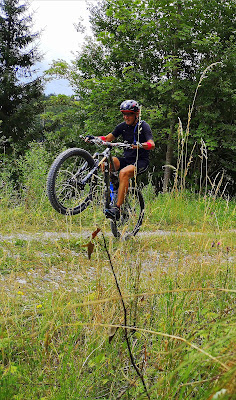
Gerhard Kaučić (geb. 1959, Dr. phil., Philosoph, Naturist, Freerider)
Raumnotwendigkeit, Raumfeeling, (Mountain-)Biking, Bewegung, Lebensqualität, Leben, Lebensraum, Lebensfähigkeit (Anaximander, Aristoteles, Plato, Rousseau, A. W. Amo, Dewey, Adorno, Foucault, Freud, Artaud, Lacan, Lévinas, Benveniste, C. Castoriadis, G. Anders, H. Cixous, J. Butler, J. Derrida, Jean-L. Nancy, K. Schlögel, Maresch/Werber)
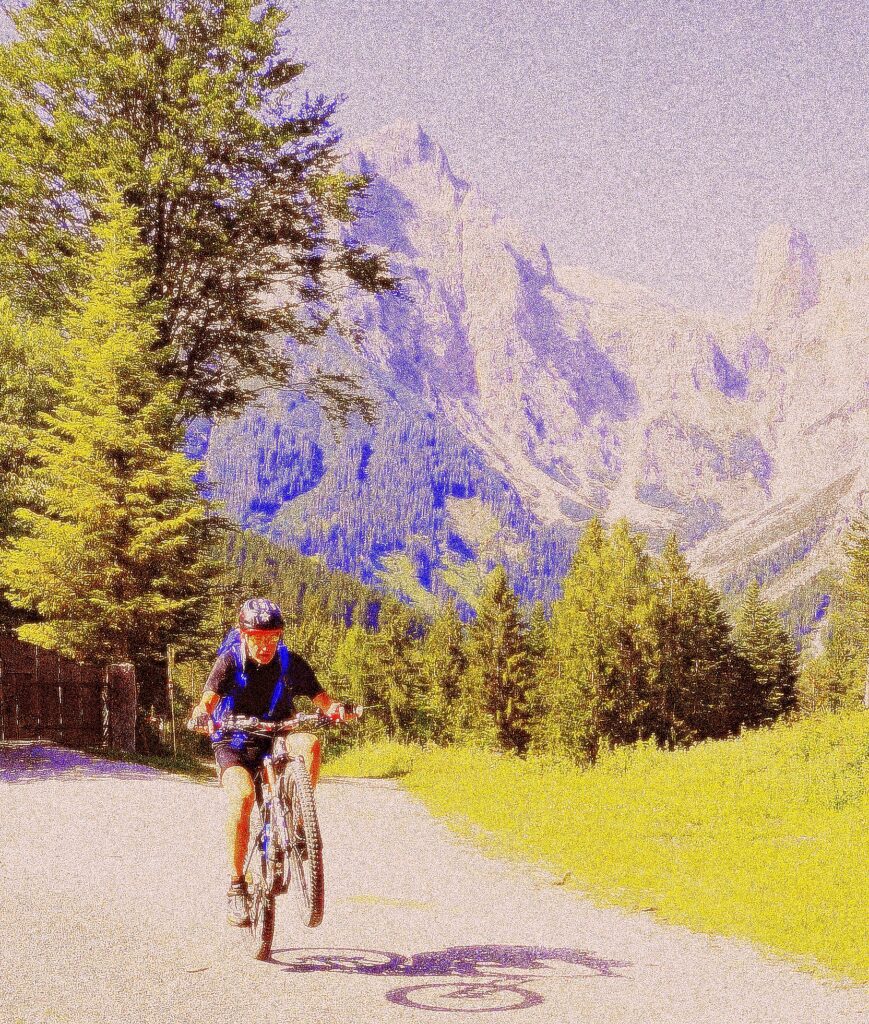
Fahrradfahren, Etappenende, Tagesausklang, Freibaden, Nackterfahrung, Berührtwerden, Berühren
Grünes Denken, Planetarisches Denken und Handeln, Philosophie
Vom Fahrrad aus
Anna Lydia Huber (geb. 1959, MSc, Philosophin, Naturistin, Enduro-Bikerin, Freerider:in)
Raumnotwendigkeit, Raumfeeling, (Mountain-)Biking, Bewegung, Lebensqualität, Leben, Lebensraum, Lebensfähigkeit
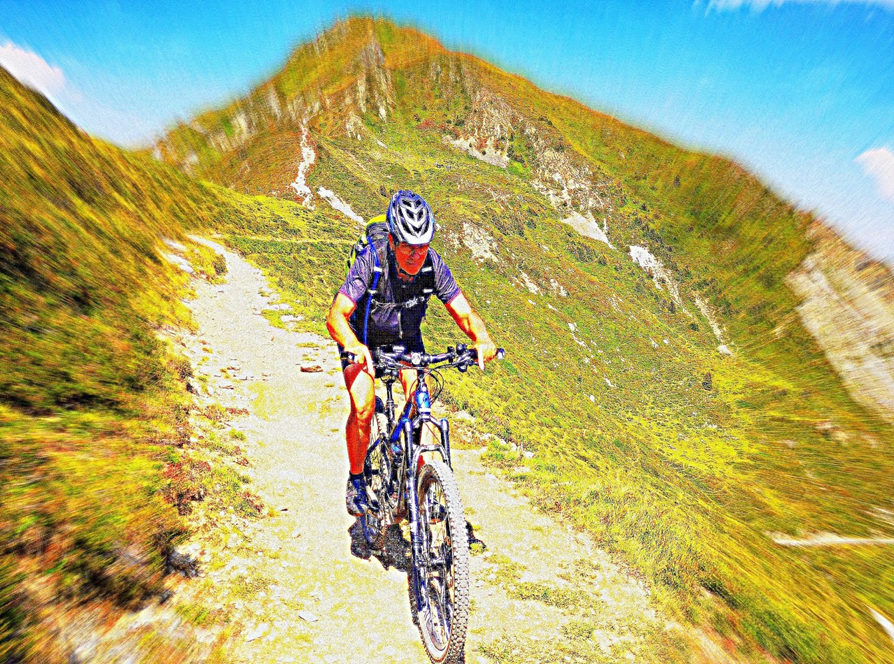
Anna Lydia Huber (geb. 1959, MSc, Philosophin, Naturistin, Freeriderin) , – vom Hundsstein herunter nach Zell am See und Maria Alm

Anna Lydia Huber (geb. 1959, MSc, Philosophin, Naturistin, Enduro-Bikerin, Freerider:in)
Raumnotwendigkeit, Raumfeeling, (Mountain-)Biking, Bewegung, Lebensqualität, Leben, Lebensraum, Lebensfähigkeit
Philosophie
Grünes Denken, Planetarisches Denken und Handeln

Vom Fahrrad aus
Adventure Philosophy! AN ANNIVERSARY EVERY YEAR / LIVING CONSCIOUSLY EVERY YEAR …………… Adventure Philosophy ……. Adventure Life !!!
Friendship Joy Freedom Naturism
Philosophie
Vom Fahrrad aus
Cycling, end of stage, end of day, open air bathing, naturism, free body culture, freedom, quality of life, love of life, joy of life, necessity of life, beautyness, aesthetics, nature, culture, friendship
Erfahrung der Nacktheit, Erfahrung der Natur, John Dewey – Natur – Leben – Körper – Mentalität, Dewey – ästhetische Erfahrungen, John Dewey – Erfahrung und Natur, John Dewey – Experience and Nature
Experience of Nudity, Experience of Nature, John Dewey – Nature – Life – Body – Mentality, Dewey – Aesthetic Experience, John Dewey – Experience and Nature, John Dewey – Experience and Nature
in German:
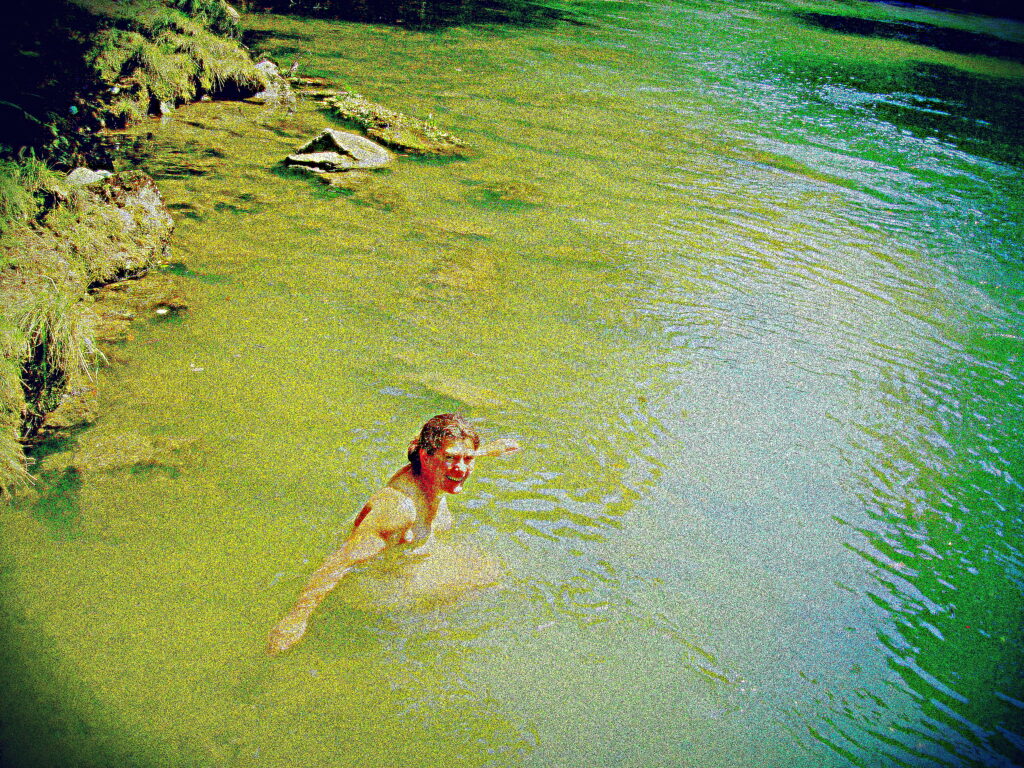
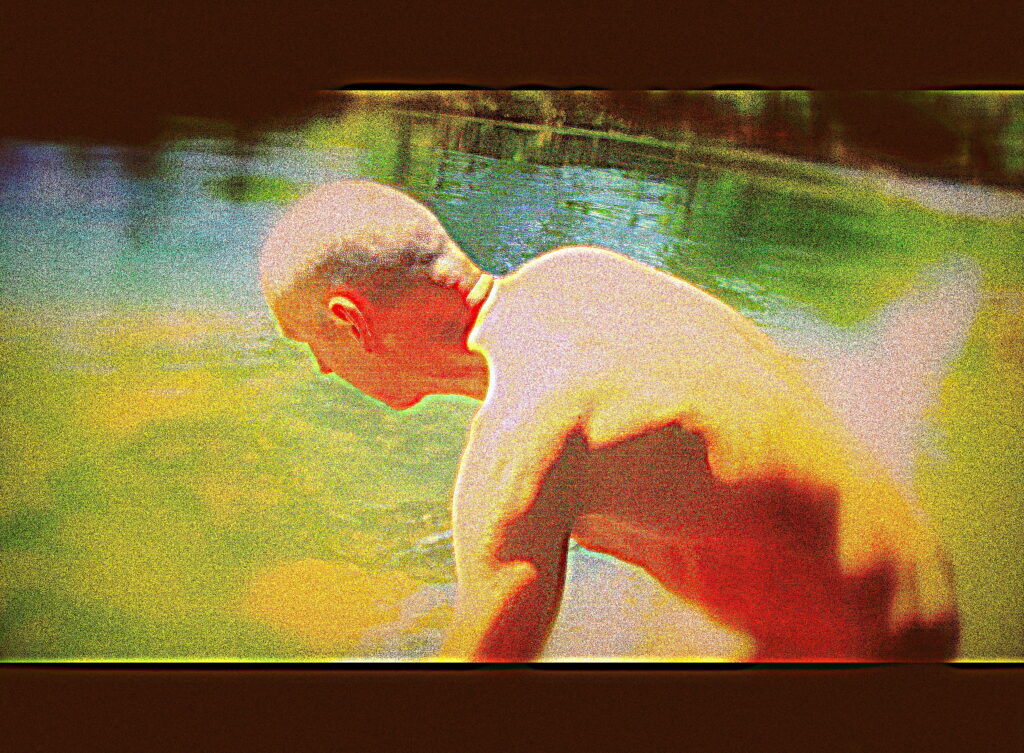
Fahrradfahren, Etappenende, Tagesausklang, Freibaden, FKK, FreiKörperKultur, Freiheit, Lebensqualität, Lebenslust, Lebensfreude, Lebensnotwendigkeit, Naturismus, Erfahrung der Nacktheit, Schönheit, Natur, Kultur, Freundschaft
John Dewey, amerikanischer Pragmatist, wollte seinen Lebenssinn darin sehen, den meßbaren Dingen zu entgehen. Er schrieb in Erfahrung und Natur:
„Das charakteristisch menschliche Bedürfnis ist das nach Besitz und Genuß der Bedeutung von Dingen, und dieses Bedürfnis wird im traditionellen Begriff des Nützlichen ignoriert und unbefriedigend gelassen.“ (Frf. 1995, S. 341)
Dewey meint, wir erfahren immer etwas, wenn wir in Bewegung bleiben und interagieren. Gewisse Ereignisse wirken auf uns, nicht alle gleichermaßen.
Genau diese bestimmten Ereignisse meint Dewey, wenn er von ästhetischen Erfahrungen spricht.
Ästhetische Erfahrungen lassen die Welt um uns für uns bedeutsam werden. Sie erscheint uns dann wie verwandelt oder besser als verwandelt. Das hält und macht uns lebendig. Lebenslang.
Solche Erfahrungen sind es auch, was uns nachdenklich macht. Nachdenkend, reflektierend. Reifer!
Freundschaft Freude Freiheit Naturismus
in English:
Cycling, end of stage, end of day, open-air bathing, nudism, free-body culture, freedom, quality of life, joie de vivre, necessity of life, naturism, experience of nudity, beauty, nature, culture, friendship
John Dewey, an American pragmatist, wanted to see the meaning of life in escaping measurable things. He wrote in Experience and Nature:
“The characteristically human need is for the possession and enjoyment of the meaning of things, and this need is ignored and left unsatisfied in the traditional concept of the useful.” (Frf. 1995, p. 341, germ. ed.)
According to Dewey, we always experience something when we remain in motion and interact. Certain events have an effect on us, not all of them equally.
It is precisely these certain events that Dewey means when he speaks of aesthetic experiences.
Aesthetic experiences allow the world around us to become meaningful to us. It then appears to us as transformed, or rather as transformed. This keeps us alive and makes us alive. For life.
Such experiences are also what make us thoughtful. Thoughtful, reflective. More mature!
Friendship Joy Freedom Naturism
Friendship Joy Freedom Naturism
Cycling, end of stage, end of day, open air bathing, naturism, free body culture, freedom, quality of life, love of life, joy of life, necessity of life, beautyness, aesthetics, nature, culture, friendship
Grünes Denken, Planetarisches Denken und Handeln, Philosophie
Vom Fahrrad aus
Abspann / Closing sequence:
Psychoanalyse, Sprachanalytische Philosophie, das Unbewußte
Die Sprache, das Sprechen, das Unbewußte (Ubw)
Der Satz und die Philosophie
Philosophical Practice Vienna 1989 ff. Analysis Complication Aporia Identity Dislocation Meta-thesis Deconstruction
Falls Sie interessiert sind an einer PP mit mir/uns, bitte nur unter dieser E-mail einen Termin reservieren: To contact me/us, please use only this email: g.kaucic[at]chello.at
If you are interested in a PP (Philosophical Practice) with me/us, please reserve an appointment only under this email: To contact us, please use only this email: gack[at]chello.at
Philosophers, Writers, Philosophical Practitioners, Mediators, Translators, Feminists, Freeriders, (Wild) Camping Enthusiasts, Survivors Vienna
Philosophical Practice weltweit … rund um die Uhr … rund um die Welt, … „face à face“, … confidential one-to-one conversation, … around the clock … around the world
Grammatologische Philosophische Praxis Dr. Gerhard Kaucic / Djay PhilPrax ( geb. 1959, Autor, Philosoph, PP seit 1989 ) Gespräch, Analyse, Diskurs, Problematisierung, Identitätsdislokation, Subjektivierung, Formalisierung, Fältelung, Komplizierung, Aporie, Dekonstruktion
Öffnungszeiten / Hours of opening: Mo – Do: 11 – 20 Uhr
Honorar nach Vereinbarung / Charge by arrangement
Gespräche outdoor/indoor: Grammatologien, Kontextualisierungen, Analysen, Komplizierungen, Plurivalenzen, Dependenzen, Interdependenzen, Grammatiken, Aporien, Dekonstruktion…rund um die Uhr…rund um die Welt…
…around the clock …around the world…
GESPRÄCHE sind EREIGNISSE als TEXT
cf. Jacques Derrida, Signatur Ereignis Kontext, – in: Randgänge der Philosophie, Wien 1988, S. 291-314 ( Französische Originalausgabe: Marges de la philosophie, Paris 1972 )
Philosophical Practice Vienna 1989 ff. Analysis Complication Aporia Identity Dislocation Meta-thesis Deconstruction
Cf. list of publications at: https://scholar.google.at/citations?user=wNUSN64AAAAJ&hl=de
To contact us, please use only these emails:
g.kaucic[at]chello[dot]at or gack[at]chello.at
Projekte / Projects (1989 – 2025 ff.) 36 Jahre Philosophische Praxis Wien GK & ALH
Mehr dazu siehe unseren Teaser und unseren Footer sowie die übrigen Postings im Blogspot-Blog 2014 ff.
Homepage:

Anna Lydia Huber (MSc, 66, 2025), Österreichische Philosophin, Grammatologische Philosophische Praxis (GPP) Wien
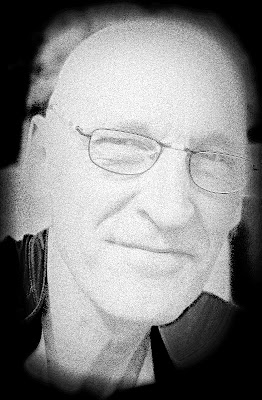
Gerhard Kaučić (Dr. phil., 66, 2025), Österreichischer Philosoph, Grammatologische Philosophische Praxis (GPP) Wien
[[ Gerhard Kaučić / Djay PhilPrax (born 1959), Anna Lydia Huber (born 1959), Philosophers, –
Writers, Feminists, Freeriders, Grammatological Philosophical Practice, Vienna, PP since 1989, Dr. phil., MSc, —
( Copyright, Bildrechte, Urheberrecht, rights to images, copyright, Picture rights, Image Rights, Copyright, –
Texte, Fotos © Anna Lydia Huber, Gerhard Kaučić ) ]]
Zum besseren Verständnis und zur beginnenden Einübung in unsere philosophische Praxis lesen Sie bitte unsere Charakterisierung der Grammatologischen Philosophischen Praxis (GPP GK & ALH, Deutsch/Englisch), –
Url/Link: https://www.philosophischepraxiskaucicundhuber.at/charakterisierung/
For a better understanding and to begin practicing our philosophical approach, please read our characterization of Grammatological Philosophical Practice. (GPP GK & ALH, German/English), –
Url/Link: https://www.philosophischepraxiskaucicundhuber.at/charakterisierung/