Philosophical Practice as Training / Philosophical Practice and Training Boredom Freedom to work free from the need to workTraining Education Future Humanity Democracy
Text/Translation Gerhard Kaučić, Anna Lydia Huber (Dr. phil., MSc, born 1959, Age 66, 2025)
Philosophische PraktikerIn/Praktische Philosophie, Sprachanalytische Philosophie, Dekonstruktion, Philosophische Praxis Wien Österreich Europa
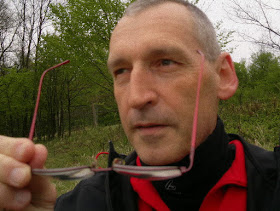
Gerhard Kaučić
(Dr. phil., born 1959, Age 66, 2025)
Anna Lydia Huber
(MSc,, born 1959, Age 66, 2025)
Anna Lydia Huber ( * 1959 ) Gerhard Kaučić
eine lange Geschichte der Freundschaft a long history of friendship a long story
Adventure Philosophy! AN ANNIVERSARY EVERY YEAR / LIVING CONSCIOUSLY EVERY YEAR …………… Adventure Philosophy ……. Adventure Life !!!
Friendship Joy Freedom Naturism
Cycling, end of stage, end of day, open air bathing, naturism, free body culture, freedom, quality of life, love of life, joy of life, necessity of life, beautyness, aesthetics, nature, culture, friendship
Erfahrung der Nacktheit, Erfahrung der Natur, John Dewey – Natur – Leben – Körper – Mentalität, Dewey – ästhetische Erfahrungen, John Dewey – Erfahrung und Natur, John Dewey – Experience and Nature
Experience of Nudity, Experience of Nature, John Dewey – Nature – Life – Body – Mentality, Dewey – Aesthetic Experience, John Dewey – Experience and Nature, John Dewey – Experience and Nature
Anna Lydia Huber (geb. 1959, MSc, Philosopher, Naturist, Freerider)
Gerhard Kaučić (geb. 1959, Dr. phil., Philosopher, Naturist, Freerider)
John Dewey, amerikanischer Pragmatist, wollte seinen Lebenssinn darin sehen, den meßbaren Dingen zu entgehen. Er schrieb in Erfahrung und Natur:
„Das charakteristisch menschliche Bedürfnis ist das nach Besitz und Genuß der Bedeutung von Dingen, und dieses Bedürfnis wird im traditionellen Begriff des Nützlichen ignoriert und unbefriedigend gelassen.“ (Frf. 1995, S. 341)
Dewey meint, wir erfahren immer etwas, wenn wir in Bewegung bleiben und interagieren. Gewisse Ereignisse wirken auf uns, nicht alle gleichermaßen.
Genau diese bestimmten Ereignisse meint Dewey, wenn er von ästhetischen Erfahrungen spricht.
Ästhetische Erfahrungen lassen die Welt um uns für uns bedeutsam werden. Sie erscheint uns dann wie verwandelt oder besser als verwandelt. Das hält und macht uns lebendig. Lebenslang.
Solche Erfahrungen sind es auch, was uns nachdenklich macht. Nachdenkend, reflektierend. Reifer!
Freundschaft Freude Freiheit Naturismus
in English:
Cycling, end of stage, end of day, open-air bathing, nudism, free-body culture, freedom, quality of life, joie de vivre, necessity of life, naturism, experience of nudity, beauty, nature, culture, friendship
John Dewey, an American pragmatist, wanted to see the meaning of life in escaping measurable things. He wrote in Experience and Nature:
“The characteristically human need is for the possession and enjoyment of the meaning of things, and this need is ignored and left unsatisfied in the traditional concept of the useful.” (Frf. 1995, p. 341, germ. ed.)
According to Dewey, we always experience something when we remain in motion and interact. Certain events have an effect on us, not all of them equally.
It is precisely these certain events that Dewey means when he speaks of aesthetic experiences.
Aesthetic experiences allow the world around us to become meaningful to us. It then appears to us as transformed, or rather as transformed. This keeps us alive and makes us alive. For life.
Such experiences are also what make us thoughtful. Thoughtful, reflective. More mature!
Friendship Joy Freedom Naturism
Friendship Joy Freedom Naturism
Cycling, end of stage, end of day, open air bathing, naturism, free body culture, freedom, quality of life, love of life, joy of life, necessity of life, beautyness, aesthetics, nature, culture, friendship
Grünes Denken, Planetarisches Denken und Handeln, Philosophie
Vom Fahrrad aus
……………………………………… Grammatological Practice, philosophical practice, philosophy, what is philosophy, understanding, desire, knotting, knots of life and writing and of life as writing, semiology becomes grammatology, philosophy as science, differ/a/nce, Socratism as stultification, theoria as the highest form of practice. ……………………………………………….
Writing (cf. teaser), language, the sentence, the word. Every sentence is a leap!
Personal history and general history; language consciousness unconsciousness; what does this have to do with general history, experience, phenomenology (e.g. that of Merleau-Ponty), desire (e.g. Freud, e.g. Lacan, e.g. Melanie Klein), processing, reality, „psychic reality“ (Freud) (?!) ……………………………………………………..
LANGUAGE, THINKING, PHILOSOPHY, UBW: …………. HOSPITALITY PHILOSOPHICAL PRACTICE ……
……………………………………………………………………….. GastfreundschaftPhilosophische Praxis ……………………………………………………………………. ich versuche
……………………………………………………………………. I try to explain why I answer requests for lectures, seminars or discussions permanently and persistently (almost) in the negative; my grammatological philosophical practice requires deconstruction. ………………………………………………………………………………………………………………………………………… And this requires ruthlessness, independence and the utmost attention! …………………………………………………………………………………………………………………………………………………..To a person to whom you want to be able to listen and whose words you want to be able to perceive, in all openness, to such a person you should want to and be able to develop a love, a passion, or at least an affection.
The body should not only not be ignored, but should be perceived and valued with an open mind – in all its frailty, fragility and vulnerability! ………………………………………………………………………………………………………………………………………………………………………………..Body also means voice, color of voice, tone of voice, rhythm, tempo, gesture, movement, face, eyes, looks, expression, etc. ……………………………………………………. the body is something beautiful, – …………… …………………………………………………….
(art shows us the body, as do traditional tribal cultures in Africa, Australia and America; people enjoy the body as text and often „describe“ it with tattoos), ……………………………………………………., – today
and in earlier cultures. …………………………………………………….
The body is the basis for any structurality of successful intellectual intimacy of any philosophical practice as conversation.
Contemporary Philosophy
The invention of reality, the truth of a work, whether a philosophical, literary, artistic or a scientific, architectural, photographic work or a political, military, economic work or an artificially-naturally brought about reality as the truth of a work of climate change and consequences, – – – – the truth of a work (!!!) only reveals itself in the recognized and recognizable (!) history of its effects.
At the same time we think the impossible and that (this >at the same time<) is the impossible! (Derrida, Donner le temps I)
Philosophical Practice as Training / philosophical Practice and the training
Boredom Freedom to Work Trainings Education Future Human Being Democracy Philosophical Practice as Training Free from having to work / free from the need to work / joblessness / work-free Education Humanity Future
Lust for the skills and their improvement
„Future, boredom, work-free, training, education, being human, democracy“.
Trainings – the material of the future?
Skills Discipline School Training and the Work Free Society in the Future!
At the beginning was a quote from my last posting:
„Physical Presentation as perfection of the personality as philosophia perennis;
Ecology as a necessity of our actions;
we do it in nature, – at least in culture-nature;
without nature no freeriding; without freeriding no balanced personality;
without skills no discipline;
without discipline there is no school and no educational ability;
without the will to educate no education, no civility, no civilization, no constitutional state, no democracy!“
Truth? Assertion?! Provocation?! Necessity? Illusion?! Utopia?! Dystopia?! Desire?! Hypertrophy?! Becoming democracy! Democracy on the rise?!
The work, as we know it today, organizes for the most part in the employee formation, this work or this „essential action of man“ (Marx) will be lost or taken away from us at least in the simpler forms.
This is ensured by computer and robot technologies (cf. my posting: „MASCHINE MENSCH Roboter Androiden Cyborgs als Subjekt Dekonstruktion“)
Education or even better „training“ is the word of the hour. (!?)
We need skills and training in order to find our way in the world as >unemployed<(!)/work-freed (in the conventional form understood also economically a particularly difficult way of survival!).
A world without conventional work for us humans. A life in a world that we do not have to earn with our hands work.
The economic basis for our life is provided by the means of production and wealth taxation (90%, Piketty) and their just and fair political and legal design (cf. Thomas Piketty, Kapital und Ideologie, fr. edition 2019, german ed. 2020;
In the future, we must shape our own lives, recognize our desires and learn to assess their realization possibilities. For this we need a good, contemporary education.
An education that prepares us for the complexity of the world as ecological.
An education that disciplines us and prepares us.
A training of human education.
A training especially on the behavioural level in interaction with cognition.
Perception, attention, concentration, argumentation, expansion of imagination.
A training for embedding into the various attractions of society and their intelligent and disciplined handling.
A relatively new field of activity here would be the gaming of e-athletes, a longer invented field the freeriding in various disciplines, to name only two recent inventions or developments, which show a life outside the world of workers and employees.
The future might have many fields of activities of this or similar kind.
Children, pupils, people acquire knowledge in one or more fields, which enables them to strengthen their own individual identity.
At the same time, they acquire knowledge that enables them to adapt individually to the situation that has arisen as a result of their activity knowledge.
Knowledge, empowerment, skills develop their own personality through training and its improvement.
The development of skills and abilities improves individual identity.
The ability and the willingness to change in a disciplined way means the processing of the individual and the processing of knowledge.
We found an example of such a way of life in Reinhold Messner’s person – the three of us quickly agreed on that.
In our small group of three I took the liberty of modestly pointing out that my now 66 years of life and perhaps my way of life as a philosopher, writer and head of a philosophical practice (philosophical practitioner for more than 36 years) could also provide an example of how people as humanity could spend their lives in the medium to distant future, perhaps also in many individual cases.
To say it completely simply and briefly:
A happy, – on all or at least many levels, – and very satisfying life with and through practice, training, experience, reflection and self-reflection and not least through a well-dosed interaction with relatively many, but not too many, passionate and thinking people!
According to various studies, this is only true for a few people in a population like Austria.
Accordingly, almost 70 percent are dissatisfied with their professional activities – their jobs!
The ability and the readiness for disciplined change means the processing of the individual and the processing of knowledge!
A small insertion for identity formation or insecurity:
Already in the family we have a small social structural framework, which is again and again in danger of dissolution, e.g. by the addition of new brothers and sisters or for instance by worse accidents etc..
According to Luhmann, the child already arrives at school structurally dissolved, meaning that the child has had to make challenging experiences that have put the familiar structure of a social situation at risk of (perhaps even total) dissolution or a dissolution that is actually taking place (cf. Niklas Luhmann, „Strukturauflösung durch Interaktion: Ein analytischer Referenzrahmen“, Soziale Systeme 17, 2011).
Children are confronted with many interactions and interventions. Adults too.
But are these children adequately (!) trained in our schools and homes today and are they trained at all?
Are our children trained in seeing through and recognizing people and their actions? Are they trained, educated, taught in respect and relativity with a factual argumentative background?
Have we been and are we being trained for mobility in respectful argumentation due to an improved imagination and inventiveness.
In schools, universities, academies and also in companies?
Have we been encouraged and trained to be critical in both directions?
To criticise and endure criticism?!
Transitions from one situation to another are always critical transitions.
Will I make the transition?
Am I sufficiently trained for the new?
Have we been able to do trainings of this and other kinds in school?
Our societies are media societies, made medially and medially. We as individuals are made medially and medially (cf. Moira Gatens). Our societies need critical citizens, otherwise the many media changes in the current situation cannot be mastered. Is our school knowledge and our school training (e.g. in project group dynamics) critical enough for this?
Have we learned which contexts are necessary to classify certain information? Have we designed the education sufficiently for the training for the handling, the critical handling, with the electronic media?
Do we attach enough importance to the acquisition of critical comparative knowledge, to respectful interaction with others and respectful interaction with tradition and knowledge authority?
(cf. also N. Luhmann, The Educational System of Society)
The difference in the form of education is:
a) hardly any exercises in and on the technological medium, i.e. more or less unintentional socialisation mostly through oral instructions as abstract content for the classroom, or
b) education through training of all kinds for self-education as disciplined adaptation, – a kind of self-formatting (whether through well-founded acquired knowledge of self-chosen/discovered reading for further trained ability to differentiate, competence responsibilities and motivation intensification or through project development together with other non-dominant participants under the premise of free will with consciousness including beginning and end freely according to the opinion of all motivated participants).
This is the only way for disciplined adaptation to sometimes complex situation relations to occur.
This is the only way fruitful education can take place!
In the family constellation or relationship constellation of any kind, in schools and also in companies.
Also and especially in the respective futures.
Exercise, training, awareness of mediality, skills, abilities, competence, capability, education, awareness/knowledge (also about the „ghost“(!) of the Ubw (cf. Freud, Lacan, Derrida), decision-making ability, critical criticism awareness, training, exercise, practice.
Life as Performance!
Life an exercise?!
In(ter)vention
All of us practicing individuals? All of us in the future? No work?! Free from economic survival care?? Free and safe!!???? Before death????!!! Life is an exercise-out/exertion.
Towards the temporary end:
Training and its effects on the human being arise from the interplay of stimuli from outside (events diffusing outside the human body and their recognizable or perceptible and ever-changing stimulus of experience) and from inside (stimuli arising inside the human body).
Desirable things thus arise and set us in motion. Training is a passing and past movement.
Targeted training – training with recognizable and formulationable intention can form us. In the positive as in the negative! How and whether the individual knows how to distinguish between these depends very much on the upbringing, the education, the practice – in total on the surrounding „world“ and its realities.
If my little remarks and remarks on the subject of our longer conversation on the subject of „Philosophical Practice and/as Training“ are of any of you, I mean you as a reader, as a reader of this little text here, – so some of you should seem incomprehensible to some here, you may be right about that.
I would like to encourage you then to a training in reading and understanding and invite you to Paul de Man and his „Allegories of Reading“ (Frf. 1988, Suhrkamp).
In this book and his essays you will find explanations and citations on the complex of „reading“ and „understanding“ and their presupposition in the „incomprehensibility“ of communication as „text“.
And now, still for the time being, quoting Niklas Luhmann once again in conclusion, for him unsuccessful communication is the normal case and an „improbability that has become invisible in everyday understanding“ (cf. Niklas Luhmann, Social Systems. Outline of a general theory. rf. 1984, p. 216f., germ. ed.).
For the time being, however, I will end these few hints about the future, training, practice in democracy as a successful education and disciplined adaptation to situations of higher complexity with a few quoted lines from Peter Sloterdijk (from: P. Sl., Du mußt dein Leben ändern. Über Anthropotechnik. Frankfurt 2009, (Suhrkamp) p. 14) and thank my two engaged guests for the passionate conversation in my philosophical practice here in Vienna in the past days.
Quote:
„The one who speaks of man’s self-generation without speaking of its formation in the exercising life has missed the subject from the beginning. We must therefore suspend practically everything that has been said about man as a working being in order to translate it into the language of exercising or self-forming and self-enhancing behavior. …
It is time to reveal man as the living being that arises from repetition. As the 19th century was cognitively marked by production, the 20th by reflexivity, the future was to present itself under the sign of exercises/exertions.“
Vivification through deconstruction is necessary.
The liberation from the melancholy of the closeness of the word, the simplicity of words, the totality of beliefs, the meaningfulness of non-contextualized sentences.
Mistrust the slogans! Mistrust the sentences! Every sentence a leap.
Worlds between the sentences. Worlds in the sentences. World in every sentence, – in every jump!
Aesthetically and ethically at the same time!
Deconstruction has an ethical component !
Deconstruction has an ethical component, – perhaps even a goal orientation (without wanting or being able to be a method or criticism), – a goal orientation towards responsibility for the other!
My life’s work – my philosophical practice!
LIFE’S WORK PHILOSOPHICAL PRACTICE GERHARD KAUČIĆ (*1959)
Deconstruction is and always will be the questioning of the origins, the foundations and the limits of our conceptual, theoretical and normative apparatus.
And this always in the double movement of the Différance.
This is exactly what I am trying to achieve in my decades of work in my practice.
Now already 36 years, – almost my adult life long, 1989 – 2025 ff., deconstruction, – means: 36 years, open end, indoor / outdoor, more than 3500 conversations, discourse, associations, analysis, problematization, identity dislocation, subjectivation, formalization, folding, complication, aporia, deconstruction, supporting/concomitement/accompaniment.
And many, many journeys and just as many guests in my long practice time.
I must let myself be touched! Let myself be touched for this limited period of time! Without movement there is no touch, without touch there is no emotion, without emotion there is no strong, vivifying, living experience. Hardly a life! Hardly a life without life experiences (!?). Hardly a life without some kind of experience (!?).
Experience first and foremost requires affirmation, otherwise it is not experience (!?). I have to affirm something, praise it, recognize it in order to be able to recognize and touch something and to be touched by something! Otherwise it is merely something pushed towards me, a pain, an unrecognized, perhaps unrecognizable touch. An inexpressible and unspeakable thing! A kind of trauma.
In his “Rhetoric”, Aristotle writes that we should praise the virtues and, above all, the successes of those we admire. He believes that by praising things and events, we give them “beauty and meaning” (! ) and Aristotle also believes that the trope of amplification is appropriate for this – that is, the expressive, passionate mode of expression that lifts the “hero”, the “heroine”, the “artist”, the ‘artiste’, out of the everyday and the commonplace and thus at the same time also allows the spectator to participate in a kind of “sublimity” (cf. Kant, Lyotard).
This participation perhaps increases the perceived intrinsic value by being part of the party. The feeling of the beauty ( cf. Goethe ) of something. The beauty of art. The beauty of sport – of the sporty. The beauty of movement and those in motion. The beauty of the practiced. The beauty of the well-trained. The beauty of the artist. The beauty and meaningfulness of the artistic! That which can only be achieved through extraordinary physical effort. The unattainable! For almost everyone (!?).
However, by practicing and exercising something, some people can attain a little of this kind of “sublimity”/being elevated (from the multitude of the ordinary) and enjoy it and about it and through it. Can man rejoice in himself/through himself?
I think I can. I am happy when I can and am allowed to move. I am happy when I experience sport (whether cycling, soccer, handball, basketball, tennis, badminton, swimming, boxing, aikido, floor and apparatus gymnastics, weightlifting, 100-meter runs, cross-country skiing, marathons, etc.) – as a spectator. As a spectator and as a practitioner. I enjoy others who are better than me (at something) and I enjoy my own abilities.
I’m talking about my physical abilities in particular – my “artistic” abilities, so to speak. I’m referring in particular (today and here) to my cycling, my ability on a bike. I enjoy it. I enjoy this kind of movement and the movement it triggers.
I need the repetition of this movement. I need the power, the strength of the body. I appreciate the characteristics of the machine, my bike. It can’t be often enough for me. I never get bored.
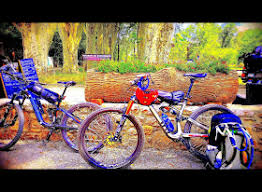
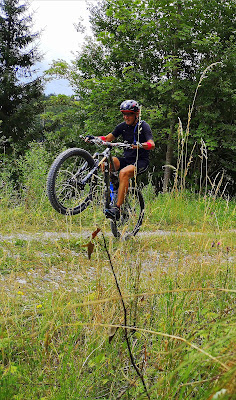
Every repetition is different and, strictly speaking, not repetitive. I use different bikes ( see What is Philosophical Practice? (II) Part 2 ) and I always take different paths. Each time a different topography, a different and differently challenging terrain. I love that. And I especially love riding my Enduro at the moment, my “fun work”! Those in the know know what that means.
I’m talking about my physical abilities in particular – my “artistic” abilities, so to speak. I’m referring in particular (today and here) to my cycling, my ability on a bike. I enjoy it. I enjoy this kind of movement and the movement it triggers.
I need the repetition of this movement. I need the power, the strength of the body. I appreciate the characteristics of the machine, my bike. It can’t be often enough for me. I never get bored.
Every repetition is different and, strictly speaking, not repetitive. I use different bikes ( see What is Philosophical Practice? (II) Part 2 ( cf. Was ist Philosophische Praxis? (II) Teil 2 )) and I always take different paths. Each time a different topography, a different and differently challenging terrain. I love that. And I especially love riding my Enduro at the moment, my “fun work”! Those in the know know what that means.
This bike is the all-rounder, the all-rounder that makes almost everything possible, even if the rider (bike rider) that I am is far from being able to do everything.
„Sport and fun, passion, philosophy and fun, humor, fear, seriousness and skill, body, strength, finesse and mechanics. What does that do to modern, risk-taking people!“
Can philosophy do anything with this? Can philosophers do anything with it?
Do something with it? Develop passion? Enjoy it?
And still not lose their minds afterwards? Remain critical?
And be or become joyful people?
Artists in your field?!
As an invitation for especially interested people:
What is philosophical practice as deconstruction and how „goes“ my deconstructive PP or how goes deconstruction as philosophical practice .
(( See: Part I, Part II and Part III in this blog ))
To contact me, please use only this email: g.kaucic[at]chello.at
Deconstruction enables the relationship to the other and the relationship to the other enables (perhaps) deconstruction. Différance as a matter of freedom and liberation.
Time becoming of space and space becoming of time and being different, being recognizable, not being identical! Only he who is not equal to all others is recognizable as one, as another!
Otherness from the dissimilar logically requires that between the distinguishable units or elements interval, distance, spatialization emerge in persistent repetition (Derrida, Randgänge, p. 33, german edition!). Other, Other, Other, …
There’s the time since life has existed.
To contact me, please use only this email: g.kaucic[at]chello.at
Giving a picture
„You’ll never know, you won’t know, all the stories I could tell myself while looking at these pictures.“ (Derrida, Plissart)
And this always in the double movement of Différance.
Sentences that mean the world!
Sentences that interpret the truth!
What the philosophical practice wants and can do – in search of the true life, „the true life“.
Deconstruction cannot be included in a „term“ deconstruction.
And deconstruction opens up or opens up an access to the other through discoveries of the unknown or the previously unthought.
Deconstruction cannot be defined or completed (cf. J. Derrida, Limited Inc, p. 171 ff., germ. edition).
Deconstruction is and always will be the questioning of the origins, the foundations and the limits of our conceptual, theoretical and normative apparatus. And this always in the double movement of the Différance / Différance . A text that perhaps consists of habitual (binary) thesis and antithesis, when deconstructed, reveals, for example, a multitude of perspectives that exist simultaneously – often in conflict with each other.
This conflict, however, only becomes visible through deconstruction. Deconstruction has an ethical component, since it opens the relationship to the other, insofar as it finds access to the previously unimagined or the previously excluded and possibly invents or finds new social, new interpersonal, new political, new scientific, new legal, new technical, new philosophical and artistic ways of thinking and acting (cf. E. Lévinas and J. Derrida).
Philosophical practice could make a not insignificant contribution to this, I think.
to contact me, please use only this email: g.kaucic[at]chello.at
Practice and Practices: What happens in a philosophical practice like ours. What happens in a philosophical practice? What is a philosophical practice? What is philosophical practice? ( see below in this blog post and see especially above in the teaser ! ) What happens in my philosophical practice.
The compact citation context text „Corpus“ here (!) is owed to a lucid, precise and concise reading accuracy and reading simultaneity (strictly speaking only almost / nearby!) – a kind of grammatological necessity of thinking!
In my grammatological philosophical practice we do not formulate about something, not about texts (said / unsaid / thought / interpreted / written / drawn / filmed / meant / mediated / realities of any kind) // (in relation and reference to supposed truths of reality), but we work as precisely as possible as readers of a text passage by reading it and subsequently analysing the concrete (!) ( and only these!). ) linguistic units and perpetual incessant interrelation (!) of the analyzed and its decoding by deconstruction of all (!) implications, references, (un) thoughts and the thinking of the trace ( cf. teaser on grammatology and on the trace: „The trace in which the relationship to the other emerges expresses its possibility in the whole realm of the existing, which metaphysics has determined from the hidden movement of the trace as being present. It is necessary to think the trace before the existing. … Op. cit., Jacques Derrida: Grammatologie, Suhrkamp, pp. 81-88 ).
And all this almost in the form of the locally almost tangible „simultaneity“ (!), – thus in the form of highest attention to the text just read and in question now (!).
After all, in quite a considerable and appropriate topicality and freshness of the respective present time and as present ego (!), – thus of a bold and courageous kind of acuteness (!) in the time of a present and present and present as well as in the formatting/configuration of a space of the desired, ( perhaps „dreamed“! ), and as realistically first of all unthought through presence of ego and ego. „face à face“
face to face / face à face.
To contact me, please use only this email: g.kaucic[at]chello.at
I cultivate the intellectual intimacy of deconstructive attention.
The various propositional forms in discussions, lectures, lessons, assignments, meetings, critiques, interjections, pleas, assembly speeches, meetings, service meetings, supervisions, conferences, presentations, talks, interviews, conversations, entries in social media, etc. mostly erase attention to this micrology and reduce much of what language conveys.
The beat! The tone of voice! The facial expressions! The gestures!
The speaking speed! The vocabulary! The digressions!
The exaggerations! The volume!
The ideological minimal racisms!
Certain phrases as microaggressions!
Strictly according to the setting confidential „individual conversation“, –
confidential „one-to-one conversation“, „face à face“, –
with open end, –
indoor as well as outdoor
„Conversations,“ „discourses.“
„Deconstructions“,
„Companions.“
„Text“
Arrangements in a work of relating!
CONTEMPORARY PHILOSOPHY
PHILOSOPHY OF THE 21ST CENTURY
PHILOSOPHIZING IN THE 21ST CENTURY
The Heir to Philosophy. The heritage of Greek philosophy. The heritage of Greek philosophy as a European Philosophy a paradox.
The philosophical work, the work of the différance, means for us the recognition of the own borders, the ethnocentric, the geographical, the politgeographical and the linguistic borders and at the same time the permanent exceedance of these borders without defaming or discriminating against them.
PHILOSOPHIZING IN THE 21ST CENTURY
The legacy of Greek philosophy is the incessant process of universalization. Hence the universalization of human rights, the expansion and thus the liberation of ethnic, political, cultural and linguistic borders.
Greek philosophy and its legacy as European thought is a thinking of the critical critique of reason, of displacement, indeed of identity dislocation as a kind of change of consciousness, of transformation and of temporary uprooting and redesign.
The design or the possibility – first the mental possibility of a new design of one’s own (!) self.
The European descent of philosophy as overcoming this European and Eurocentric limitation. The liberation also from European centrism. The constant development of universalization as liberation and self-break. This is the contradiction of Europe itself. Europe and universalization as the deconstruction of one’s own restriction, of one’s own restriction, of colonization and imperialization – also of economic imperialization.
The heritage of Greek philosophy a universalization. The heritage of Greek philosophy a liberation from constraints and limitations of cultural, political, ethnic, sexual and linguistic nature(!). Infinite perfection, for example, and above all the infinite perfection of the human rights.
And finally …
As in the newer music since Cage, Stockhausen and others, silence, pauses, noises, gestures are just as important as what you hear and what you (supposedly?) hear. The oh so important pauses, holes, crumbling of the unheard and the unsaid, over which the said, thought, heard jumps incessantly (unfortunately incessantly!).
Every sentence a jump!
Common thinking jumps in the usual rhythm of index words generated by repetition, unreflected repetition. What can unfold in the process is more likely to be the least possible.
Let us try to hold against it by taking the trouble to work behind it. Our PPs. Our philosophical practices and their practicings. I salute you. Stay cool and considerate.
With kind regards, – Gerhard Kaučić (Dr. phil., age 66, born 1959) Djay PhilPrax, operator and head of a philosophical practice since 1989 here in Vienna and almost everywhere else in and around the world.
The Political Body and the Other
contemporary philosophy
Body Philosophy
body philosophy
Let’s not forget! ! !
Psychoanalysis ! ! !
Let’s not forget –
Jacques Derrida! ! !
Deconstruction
grammatology
Philosophical Practice
contemporary philosophy
to contact me, please use only this email: g.kaucic[at]chello.at
DECONSTRUCTION HAS AN ETHICAL COMPONENT!
Conversations are events of a very or more or less intelligent being together of two or more people on a topic to be determined.
Conversations in this kind of philosophical practice are confidential!
Conversations are therefore text events without a protocol.
Conversations in my philosophical practice result in this blog as a further text event (and at the same time as a presupposition!).
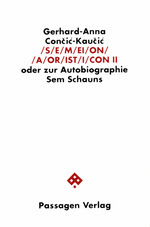
For the question and the word „deconstruction“ see Jacques Derrida’s „Reflections“ in a „Letter to a Japanese Friend“ from 1985, translated into German and reprinted in: J. Derrida, Psyche. Inventions of the Other II. Vienna 2013 (Passagen Verlag.), pp. 15 – 22.
„The word „deconstruction“, like any other, draws its meaning value only from an inscription into a chain of possible substitutions, into what is so calmly called a „context“. (ibid., p. 21)
„Despite all appearances, deconstruction is in any case neither an analysis nor a critique … It is not an analysis, particularly because the decomposition of a structure is not a decline to a simple element, to an origin that cannot be further decomposed. These values, such as that of analysis, are themselves philosophemes exposed to deconstruction“. ( S. 19)
„Deconstruction is in place, it is an event (événement) that does not wait for the reflection, the consciousness or the organization of the subject, not even of modernity. It deconstructs itself.“ (S. 20)
Philosophy … Deconstruction … „Right to Insight, or the Invention of the Other“ (cf. J. Derrida, Psyche. Erfindung des Anderen, Vienna 2011)
contemporary philosophy
contemporary
philosophy
To contact me, please use only this email: g.kaucic[at]chello.at
Contemporary
Philosophy
Falls Sie interessiert sind an einer PP mit mir/uns, bitte nur unter dieser E-mail einen Termin reservieren: To contact me/us, please use only this email: g.kaucic[at]chello.at
If you are interested in a PP (Philosophical Practice) with me, please reserve an appointment only under this email: To contact us, please use only this email: gack[at]chello.at
Philosophical Practice weltweit … rund um die Uhr … rund um die Welt, … „face à face“, … confidential one-to-one conversation, … around the clock … around the world
Grammatologische Philosophische Praxis Dr. Gerhard Kaucic / Djay PhilPrax ( geb. 1959, Autor, Philosoph, PP seit 1989 ) Gespräch, Analyse, Diskurs, Problematisierung, Identitätsdislokation, Subjektivierung, Formalisierung, Fältelung, Komplizierung, Aporie, Dekonstruktion
Öffnungszeiten / Hours of opening: Mo – Do: 11 – 20 Uhr
Honorar nach Vereinbarung / Charge by arrangement
Gespräche outdoor/indoor: Grammatologien, Kontextualisierungen, Analysen, Komplizierungen, Plurivalenzen, Dependenzen, Interdependenzen, Grammatiken, Aporien, Dekonstruktion…rund um die Uhr…rund um die Welt…
…around the clock …around the world…
GESPRÄCHE sind EREIGNISSE als TEXT
cf. Jacques Derrida, Signatur Ereignis Kontext, – in: Randgänge der Philosophie, Wien 1988, S. 291-314 ( Französische Originalausgabe: Marges de la philosophie, Paris 1972 )
Zum besseren Verständnis und zur beginnenden Einübung in unsere philosophische Praxis lesen Sie bitte unsereCharakterisierung der Grammatologischen Philosophischen Praxis (GPP GK & ALH, Deutsch/Englisch), –
For a better understanding and to begin practicing our philosophical approach, please read our characterization of Grammatological Philosophical Practice. (GPP GK & ALH, German/English), –
Most of all I like to „cycle around“, – to preserve my „soul“,
my mood, my reflexes, my mind, my health and „the world“ !
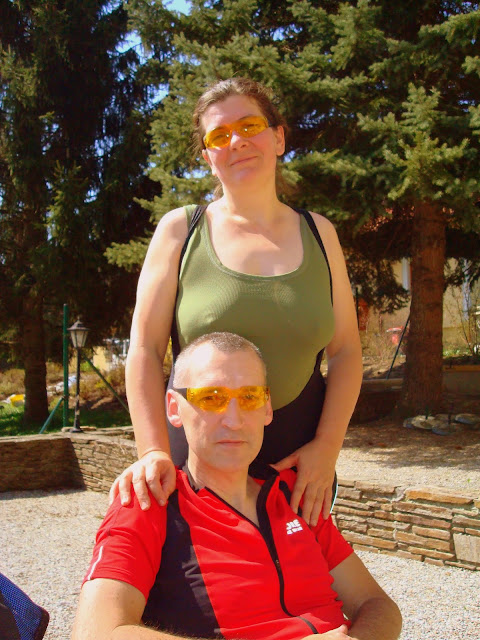
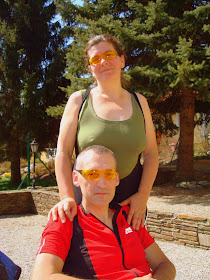
Gerhard Kaučić & Anna Lydia Huber auf Tour
Gerhard Kaučić & Anna Lydia Huber on tour with light tent tarp and sleeping bag
Philosophical Practice, Head Gerhard Kaučić & Associate Anna Lydia Huber
Gerhard Kaučić (Dr. phil., born 1959), Anna Lydia Huber (MSc, born 1959)
First contact please only under these e-mails:
g[dot]kaucic[at]chello[dot]at or gack[at]chello[dot]at
Opening hours: Mon – Sat: 11 am – 8 pm
Contemporary Philosophy
Gegenwartsphilosophie
1) The question of death and the question of birth
Sociologies of religion can be deconstructed. They all undermine their declared goal. They are all overtaxed in the attempt to answer the question of the nature of religion.
They all try themselves(!) not to be religious in their attempts to describe the religiousness of religion, because that is the essence(!) of religion.
Religion states(!) religious by restriction and exclusion! Is insofar not every description of religion(s) automatically(!), inevitably religious itself?! The description of religious facts (!), rituals, events, descriptions, communications (like prayers!), phenomena (!) must itself be religious! Otherwise it could not describe religion (!).
These sociologies and phenomenologies include and exclude! As it suits them or is possible.
Both is paradox! In the straight literal sense para-dox! Close to something!
Paradoxical distinctions, explanations produce paradoxical descriptions.
Science as paradoxical statement ?!
Religion defines itself.
Makes itself free from the judgment of others!
Religion judges only(!) itself about other(s).
The system religion, if I may call it so, because strictly speaking, scientifically speaking (cf. Luhmann), it is not a system, rather a system delusion, a psychosis (cf. Lacan, Abraham/Torok) as an institution in the form of e.g. the churches.
The system R e l i g i o n is only as such(!) independent (!?), if it is put into the position to co-control, what it all is not.
Psychoses and religion(s) have something in common, – namely the ability to give meaning to something, to make something special, thus a kind of doubling of reality (( e.g. the burning thorn bush! Only or more?! Surpluseffects, where there is (almost) nothing at all of something that is supposed to be there (!) )).
Paradoxical statements are also frequent in the history of philosophy. The history of metaphysics is one of paradoxes.
Mostly as a result of the almost imperceptible change from one level of reality (or a statement about it) to another. Hegel, Heidegger, Wittgenstein. They all speak of being, which does not exist at all. Of being as suchness or of „could“ in the word „to be“.
Marx considers the critique of religion as the premise of every critique of ideology!
Now, however, in my opinion, there is in every critique a certain
(( determinable (!), to be determined (!) spirit (!), – a ghost better (as Derrida formulates) ))
ghost spirit(!), the ghost of the sentence, of every sentence, the ghost of the jump between sentences and as the jump from sentence to sentence.
The ghost of a heterogeneity between belief and knowledge. A ghost of religion perhaps (or rather psychosis?) at the borders of mere reason?
The exclusion of the religious of religion as recourse and descent or repeated return of the principle (!) of faith and the eternal (?) return of religion qua „religious“.
How to think religion today without being/becoming religious. After all what has been said before.
Can the further above stated assertion with question marks of a „civil religion“, which we would need, perhaps also only need in the meantime, be justified at all somehow, at least filled/fulfilled with plausibility of today’s enlightened thinking?
Meaningful ? Not ?!
What would be the purpose ? And is thinking to a purpose religion-friendly and capable of majority ? And if yes, what would be the consequences!
Spaghetti – monsters ?
Voodoo – parties ?
Martial – Arts – cages as church ?
Uniform clothing?
Collective suicide?
Flying carpets?
LSD for all on prescription ?
Latin masses as vegan gala dinners ?
Continuation by every self-thinker !
Is religion absurd ? The absurd as basic substrate of every religion ?
Kierkegaard interprets a purpose into religion. Into the act of faith.
He thinks that Abraham would have known in his heart that God would not take Isaac as a sacrifice in the end. He would merely(!) test him. And if he does, the Lord will give him a new(!) Isaac, a new son. Power of the absurd !
Abraham is absolutely and totally bound to his God. To the absoluteness of the religious bond (both Abraham as the progenitor/forefather of Israel and as the progenitor of the Arabs).
Also the Christian (the third Abrahamic religion beside Judaism and Islam, which refers to Abraham and Isaac) and all other (known to me!) religions and faiths know absurd irresponsible (!) sentences like „The Lord gives, the Lord takes away“.
Sentences surrendered to fate. A self-protection formula. From the history of the sufferings and the suffering quite understandable.
Thinking does not always help!
Reciting formulas sometimes does ! In the form of the negation of thinking!
Understanding working through situations, events and processes must be learned.
Order schemes like psychologies create them are in the end also only „frames„, – not much different than prayers (!).
„Originally“(!) prayers were supplications and petitions to the Lord (!)
! More precisely: absurd, because not on eye level dialogue attempts, trial arrangements of D i a – l o g. Interchange speech! Back and forth – speech (cf. m. BlogPost on „dialogue“, „entering into a dialogue“, blogspot-Blog 2014 ff.).
Dialogue demands entry. Entering! To be able to enter! From both sides the willingness and ability where(!) to enter !
Education ! Attention, education as a necessity! (cf. Quintilian, 1st century, Institutio oratoria)
In reality (also today) often domination language.
The irony of incomprehensibility ! Absurdities. In religions! In philosophies !
Absurdities also at an overdose of the interpretative.
Communicative collateral damage of the interpretation of irrationality. The „holy“, the „transcendent“, the „divinity“ as interpretations of an unattainable, of an unattainability by current knowledge, which as non-knowledge always (also for the sciences!) constitutes the greater part of the empirical.
The medium of the „miracle“ serves here for the communication of an at the moment ( = ev. also f. centuries! ) not solvable riddle of eventfulness(!).
Of all things the book religions with their countless rules of life, which want to pretend to be so rational (?).
Their rituals serve the collective function maintenance of further life in any form, whether here on earth or elsewhere.
A clever way of self-insurance in agreement with the others of your kind. Also and especially as making sense of suffering and death. And not merely purely coincidentally on the side of the respective politically-socially prevailing powerful ones gladly seen as in the nucleus uprooters of possible uprisings or revolutions from below. Such a thinking and doing does not come there at all to its birth.
Closely with the question of the death, the being dead (!) and its place the question of the communication from the beyond is connected. I mean the so-called „revelations“. Miraculous signs as messages. Codes.
A wonderful (!) field for exchange of opinions almost without borders. And the countless legitimate interpreters. Apostles, prophets, popes and others.
All of them scholars of the Scriptures, spun into a centuries-old inscrutable tangle of texts and admissible or also inadmissible interpretations of rational kind (rational, because it follows criteria). Rational interpretation of the codes of the irrational.
Today, this is no longer as easy as it was in past centuries. Even theologians of all kinds and provenance are under a certain pressure to learn from modern science.
Even the Near East in the meantime, although very very sluggishly and with blatant setbacks (cf. IS et al.). So-called „counter-reformations“ will always be attempted from the lines of the religious communities. Pius brothers, Salafists, Ayatollahs and many others.
Just we all now might be in the wave of a counter-reformation offensive. An attempt to bring about/initiate/set in motion the so-called „return of religion(s)“.
The „negative freedom of religion“ (= the right not to belong to any religion, cf. human rights! , – and cf: The judgment of the European Court of Human Rights has affirmed the negative freedom of religion in November 2011.) does not exist in many countries of this earth.
In Islam today nowhere, as far as I know. But also here in Europe there are states, whose laws expressly forbid this (want!)! I would like to refer here only to Poland. One would like it almost not „believe“, – this knowledge! An E U – country!
The civilizational way is a hard way! These one – God – teachings work with the same perfidious(!) means as the star – blockbusters from Hollywood. The star is everything. All eyes are directed simplified on this one hero. One follows him. He is the one we believe in. We identify with him (passionately).
Unfortunately for all of us.
Man as Contingency. The birth of man and the death of God. I don’t want to list here a hero cult, a hero worship of the human being and the human being as a human being I am, – so I think (!).
And I don’t want to be understood polemically and to be considered as God despiser.
I just don’t believe in a cult of God. God, if there is such a one (!), does not need us. Some of us need this imaginings (and this theater of cults), there are such ones as beings, some even believe, there is a personification of essences.
Sometime the birth of the human(!) happened. Not yet immediately the human being in form of the individuals. A birth of millions of years was, a phase of thousands of years of the end will be.
The end of the human being(s) is certain. We make some, I hope, interesting thoughts about this with the help of Derrida and Leroi-Gourhan, and since I myself am what everyone defines as human, thoughts out of this being human.
Thoughts about the beginning of human life and about the end.
Now I could also call that (slightly frivolously) „r e l i g i o n„. But I am not a slave to any church faith, nor do I want to place my thoughts in what is commonly called a religious context.
All I have tried to do in this posting(!) „Religion and Society“ so far (and based on my/our practice work between Vienna and Paris and emanating from this very practice!), was to show, was to say, – by drawing on various mutually influencing contexts like politics, jurisprudence, sociology, sociology of religion, history, political science, psychoanalysis, philosophy etc etc., – look here, let’s see what religion and faith is and could be and what weight these things(!) have for our society(s) today.
2) The Deconstruction of the Religious
What can it do, – religion !
Can it still do anything ?
Does it do us all good ?
Or what is the mishap, the handicap, the crux, the exhausted.
Where would be the mistake in the construction, if there is a mistake !
And we phoned and tried to reflect in our philosophical practice about it, over it and through it.
Completely casually and purely coincidentally out of interest and without time pressure.
From it become (and became then also) 4 x 4 hours in the friendly and inclined, critically intellectual being together via tele-phone, us consciously of the importance and meaning of the European(!), the Enlightenment and the philosophy and the philosophical as well as the political and its freedoms on this old continent Europe.
This section on „Religion and Society“ I could now also call a chapter on a „Civil Religion“ ( cf. M. Ley, Lübbe, Watzinger, P. Zulehner, U. Barth and others). But I don’t.
I want to leave the religious out of my text here as much as possible.
Perhaps this is then what I would like to call here now the deconstruction of the religious and of religion in general (no matter in which concrete form).
To the heart(!) put, try it but then not to take it too seriously (for you)! That would be now here(!) for the time being only once my expression of will.
And please listen up !
These lines are „only“ a preparation and post-processing (m)of a grammatological philosophical practice of deconstruction from face to face and in actu from ear to ear.
Both, – the preparation and the conversational practice, – constitute the attempted double thinking. The practice of deconstruction in practice.
Thinking(!) (alone and conversationally together) about the end, – death(!), – also generates a thought process about birth. What is our relationship to death. I am not asking, do we have a relationship with death, no, rest assured, we/you do!
Almost a Gretchen question! „How do you stand with religion?“ But just almost !
When does the human being become a human being? When was the human being invented?
When quasi embryonal!
Since Darwin at the latest we all know, the man has found to his being. No idea!
Almost none.
And! Is his end already inaugurated? This is no science fiction and no end time story.
No, are we still human beings and how long will we be? Quite seriously, – the time of the earth is limited.
But before that, – before the end of the earth, – before that, we must go ! Perhaps even already long before. Who knows. Je ne sais pas.
Jacques Derrida describes with the invention of his D i f f é r a n c e the process of life (cf. Teaser, blogspot-Blog 2014 ff., German and English), in which man is a special case, a unique case. A by accident almost and nevertheless from a certain covered distance of processes of physical, chemical and then neurological kind then increasingly more stringent, more defined, more fixed.
Where is the border crossing from the animal to the human being?
That is exciting and thrilling. Is there even such a thing as a borderline possibility!
I ask this question without the intention to make the human being an animal.
We are animal-like, but just not animal alone. And what does animal mean here ! (Cf. my blogpost „animal philosophy“ in this blogspot-blog 2014 ff.).
Animals are! Are many different individuals! And each animal for itself unique !!!
And some animals possess even so-called human characteristics like memory contents, technique ability, special ability, conclusion ability, love, communication etc.! And partly even consciousness!
Jacques Derrida’s phonologocentrism means among other things that every humanism is logocentristic and every metaphysics is a humanism.
Even if until today most philosophers do not like to hear this.
Humanism as metaphysics is the enemy of the animals.
The enemy of the animals and finally also the enemy of the people.
I can’t roll up everything here(!) now (that always happens to us!), have a look at my animal philosophy in the blog, – read Derrida’s works on it and pay attention to the „sins“(!) – catalog, – my red list to the „coming democracy“! (Keyword „extinction of species“, „climate change“, … etc.; always to be found in the appendix of each posting (blogspot-blog!) in red letters, English and German).
If grammatology „can not be a science of man“ it is precisely because „from the very beginning it poses the question, fundamental to it, of the name of man“ (J. Derrida, Of Grammatology, 1974, p. 148, germ. ed.).
The name, the birth, the end, the signature of man !
The event man !
The context of the man !
The concept(!) Différance questions man in a certain sense and thereby draws the history of life in general.
Once again briefly to the humanism as logocentrism or phonologocentrism.
Derrida shows that the traditionally hierarchical arrangement of the two components of the sign must be deconstructively reversed. Up to modern linguistics, the ideal meaning of a sign, called s i g n i f i e d (the idea), is superordinated to the material carrier of meaning, called s i g n i f i e r (the sound or written image). At all times there is an attempt to orient the external signifier, the writing, toward a transcendental signified.
Remember what we said before about religion, God and man.
But every signified (The Imagination!) is (according to Derrida) „always already in the position of the signifier“ (Derrida, Of Grammatology, p. 129, germ. ed.).
There can be no meaning and no sense that could escape spatialization and temporalization and the differential play of signifier relations.
Writing, according to this definition, is sign of signs, signifier of signifiers.
The main purpose of this inversion is to show that the materiality of the signifier is not added to the sense in a retrospective and external way, but vice versa, that the sense is e f f e c t of a signification that is always already retrospective. In this way, Derrida reformulated and reframed the relationship between language and writing/scripture.
Through Derrida’s transformation of the concept of writing, this concept goes beyond that of language and at the same time conceptualizes this concept of language.
From all this follows a completely new, because multi-transformed, understanding and event of
T e x t .
Inherent in such a text (understanding) is the „essence,“ the practice of deconstruction, that is, „inscribed“ (cf. Derrida, Freud and the Scene of Writing, or Freud’s „Wunderblock“).
The thinking of différance is the inherent practice of „deconstruction“.
It is always about, i.e. it is always about for me in my philosophical practice -.
and this includes the conversation in this, but also my/our writing practice before and after each setting/session(!), –
to comprehend texts (written, spoken or representations(!) e.g. technical, artistic, economic, political, institutional) in their inner structure and in their interaction with other texts.
The texts are not only to be analyzed and interpreted, but through the practice of deconstruction to be de-veiled of their conflictuality, their aggressiveness, their covertly carried contents and intentions.
What is meant is the visualization of the duality of the simultaneous presence and absence(!) of truth.
We utter sentences of intentional analytic truth and thereby simultaneously displace other eventual truth or untruth sentences.
Cuttings/settlements punctuate, jump from something to something and thereby lose „something“(!) from view (!) by wanting to take something else ( even as the presumed „same“(!) ) into view as access.
Even such a „wanting“ already leads to shifts in the perception of truth in time and space.
Such a practice leads to a whole new interpretation of all the contexts of these textual formations, – to new configurations in politics, law, literature, philosophy, art, institutions, economies, life as a whole.
There is never and nowhere the possibility of a clear „presence“ or „presentation“. Every representation (re-praesentatio = making something present again !) is contaminated by alterity and affected by moments of absence.
There will never have been „presentative simplicity“, but always another fold/pleat, another non-representable difference. „What is it about this non-presentable or non-representable? How do we think/comprehend it?“ (Derrida, Psyche I, p. 122)
Structurally unfinishable „Nachträglichkeit” [1] (see Derrida) and an eternal game of signifiers create temporary textual-configurations, which are exposed to the permanent activity of translation, interpretation and „deconstruction“ (see details later in this section: “deconstruction as a philosophical practice” ! ).
In his description of the two tempi, which are on the one hand staged/arranged by the death-instinct / death-drive ( cf. J. Lacan, „pulsion de mort“,- in: Se 2, 375 ; in: Se 11, 232; in: Écrits, 848 ) and on the other hand by the life instincts, Freud talks about a „Zauderrhythmus“ in Beyond the Pleasure Principle, which is the result of these two encounters.
The death-instinct / death-drive blindly follows its primary tendency to lead the organic system to its entropic ending. The life instincts on the other hand secure and transmit the kind of knowledge that organisms acquire over millions of years on their way to death.
The beginning of life and its signs lies in the almost nothingness of one pleat / fold, of an interval, which Derrida moved into the position of all origin, – différance ( J. Derrida, La différance ).
Apart from that: Every everyday utterance ( and every everyday action ) has always required an act of trans-lation !
1 In the English language the term „deferred action“ has become established, in French most suitably après-coup (researched by Lacan and even more by Laplanche), the Freudian expression „Nachträglichkeit“ is not transferable, its multi-dimensionality is not reached in other languages! See particularly Derrida, „la différance“!
The „Commentary“ restricts the open semantic game by means of identity, repetition and the attempt of representing „the same“. In doing so it turns itself into a mechanism of control and order by restricting and limiting discourse in order to generate unambiguity (!!!) .
A translation is never a replacement ! Every placement is already a translation of the already imagined and the unimagined. A translation changes the location, it relocates and changes and, therefore, it always is a different text. Thus, only an approximate signified can be saved.
Every Reading (even „conversations“ have to be read) ! Things that have been heard are being „read“ by a comprehending intellect. Read-out ! Singled out! Sorted out! Out of the heard „reality“ ! Every reading must first produce a significant structure !
There is no criteria for the identity of the meaning of an expression/a term: the interpretation in its scientific sense turns into a thing of indeterminacy. This does not mean, that you shouldn’t quasi-fixate, utilize and evaluate it for some time with the consent of a wide range of readers. So-called “islands of understanding” of temporary textual-configurations! Understanding also in the sense of:
a small or larger group of participants of discourse “stands”(!) temporarily on a temporary safe ground of understanding!
This reason of understanding, limited by „territory“ (temporally and spatially), the image of temporary textual-configurations ( mise en abyme, picture in picture in picture…), „picture“ as a metaphor of re-flection, the picture of the mirror without tinfoil, the picture of standing behind the mirror as „standing“ in the mirror, – a mirror of distortion and performance/performation (!), a mirror of the initial transformation without origin, – a mirror, which gives the picture ( away ! ?!) for our language, – our language as graphically marked poetics of communication, – literally ! (see J. Derrida, La dissémination, p. 350 und passim)
The comment places the author as the highest principle of the order of discourse (see M. Foucault, Ordnung d. Diskurses) and provides itself authority.
„We“ (!) represent the task of disseminal critical communication as an open text of writing to elope the exegesis and re-presentation of the commentary.
The task is „to first understand speech as well and later better than the author/originator“ (approach in engl.: Schleiermacher, Hermeneutik und Kritik, S. 94).
To us the only acceptable critique is a constantly critical critique, i.e. a constantly deconstructing critique, whose object is the writable of a text, a constantly multiplying text.
A signifier is from the very beginning the possibility of its own repetition, of its own image or resemblance. It is the condition of its ideality, what identifies it as signifier, and makes it function as such, relating it to a signified which, for the same reasons, could never be a „unique and singular reality.“ From the moment that the sign appears, that is to say from the very beginning, there is no chance of encountering anywhere the purity of „reality“, „unicity“, „singularity“. (Derrida, of Grammatology, p. 91)
The authority of the Logos, the Commentary, the domination of the interpretation of Writing with focus to its origin, has been, for quite some time, exposed to the critical critique of deconstruction and herein lies the chance for Democracy on the rise (Derrida).
All this refers to a common and radical possibility that no determined science, no abstract discipline, can think as such. (Derrida, of Grammatology, p. 93)
The intertextuality and its underlying multiplicity of codes is principally unlimited and unlimitable. The growing deconstruction- textualities and their texture of connotation are not includable or even determinable by any context.
The beginning of life and its signs lies in that almost nothingness of a fold , an interval, which Derrida has put in the place of all origins, – the d i f f é r a n c e ( Derrida, La différance,- in: Randgänge der Philosophie, Vienna, Passagen, 1988 ).
Derrida writes d i f f é r a n c e and not d i f f é r e n c e. His invention, the difference between e and a cannot be heard in French, it is silent but present without being there, it is only graphically there as a difference.
Derrida thus wants to express, in purely factual terms, the phonetically incomprehensible peculiarity of writing.
The French verb d i f f é r e r, to which the expression différance refers, means a twofold, a double (!).
D i f f é r e r in the sense of postponement and detour means temporization, „means to recur, consciously or unconsciously, to the temporal and delaying mediation of a detour which suspends the execution or fulfillment of the desire or will and also realizes it in a way that suspends or tempers its effect“ (Derrida, Randgänge …).
A second meaning is the well-known „to differ“, to be different and distinct.
In this sense, a distance, a „fold“ (pli), an i n t e r v a l l or spatialization, is created between the various elements. These two processes, temporalization (of space) and spatialization (of time), form the formal structure of any Scripture. They are the enabling ground of the sign at all.
Thus also the presence, which is to experience its privileged expression in the self-interrogating voice, cannot do without this basic structure.
No presence is ever completely punctual and identical with itself; it must always refer to something other than itself.
„An interval must separate it (the respective present element) from what it is not, so that it may be itself, but this interval, which constitutes it as present, must at the same time separate the present in itself, and thus separate with the present everything that can be thought from it. (…) This dynamically constituting, dividing interval is what one can call spatialization, space – becoming of time or time – becoming of space (temporization).“ (cf. Derrida, Marginal Passages, p- 39)
„A signifier is from the beginning the possibility of its own repetition, its own likeness or resemblance to itself. This is the condition of its ideality. What identifies it as a signifier and gives it its function as such and relates it to a signified can never be a ‚unique and particular reality‘ for the same reasons.
From the moment the sign appears, that is, since ever, there is no possibility of locating pure ‚reality,‘ ‚uniqueness,‘ and ‚particularity'“ (Derrida, Of Grammatology, p. 165, germ. ed.).
Never will there have been „presentational simplicity,“ but always another „fold,“ another non-presentable difference.
„What is it about the non-presentable or non-representable ? How to think it?“ (Derrida, Psyche I, p. 122)
Structurally inconclusive post-compatibility/deferred action/Nachträglichkeit (cf. Derrida passim, the Freudian expression „Nachträglichkeit“ is not transferable, its multi-dimensionality is not reached in other languages! See particularly Derrida, „la différance“! ) and infinite play of signifiers erect temporary textual configurations that are exposed to the permanent work of translation, interpretation, and „deconstruction“ (see my blog teaser „Deconstruction as Philosophical Practice“).
Underlying intertextuality is the multiplicity of codes, which is fundamentally unrestricted.
The „text“ has ceased to be an object in itself.
The permanently absent presence of I n t e r t e x t u a l i t y (this applies to every text, – and since time immemorial), in which the power of rupture with its contexts has always been structurally immanent in every sign of a writing as a voice of never quite present presences, has always determined writing, – scripture without origin and destination (arche, telos).
All this points to a radical possibility that cannot be shouldered by any single science (Derrida, Gram., p. 168f., germ. ed.).
My task, our task, is to thwart all discourses of power, of domination, of aberrant presumption of authority, by driving apart their intertextualities, the points of intersection of many other texts in each text into many heterogeneous parts.
In this case, here the knotting of the discourses and views of religion and society.
And by driving apart the intersections of the discourses of religion and their play (!) in the most different directions like the constitution of society and state, society and democracy, society and human rights, society and ethics, society and religiosity, society and churches, society and politics, society and philosophy and society and psyche (Ubw/unconscious).
Texts of this kind and their connotation texture are not enclosable by any context, determinable or even politically manageable in the form of imperative statement politics and announcement politics.
And !
„A text is a text only if it conceals from the first glance … the law of its composition and the rule of its play“ (Derrida, Plato’s Pharmacy, – in Dissemination, p. 71, germ. ed.).
The „phono-logocentrism“ is always an anthropo-logocentrism.
To contrast the word with the Scripture is always to contrast man with the animal (!, cf. m. Post on the singular „animal“ in „animal philosophy“ here in this blog) and thus also the question of technology.
The grammatology creates the expression „Différance“ and writes with it the work(!) of the life !
When grammatology thinks the graphy, which it undoubtedly aspires to do, and when it thereby thinks the name of man(!), it does so by elaborating a notion of différance as a stage in the development of the history of life as the history of g r a m m a and thus of the notion of p r o g r a m m (!).
I refer here simultaneously to a kind of trinity of authorship, namely to Leroi-Gourhan, Jacques Derrida, and Bernard Stiegler.
The gramma, these say, structures all levels of life from the writing of genetics to the overcoming of logos.
From the basic programs (!) of instinctive(!) behaviors to the expansion of memory through the production of electronic data processing and diverse information machinery (Derrida, Grammatology, pp. 149ff., germ. ed.).
I thank my guests for the stimulating and hope-making reflections, trains of thought and thought creations, – sometimes and always also at the edge of the abyss.
No reason without abyss!? Philosophical practice as a construction site with building blocks, ruins, gravel, scrap and techné and as a free experimental laboratory for thought walks in thought buildings and ruins also of archaeological nature.
And: As always, we have too little time!
Every sentence has too little time. Every sentence displaces by jumping. It displaces many other possible and necessary (!) sentences (for more see my Youtube video on „The Sentence“).
Each sentence, each word, each code drives its being and its mischief in the incommunicability!
Every sentence greets a ghost. Every sentence is a ghost.
Every sentence in every setting and every session (also the one in a PP/philosophical practice).
I should always be able to state all the psychoanalytic, economic, political, and juridical implications of what is said/set above.
I refer all readers to my/our publications on the net and to the publications on paper.
The terrain of reading is abysmal(!) and unlimitable!
As I said, I refer here simultaneously to Leroi-Gourhan, Jacques Derrida and Bernard Stiegler.
The gramma, these say, structures all levels of life from genetic writing to the overcoming of logos.
From the basic programs (!) of instinctive(!) behaviors to the expansion of memory through the production of electronic data processing and diverse information machinery (Derrida, Grammatology, pp. 149ff.).
Derrida bases his thinking of différance on the concept of program in the sense of epigenetics.
Programs, pro-grams(!) with fraying(!).
Because the g r a m m a is older than the human graphy and the trace has always started from an essentially non – anthropocentric notion of anthropology, which does not run in the template of the division between animality and being human/ the being of human.
And consequently also the différance, the thinking of différance, which undermines and rejects the opposition (!) animal(s)/human(s) and nature/culture.
What this means for the thinking of an expression of r e l i g i o n is not yet to be imagined !
The so-called religious return applies to me here rather as an act of the desperation of a small thinking. A small attempt of home in the delicate security of wanted unquestionability of authority in God (!?).
The history of gramma is a history especially of technique. Both the inventing and the invented techné. The techné.
The great question of the t e c h n é, which resolves the traditional thinking of technique from Plato to Heidegger and beyond, complicated and largely redeemed (!) (cf. B. Stiegler, Technik und Zeit, p. 185).
The différance, the history of life, stages of life with articulation of „consciousness“.
The emergence of a new type of g r a m m a and prog r a m m .
The cultural behavioral programs, the cultural codes, like the genetic codes, are life-determining, in order and direction.
This new type gramma / program is the transition from the genetic to the non-genetic (cf. A. Leroi-Gourhan, Hand and Word, pp. 275ff., german edition).
New code systems, customs and rituals largely take the place of the genetic codes (cf. P. Ricoeur, Time and Narrative, p. 96, germ. ed.).
The story of this transition, the story of an uncanny abyss, – a past that was never present, leads to a present that is connected to many pasts and connected to no past present.
Différance helps us to understand what this transition means as a gap and a folding.
Differentiation and Spatiotemporalization.
Derrida writes that „the trace is the différance that opens appearance and meaning as an articulation of the living in the non – living par excellence, as the origin of all repetition“ (Derrida, Grammatology, p. 114, germ. ed.).
What is meant is a structure of transmission, the inheritance of a past which I have not experienced, but which is nevertheless my past. And which is the foundation of facticity itself.
What we call past is the storage, an epigenetic sedimentation (Stiegler, Technik u. Zeit, 189), of what has happened.
An epiphylogenesis (Stiegler, ibid.,) of the living, as taught by embryology (Fr. Jacob, The Logic of the Living, The History of Heredity 2002, p. 11, german ed.).
Leroi-Gourhan tries to solve the paradox of becoming alive. Only so much: L. – G. speaks of an intermediate period, already(?) man and yet not yet. A „quasi – zoology“ ! And it is already no more.
In this intermediate period a kind of coupling of living matter/unliving matter, Cortex/Silex, arises, in which a double plasticity develops.
The hardness of the mineral matter gives a form and forms at the same time at the fluidity of the „spiritual“ im-matter (( which is still(!) a „differentiating matter“ (B. Stiegler, p.191), – immaterial-material )), a still genetic work and already epigenetically (= here „culturally“!) determined / co-determined, and which takes its course as epiphylogenesis, – by an epigenesis, which conserves the carpet pad of the flint (silica, „flint“ diagenesis).
„The Silex is the first reflecting memory, the first mirror“ (B. Stiegler, 191).
In the time of corticalization as the earliest stage in human development, a process proceeds as a reflection of a conservation of epigenesis, which is itself already a reflection (Stiegler, ibid., 192).
Leroi-Gourhanquestions the division of the empirical and the transcendental, as Bernard Stiegler correctly notes, and this brings us back to our main thematic concern.
Religion and Society !
Do we need religion to understand becoming human and being human. I mean, I have already said it, no aggression and disparagement of religion and believers. As a social ritual community, religion still has its intellectual justification and often even necessity.
The only question important to me now is/was, however, – do we need religion in order to say and think M e n s c h / m a n .
The belief in a creator is permissible, but not compelling, I think.
About freedom of faith (like freedom of opinion!) and free exercise of religion we do not need to talk further in liberal democracies. Nor about „negative religious freedom“. And also not about separation between state and church (although in Austria, e.g., a real separation has not been carried out until today!).
All this is clear to us here, at least theoretically and legally. The last point not yet clear everywhere. But I am confident! Keyword: fundamental rights, human rights.
The request for protection and security ( immunization! Cf. Derrida, Glaube und Wissen/Belief and knowledge , and passim ), the prayer for oneself or someone as self-insurance „works“ only in a magic space (of thinking) or in the protection of the possibility of religious thinking.
The rest of us stick to state, faith in the rule of law(!), democracy, health care, insurance system, palliative care, funeral system and if available to loving fellow men, friendship, partnership/sociality , as well as art, literature, media, sport and music, science, politics, philosophy, light drugs well dosed like alcohol or all kinds of smoking stuff and nature and adventure.
But! Are we really ready, being completely with ourselves and asking ourselves, – are we able to accept our death simply as I indicated earlier?
Can we really think death and accept it?
Or is it the unacceptable par excellence, the totally unacceptable !
Our real scandal !
Our real fire of narcissism up to the moment of being dead as a not-being, our not-being ! Scandal! Scandal ! Scandal ! Our narcissism with the many many almost senseless enterprises until the end (almost) ! To postpone the end as long as it is possible!?
In this however perhaps completely hidden non-acceptability, because simply not receivability of death, – we are then no longer present with our death !, – there is the contagiousness, the contagion(!), our all contagion(?) with the spark (virus?) of the religiousness !
The trigger of a „religious“, of a religiosum (still without full-blown religion in full incubation!) and fascinosum(!) at least very close to the border of death !?!. Perhaps also frequently as fascinosum of the power !!! (Cf. Elias Canetti!). The power of death and (as) the power of God!?
And in our feelings and ideas of wanting to leave something behind. The concern of the inheritance as a trace!
The passing on! Genetically and culturally up to economically as trace and writing !?
Or still differently asked !
Does our narcissism carry us until death (or even beyond that ?!), – until death ?!
Clandestine, – a fold of respect ?
Of fear ?
I said feelings. Feelings, because intellectually comprehensible, I mean the dying event with the death as end and nevertheless not completely up to the end definable as point. The end of a line as point and not even a point anymore. There also the interval of the transition!
The transition and break of the life towards the death, the last part of this break process as the death !
What is this? What does it tell us. Does it say something. First of all no more „and something“ ?! Intellectually considered ! But our feeling ?! What does it want to force us survivors to do again and again ? We think and keep silent. Forever. ( ! ? )
We have talked about it(!). Many times. And also recently again. Here in Paris and in Vienna. Yesterday. Today. Tomorrow. And very extensively.
Why I wanted to write about it (!) later, I was asked. Already often asked !
And why I wrote something before,- quasi before the event of speaking to each other! Before the „dialogue“! The conversation. The con-versation. Already often asked ! Already so often again calmed down! Remain(!) calm. (?)
My answer (sometimes !):
With Derrida in memory. In passionate memory. Now I remember by reproducing his almost last words (in/from a conversation of J. D. with Jean Birnbaum some weeks before his death in 2004 in the night of October 9) here and retrospectively to our conversation today in Paris a few days ago, re-set here, because I answered so or so similar to it, almost always answered so, when I am asked about the why !
The why >actually< !
I answer in full passion to Derrida and his work, whose heritage I study and enjoy incessantly (!), whose heritage I try to carry on in my own way in and through my (!) philosophical practice. Ever mindful of him. Mindful of his lines, some of which I know by heart(!) almost like an actor, to quote them as here and now.
By heart! Par cœur! Outside of me, although I speak of love and passion along with sorrow, when I speak of him from and about him (( who has long ceased to live among us and lives a little through us (?) And we live and consume and pine for him, – more or less desperately ! )). By heart !
Am I then with this almost(!) by heart and speaking through the heart with me and with my death ?!!
Or do I flee myself and my ( some day ) oncoming death ? Am I only(!) intellectually with me when quoting? Am I then with me (( myself (!?) )) ? Or perhaps only afterwards! After these words of speaking? After such a practice! And being in contact?! When I am alone. In the hotel room. Alone again! Perhaps feeling lonely ? Sometimes at least. Thinking of „my“(!) death! My(!) death! Is my death mine? Does it be mine or does it belong to me. Will it be part of me(!). The „myself“ will then no longer be in the world!
Am I then not free of religiosity after all? Am I religious? Religious without being religious? Then! And otherwise? What would that mean ?
But now Derrida from „Life is Survival“.
Page 62 f. (germ. ed.) the lines on the last two pages of this book !
„We are structurally survivors, marked by the structure of the trace, of the will. When I say this, however, I by no means want to give free way to that interpretation according to which survival is more on the side of death and the past than on that of life and the future.
No, deconstruction is always already on the side of the yes, of the affirmation and assertion of life. ( … )
Survival, that is life beyond life, more life than life, and my speech is not a death-defying speech but, on the contrary, the affirmation of a living person who prefers life (le vivre) and therefore survival (le survivre) to death, because survival, that is not simply what remains, it is life in its greatest possible intensity.
I am never so afflicted by the need to die than in moments of happiness and enjoyment.
Enjoyment and lamenting the impatiently lurking death are one and the same for me.“
And still paraphrased. He like me, we are grateful (!) for our beautiful and happy moments, – even in retrospect for our less happy moments.
We are grateful means we bless them! Because I can be grateful only to someone to whom I owe something, to whom I am grateful, whom I perhaps therefore even love for it, to whom I would therefore be addicted and whom I would thus bless with my love! As some say, their love belongs only to Jesus!
That I call the libido in the narcissism dissolve!
Here the distance between I and you becomes so narrow that almost only the I remains.
A small distance must remain for a self-determined life, for a happy life in moments, means in interruptions of felicity.
When some religious people (and only such people say that, – sometimes) say that they belong to Jesus, they belong only to themselves.
This is the problem of religion. There this becomes pure ideology and often pure demonstration of power (often in association with state power) and as a consequence violence, violence and again violence!
These are the consequences of invocable and invoked God power! The individual saturates his narcissism with the invocation of God for his (the individual’s) purposes. God is private! A kind of private property!
Then the social bond breaks. Then it is said, – believe! Believe, what I tell you! Believe in the miracle! Witness it!
This faith in miracles, – and every faith is a faith in miracles! A faith in divinity! In your(!) appropriating(!) divinity! In holiness! Already the possibility of the canonization of a person sets the premise for the faith (the faith in holiness).
A community(!?) without interruption, without distance. A fusion(!) without air to breathe independently. The sacral comes into being.
That is the dangerous !
The (sometimes) death-bringing even !
Benveniste refers to it with the reference to the Hebrew and the distinction or separation(!) made there between the naturally sacred, which lies in the things, – and the holiness of the institution or the law.
This interruption and disengagement of contemporaneity opens, as it were, space for faith activities, rituals and perhaps faith ability on this side and beyond miracle faith. Simply because the Scriptures say so, and not just say so, the Torah (תורה), the Mishnah (Hebrew מִשְׁנָה, „repetition“), the Talmud, and most excitingly the Sohar (the Sefer haSohar, Hebrew זֹהַר), – writings that discuss(!). In fact, everything!
Texts as commentaries on the Torah, texts on the origin and structure of the universe, on the nature of the soul, on redemption, to the nature of man and the human and on the nature of God.
Everything that is human. Everything that is conceivable. And not only always in the sense of the connservative-canonical tradition. Also subversive, brushed against the current!
Let come together in the house of prayer and discuss. These writings even discuss the discourse of not believing and not having to believe.
The holiness of the covenant as a bond of the community (and as a marker of this the male circumcision!), that is enough.
The consequence, which becomes clear to us with it, – and does not want to please. Born a Jew, he can never cease to be a Jew. He belongs to the covenant forever. Compulsion of the holy institution.
( ( Only in passing two extraordinary works are mentioned here, which had raised a lot of dust and which deal with the „collective imagination of the Jewish people“, its origin, its bond and its covenant and especially with the question of the chosenness and the historical provability of the relationship(! ?) of Khazars and Judaism and the problems with the „mythohistory“ of the Bible, – in short with all the extremely >libidinous< questions of identity and memory and identity politics in Israel:
a) Shlomo Sand: The Invention of the Jewish People. Israel’s founding myth put to the test. Berlin 2010 (original edition in Hebrew 2008).
b) Arthur Koestler: The Thirteenth Tribe. The Empire of the Khazars and its Legacy. Bergisch Gladbach 1989 (original English edition 1976). ) )
The ritual of circumcision as a sign etc etc.
Again, no negative religious freedom (not even in Israel today!, – a lack of democracy in Israel!). One cannot leave the community. Also and especially Islam forbids that. Even under threat of death penalty!!!
Like the blessing, prayer belongs to the core of a true faith. Also the belief in a radical evil, a deeply theological pair of terms, is always at the beginning of something religious. We said it already at the beginning.
The evil deed as the origin of prayer, as the founder and promoter of the religious.
Co-founder of the religious is the ignorance about processes, e.g. about processes in the run-up of acts, – of acts in the sign (!) of a radical evil!
One is not evil, one becomes it! And one could start to understand instead of praying. Understanding and acting.
Let us think again of Aristotle (as we did at the beginning).
According to Aristotle, the truth of prayer is beyond the true and the false, beyond the concept of judgment. The prayer as murmur of a madness (?).
However ! Not always the worst ! Not in every case ! But most of the time. The pure madness of pure faith. And also far too often the worst violence !
Just think of Charlie Hebdo et al (cf. m. post on this).
Incidentally, Emile Benveniste notes in „Indo-European Institutions“ (pp. 433ff.) that there is no common expression in Indo-European to denote religion. Their rituals and practices were mixed up with other social duties.
However, it can be read from the writing of Benveniste that religion was formed on the known double track, – on the one hand securing or insurance against a danger of death or life and on the other hand calming by healing. In Latin also marked by the pair „salva“ and „sana“ or „sacer“ and „sanctus“. Both originate from „sancio“ (to make unbreakable).
The attempt through a libation to the gods to immunize oneself or another, by saying a prayer asking the deity to preserve the integrity.
„The deity possesses this gift of integrity, of salvation, of felicity by nature, and can make men ( … ) partakers of it“ (Benveniste, p. 440).
Likewise, when forbidden things have been done ( s a n c t u s ! ), the sanction, – that is, threat of penalties and punishment.
Affirmation and negation.
Inclusion and exclusion. Carrot and stick. S a c e r and s a n c t u s.
Sanctum is the wall, it is the enclosure of the sacred, of a holy place that must not be entered. Sanctum is that which is forbidden under threat of certain sanctions (E. Benv. ibid., p. 443).
The sacred place is always consecrated, reserved to the gods.
An assertion of a divine !
The belief in this assertion is demanded as normativity of power.
Benveniste elaborates on this. For us it is important to show how religiosity has been put in the service of „worldly“ power, – which, however, is not worldly, but can be called and described as divine, given by God ( until today, by the way ! ).
I would even say, religiosity was invented exactly for such purposes and it was soon forgotten afterwards and believed quasi „honestly“. Also by the authorities.
Traditions serve the belief (in them) and thus the ever current power.
So also the still today often articulated sentence: „But ‚we‘ live in a Christian tradition and culture“. Who is WE ?!
And who refers to the Christian tradition for which purposes ? !
For example, I much prefer to refer to the values of the Enlightenment !
Immunize the hierarchy, the law, the power of the powerful ! This is what it is all about in the first place.
Most clearly to notice today in the Arab-Islamic countries. What is perceived as threatening is the relation or the contamination of one’s own identity by the alterity of the others. The law, the right protects against something that constitutes or could constitute a community.
Law immunizes by including, confining (!) and excluding others from something. Divine right, a right and law established by God, here takes precedence over the secular.
No Community without immunity, – but!, – also no immunity without auto-immunity! (cf. Derrida, Religion and Knowledge, p. 85 u. passim). Only because there is the possibility of contagion, of infection, there is the possibility of community, of communion.
Every community requires justice if it wants to survive in the long run. But justice can only be, who opens and exposes himself to the other in his own singularity (!) and his always threatening alterity (!). The other (as well as the other) can always become dangerous, dangerously contagious and the own is always exposed to this danger and immunizes itself and at the same time autoimmunizes itself. Therefore, the destruction of immunity as a threat to community (or state) simultaneously guarantees the possibility of justice.
Even believers in Islam living in European countries answer (according to surveys) in majority like this and think that the words of the Koran are above the constitutional rights ! Majority! But just a part of the still existing community does not mean this! Attempts of the immunization on the one hand and at the same time auto-immunization!
And in fact in all interests, not only in relation to the practices of the religious practice.
Also the today’s government in Turkey tries to profit from these immunization effects.
Kemal Atatürk has lost terrain for the time being.
Without autoimmunity, nothing would come to pass! (cf. Derrida, Schurken. Zwei Essays über die Vernunft, Suhrkamp 2003, p. 207, german ed.)
Here we see a „freedom“ at work that no longer limits the power of a subject.
Derrida writes that here it is necessary to think the unknowable, a kind of hyper-politics that exceeds the limits of „what one knows one has to do“ (… ) „this surplus of a reason that transcends itself and thus opens itself to its future and its becoming“ (ibid., p. 207) ( … ) „For insofar as reason does not close itself off to the (coming) event of what … is coming, … , then alone the infinite possibility of the worst and of perjury can confirm the possibility of the good … . This possibility remains infinite, but precisely as the possibility of an autoimmunitary finitude.“ (ibid., p. 208) (Cf. also my teaser on the idea of the good in Plato and beyond).
„A new violence announces itself and will indeed rage for a long time, a violence that will rage suicidally and autoimmunitarily to a significantly greater degree than ever before. This violence no longer falls under the concept of world war or of war at all, certainly not under that of any law of war. And there is nothing reassuring about that, on the contrary.“ (Derrida, Villains, 2003, p. 211)
And for a preliminary conclusion, a few words on „r e l i g i o“ and its double etymology, – spoken with Émile Benveniste and Roberto Esposito (Immunitas. Schutz und Negation des Lebens, Engl. ed. 2004, pp. 81 u. 82, germ. Ed.).
Two etyms are connected more or less subliminally in the term „religion“.
One is the etymology of the term r e l i g i o, which goes back to Cicero and sees a connection with r e l e g e r e (to gather, to unite), and the other, attested by Lactance and Tertullian, which emphasizes the association with r e l i g a r e (to bind, to connect).
Benveniste favors the first assumption when he writes: „On the whole, r e l i g i o represents a hesitation that holds someone back, a scruple that prevents something, rather than a feeling related to a (cultic) action.“
Esposito sees it more like Derrida, and glimpses an „underground“(!) coexistence of r e l e g e r e and r e l i g a r e .
„The >re<, the repetition, the replication, the reiteration. Religion – one could say – is the non-practicability of the n o v u m, the impossibility of man being his own beginning, his constant re-inscription in a predetermined framework that makes of every beginning a re-beginning, a re-absorption of something that is always already included in what precedes and predetermines it“ (Esposito, Immunitas, p. 82, germ. ed.).
Remember the section on genetics and inheritance/heredity !
And to the immunitary logic ! The slightly clogged relationship, I want to say, of life and death, of birth and death.
To this immunitary logic, of which Derrida also speaks so often, belongs the search for an answer to the question of the victim! Why kill in order to live?
Why is sacrificare meant „to kill“ when it actually (!?) means „to make sacred“ (cf. sacrificium), Benveniste asks (p. 441, engl. version).
Apparently (after much research on „sacrifice“) sacralization implies crossing a threshold, crossing a boundary! The border between life and death.
Something that is no longer perceptible, the separation in two worlds. The preservation of life by the production of death. „To make the animal >holy< it must be excluded from the world of the living and must cross the threshold that separates the two worlds; this is the purpose of killing“ (so Benveniste, p. 441).
„This aporetic linking of life and death, of momentum and inhibition, of openness and boundedness, belongs to every religion. Indeed, it constitutes the necessary condition for it…“ (Esposito, 83).
Whether this aporetic linkage of life and death as a presupposition of religion, and thus whether religion belongs to society (today?), should belong to it, should still belong to it tomorrow, or must belong to it, that was one of the main concerns in our philosophical practice between Paris and Vienna , between the four of us, the two couples.
As a last little remark for the time being, a slightly digressive addition to the topic: What does the often radically rising value curve, the steeply rising appreciation, homage, yes quasi – sanctification(!), of a deceased (accidental!?, killed!? suicidal!?)/accidental(!) pop star figure like e.g. Falco, John Lennon, Kurt Cobain mean to us.
I strongly suspect it has something to do with „sacrifice“ and „religion“, with the intangible (!), the incomprehensible(!) link between life and death.
With the no longer accessible, – also not theoretically accessible.
Quasi almost something like a holy place, an overstepping of one’s self and a forbidden, – because absolutely (!) absent. A (now) inaccessible !
Unattainable for humans. The death and especially the death of a star (quasi(!?) of a Beloved !) an unthinkable and unacceptable. The unacceptable as sacrilege.
P. S.
A sacrilegium (temple robbery) ! Sacer and legere (to take away, steal).
Sacrificium (sacrifice, to sacrificare „to offer a sacrifice“).
Sacrosanct (highly sacred, inviolable).
The injured pop star.
The pop star killed.
The sacred pop star.
The fictional „highly sacred“, „inviolable“ pop star in the memory truly present and in reality as a sacred person eternally absent.
Example „Elvis“ lives (!).
Thus the call of the eternal „revival“ of all believers. I cry, if I only hear and think!
The religious man as a different-believer (!) in a >reduced< way an „untouchable“ (!?), – a „homo sacer“ (!) ! (( ancient Roman legal figure “ h o m o s a c e r“, outlaw and holy! Killing without punishment, but not sacrifice! Therefore killing senseless(!), thus quasi „untouchable“(!) S a c e r accursed and holy at the same time!
A short look into the history (also of the present) would be helpful !?!
The question about man is inevitably also a question about belief, faith, religion, religiosity and politics.
Religion is not only also, but especially an element in the context > of the political < ! And the place of the political is called „psyche“.
The „origin“ of the human being also as a question of descent (meant as a question of genus) forms the present by producing permanently effects, genetically, non-genetically thus culturally and politically.
Almost as if out of nowhere the sword of faith, no matter now which faith, which belief, rushes down on the people (e.g. Daesch) and turns neighbors into enemies or „friends“.
Simply because something came in motion (e.g. globalization) and someone looks into history, looks at a certain section and rationally irrationally wants to (expand) a state, an empire (compare Putin, Erdogan et al.).
The origin, especially the cultural origin is never merely a past. These pasts shape the present. A simple publication like the Koran co-shapes the present.
Humans are small and love (!) the big, especially the big in itself, – the exaggeration and exaltation of the I in the transcendence.
Also these religions from the Near East, these developed monotheisms fulfill in full passion the motive of the exceeding. They lure their members in this way, keep them so in the loyalty.Think calmly „flagpole“ ! Always it was and is campaigns, missions, battles and religious zeal. The origin is the Occident! Promise and danger of nihilism in global proportions.
If people tie their identity strongly to religion and the community of believers, they quickly perceive criticism and questioning of their religion as a personal slight.
Accordingly, the feelings of believers can be instrumentalized easily and simply by leaders and organizations. Threatening gestures are quickly at hand – see, for example, Salman Rushdie or the cartoon controversy, etc., etc.! !
The „Organization of the Islamic Conference“ (OJC) and the „Arab League“ have been trying for years to enforce an international ban on „defamation of religions“.
Fortunately, our fundamental rights explicitly recognize the right to be able and allowed to express criticism even in the clearest and sharpest form.
I already said, the origin is the Occident, which concerns Christianity in particular. The Orient was also formed. After that !
It seems to me that the main axiom (basic truth which needs no proof!) of all 3 monotheisms gives the promise! The promise develops a program for the future. The functionaries/functionalists of the earthly world vouch for this unprovable truth, a world, a kingdom of God, which should/will come. They quote persons, sons of God, prophets, in whom they express their confidence as a result of this long tradition, and thus bind the faithful who trust and believe in the > functionaries <, the priests and other representatives of God on earth, and in the Word of God proclaimed by them, – and above all obey.
This obeying is perhaps the great and greatest challenge for the rest of us. The rest of us who believe in human rights and democracy with the rule of law.
Our trust and hope hangs on these formations of the modern world and civilization. Criticism and the ability to criticize are among the first/supreme principles.
Philosophy as a deconstructive practice is our freedom to defend, – we who have long stepped out of the religious (at least in the monotheistic context).
At least, that’s how we think.
Or so I think.
Perhaps we are, I am still and only more „Christian“ in quotation marks, Christian in the sense of Jean-Luc Nancy, who characterizes Christianity as „a deconstruction and an autodeconstruction“ (cf. J.-Luc Nancy, Deconstructing Christianity, p. 58, germ. ed.).
This would help explain an often uttered and usually unreflective phrase, – the phrase „after all, I grew up in a Christian ‚culture‘ (!) and was socialized there (!).“ And further: „Because Christianity in its monotheistic form is where I received (!?) my culture as an Austrian and European.“
Yes and no at the same time.
Yes: weak involvement due to formulas and forms no longer (graspable) for me as an awake(!) spirit/intellect (!).
No: early decision of an awake person with many interests to leave the religious territory(!) of fear and bondage !
From the origin, from the heritage, yes, – from the promise and realization of a self-built future as present, no !
We have left! State and society with rights enabled me/us to make a decision and to take the right „to leave the religious community, to use, in use.
If we let the transcendental-theoretical background apply, as Husserl states or elaborates it in the Phenomenology as a basic premise, then the justification for generality lying in the transcendentality of consciousness is still valid, – which means that statements must be possible which are valid for every empirical consciousness.
The concept of religion of the tradition(s) holds on to a reference to the personal being of man.
As a result, religion is in contact with what is said about man in the sciences (of man) and elsewhere.
Especially Christianity maintains these connections and contacts and thus stands in a process of deconstruction with the danger of dissolution in the sense of human rights.
Jean – Luc Nancy formulates this in his second „autodeconstructionist trait,“ namely, the „demythologization“ brought about by contact with world (and its discourses of science, law, etc.) as the „unique development“ of a self-interpretative history.
„Tendentially, Christianity erases every religious mark and sacrality in favor of what Kant called a > religion within the limits of mere reason <. ( … ) Henceforth, the democratic ethics of human rights and solidarity … ultimately constitutes the permanent sediment of Christianity“ (J.- Luc Nancy, Deconstructing Christianity, pp. 60f., germ. ed.).
„In one way or another, what is at stake is nothing other than how monotheism produces itself as humanism and how humanism confronts the finitude that has thus entered history“ (ibid., p. 64).
With the scheme „consciousness“(!) (subject/object, observer/object or thing) religion cannot really be grasped.
Religion is not a mere reflection performance of consciousness, – because that would mean to be able to make the „self“ of consciousness an „object“ and to describe it with terms (!?) like soul or spirit. Quasi as a „thing“!
Theory of religion must be led as theory of communication and not as anthropological theory of religion.
The question of the „essence“ of religion thus becomes detached and deconstructable. Means also as already said (with Nancy), autodeconstruction / dissolution / undermining.
Religion constitutes itself until today by exclusion. That is religious and that is not!
The sociology of religion describes the forms defined in this way more or less unasked. Where is its epistemological location?
Is it thereby not itself religiously bound?
Religion defines itself and excludes everything that does not go together with it !
Self-thematization makes sense only if I include what I exclude. Only in this way can I distinguish, for example, religion from religion or religion from non-religion.
As soon as someone says what religion is, what is religious or non-religious, the other comes to say, no, it is not.
Think of the definition „non-believer“ !
Pure criterionless self-empowerment! Strife, war, slaughter, god of slaughter!
Hate! Hate politics!
Exclusion policy ! Exclusion – politics !
Religion has not only something to do with „consciousness“(!)!
Religion has to do with desire (and desirability). And desire is a sphere for the Psa.
Please refer to Sigmund Freud and Jacques Lacan.
And start right here in this blog at and with my/our teaser!
Desire works towards something outside. And desire needs this outside as constant fodder. To be read in Alenka Zupančič in „Why Psychoanalysis?“
And in Monique David-Ménard (2009) in „Deleuze and Psychoanalysis.“ Especially the chapter „Does a Conceptual Invention Bring the Infinite into Play? >>Stop judging, stop the judging, stop the judgment<< „, (1993, pp. 132ff., German Edition).
In this it is G. Deleuze’s attack on Kant’s philosophy of judgment. In it it is not only about making an end with the judgment of God, but with judgment and judging in general. Please remember what has already been said above about judgment.
I thank my guests for the inspiring and hopeful reflections, trains of thought and thought creations, – sometimes and always also on the edge of the abyss.
No reason without abyss!? Philosophical Practice as a construction scene with building blocks, ruins, gravel, scrap and techné and as a free experimental laboratory for thought walks in thought buildings and ruins also of archaeological nature.
Do we need religion(s)?
Is there such a thing as religion?
What is religiosity?
The word religion comes from the Greek-Latin language area!(?)
Do we need „fear of God“ and „worship of God“?
What kind of word is God?
Has God always existed?
Does „God“ never exist!?
Since Friedrich Nietzsche!?
One thing is/seems to be sure, – also „God“ is „only“(!) a word! For the time being!
And:
I don’t want to instruct anybody or even prescribe something.
I also do not speak (with pleasure) about the advantages and disadvantages of cultus, rites and cults.
And also not to the possibility, necessity or superfluity of rite as glue for social cohesion.
But:
I may be talking about naiveté, faith naiveté, anxiety and fear of authority, and the instrumentalizability of faith.
And I may be talking about birth, breeding, ideologization and content of faith and belief. And that with renewed emphasis here at the end of the posting.
When I write here I do not talk about, I do not mean that I do not talk !
I talk about everything to what and about what you want ! But I speak then perhaps in the form of to and about something in the direction of „towards a running trace of something“.
And what you will read here about(!) what might have been spoken there a few days ago and might have been meant is not necessarily what you read (!) and of which you think you know now what is said here and would be to be read! Just do not be too sure, but full of courage! Have many thanks!
Religion and Society.
This „here“ and this „now“.
Living in the here and now. Life. A certainty? To unfold from a so-called „immediacy“?
We live in the here and now and we, most of us, trust this felt immediacy.
We trust in the world in „good faith“ (Jacobi). And live!
But how to hold on to the moment? (Goethe)
In the „Phenomenology of the Mind/Spirit“ Hegel answers Jacobi. Right at the beginning he shows us the fragility of this „immediate“ relation to ourselves and to the world. The now is always already gone. The negation always already plays along. The now is always immediately gone again. Our senses are unsteady.
We try to trust in it and are disappointed. We always try the communication „about“(!) an immediate. And it fails.
A specific now put into words becomes a general. The concrete is always already gone, as soon as we only blink and move. All the time. Every second. Every day.
The mediation of language lets me fall, topple, tumble, jump into the generality.
Every sentence a jump.
How naive we are when we „believe“!
To live faith in direct openness to the world for the world.
How naive is that! To trust in the sensual! Trusting in the word! Trusting in the literalness! To trust in the literalness(!) of „religion“ and „faith“.
Hegel’s teleology of „absolute knowledge“ prescribes us an access to language with the aim of a general reconciliation of all contradictions between world and I, – a kind of promise of salvation. The „access“ to the immediate by means of words as the strategy (Hegel’s) of the imaginability of „uniqueness“ (Hyppolite).
Hegel’s fear of unsayability! Of incommunicability! His apotheosis of a universal through all contradictions. Up to the now of identity! How naive we are to live this faith on discursivity. To trust the word! To trust the word „God“! And thus even the word of one(!) God!!!
Our use and setting of words must interrupt, shift, cross these discursive formations of word-trust, of consciousness-belief. Thus an immediacy rises directly in the midst from deconstruction. Directly out of the signature. Out of the subsequentness/postponed subsequent action/aprés coup/Nachträglichkeit (Freud) and its trace. Out of the „how“ of the mediation itself ! Out of the text itself ! As far as the rule of the game and the composition remain imperceptible. At least during a first conscious reading.
Here arises to us (!) the perception and perceptibility of a real here and now, which is always already changed and will be different and could be different.
The blossoming of a sensation by remembering an impression in the permanent shift in the supposed „presence“ (of something and something and something; cf. teaser of my blog and my videos on language and the unconscious) and a supposed but real „absence“ of something and vice versa.
The care of a present and the poison of a past that one awaits, contemplates, and perhaps even confuses the senses, in the case of adherence to a belief in literalness and unity of meaning. The unification!
The vivification through deconstruction is necessary. The liberation from the dreariness of the single-mindedness of the word „God“ and consequently „God’s word“.
Aesthetically and ethically at the same time. Configurations of knowledge and worthiness.He who knows nothing (!) must believe everything (!) !
He who believes nothing, must (want to) know much!
Who wants to know, must set doubt. Who doubts, must think critically. Who thinks critically, must practice critical criticism !
Who practices, will perhaps learn deconstruction and learn to walk independently and upright. However, always remain relegated to post-sustainability/subsequentness/postponed subsequent action/aprés coups/Nachträglichkeit (Freud).
Along human right set and to be set laws! Laws!
Arrangements in a work of in-relation-setting! Metaphor instead of metaphysics! Literature! Trans-latio! Transference!
The metaphor that transmits to another. The beauty of the here and now in transference as a relationship between presence and absence. No projections of another or even otherworldly world!
Here and now!
The world is metaphor.
The world is literature.
The world is text. „The world“ is imperceptible!
The play of the text of the world as the play of the work of an in-relation-setting of presence and absence in arrangements of sense and configurations of meaning.
Open, transparent, criticizable, adjustable, shiftable, finite, temporary, spatial and in the something of now and now and now and something and something …
Modernity lies in the „and“ of something and something! The and knows no beginning of something, no initial recognition, no original beginning.
The trace of something is to be thought before the being! (Derrida)
Heraclitus already calls the awake thinkers those who do not „think things as they encounter them“.
Those who do not live (believe to want) only and merely in the here and now, but who live and think between the „something“, „present-absent“, never knowing/thinking themselves completely present.
Consciousness in the Unconsciousness/Ubw (Freud, Das Unbewußte!).
Life is (!), when the one illuminates itself in the other.
Then one has discovered „the true life“. One does not have to search for it desperately somewhere else or to hope for it in a beyond of here (and now).
The question of „God
The questions about God are by no means only, if at all, questions of faith.
They have always been questions of power and politics. So also today in the modern age.
Europe marks the intersection of three world religions and stands in a strong tension with the Islamic tradition and civilization together with all irrational excesses (Islamism as continuation of Islamic beliefs into the real extremist as literal!?).
A „religous revival“(!?) in a mixture of old and new forms of religious interpretations of reality show their effects on the respective current political processes.
The most urgent and forward pushing conflict potentials might lie in the mostly former colonized countries in their „religious revival“ and the heterogeneity of civilizations that goes along with it.
New nationalisms and intra-national conflicts between liberal non-religious or differently religious movements with established power structures (usually supported by the West) usually end in so-called political religions and the state leaderships that grow out of them.
Modern totalitarianisms thus undermine the course of civilization in the direction of a broader distribution of power up to pre-democratic or quasi-democratic conditions.
In many cases, the modern separation of politics and religion is rolled back or even erased altogether (see, for example, Erdogan’s policies in Turkey).
Political opponents are demonized as the embodiment of „evil“(!) and suspected of terror across the board. Such decivilizing processes arrange sufficient conditions for totalitarian extermination fantasies and extermination policies.
In non-Western countries as well as in Europe itself and in the U.S., the intensified transformation to pluralistic and multi-religious societies (believe your faith unwaveringly but privately), accelerated by globalization, technologization and mediatization as well as increased migration movements and subsequent alienation effects and affects, generates religiously motivated fundamentalisms and policies.
These patterns of action and thought can now be found at all levels of political action and influence the relationship between the state and religious communities (politics and religion) as well as the significant levels of peace, security and tolerance.
One of the pillars of European identity is the most important achievement in the development of history towards modernity (with all individual-liberal legislation), – namely the separation of politics and religion, especially the separation of state and church.
The detachment of the social processes from the word = power of God. God no longer commands (since Nietzsche). God does not need us. Some of us try to use him again and again for their own purposes.
The civilization project Europe knows its heritage (also its religiously motivated), and tries to live this separation of politics and religion in a liberal way.
Liberal, because human rights and not religious fundamentalist or even extremist. Political liberalism gets along without the word of God.
God is or is not. No one can know.
Human rights and human dignity are to be demanded for all and thus globally (planetary).
No instrumentalized faith in God may rule into the human and reasonable reason (Kant) of the political.
Europe’s future and „soul“ is a „civil religion“ (!?).
I put sentences like these for the time being simply as you read them just now. But reading means to connect the later lines with the preceding ones and to try to illuminate the read with the own thought pictures. And vice versa.
And not only once, but until you will have come to a green branch with yourself and the reading. As an author of deconstructive lines, you can also escape the simultaneity of running processes in the brain and out of the memory as little as the reader.
I am just like Freud and others on the „consideration of representability“
(( analogous to Freud’s concept and description of the consideration of representability of the „dream work“ , – so here the text work(!); this >text work< is like the „dream work“ not or only limitedly „detectable(!), controllable or decipherable, because exactly that makes a >written< , – whether literary, cinematic or philosophical, – only a „text“(!);
„A text is a text only if it conceals from the first glance,…, the law of its composition and the rule of its play. A text, moreover, always remains imperceptible.“ (cf.: Derrida, Dissemination, p. 71, germ. ed.) ))
instructed, referred and reduced!
Subsequent can infect, immunize, annul, erase or also infiltrate and deconstruct as context preceding. The same in this statement as announcement is always valid also in the reverse direction as well as at all in every transverse direction read as always.
All these reading lines as understanding operations with references to present absent (always with regard to possible other lines of understanding and critical reading) form the spatial structure as a spatial net of meaningful meanings and possible differences and form what we call and think „text“.
A structure with very many nodes!
Points of condensation by overlapping reading lines in one and the same space in which we (must) find ourselves as readers. Otherwise there would hardly be the possibility of understanding and understanding communication (possibility). To „written“(!), – to the concept of „writing/Scripture“ a little later in this BlogPosting.
Civil religion! Do we still need such vocabulary?! Soul. Religion.
The politics of religion speaks to them. Of necessity. History speaks with them for a long time in the present.
I plead for the abandonment of the Christian appropriation of the Platonic ideal of reason.
For too long we have been troubled, worried and poisoned by political totalitarianism.
A „return of the religious“ can be observed, I said. Many write and think so.
But what does „the religious“ mean?
Does it mean the frequently reported fanaticism, extremism, fundamentalism of the Salafists (some!), the IS (Daesh) or Iran in the form of the policy of the Ayatollahs („sign of God“, pers. and Arab.)?
Does this concern us?
I do not mean migration. I mean our thinking!
Let’s become religious again, if we have not always been and are perhaps to some extent. (!?)
Were or are A. Schopenhauer, Fj. M. Dostojewski, Fr. Nietzsche, K. H. Deschner, A. Schmidt, H. Wollschläger, E. Drewermann, A. Holl, U. Ranke-Heinemann, F. Mernissi, Ayaan H. Ali, or for instance H. M. Broder, M. Brumlik and others religious?
What kind of question!?
Were (Are!) they fanatical?
What does fanatic mean here!
Perhaps one must and can consider and recognize such eminent questions only in the field of the political?
What is it about Islam, one of the three Abrahamic religions in the midst of numerous political upheavals including daily „fundamentalist extremism“?
May or must we use the word, the name I s l a m for it?
A reference to Islam is made wherever extreme physical acts of violence by „Islam“ are directed against the model and reality of a certain liberal democracy.
Does the whole thing have geopolitical premises?
Did the Iraq war intensify, if not cause, the pushing of the Islamic world (at least in the form of the transfer of physical violence to Europe and the USA, keyword 9/11).
Is this form of Islam in the formation I s l a m i s m going after entities of liberal democracy (cue: satire, cartoons, comics, literature, cf. Charlie Hebdo, Salman Rushdie, etc., etc.).
We have to make distinctions. Islam, Islamism, – a question of the „name“!
The name „God“!
The name „Islam“!
The name “ Non-Believer „!
What the word „faith“ says. What the word „religion“. What the word „God“?!
Do we understand the powers and forces in the place where this name ( in the name(!) of I s l a m ) has the power it has or triggers.
Are these names and concepts like religion, democracy, literature after all of Greek-Roman and Greek-Christian origin!
I do something in the name of! A name belongs to a language.
Questions arise. Questions about the relation between the name and the one who makes claims in this name. An invocation executes !!!
An invocation e.g. of God for the accomplishment of a political task „in the name of God“!
This performative invocation, an act of address to another, which is to cause to the testimony of something or to a fidelity.
This is a point of faith, a place where prayer is neither true nor untrue, as Aristotle puts it. The invocation of a testimony of something, an act of faith.
If one follows such, one follows blindly. Blind in faith and blind with faith and fidelity and vow and oath.
All names of immanent unreason. Things of faith. Things of not knowing. Foundations for fanaticism. Neither true nor untrue.
Enlightenment as light, enlightenment, education, knowledge as form of a brightness, a visibility, a visualization.
Benveniste writes that in the Indo-European language there was no uniform term „to designate the religion itself, the cultus“, not even the name of a personal God, but the collective term „God“ (deiwos), the sense of which is said to have been „luminous and heavenly“.
May it have been exactly the same or not. I do not know to prove it. Because it is also not strongly provable.
Strong provability is doubtful everywhere in human and scientific matters. Therefore it is valid also always and everywhere: Caution is required. And consideration! God as light.
Pure light is not visible for us, not visible. Only provable.
Light of God is: is not scientific.
We are left with the attempt of approaching clarification. The approach to clarification. The approach to democracy. The democracy that can always be better. A coming democracy. This is not a belief. It is a process of knowledge development. Permanent illumination of knowledge by knowledge. A u f – k l ä r u n g ! En-lightenment!
Clarification, clearing as light. Making consciousness.
Following in a name of, – that does not exist in enlightened societies. But we always have to think about the >still< unenlightened and the permanently unenlightened, – thus also the unenlightened in the enlightened societies and beyond.
We are also not looking for an „other“ society! The „true life“! We already have that (cf. the first paragraph).
What would be the civil religion here. The faith in the coming democracy? The freedom of literature. The liberal democracy. Human rights. Rule of law. Human duties. Human dignity. Animal Charter etc.
Faith as knowledge? „Faith and Knowledge. The two sources of >religion< at the limits of mere reason“ (Derrida).
Civil religion. Civilized religion!?
„How should or how can one talk >about religion<?“ (Derrida)
Neither true nor untrue (Aristotle)!
Is there anything to be gained by „morality“?
Is it not a moral way of life as the only thing that God
(( (according to old writings!). Who or what guarantees their appreciation as a condition for moral regulations to be derived from it? And which morals under which customs, laws and which rule of law!? What means rule of law alone! Compare my post to DDR! What is morality. What ethics. Which? Under which conditions? Economic, political, social, legal, psychoanalytical, religious!? ))
demanded from humans and the only thing that could be derived from God „in good faith“ as „pure religious faith“ (Kant).
But what is a morally good way of life !?
This cannot be derived or defined from pure religious faith on the basis of old books. The world plays purely and must purely, otherwise the whole is a hung thing and the people does not care it further.
However, a certain moral way of life can be enforced by order of the authorities and by force (e.g. Iran, Saudi Arabia etc.).
Certainly not in modern liberal democracies.
„The constitution of every church always starts from some historical (revelation) faith, which can be called the church faith, and this is best founded on a holy scripture“ (Kant, Die Religion innerhalb der Grenzen der bloßen Vernunft, Der Philosophischen Religionslehre Drittes Stück. Erste Abteilung, V, 2nd edition as the basis of Kant’s text).
The faith of the people alone seems to have always been under suspicion and distrust. Institutionalization had to come. So a church. A boss of bosses. Exclusively male. Eh clear!
Clear?
Reason !!! ???
Clever for the preservation of power, anyway.
Perfidiously(!) suitable for enormous(!) and permanent suppression.
Freedom. Freedom of opinion!?
Tolerance!?
Pluralism!?
The general human rights put the dignity of the individual human being and its protection in the focus of the consideration and the discourses and these human rights form the basis of a legal system (as) in the states of the European Union and in the Treaty on the European Union (Art. 2).
The question of dignity
The right to freedom of religion, which is anchored in human rights, guarantees the free practice of a religion. Some people who call themselves religious (I don’t doubt that!) understand this right to free exercise to include a kind of right to protection from discourse and criticism.
Criticism and insult are two separate things. However, I understand that some people feel „offended“ by criticism of their idea of religiosity(!).
This feeling can come up, since criticism is, after all, to some extent denying the so-called „full“ recognition of something. Criticism of something means, after all, a possible solution or even dissolution of something. In any case, however, a (rightly or wrongly) impairment of a fully comprehensive sovereignty of opinion.
Critical ability is a small art and the antidote, if there is one, is the criticism of the criticism or the frank assumption and integration including possible adaptations of the respective facts by the criticism.
But that’s just the way it is in life! A way of dealing with criticism must be acquired by each person himself. This is not always easy. Each of us has prejudices and the criticism of them can be painful. There can be no legal protection against it. That would be absurd.
Human rights protect the individual in what he or she does, but not religion(s) itself.
It must expose itself to criticism like any other knowledge or procedure. Also every criticism must expose itself to further criticism. Maybe a more critical critique or even deconstruction!
Who identifies himself completely with something is a fundamentalist.
These usually do not stand criticism at all. In the scientific age every human being must learn to acquire distances.
Distance is play space, – to the things, to the others and also to oneself. This is the art of life. Nothing is safe from anything. Critical judgment can haunt you at any time! And the chance for change. The chance for new insights.
Also for this the „Philosophical Practice“ was developed (over the millennia) and revitalized again by us practitioners worldwide.
The „Déclaration des Droits de l`Homme et du Citoyen“ of 1789 speaks of the forgetting and the disregard of the rights of man and the necessary remembrance that it is nothing new from the year 1789, but that these rights are quasi (qua reason recognizable and self-evident) always already a „natural“ given of man,- namely the right of man to be and to be „like this“(!), since „man“ exists.
And this declaration of human rights explains and clarifies about the fact that it is and has to be, what it always already was and never almost brought to the presence, – thus consequently this publication and declaration of the rights of the human being calls these so to speak into the memory and brings out from the oblivion.
And that with this publication and remembrance of the always-been of these rights and their rightfulness, the „sole causes of public unhappiness and of the depravity of governments“ are to be removed.
And the „Universal Declaration of Human Rights“ of 1948 proclaims that the General Assembly of the United Nations proclaims human rights „since the recognition of human dignity“ is the basis of „freedom, justice and peace in the world“.
Important to note here, this declaration is a decision, that is, a conscious decision by and for something.
It is an agreement of an assembly (first of the French, then of the UN) about what is called „human being“ and the recognition and proclamation as well as the political-legal enforcement of it.
The knot(!) here is of the greatest importance! First the ontological (thus also l o g i c !) form of the determination of the essence of man and this knotted with the explicit, thus the elaborated form of the knowledge which is in the recognition(!) with its public proclamation.
This sentence, this published sentence, this statement in the form of a declaration, thus a consensual and concluding form, – this knotting/connection/connection with the „recognition“ of the human dignity (art. 2), – thus of the freedom , – is the „basis of the freedom, the justice and the peace in the world“, this sentence means the most important and thus literally(!) most essential grasp of a being human in freedom and peace.
And that means no war! No subjugation! No exploitation! No corruption!
No offence to the dignity of man means the dignity of every single human being and of all human beings worldwide !!!
This declaration is a revelation(!) of man as a human being (with rights and duties!!).
At the same time this declaration means a juridification of the human being.
The human being as an object of the right in his humanity, – not merely in his appropriations and characteristics or ownerships.
To recognize this humanity of man and to judge about it and about it in court are two different worlds.
The veiled man and the naked man. The rich man as appropriated man (full of things etc.) and the always already disappropriated man (e.g. without education and education possibility).
Plato’s Gorgias tells about it. Let him who dares to judge throw the first stone!
The verdict on people. One of the most delicate matters in the world.
Psychoanalysts know about it (and are hardly consulted!).
The sight of the eyes.
The sight of the soul.
The duo soon cancels out all judgments including the philosophy of law!
„Visible is everything at the soul“ (Plato 524d).
The philosophy of right is a philosophy of property (comes second to freedom).
John Locke thinks life itself as property, not merely the material possessions. And therefore the reason of all right to property would have to be an inalienable property, – according to Locke the property of the own person!
The basic right to the own person a property right!
What means here e.g. the sentence: „My belly belongs to me!“ (?!)
Dangerous danger of splitting and splitting off! (compare the right to abortion e.g. in Ireland !!! )
Basic rights as a negotiating mass?
Man against man!? Competition of the property of the one to the other!
Plato speaks in his court of the dead (judges as well as defendants are naked!, cf. Rousseau) nowhere of property.
The judges of the dead call all „externals“, all conventions, fortune, appearance etc. a misleading cover, a veiling.
The naked judgment event and mere responsibility of the one for the other without right (claim)! (cf. Levinas discussion of the Gorgias myth in „Autrement qu‘ être, p. 204, fr. ed.).
The crisis of judging ( krisis = judgment ) as infinite judging means in relation to human rights (also in relation to human rights!) necessary (perhaps arising in the future!) adjustments, shifts due to insufficiencies, insufficiencies becoming recognizable.
E.g. the right to property can be/is forfeited; or the right to change all rights knows no natural limit; or all rights are transitional rights, open for more just rights and! (already Hans Kelsen in the 50s) for a justice beyond the right!; and the inclusion of the right not to use the individual rights, the human rights!
This is the reason for the right of mercy. „Let mercy go before right!“
The principle renounceability of the use of rights and the whole legal sphere means probably also the possibilities of the political for the politics?
This pre-right not to use rights is probably therefore not unfolded in any constitution, but implied as freedom before the law and before the right to freedom (cf. Werner Hamacher, „Vom Recht, Rechte nicht zu gebrauchen“, – in: Die Revolution der Menschenrechte, Suhrkamp, p. 235, germ. ed.).
The freedom of the renunciation of use, this connection of right(s) and the non-use, that is the infinite c r i s i s of judging and condemning!
Judgments do not necessarily lead to more justice. And rights do not serve it from the outset.
Nor does the „mere“(!) formulation and proclamation of human rights.
Justice requires also human duties! One thinks only of Climate Change among other things.
But all this cannot mean, not to help the right to the breakthrough and not to promote rights!
The right is to be improved, to promote. Justice does not come by itself.
Not terms count for me in the first place, but sentences.
Sentences as minimal constructs of a „higher“ unit(!) of text.
Countless sociologies of religion entwine around a concept that is none. Religion is rather a field of attraction for those whose desire thirsts for complete suspension. Yes, thirsts!
A rigorism of restriction is inherent in the religious.
On the one hand lifted up in a protective cloak of the confidence of the fear and on the other hand lifted up in a collective of the expectation.
Both can be justified badly or not at all.
Luhmann, Durkheim, Weber, Girard, Simmel et al. They all avoid conceptual definitions of the so-called „essence“(!) of religion and they all lie in wait when observing what people consider to be religion or religious.
Lousy empiricism to nowhere!
Also the phenomenological analysis of Husserl as an attempt to access „the thing itself“ and thus to think uninfluenced by social and historical things and processes in flux (in time and their time of consciousness!?) in order not to become relational, creates one aporia after the other when it comes to the attempt to comprehend religion, seems to me almost more than a madhouse!
From a psychoanalytical point of view, a well-founded and at least plausible statement can be made about it.
The messianic principle of redemption has done it to many of us.
A principle (both Freud, Fromm, Derrida and others have written about it and remained silent).
A certain infantilism seems to me necessary to approach liberation and emancipation in a liberation-theological way, without permanent reflection of the economic-political and the political-economic relations on each other.
That is why there were always the excesses of violence in all theologically, better ontotheologically motivated revolutions and counter-revolutions.
Always blood flowed. Always blood flows.
That which really demonstrably emancipates is, in my opinion, the thinking of the coming(!) democracy.
This does not utopize a revolution towards a paradise, is not subject to a patriarchal leader principle and does not work with the crude club of putting concepts into the world.
The coming democracy, the thinking of the always coming democracy as a progress of an increase in justice that can be realized does not need a utopia, not a concept of utopia that is necessarily misunderstood and to be misunderstood, but this thinking of the democratic is the thinking of sentences, of texts (especially also of the legal text), whose discourses surrender themselves to deconstruction and yes, must surrender themselves.
As already said, even human rights and their catalog of individual rights can always be improved (see Kelsen et al.).
The dangerous thing is always the „sacred“! The untouchable! The „divine“!
Something indefinable, which can be instrumentalized wonderfully(!). And always! – I emphasize, always, has been and will be instrumentalized !!!
Religion has not only something to do with „consciousness“(!)! Religion has to do with desire (and desirability). And desire is a sphere for the Psa.
Please refer to Jacques Lacan.
And start right here in this blog at and with my/our teaser!
Desire works towards an outside. And desire needs as constant food this outside. To be read by Alenka Zupancic in „Why Psychoanalysis?“
And in Monique David-Ménard (2009) in „Deleuze and Psychoanalysis.“ Especially the chapter „Does a Conceptual Invention Bring the Infinite into Play? >>Finishing the Judgment<< (1993),“ pp. 132ff.
In this it is G. Deleuze’s attack on Kant’s philosophy of judgment. In it it is not only about making an end with the judgment of God, but with judgment and judging in general.
Please remember what has already been said above about judgment.
I thank my guests for the inspiring and hopeful reflections, trains of thought and thought creations, – sometimes and always also on the edge of the abyss.
And: As always, we have too little time!
Every sentence has too little time. Every sentence displaces by jumping. It displaces many other possible and necessary (!) sentences (for more see my Youtube video on „The Sentence„).
Each sentence, each word, each code drives its being and its mischief in the incommunicability!
Every sentence greets a ghost. Every sentence is a ghost.
Every sentence in every setting and every session (also the one in a PP/philosophical practice).
I should always be able to state all the psychoanalytic, economic, political, and juridical implications of what is said/set above.
I refer all readers to my/our publications on the net and to the publications on paper.
The terrain of reading is abysmal(!) and unlimited!
To the provisional (probably never-ending!?) conclusion, a small, serious, non-serious reading tip for the heart and the brain from my long-term friend Adolf Holl, who more than thirty years ago already once introduced me(!?) to transcultural psychiatry(! ) and ethnopsychoanalysis (cf. especially Michel Foucault’s „Madness and Society“ and „The Abnormals“ as well as Ronald D. Laing’s „The Divided Self“ and Mario Erdheim’s „The Social Production of Unconsciousness“):
Adolf Holl: How to found a religion. Residenz Verlag St. Pölten 2009.
In the German original:
Adolf Holl: Wie gründe ich eine Religion. Residenz Verlag St. Pölten 2009.
PHILOSOPHISCHE PRAXIS WIEN PHILOSOPHISCHE PRAXIS ÖSTERREICH PHILOSOPHISCHE PRAXIS OESTERREICH EUROPA
Grammatologische Philosophische Praxis, Gerhard Kaučić / Djay PhilPrax und Anna Lydia Huber Wien
Philosophische/r Praktiker:in, GrammatologIn, Schriftsteller:in, Radfahrer:in, Ökomobilist:in, der Philosoph/die Philosophin als Radfahrer:in, der Philosoph/die Philosophin als Radfahrende/r, der Philosoph/die Philosophin als Fahrende/r, der Philosoph/die Philosophin als Bewegte/r und Bewegende/r, der Philosoph/die Philosophin als Scout ……. trace ……. Spur ……. Grammatologie Dekonstruktion
Die Subjekthaftigkeit! Die Sprache! Der Andere! Das Berühren und das Berührtwerden! (vgl. Derrida und meinen/unseren Teaser im Blogspot-Blog 2014 ff.)
Berührtwerden
[[ In Klammern:
Grünes Denken, Planetarisches Denken und Handeln, Philosophie
Vom Fahrrad aus
Gerhard Kaučić (geb. 1959, Dr. phil., Philosoph, Naturist, Freerider)
Cycling, end of stage, end of day, open air bathing, naturism, free body culture, experience of nudity, touching,, quality of life, love of life, joy of life, necessity of life, beautyness, aesthetics, nature, culture, friendship
Erfahrung der Nacktheit, Erfahrung der Natur, John Dewey – Natur – Leben – Körper – Mentalität, Dewey – ästhetische Erfahrungen, John Dewey – Erfahrung und Natur, John Dewey – Experience and Nature
Anna Lydia Huber (geb. 1959, MSc, Philosophin, Naturistin, Freeriderin)
Gerhard Kaučić (geb. 1959, Dr. phil., Philosoph, Naturist, Freerider)
John Dewey, amerikanischer Pragmatist, wollte seinen Lebenssinn darin sehen, den meßbaren Dingen zu entgehen. Er schrieb in Erfahrung und Natur:
„Das charakteristisch menschliche Bedürfnis ist das nach Besitz und Genuß der Bedeutung von Dingen, und dieses Bedürfnis wird im traditionellen Begriff des Nützlichen ignoriert und unbefriedigend gelassen.“ (Frf. 1995, S. 341)
Dewey meint, wir erfahren immer etwas, wenn wir in Bewegung bleiben und interagieren. Gewisse Ereignisse wirken auf uns, nicht alle gleichermaßen.
Genau diese bestimmten Ereignisse meint Dewey, wenn er von ästhetischen Erfahrungen spricht.
Ästhetische Erfahrungen lassen die Welt um uns für uns bedeutsam werden. Sie erscheint uns dann wie verwandelt oder besser als verwandelt. Das hält und macht uns lebendig. Lebenslang.
Solche Erfahrungen sind es auch, was uns nachdenklich macht. Nachdenkend, reflektierend. Reifer!
Freundschaft Freude Freiheit Naturismus
Friendship Joy Freedom Naturism
Cycling, end of stage, end of day, open air bathing, naturism, free body culture, experience of nudity, touching, quality of life, love of life, joy of life, necessity of life, beautyness, aesthetics, nature, culture, friendship
Grünes Denken, Planetarisches Denken und Handeln, Philosophie
…………………………………………………………………………………………………………………………………………………………………………………………. Philosophical Practices / Politics / Disseminations …………………………………………………………………………………………………………………………………………………………………………………………………………………………………………………………………………………… Unsere Aufgabe ist es, die Diskurse der Macht, der Herrschaft, der Autorität – und jeder Diskurs impliziert Machtausübung ! – zu durchkreuzen, logothetisch (im Sinn der Schaffung einer neuen Sprache / einer anderen Sprachverwendung) zu disseminieren, indem wir deren Intertextualitäten, die Kreuzungspunkte vieler anderer Texte in einem jeden Text in viele heterogene Teile auseinander treiben. Der Intertextualität zugrunde liegt die Multiplizität der Codes, die grundsätzlich unbeschränkt ist. ……………………………………………………………………………………………………………………………………………………………………………………………………………………………………………………………………………………………………. Mise-en-Abyme ……………………………………. mise en abîme ………………………………………………………………………………………………………………………………………………………………………………………………………………………………………………………………………………………………….. Abyssos …………………………………………………………………………………………………………………………………………………………………………………………………………………………………………………………………….. intertextuelle Strukturen als die „Natur“ der Sprache ………………………………………………………. ……………………………………………………………………………………………………………………………………………………………………………………………………………………………………………………………………………………………………………………………………………………………………………………………….. This reason of understanding, limited by „territory“ (temporally and spatially), the image of temporary textual-configurations ( mise en abyme, picture in picture in picture…), „picture“ as a metaphor of re-flection, the picture of the mirror without tinfoil, the picture of standing behind the mirror as „standing“ in the mirror, – a mirror of distortion and performance/performation (!), a mirror of the initial transformation without origin, – a mirror, which gives the picture ( away ! ?!) for our language, – our language as graphically marked poetics of communication, – literally ! (see J. Derrida, La dissémination, p. 350 und passim) ……………………………………………………………. ……………………………………………………………………………………………………………………………………………………………………………………………………………………………………. Jede Lektüre ( auch „Gespräche“ müssen gelesen werden! Gehörtes ist gehört worden und in der verstehenden Verstandestätigkeit „gelesen“ worden. Aus-gelesen! Ausgewählt! Aus-sortiert! Aus der gehörten „Wirklichkeit“ er-hört und ent-hört, ver-hört, verwirklicht, verkettet, sprachverkoppelt, verlesen!, zusammen-ge-lesen!, zusammengesammelt, ver-sammelt, ge-doublet, ge-setzt, produktiv ausgelesen! ) muß erst eine signifikante Struktur produzieren. Es gibt kein Kriterium für die Identität des Sinns eines Ausdrucks: die Interpretation wird im wissenschaftlichen Sinne eine Sache der Unentscheidbarkeit, was nicht gleich heißt, daß man sie nicht in einem passageren Einverständnis vieler LeserInnen vorübergehend quasi-fixieren und ver- und bewerten könnte und sollte. Sogenannte „Verstehens-Inseln“ temporärer Textkonfigurationen! Ver-stehen auch im Sinne von: eine kleine oder größere Gruppe von Diskurspartizipanten „steht“(!) temporär auf temporär gesichertem „Verstehens“- bzw Verständnis-Grund! ………………………………………………………. ……………………………………………………………………………………………………………………………………………. Dieser Verständnisgrund, dieses „Territorium“ begrenzten (zeitlich und räumlich) Verstehens, das Bildnis temporärer Textkonfigurationen ( mise en abime, Bild im Bild im Bild…), „Bild“ für die Metapher der Re-flexion, das Bild vom Spiegel ohne Stanniol, das Bild vom hinter dem Spiegel stehen als in dem Spiegel „stehen“, – ein Spiegel der Verzerrungen und Performungen, ein Spiegel der ursprünglich ursprungslosen Verwandlungen, – ein Spiegel, der das Bild ab-gibt (!) für unsere Sprache, – unsere Sprache als graphisch markierte Poetik der Kommunikation, – buch-stäblich ! (Vgl. J. Derrida, La dissémination, p. 350 und passim) ………………………………………………………………………………. …………………………………………………………………………………………………………………………………………………………………………………………………………………………………………………………………………………………………….. Philosophical Practices / Politics / Disseminations …………………………………………………………………………………………………………………………………………………………………………………………………………………………………………. …………………………………………………………………………………………………………………………………………… Unsere Aufgabe ist es, die Diskurse der Macht, der Herrschaft, der Autorität – und jeder Diskurs impliziert Machtausübung ! – zu durchkreuzen, logothetisch ( im Sinn der Schaffung einer neuen Sprache / einer anderen Sprachverwendung / einer intensivierten Wahrnehmung / einer komplexeren Lesbarkeit ) zu disseminieren, indem wir deren Intertextualitäten, die Kreuzungspunkte vieler anderer Texte in einem jeden Text in viele heterogene Teile auseinander treiben. Der Intertextualität zugrunde liegt die Multiplizität der Codes, die grundsätzlich unbeschränkt ist. ………………………………………………………………………………………………………………………………………………………………………. The intertextuality and its underlying multiplicity of codes is principally unlimited and unlimitable. The growing deconstruction – textualities and their texture of connotation are not includable or even determinable by any context. ……………………………………………………………………………………… ………………………………………………………………………………………………………………………………………….. More complex readability ! More complicated readability of the world ! Intensified perception ! ! ………………………………………………………………………………………………………………………………………………………………………………………………………………………………………. …………………………………………………………………………………………………………………………………………. ……….. ……….. To contact me, please use only this email: g.kaucic[at]chello.at ……… ………… ………………………………………………………………………………………………………………………………………………………………………………………………………………………………………………………………………………………………………………………………………………………………………………………………………………………………………………………………………..
Jedes Jahr ein Jubiläum / Jedes Jahr bewußt leben
Gegenwartsphilosophie
Adventure Philosophy!
Philosophische Praxis
Gerhard Kaučić / Djay PhilPrax, Wien ( Dr. phil. ), Philosophical Practitioner, Writer
Gerhard Anna Cončić-Kaučić (geboren 1959, Schriftsteller:in – Wiener Postmoderne – Dekonstruktion – Wien – Vertreter:in der Wiener Spielart der Dekonstruktion im Sinn Jacques Derridas)
/S/E/M/EI/ON/ /A/OR/IST/I/CON ist ein siebenbändiger Großtext, eine disseminative Lekritüre, dessen zweiter Band der Dekonstruktion von ‚Finnegans-Wake‘ gewidmet ist. Große Literatur ist nicht einfach nur Sprache, die bis zur Grenze des Möglichen mit Sinn geladen ist, wie Ezra Pound meinte, James Joyce verwirklichte, Arno Schmidt und Hans Wollschläger fortführten, sondern sie ist Schrift im Sinne Jacques Derridas, die diese Grenze ständig verschiebt, verdichtet, entstellt. Der Text besteht aus vielen Buchstaben, aus sehr vielen – und jeder Buchstabe ist ein ganzes Universum an Bedeutungen – mehr noch – an „Zeichen“. Jedes dieser Zeichen ist in Bezug auf sich „selbst“ und in Bezug auf alle anderen Zeichen zu setzen und zu lesen. Kein Zeichen darf nicht gelesen werden. Wie im ‚Book of Kells‘ oder den Handschriften des alten Orients in der „untergegangenen“ Bibliothek Sarajewo. Dieser Grenzgang durch die Felder von Literatur, Theorie, Informatik, Wissenschaft, Philosophie und Sprachen arbeitet in und mit allen Überlieferungen des Orients, des alten Europa, der neuzeitlichen Wissenschaften und Literaturen sowie der postmodernen Theorie.
/S/E/M/EI/ON/ /A/OR/IST/I/CON/ ist ein siebenbändiger Großtext, eine disseminative Lekritüre, dessen dritter Band der Dekonstruktion von Wissenschaft und Theorie gewidmet ist. Große Literatur ist nicht einfach nur Sprache, die bis zur Grenze des Möglichen mit Sinn geladen ist, wie Ezra Pound meinte, James Joyce verwirklichte, Arno Schmidt und Hans Wollschläger fortführten, sondern sie ist Schrift im Sinne Jaques Derridas, die diese Grenze ständig verschiebt, verdichtet, entstellt. Konzis arbeitet Inspektor Sem auf dem Strich vor dem Gesetz. Telquel die Bannmeile Europa, Sucht und Seuche, Wissenschaft und Wahrheit, Mikroben, Gene, Spuren zur Autobiographie Sem Schauns. Dieser Grenzgang durch die Felder von Literatur, Theorie, Informatik, Wissenschaft, Philosophie und Sprachen arbeitet in und mit allen Überlieferungen des Orients, des alten Europa, der neuzeitlichen Wissenschaften und Literaturen, sowie der postmodernen Theorie.
/S/E/M/EI/ON/ /A/OR/IST/I/CON/ ist ein siebenbändiger Großtext, eine disseminative Lekritüre, dessen erster Band der Dekonstruktion von Religionen und Mythologien gewidmet ist. Große Literatur ist nicht einfach nur Sprache, die bis zur Grenze des Möglichen mit Sinn geladen ist, wie Ezra Pound meinte, James Joyce verwirklichte, Arno Schmidt und Hans Wollschläger fortführten, sondern sie ist Schrift im Sinne Jacques Derridas, die diese Grenze ständig verschiebt, verdichtet, entstellt. Dieser Text schreibt in sich einen Roman, ein Gedicht, ein Epos auch. Die Geschichte ist ein Krimi rund um den Helden Sam. Eine Geschichte ein Ro man zum letzten Helden, zum ersten Helden. „Es“ ist „Ain Traum Booch“ – wie der „Unter-Titel“ sagt. Dieser Grenzgang durch die Felder von Literatur, Theorie, Informatik, Wissenschaft, Philosophie und Sprachen arbeitet in und mit allen Überlieferungen des Orients, des alten Europa, der neuzeitlichen Wissenschaften und Literaturen sowie der postmodernen Theorie.
/S/E/M/EI/ON/ /A/OR/IST/I/CON ist ein siebenbändiger Großtext, eine disseminative Lekritüre, dessen vierter Band der Dekonstruktion von Sexualität und Sexualisationsprozessen gewidmet ist. Große Literatur ist nicht einfach nur Sprache, die bis zur Grenze des Möglichen mit Sinn geladen ist, wie Ezra Pound meinte, James Joyce verwirklichte, Arno Schmidt, Hans Wollschläger und Oswald Wiener fortführten, sondern sie ist eine Schrift im Sinne Jacques Derridas, die diese Grenze ständig verschiebt, verdichtet und entstellt. Inspektor Sem dekonstruiert Rhetoriken, Sexualanthropologien, Psychagogien, erfindet Schnittstellen, Codes von Liebesrelationen, Liebesmodellen, Geschlechterbeziehungen, decouvriert Paradigmen von Geschlechterdifferenz. Differenz zwischen Liebe und Tod. Dieser Grenzgang durch die Felder von Literatur, Theorie, Informatik, Wissenschaft, Philosophie und Sprachen arbeitet in und mit Überlieferungen des Orients, des alten Europa, der neuzeitlichen Wissenschaften und Literaturen sowie der postmodernen Theorie.
Mit dem fünften Band von ‚S/E/M/EI/ON/ /A/OR/IST/I/CON/ oder zur Autobiographie Sem Schauns‘ erscheint ein weiterer Text in der Reihe zur Autobiographie des Agenten Sem. Sem, Privatdetektiv, Inspektor, Geheimagent, ist Akteur im System Sprache. Die Schrift im Sinne Jacques Derridas ist sein Medium und auszuspionierendes geheimdienstliches Operationsfeld. Das „Echelon-Projekt“ repräsentiert als Ergebnis die Matrix eines großen Lauschangriffs auf das Humanum schlechthin: Identität, Körper, Reproduktion, Sexualität, Macht, Gewalt, Repräsentation, Sprache, Semiotik, Gedächtnis, Wissen, Archiv. Zugleich ist dieser Text vielleicht die Erfüllung der Forderung von Helmut Heissenbüttl nach einer Literatur für intellektuelle LeserInnen und eine Liebeserklärung an Jacques Derrida.
Semeion Aoristicon or to the autobiography of Sem Schauns
……. THE SET …….. THE LEAVING OF THE BOOK …….. !?
/S/E/M/EI/ON/ /A/OR/IST/I/CON/
Psychoanalyse, Sprachanalytische Philosophie, das Unbewußte
Die Sprache, das Sprechen, das Unbewußte (Ubw)
Der Satz und die Philosophie
Falls Sie interessiert sind an einer PP mit mir/uns, bitte nur unter dieser E-mail einen Termin reservieren: To contact me/us, please use only this email: g.kaucic[at]chello.at
If you are interested in a PP (Philosophical Practice) with me, please reserve an appointment only under this email: To contact us, please use only this email: gack[at]chello.at
Philosophical Practice weltweit … rund um die Uhr … rund um die Welt, … „face à face“, … confidential one-to-one conversation, … around the clock … around the world
Grammatologische Philosophische Praxis Dr. Gerhard Kaucic / Djay PhilPrax ( geb. 1959, Autor, Philosoph, PP seit 1989 ) Gespräch, Analyse, Diskurs, Problematisierung, Identitätsdislokation, Subjektivierung, Formalisierung, Fältelung, Komplizierung, Aporie, Dekonstruktion
Öffnungszeiten / Hours of opening: Mo – Do: 11 – 20 Uhr
Honorar nach Vereinbarung / Charge by arrangement
Gespräche outdoor/indoor: Grammatologien, Kontextualisierungen, Analysen, Komplizierungen, Plurivalenzen, Dependenzen, Interdependenzen, Grammatiken, Aporien, Dekonstruktion…rund um die Uhr…rund um die Welt…
…around the clock …around the world…
GESPRÄCHE sind EREIGNISSE als TEXT
cf. Jacques Derrida, Signatur Ereignis Kontext, – in: Randgänge der Philosophie, Wien 1988, S. 291-314 ( Französische Originalausgabe: Marges de la philosophie, Paris 1972 )
Zum besseren Verständnis und zur beginnenden Einübung in unsere philosophische Praxis lesen Sie bitte unsereCharakterisierung der Grammatologischen Philosophischen Praxis (GPP GK & ALH, Deutsch/Englisch), –
For a better understanding and to begin practicing our philosophical approach, please read our characterization of Grammatological Philosophical Practice. (GPP GK & ALH, German/English), –
MISLEADED and CONFUSED, sexists, racists, fascists, attackers, assassins, AN ATTEMPT.
Misguided and confused harassers, sexists, users of (sexual) violence, ideologically religious fanatics, racists and humiliators, assassins, misanthropists, fascists of all countries, go into meditation, reflection and analysis!
Sexual economies, desire, willingness to use violence, perpetration, responsibility!!!
Desire and responsibility!
Sexual economies! The possibilities of being born to the end!!!
the secret of the communicative in the constantly
threatening incommunicability
Sexism. Racism. Religious fanaticism. Fascism. Murder.
Adaptations.
Philosophical processes.
Slow, concentrated reading.
Analysis. Reflectorium. Psychoanalysis.
Possibilities for identity dislocation. Deconstruction.
Becoming a subject.
Being born to the end.
Repeated !
Dear readers
Dear visitors to our Grammatological Philosophical Practice in Vienna and everywhere else:
This is a construction project in the midst of an ocean of countless trains of thought, explorations, reconnaissance missions, illuminations, consolidations, dis- and parkurses, analyses, tasks, target explorations, planning, localizations, dislocations, deconstructions and attempted climbs to sometimes unimagined heights far beyond the general horizon of the conceivable. It is always a great pleasure for us.
Best regards
Gerhard Kaučić, Anna Lydia Huber (Dr. phil., MSc, born 1959, Age 66, 2025)
(( More in the posts here and in the blog Blogspot 2014 ff. on the subject of the assassination and on the subject of sexism
Briefly outlined in extreme brevity and complexity. The political body !
Self-empowerment! Desire as an effect of socio-historical power relations!
Power and domination relations connect individual, social, physical and virtual bodies.
Everything takes place where the ground opens up to the abyss, where the justification of something is attracted by countless abysses. ParaNoia lives as long as there will be libido. We must contain it, not rationalize it, contain and nurture it, in other words civilize and educate it.
Desire always moves through all the specific categories of power that make up a geo-historical context (Elspeth Probyn 1996), albeit unique and singular. Society as a tracing (Derrida) of “relational singularities” (Probyn).
Identity dislocations, chorology, hyle/morphic structures as tangible/not real(!) moments of experience (Husserl, Derrida).
The possible self (Hochschild 1999) is an idealized and unrealized part of one’s own existence. The images and role models(!) of our cultures form the connection between our possible selves.
For example, you can drink up your courage in company and “let off steam” when drunk, the possible self of a macho man as a “drunken assailant” and “aggressor”. The heroes(!) of touching and groping, of mocking and raping, of self-empowerment intoxication and the sadistic pleasure of humiliating and distressing, of torturing and murdering!
What is important here is that although the possible self usually remains virtual, it is nevertheless a special moment of self-understanding! An affective occupation takes place in the possible self. Since this usually appears desirable (for whatever reason, this is solely due to the biographical development of the individual), ideas and feelings of the most peculiar kind arise, i.e. the possible self is formed into a mode of diverse identifications and formations of desire.
The absurd train of thought of religious fanatics to be able to do justice to God, to be able to enter his “eternal”, his paradise, yes, to save themselves from hell and to be able to erase their own previous misdeeds (such as criminal offenses) through the “heroic”(!!!) act of murdering so-called non-believers or people of other faiths.
And this is just one variant of crude thought processes and the resulting acts or assassinations among many other self-seductions with underlying afflictions
Gropers, mockers, humiliators, rapists, murderers and assassins should learn to rebuild themselves by working on their desires and dreams and thus learn to see their own past in a different light and, above all, learn to see themselves in the light of others.
On the contrary, they usually work on so-called cavalier justifications to ward off criticism from the outside. They usually form themselves as a possible self in the form of a promise of their specialness. After all, they only mean well, according to the outflow of a stupid culture of incomprehension for humiliations of all kinds (of the other). Trumpism! The new vocabulary for this kind of posturing.
They don’t want to be able to recognize that they have turned their “normal lives” into deviance and depravity.
Individuality and responsibility!
Not an easy path. Not a very difficult path!
Desire and responsibility!
Possible careers from thoughtlessness(!?), rudeness, being rejected(!), feelings of hatred, exclusion, sexism, sexual harassment, coercion, the crude, racism, hate speech, violence, rape, cruelty, torture, fascism, inclusion, mobbing to murder (?!!!), serial murder, mass murder, genocide, extermination!!!
The dominance of the other as a consequence of the lack of doubt.
The Political Body and the Other
Afflictions
Inskriptions
Recollections
Individuality and responsibility! Not an easy path. Not a very difficult path!
Politics, ways of thinking, acts of communication, territorializations, deterritorializations (cf. Deleuze!), deconstructivisms, constructivisms.
Dehierarchizations, displacements, identity dislocations, chorology, hyle/morphe structures as tangible/not real(!) moments of experience (Husserl, Derrida), sensual(!) matter experienced(!) or shaped(!) in différance.
The Political Body and the Other
Affections
Inscriptions
Recollections
Every democracy, every democracy to come, will have to deal with these energy arrangements(!) (libido wasters) of irrational, slightly to severely paranoid megalomaniac personalities over and over again. Not born to the end
(cf. Theweleit, Männerphantasien)!
The bodily architecture is political (cf. Monique Wittig’s analysis of heterosexuality as a political regime and Michel Foucault’s analyses of the dispositif of sexuality as well as Judith Butler’s analyses of performative identity).
Bodies are socially constructed texts (cf. Beatriz/Paul Preciado‘s Contrasexual Manifesto).
Consciousness arises from bodies in structures.
Actions are founded in delusions in dreams and as dreams.
In psychosis, the father function is reduced to the image of the father.
The symbolic is reduced to the imaginary. Under certain real conditions, the person lives his dream as madness set in action – he follows his puzzling image of the father. His rebus remains closed to him. He does not know distance to himself. He does not recognize a real self in relation to the other. Relational shifts. Distortions. Delusions of grandeur. I/ME as God! Imagination as the unshakeable necessity of a self. Trumputinism.
Lacan defines psychosis as one of three clinical structures defined by the mechanism of decomposition.
In this mechanism, the “name-of-the-father” (cf. “Introduction to the name-of-the-father”, – in: Jacques Lacan: Name-of-the-Father. Vienna 2006, translated from the French by Hans-Dieter Gondek, Vlg. Turia+Kant, pp. 63-102, german edition) is not integrated into the psychotic’s symbolic universe; a gap remains. There was a “rejection/decomposition”!
In psychosis there is indeed an unconscious, but according to Lacan a non-functioning unconscious. In other words, a gap or a hole in the symbolic order for lack of the name-of-the-father, a dysfunction of the unconscious, perhaps better a parafunction of the unconscious. The psychotic structure arises due to a dysfunction of the Oedipus complex, a lack of the father function.
“Dream and delusion come from the same source, from the repressed; the dream is the physiological delusion, so to speak, of the normal person. Before the repressed has become strong enough to assert itself as a delusion in waking life, it can easily have achieved its first success under the more favorable circumstances of the sleeping state in the form of a dream with a lasting effect. For during sleep, with the reduction of psychic activity in general, there is also a reduction in the strength of the resistance which the prevailing psychic powers put up against the repressed. It is this reduction that makes the formation of dreams possible, and it is for this reason that the dream becomes for us the best access to knowledge of the unconscious sphere (of the soulic/the psychical). The only difference is that the dream usually vanishes again with the establishment of the psychic occupations of waking, the ground won by the unconscious is cleared again.” (S. Freud, The Delusion and the Dreams in W. Jensen’s Gradiva, Chapter 2)
(( Compare also and especially Jacques Lacan, Nicolas Abraham/Maria Torok “Kryptonymie. Das Verbarium des Wolfsmanns” and Jacques Derrida ‘Fors’ (tr. from the French Werner Hamacher), Basel 2008 (especially p.71ff. ‘Einverleibung, interne Hysterie, Kryptonymie’ and p. 94 ff. ”Die interne Hysterie. Structure and functioning of a machinery” (germ. Ed. ))
Lacan is not agreed here by Abraham/Torok/Derrida that the wolf-man is merely a neurotic, but in truth a psychotic whose “distortions” are not accessible to symbolization!!!! ( keyword Trumputin! ).
In and through “cryptonymy”, the questions of philosophy (especially those of J. Derrida, which are still being increasingly extensified and disseminated in a concentrated manner) are posed as hard as nails on the level of psychoanalysis, and it is precisely on this level of psychoanalysis that philosophy is categorically and grammatologically denied the possibility of an answer.
Possible careers from thoughtlessness(!?), rudeness, being rejected(!), feelings of hatred, exclusion, sexism, sexual harassment, coercion, the crude, racism, hate speech, violence, rape, cruelty, torture, fascism, inclusion, mobbing to murder (?!!!), serial murder, mass murder, genocide, extermination!!!!
Democracy, politics and society are threatened by assassination, by the assassins. Threatened by border crossers of an erroneous belief, trapped in the paranoia of fatal certainties up to a megalomania of a historically invented IS state (Kant’s “false poetic imagination” in the interpretation, assessment and interpretation of signs of realities; see Immanuel Kant: Anthropologie in pragmatischer Absicht, 1798, § 49, germ. ed.).
In his writing, Kant speaks of a “methodical madness”, of the ability to “race with reason”, of the paranoia of the soul and the mind, which would be able to think according to the laws of logic with the wrong “data” in the form of hyper-reason.
And if only to understand how to move in traffic with an automobile and pull the lever of an automatic rifle.
How can the reasonableness of reason be provided in contrast to crazy ideas and actions? In Kant’s “Critique of Pure Reason” (Darmstadt 1983, vol. 3, p. 35, germ. ed.) there is a criterion of “self-knowledge”, the critical examination of ideas.
So-called critical reason places itself in a relationship to itself, in particular in order to “cut off the root of enthusiasm and superstition” (ibid.). According to Kant, this kind of rapture is “a delusion” (I. Kant, Kritik der Urteilskraft, vol. 8, p. 366, germ. Ed.) beyond all limits of sensuality.
Reason must therefore keep this process of paranoia, i.e. the “rush of reason”, under control or prevent it (ibid.).
Pardon!
Intermediate step towards consciousness-expanding reading on the topic!
When it comes to sexism, racism, fascism (!), let us always consult and not forget — the fascism analyses and sexual economy theories of Wilhelm Reich („Massenpsychologie des Faschismus.
Zur Sexualökonomie der politischen Reaktion und zur proletarischen Sexualpolitik“ 1933 ) and Klaus Theweleit (”Männerphantasien” 1980, esp. vol. 2 ‘männerkörper – zur psychoanalyse des weißen terrors’ 1978 )
Pardon!
Once again on the possible career on the road to death:
Read slowly! With caution and measuring the weight of the words!
Sexism debates! Sexism! And!
– the secret of the communicative in the constantly
threatening incommunicability
Inconsiderateness(!?), rudeness, being rejected(!?), feelings of hatred, exclusion, sexism, sexual harassment, coercion, the crude, racism, hate speech, violence, rape, cruelty, torture, fascism, inclusion, mobbing, murder, serial murder, mass murder, genocide, extinction, death, social death, self-extinction, silence,
eternal silence
inhumanity
no soul
finis terrae
fin
f abyss ??? !!!
“What is a crypt? (same volume p. 11, 12) …
…….
Reversing the order of questions, no longer considering the name crypt to be a metaphor in the usual sense, this will perhaps mean moving from psychoanalysis and within it from a new cryptology to an anasemic radical semantic change that psychoanalysis has introduced into language>> (Nicolas Abraham/Maria Torok: “L’écorce et le noyau”. Paris 1978 ))
The politics of love and friendship. Only those who love can know what it means to love.
Respect, —
from a new cryptology to an anasemic retranscription of all
concepts
Lost and confused people of all countries, practise the geography
of respectful behavior!
Sexual economies!
Desire and responsibility!
“The Sense of the World” (Jean-Luc Nancy)
“Responsibility of Sense” ( in: J.-L. Nancy, Das nackte Denken, Zurich, Berlin 2014, pp. 201-213 )
“Corpus” ( cf.!, read!,- absolutely !: J. – L. Nancy ! )
“This thinking is maddening. … the repulsion of the world is the world. Such is the world of the body. It has in itself this disarticulation, this inarticulation of the corpus.” (Corpus, p. 94) !!! Violence and the body !!! Violence and impossible thinking !!! Body-speaking !!! Touching !!! Madness !!! Delusion !!! Sense !!! Paranoia ???
“The Primacy of the Same or Narcissism” (Emmanuel Lévinas: The Trace of the Other, p. 167, p. 217, germ. ed.). “The senseless suffering” (hes., – in: Between us. Mch. 1995, p. 117ff.). “Touch anxiety” as the cause of the lack of a sense of plurality and otherness (Antje Kapust: Berührung ohne Berührung. Mch. 1999).
“But a twofold law: YOU MUST TOUCH; YOU MUST NOT TOUCH AT ALL.” ((Jacques Derrida: Touching, Jean-Luc Nancy. Bln. 2007, p. 2, pp. 87-94 “For there is a law of tact. … This law of the law … What thus commands us respect, and above all respect in the Kantian sense, … where it is first of all respect for the law, … ”; p. 117 “Separation of the Other”; — cf. on this “The Separation of Lovers” by Igor A. Caruso; — and further in touching on JacquesDerridaJean-LucNancy through reading and lekriture: p. 145ff., p. 277ff., p. 339ff., germ. ed. )).
“… Consequence of the castration fright …” (Sigmund Freud: Die Ichspaltung im Abwehrvorgang, – in: S. Freud, Das Ich und das Es. Metapsychological Writings. Frf. a. Main 2010, p. 339 prev.f., germ. ed.).
For S. Freud, too, the moment of the “prohibition”(!) of touch is considered to be the predominant cause of neurosis (S. Freud, Totem und Tabu, – in: S. Freud: Werkausgabe in 2 Bden, ed. by Anna Freud, Frf. 1978, II, P. 224, germ ed.).
The touch through “oneself”(!) The touch of the other without touch. Touching by the other without touching! Bodies speak body-speak. Sense of sense and sense of the senses. Sense of the world. Writing of the world. Violence of writing. Writing of violence ( see teaser and our blog posts, – especially: “Charlie Hebdo” ! cf. Blogspot-Blog! ).
The writing of the “soul” as a tendentially boundless “body of pleasure” and “body of pain”! — cf. Jean-Luc Nancy in “Ausdehnung der Seele” (Zurich-Berlin 2015, germ. ed.), p. 33ff. “Der Lustkörper”; p. 39: “The pleasure body (and the pain body as its counterpart) delimits the body. It is its transcendence.” … p. 39: “In sex, bodies express a vocation to transcend all destiny that would be subject to a given order.” !!! …
“That is why sex is the place of creation: … And this starting from nothing, that is, solely through the wide opening of that which in itself is nothing other than opening: mouth, eye, ear, nose, sex, anus, skin, skin endlessly repeated and reopened through all its pores. Distancing, wasting, taking and detaching, coming and going, masturbating: always the syncopated cadence of a process that drives towards the limits of what first and foremost limits a body.”
Relationality between fear of touching and touching. Relationship. Body language. Sense of sense and sense of the senses. Sense of the world. Writing of the world. Lovers! Killers! Violence of scripture! The writing of the soul!
[ This is a construction site, see more in the posts on the assassination and on sexism in the Blogspot-blog and in the magazine Freitag]
Vergessen wir nicht ! ! !
Let us not forget ! ! !
Die Psychoanalyse ! ! !
The Psychoanalysis ! ! !
P.s.: (in German)
[[ als kleine Info hinzugefügt am Schluß:
Nicht jeder Mensch kann und will in die Öffentlichkeit mit persönlichen und gleichzeitig politisch-gesellschaftlichen Leidensthematiken. Die Philosophische Praxis bietet hierfür den geeigneten Ort und wie ich denke eine geeignete, weil angemessene intellektuelle Intimität des behutsamen, mikrologischen Gespräches zwischen zwei Menschen. Face à Face. Open End.]]
P.s.: (in English)
[[ as a little info added at the end:
Not everyone can and wants to go public with personal and at the same time political-social issues of suffering.
Philosophical practice offers a suitable place for this and, in my opinion, an appropriate intellectual intimacy of careful, micro-logical conversation between two people. Face to face. Open End.]]
To speak briefly with Derrida, to remind us how necessary this will always be:
The subject of an utterance can hardly be aware, and must be aware, that all “communication” is subject to a general graphematic structure.
One consequence of this is that the iteration structure is given and thus the intention of an utterance can never be fully present to itself and its content.
This means that the iteration always produces a break, the iteration structures
a p r i o r i.
There is always already an oratio obliqua, a structural unconsciousness of intention in the actuality of the statement.
Never forget to remember that in the matter and the conception of it a ghost is at work – the teleological illusion of consciousness (cf. esp. “Signature, Event, Context” by J. Derrida, in: Randgänge der Philosophie).
This also applies, and perhaps even more so, to the actor of a hate speech than to the addressee.
So watch out for the always possible boomerang effect of self-harm! In private as well as in public!
Whether individual person-actor or states.
It is always important to read and critique the connotations of a text.
For Rousseau, as for Artaud, words are “corpses of psychic language”.
The theater of cruelty calls from the grave. The phenomena of this theater are screams, pantomimes, glossopoeias and onomatopoeias, which perhaps make the human body visible in its misery.
This visibility (!?) shows us an early human era as Rousseau tried to imagine it. No paradisiacal world, no lovable “natural man”(!).
Articulation is no longer a cry, but neither is discourse, where repetition, and with it language itself, is almost impossible (cf. Derrida, Die Schrift und die Differenz, p. 362f., germ. ed.).
Jacques Derrida has pointed out that Artaud, with his dramatic breathing, screaming, moving, not only follows on from Rousseau’s primal language of affects, but also from Freud’s conception of dream language, which, out of “consideration for representability”, abandons word concepts in favor of a kind of immediate pictorial writing (ibid., pp. 365ff. and especially J. D.: Artaud Moma. Ausrufe, Zwischenruf und Berufungen, Passagen Verlag, p. 13ff., germ. ed. and see also Concic-Kaucic, Sem II, Passagen Verlag, 1994, germ. ed.).
Artaud seeks the real, the raw flesh.
We also see this design very often on the net, in social media. The raw! Not very often the cooked!
The raw! The hate – speak! The raw! The rape! The raw! The assassination!
Paranoia! Conspiracies of meaning! Diseases in the head! (Kant)
Pardon!Once again to the possible career on the way to death
Inconsiderateness(!?), rudeness, being rejected(!?), feelings of hatred, exclusion, sexism, sexual harassment, coercion, the crude, racism, hate speech, violence, rape, cruelty, torture, fascism, inclusion, mobbing, murder, serial murder, mass murder, genocide, extinction, death, social death, self-extinction, silence,
eternal silence
inhumanity
no soul
finis terrae
fin
f abyss
Destructive developments are not only to be repressively eliminated(!), but also to be pedagogized and civilized through communicative inclusion. Philosophical Practice could make a not insignificant contribution to this, I think.
I must also briefly mention >responsibility< (!). This touches on becoming a subject, the ability to be a subject, thus also the discourses on the demarcation between humans and animals (see teaser!).
I would like to point out the general disquiet in the human sciences when one addresses a logicof the unconscious or even relies on it (as I/we do, for example).
A logic of the unconscious that undermines every certainty and assurance (including our own!) in the awareness of freedom (!), which then always implies responsibility.
Here the reproach is immediately raised that (with the inclusion of this logic of the unconscious) all responsibility and ethics would be called into doubt and thus every decision (and also a little bit of non-decidability) would be guaranteed.
I keep telling those who make this accusation that the opposite is precisely the case, that it is precisely this fact of doubt about responsibility, decidability and one’s own ethical being that constitutes the indeterminable nature(!) of responsibility, decision and ethics.
We not only react, we respond. Linguistically, semiotically. In a certain way, this response (with certain signs, codes) should also apply to certain animals
The function of language is not only to provide information.
In speaking I seek the answer of the other. The possibility of becoming a subject lies in what I say and ask and in my doubts.
Humans (and to some extent animals) are not Cartesian animal machines (!). Living beings do not have completely pre-programmed behavior and interaction (especially not when the observation period is extended over generations!).
Animals also possess subjectivity and even to some extent a subconscious!
Any established knowledge, any undoubted theoretical certainty would only further assert and reinforce the old metaphysical prejudices of the mere “reaction” instead of a possibility to respond(!) (i.e. to be able to “read”(!) – means leeway, i.e. freedom, not being fixed as a mere animal machine, as a mere reaction apparatus).
The dominance of the Other as a consequence of the lack of doubt.
The Political Body and the Other
Afflictions
Inskriptions
Recollections
Please recognize this truth(!), –
the factuality of your behavior and that means
that you must bear responsibility at all times and without interruption for possibly tipping your completely “normal life” into deviance and depravity by virtue of your behavior and according to your actions.
In the negative as well as in the positive!
The world today has become a single large space, the likes of which Plato and all his successors up to the 20th century could not have dreamed of (!).
But this space, as Derrida points out several times, indeed many times and explicitly, also has a quality unknown to them: hybrid in all its cultural conditions, preconditions, determinations and shifts, – overlapping on all sides, intensifying, overshooting, heterotopic, global and perhaps also coming (!?!) planetary.
(( cf. on this, – stimulatingly controversial: texts by Chantal Mouffe, Richard Rorty, Simon Critchley, Ernesto Laclau and Jacques Derrida, – in: Chantal Mouffe (ed.): Dekonstruktion und Pragmatismus. Democracy, Truth and Reason. Vienna 1999 (Passagen Vlg., german ed.) and Chantal Mouffe: Welche Weltordnung: kosmopolitisch oder multipolar?, – in: Chantal Mouffe: Über das Politische. Against the Cosmopolitan Illusion. Frankfurt am Main 2007, p. 118ff. (edition suhrkamp, germ. ed.) and in particular: Jacques Rancière: Der Hass der Demokratie. Berlin, August Verlag 2011, german edition; and: Colin Crouch: Postdemokratie. Frankf. 2008; and finally Plato’s “delicate” and provocative (!?) formulations on democracy as a political regime that is not one ( !?!), – in: Plato, Politeia, Book VIII, 562d ff. ))
The thinking of différance (Derrida, Die différance, – in: Randgänge der Philosophie, Vienna 1988, pp. 29-53, german ed.) is a thinking towards what can be!
[[ read our postings (Blogspot-Blog 2014 ff.) on attacks in Paris (Charlie Hebdo, Bataclan), violence and sexism (debates), – perhaps something else should be added here (after Orlando June 12, 2016, after Hamas attack on Israel on October 7, 2023 (massacre during the Supernova Festival), et alii., …, et alii …, — after Magdeburg, after Munich, after Aschaffenburg, after Vienna, after attack in New Orleans in January 2025, after Villach February 2025) ]]
The world is changing. Always has been. Paranoia (in Kant’s sense) has always been unable to cope with this. Paranoiacs with TNT belts, knives, pipe bombs and cars are scaring us today.
The unresolved conflicts in the Middle East, the Far East and Africa, continental plate shifts in the post-colonial or neo-colonial (!?) age are coming to us in the flesh (!). The Russian invasion of Ukraine. The long war against Ukraine. Perhaps against Northern Europe. Perhaps against Eastern Europe. Maybe again in the Balkans? New problems and new questions, new readings, new interpretations every day.
Hundreds of thousands of dead in the wars. 100s of deaths in the assassinations. Dozens killed in the assassination. Each time the singularity of murder!
Together with the historical processes, we must think the singularity.
No logic of the simulacrum can make us forget this.
Being at home or wanting to be at home is in danger of deterritorialization, even the danger of expropriation.
A decomposition of our sense of security.
Also a certain devaluation of the state, insofar as sovereignty is linked to the rule over a territory – and thus also the guarantee(ing) of security(s).
It happens to me as a sceptic of the state – as someone who always tends to see the state as someone who wants to block or roll back individualization, legalization and democratization – that I am currently a little more on the side of the state. Especially on the side of Europe, the European Union, to be precise!
In any case, one thing seems obvious to me: without the desire “to be at home with oneself” (Kant), there would be no hospitality ( cf. Jacques Derrida, This crazy “truth”: the “right name” of friendship, – in: J. D.: Politik (sic!, cf. French original: Politiques …) der Freundschaft. Frankf. 2002 (Suhrkamp, germ. ed.), p. 80ff. and: J. D.: Von der Gastfreundschaft. Vienna 2001 (Passagen Verlag, german ed.), p. 53ff. ).
We should retain this vital desire without dragging the concepts of nationalism or even fundamentalism of any kind through life with us.
The assassination. The madness. The singularity.
The work of mourning. Telegrief. The assassination. The murderers. The victims. Me. Subjects. Touching. Sad. In mourning.
Geophilosophy, Ecopsychoanalysis, ( Rousseau, Kant, Nietzsche, philosophy and movement in space, Nietzsche’s philosophical geography, Husserl, Merleau-Ponty, Horkheimer, Adorno, Foucault, Lyotard, Deleuze, Guattari, Derrida, Fr. M. Wimmer, St. Günzel, D. Harvey, K. Schlögel, S. Weigel, B. Neumann, Spivak : spatial theories, geographies, politics, ways of thinking, acts of communication, territorializations, deterritorializations, deconstructivisms, constructivisms, critical geopolitics(! ), dehierarchizations, displacements, identity dislocations, chorology, hyle/morphe structures as tangible/not real(!) moments of experience (Husserl, Derrida), sensual(!) matter experienced(!) or shaped(!) in différance,
“planetary subject”, ‘animal turn’, ‘spatial turn’, philosophy of democracy, intercultural philosophy, human rights, human duties
Philosophical Practice as grammatological philosophical Practice as Austrian(!) Philosophyof the present! Philosophy today. Philosophizing. Deconstructing in conversation. Deconstruction. Vienna, Austria, Europe, the world. Regional and global. In the sense of thinking of a “planetary subject” (cf. Spivak, below) with regional, cultural roots. Regional, continental, global.
Austrian philosophy of the present. Philosophies of the present. Philosophers today. Austrian philosophers today, in the present, in Austria and in the world. Deconstruction as a philosophical practice and attitude. Vienna, Austria, Europe, the world. Geophilosophy. Critical geophilosophy. Intercultural Philosophy, Convivialism, Multiculturalism, Interculturalism, Cosmopolitanism, New Cosmopolitanism, World Philosophy, World Philosophy, Interculturality, Intercultural Communication, Incommunicability, individual, familial, local, regional, global (!!!????)
No historical process (of freedom, the Middle East, Europe, America, wars, oil, money, weapons, colonialism, imperialism, religions, cultures, hegemonies, uprisings, iterabilities of events of murder, expulsions, fleeing, reception and rescue / non-rescue of refugees, mass murderers, war-lords, Taliban, IS (Daesh), Arab Wahabism, Salafism / Salafism, Russism and other death ideologies etc.) can make us forget the event / events. Wahhabism), Salafism / Salafism, Russism and other death ideologies etc.) can make us forget the event / events.
Hundreds of thousands of deaths in the wars. 100s of deaths in the assassinations. Dozens of deaths from the assassination. Each time the singularity of the murder!
Together with the processes of history, we must think the singularity.
((( Additional remark on the following “Mundus Corpus” as an insertion and grafting:
Practice and practices: What happens in a philosophical practice like ours. What happens in a philosophical practice? What is a philosophical practice? What is philosophical practice? ( see below in this blog post and see especially above in the teaser ! ) What happens in my philosophical practice.
The compact citation context text “Corpus” here (!) is owed to a lucid, precise and concise reading accuracy and reading contemporaneity (strictly speaking only almost/nearby!), – a kind of grammatological necessity of thought!
In my/our grammatological philosophical practice, we do not formulate about something, not about texts (what is said / not said / thought / interpreted / written / drawn / filmed / meant / mediatized / realia of any kind) // (in relation and reference to supposed truths of reality), but we process as precisely as possible as readers of a text passage by reading it and subsequently analyzing the concrete (! ) ( and only these! ) linguistic units and perpetual incessant interrelation (!) of what is analyzed and its decoding by deconstructing as many (!) implications, references, (un)thoughtfulnesses and the thinking of the trace ( cf. teaser on grammatology and the trace: “The trace, in which the relationship to the other emerges, expresses its possibility in the entire realm of being, which metaphysics has determined as present-being from the hidden movement of the trace.
It is necessary to think the trace before the existing. … Op. cit., Jacques Derrida: Grammatology, pp. 81-88, germ. ed. ).
And all of this almost in the form of “simultaneity” (!), which can almost be grasped locally – that is, in the form of maximum attention to the text currently(!) being read and in question.
After all, in a fairly and appropriate actuality and freshness of the respective now-time and as now-me (!), – that is, a bold and courageous kind of acute (!) in the time of a now and now and now as well as in the formatting of a space of the desired, ( perhaps “dreamed”! ), and as realistically at first unthought-of presence of I and me.
“face à face”)))
MUNDUS CORPUS
“The Sense of the World” (Jean-Luc Nancy)
“Responsibility of the Sense” ( in: J.-L. Nancy, Das nackte Denken, Zurich, Berlin 2014, pp. 201-213 )
“Corpus” ( cf.!, read!,- absolutely !: J. – L. Nancy ! )
“This thinking is maddening. … the repulsion of the world is the world. Such is the world of bodies. It has in itself this disarticulation, this inarticulation of the corpus.” (Corpus, p. 94) !!! Violence and the body !!! Violence and impossible thinking !!! Body-speaking !!! Touching !!! Madness !!! Delusion !!! Sense !!! Paranoia ???
“The Primacy of the Same or Narcissism” (Emmanuel Lévinas: The Trace of the Other, p. 167, p. 217, germ. ed.). “The senseless suffering” (hes., – in: Between us. Mch. 1995, p. 117ff., germ. ed.). “Touch anxiety” as the cause of the lack of a consciousness of plurality and otherness (Antje Kapust: Berührung ohne Berührung. Mch. 1999, germ. ed.).
For something to make sense, I have to be able to acquire it. To be able to acquire it through iterability. I need repetition (!). I have to learn to distinguish. I must be able to recognize it. I must be able to identify it. Appropriation processes are educational processes! Something only makes sense under this condition. I do not determine the meaning. I only desire it. I strive for what I am able to recognize. I need perspectives!
I need perspectives for a limited appropriation. I must be able to appropriate meaning and thus a conscious existence in relation to others.
In other words, based on Heidegger’s Being and Time, I must be able to live my “Being to Death”(!) as full of meaning as possible (cf. my blog post on “Charlie Hebdo”) and consciously and creatively.
A life full of meaningful moments! (cf.: John Dewey, Experience and Nature)
Deconstruction is permanently engaged in the struggle to limit violence, a violence that is inseparable from the discourse of human rights.
( see “Teaser” on the question of deconstruction, on the question: What is deconstruction? What “is” deconstruction. On the question: What is “here” deconstruction ?, – and how does deconstruction happen, how does deconstruction occur, what does the deconstructing practice do, compare blog post: “POÉSIE ENGAGÉE Sprachruf Rufsprache https://disseminationsdjayphilpraxkaucic.blogspot.com/2015/02/poesie-engagee-sprachruf-rufsprache.html?m=1
My mourning is for the survivors as the creators of sense and for all victims of the confused.
ΜΗΔΕΙΣ AΨYXOΛOΓIKOΣ EIΣITΩ
Medeis apsychologikos eisito
Let no one unversed in „psychoanalysis“ enter here
ΜΗΔΕΙΣ ΑΓΡΑΜΜATIKÓΣ EIΣITΩ
Medeis agrammatikos eisito
Let no one unversed in „grammatology“ enter here
ΜΗΔΕΙΣ AΦPENÓ-ΠΛHKTOΣ EIΣITΩ
Medeis aphrenoplektos eisito
Niemand ( m / f / o ), der nicht „leidenschaftlich“ ist, sollte Eintritt suchen !
No „passion“ ( cf. Nietzsche ! Rousseau, Freud, Artaud, Derrida ! ) no entree !
(( Cf. Teaser !!! Blogspot-Blog 2014 ff.! ))
ΜΗΔΕΙΣ AΨYXOΛOΓIKOΣ EIΣITΩ
Medeis apsychologikos eisito
Let no one unversed in „psychoanalysis“ enter here
ΜΗΔΕΙΣ ΑΓΡΑΜΜATIKÓΣ EIΣITΩ
Medeis agrammatikos eisito
Let no one unversed in „grammatology“ enter here
P A S S I O N / passion / passages / phrenoplekt / patheticus / passionate / emotional contactions / empathy / trust / pathos / emotion / movement / motion / touching, Jacques Derrida ( „So this text has several ages. From one sentence to another it sometimes jumps for years. I could have played a game with the reader and marked the layers of an archive in colour.“ cf. quotation from „Preface“ in: Jacques Derrida: Touching/Berühren, Jean-Luc Nancy p. 6 ) : : I play this game as desire and necessity and as desire need:
I
ONE PERHAPS ! ALSO ! Almost ! GREAT ! LAUGHABLE ! „GESTURE“ !! ONE about TIME OF YEAR ! AND PASSIONATE !! READERS A reader who has been faithful and passionate for decades!
see/look/reflect teasers (of the blog) and its color mark(s) color mark(s) color mark(s) color mark(s)color mark(s) color mark(s) color mark(s) color mark(s) color mark(s) color mark(s) color mark(s) color mark(s) color mark(s) color mark(s)!
(( small instruction / Hint(!):
The „Book of Kells„, Wittenwilers „Ring“ about, fine arts, „holy“(!) writings, medieval rare splendor copies of „Book“(!), compositions, language(s) / metaphors like sun>light>illumination>enlightenment etc.., Architecture (facades and plans), Geographical maps, globes, corrected school notebooks, shopping lists, stage directions, margin notes, secret files, confidential files, blackened files(!), >>> Arno Schmidt „Zettels Traum„(!), Lawrence Sterne „Tristram Shandy“(!), „Rom Blicke“(R. D. Brinkmann), Gerhard Anna Concic-Kaucic „/S/E/M/EI/ON/ /A/OR/IST/I/CON/“(!!!) etc. et cetera !
All these and even more are objects, realities with reference surplus, significant and semantic surpluses/added values/added value. Additional markings as second and third level of contexts and denotation potentials. Color marking! Color markings!
Double and doubling reading! Cf. the side lines at the beginning of Heinrich Wittenwilers „Ring“.The reading including the color lines as interpretations of the second level enables whole text logic cancellations across and contrary to the first simple recording of meaning and sense of the first reading!!!
There is no literal sense/(meaning!) – those who think this succumb to the power of habit and thus to their own reading laziness.
Everything that appeals to you(!) should be read at least seven times !!! Please always pay attention to the colour markings! Especially the markings in the teaser! An additional interpretation level, deconstruction level and reading link! )) : : „Le sens du monde“ (J.-L. Nancy)
The meaning of the world
The senses of the world
Sense Interlacements Incommunicability
Philosophical practice the enigmatic and disturbing necessity
Of communication
Grammatological Philosophical Practice the Enigmatic Necessity
of communication
!!! cf. first and foremost to the word „communication“ and to the meaning and situation in the semantic field of communication Jacques Derrida’s „signature event context“ , – in: Randgänge der Philosophie. Vienna 1988, p. 291ff. (german edition) !!!
Small Inductio to the
Dissertation/Doctoral thesis Gerhard Kaučić Paris Lodron University of Salzburg 1986
Gerhard Kaučić: Grammatotechnè as grammatology of the “Herzgewächse” or of incommunicability. Dissertation Salzburg 1986.
https://permalink.obvsg.at/AC02072855 On Jacques Derrida’s deconstruction and Hans Wollschläger’s “Herzgewächse” (novel), deconstruction of the problematic nature of communication including “illegibility” / “illisibility” (R Barthes, Hamacher, Paul de Man) … 1986
The trace of something must be thought before the existing! (Derrida)
Heraclitus already calls the awake thinkers those who do not “think things as they encounter them”.
” the secret of the communicative in the constantly
threatening incommunicability”
Performativity / Performativity ! ( J. Derrida, “Signature, Event, Context” / J. Butler, “Excitable Speech. A Politics of the Performative” / E. Fischer-Lichte, ‘Aesthetics of the Performative’)
Escaping the “ commented ‘ of the ’commentary”!
( cf.: § Para-Graphie : K o m m e n t a r , – in: Gerhard Kaučić: Grammatotechnè als Grammatologie der “HERZGEWÄCHSE” oder von der Inkommunikabilität. Salzburg 1986, pp. 46-71., german ed. )
Escape the reduction, the falsification, the humiliation, the castration of the “text” by the “commentary”!
The “commentary” always restricts the “text”!
Performanz / Performance !
Text politics !
Text performance / repetition / iterability / marking !
Dissemination / Idiom ! Performativity !
( cf.: § Para-Graphie : D i s s e m i n a t i o n, – in: Gerhard Kaučić: Grammatotechnè als Grammatologie der “HERZGEWÄCHSE” oder von der Inkommunikabilität. Salzburg 1986, pp. 71-74., german ed. )
Text music / text image / coloratura / voice / texture !
Text configuration
What is information? What is a sentence? What is a question? What determines a question?
Philosophical practice as overcoming fear! The eternal conflict with authority as a permanently deconstructive attempt at communication – the secret of the communicative in the constantly threatening incommunicability. Our task is to thwart the discourses of power, of domination, of authority – and every discourse implies the exercise of power! – by analyzing and deconstructing the ideologems and their codes.
Every sentence has too little time. Every sentence displaces by jumping. It displaces many other possible and necessary (!) sentences (for more see my/our YouTube video on “The sentence”).
Every sentence, every word, every code drives its being and its mischief in incommunicability!
Every sentence greets a ghost. Every sentence is a ghost.
Every sentence in every setting and every session (including those in a PP/philosophical practice).
I should/we should always have the opportunity to explain all the psychoanalytic, economic, political and juridical implications of the above.
I refer all readers to my/our publications on the net and to the publications on paper.
The terrain of reading is abysmal(!) and unlimited!
Philosophical practice
the enigmatic and disturbing necessity
of communication
undecidability ? Incommunicability ?
Emergence of the self! Markings!
S e l f s t – R e f l e c t i v i t y
Reflectivity
Self-reflectivity
Gerhard Kaučić, “§ ParaGraphie : D i f f e r ä n z”, – in: G. K.: Grammatotechne als Grammatologie der HERZGEWÄCHSE oder von der Inkommunikabilität. Salzburg 1986, pp. 74-84. (germ. ed.)
and esp:
J. Derrida, La différance, – in: “Randgänge der Philosophie”. Vienna 1988 (Passagen Verlag), pp. 29-52. (germ. ed.)
What and how would be an appropriate thinking practice today
In what >is<(!) philosophy conceivable today and through what or from where is that which we mean differently by philosophy to be practiced.
The term(!) différance questions the human being in a certain sense and thereby draws the history of life in general.
Once again to humanism as logocentrism or phonologocentrism.
Derrida shows that the traditionally hierarchical arrangement of the two components of language must be deconstructed. Right up to modern linguistics, the ideal meaning of a sign, called s i g n i f i c a t (the conception), is placed above the material carrier of the meaning, called s i g n i f i c a n t (the sound or written image). An attempt is always made to align the external signifier, the writing, with a transcendental signified.
Think of what we said earlier about religion, God and man.
However, every signified (the idea!) is (according to Derrida) “always already in the position of the signifier” (Derrida, Grammatology, p. 129, germ. ed.).
There can be no meaning and no sense that could escape the spatialization and temporalization as well as the differential play of signifier relations.
According to this definition, writing is a sign of signs, a signifier of signifiers.
This reversal is primarily intended to show that the materiality of the signifier is not added to the meaning a posteriori and externally, but vice versa, that the sense is the e f f e c t of a signification that has always already been implicit. In this way, Derrida reformulated and reconceptualized the relationship between language and writing.
Through Derrida’s transformation of the concept of writing, it goes beyond that of language and includes it.
All of this results in a completely new understanding and event of text, because it has been transformed several times.
The “essence”, the practice of deconstruction, is inherent to such a text (understanding), i.e. “written into” it (cf. Derrida, Freud and the Scene of Writing or Freud’s “Wunderblock”).
The thinking of difference/différance is the inherent practice of “deconstruction”.
This is what my dissertation is about as a philosophical practice
(( and this includes the conversation, but also my/our writing practice before and after each setting/session(!) ))
always about grasping texts (written, spoken or representations(!), e.g. of a technical, artistic, economic, political, institutional nature) in their inner structure and in their interaction with other texts.
The texts are not only to be analyzed and interpreted, but their conflictuality, their aggressiveness, their concealed content and intentions are to be unmasked through the practice of deconstruction.
What is meant is the visualization of the duality of the simultaneous presence and absence(!) of truth.
We express propositions of intentional analytical truth and thereby simultaneously suppress other possible propositions of truth or untruth.
Jacques Derrida describes the process of life with the invention of his D i f f é r a n c e
(( cf. teaser and footer in our blog ( Philosophical Practices / Politics / Disseminations Philosophical Practice G Kaučić & AL Huber
in which man is a special case, a unique case. Almost a coincidence, and yet from a certain distance covered by processes of a physical, chemical and then neurological nature, increasingly stringent, defined, fixed.
Where is the transition from animal to human?
That is exciting and thrilling. Is there even such a thing as drawing a line?
I ask this question without any intention of turning humans into animals.
We are animalistic, but not beastly alone. And what does animal mean here! ( in this blog, – see my blog posting “Animal Philosophy” !!! )
Animals are! Are many different individuals! And each animal is unique !!!
And some animals even have so-called human characteristics such as memory, technical ability, special skills, reasoning ability, love, communication, etc.! And sometimes even consciousness!
Jacques Derrida’s phonologocentrism means, among other things, that all humanism is logocentric and all metaphysics is humanism.
Even if most philosophers to this day do not like to hear this.
Humanism as metaphysics is the enemy of animals.
The enemy of animals and ultimately also the enemy of humans.
I can’t roll up everything here(!) now (we always do that!), take a look at my/our animal philosophy in the blog, – read Derrida’s work on it and pay attention to the “sins”(!) – catalog, – my/our red list on the “coming democracy”! (keyword “species extinction”, “climate change”, … etc.; always to be found in the appendix of each posting in red font, English and German).
If grammatology “cannot be a science of man” it is precisely because “from the outset it poses the fundamental question of the name of man” (J. Derrida, Grammatology, 1974, p. 148, germ. ed.).
This dissertation and our subsequent work, accompanied by publications on paper and online, are all about this: Gerhard Kaučić (Dr. phil.), Anna Lydia Huber (MSc), Jg. ’59 Gespräch, Diskurs, Dekonstruktion
Kant regards freedom as incomprehensible and man, especially “free man”, as falling under non-determinability. They are mutually exclusive!
The meaning of every freedom would be to love and not to hate.
To love in indeterminacy.
The aporia of the concept of freedom lies in itself. Freedom without something, without direction, – freedom from democracy, – being free from the democratic?
Subject, direction / meaning/sense, freedom. The subject needs freedom in order to become a subject, to remain a subject. Freedom needs democracy. Democracy needs political subjects.
The subject hates when deprived (of love).
The hatred of democracy!
The subject of freedom is not a general one, it is singular when it works on its freedom and only produces the subject itself (again and again).
The subject and its singularity. The subject of hate and hatred and the subject of loving and love in its singularity in the democracy of freedom.
There is always no time. Democracy does not have time, has too little time.
The aporia of hatred through lack of time, time deprivation, loss of time.
The long while of lack of time.
It takes time to work on hatred. Hate needs time. Love needs time. Love needs subject, freedom, meaning/direction. Love needs democracy. Democracy of freedom.
We live in democratic states (still?, always?!), – is a frequently uttered sentence.
Not in lawless states, rogue states or religiously bound states.
Why the hatred of democracy?
The aporia! The subject!
Let us remember Otto Kernberg’s definition of hatred.
According to this, hatred implies the consolidation of an internalized object relation between a suffering self and an object that seems to deliberately induce the suffering of the self !!!!
The aporia of hatred! The aporia of the subject of freedom and democracy (like non-democracy!).
Democracy is under threat. From many sides. In many cases it does not (yet) exist – democracy! Not even here in Central Europe.
Interest groups, social partners, sovereigns, financial oligarchs, extremely narcissistic presidents with too many constitutional rights and a lack of political sense, populist to fascist party tendencies, major powers, corporate interests, right-wing intellectuals, religious underground currents, etc., they all threaten democracy, right up to international terrorism – they all negotiate and gamble away “the democratic”.
They all hate democracy.
All of them, the haters, through their hatred of democracy, perhaps bring about one thing – to rediscover democracy, to rethink it, to reinvent it or to recognize what that means, “democracy” and the coming democracy!
Democracy is not a form of government that enables the big players, the rich, the oligarchs to rule, yes, to rule in the name of the people.
And democracy is not a form of society for managing or regulating the flow of goods.
Democracy is a practice, based on human dignity as the highest principle of human rights (and the underlying theories of good and justice from Plato to Rawls and others, – see my teaser/visible only in the web version!), which can, should and must make it possible to make it impossible for the oligarchy to rule in the name of a people through confusion of concepts, deceptive maneuvers and all kinds of rigged cards (corruption, corruptibility, etc.) in the political game of political personnel.
Democracy is the practice of obtaining the rules that can prevent governments and wealth accumulators from exercising omnipotence over public and publicized life and over the life of all (and its conditions).
It is always and continually necessary to think, discover, recognize and strive to realize the specificity of democracy (in the making).
Democracy, the idea of democracy, is fragile and powerful at the same time.
It haunts us as a ghost, it is not a necessary historical consequence of anything in history and no institution (as that of the mind and the rationality of reason in interaction with the bodies of pleasure and the bodies of pain) can sustain its guarantee in the long term.
Democracy follows its actions in the sense of global justice for all.
Being (able to be) good naturally includes the moderation of all with regard to the finiteness of our planet Earth and, before that, especially moderation in the permitted(!?) access to the other(s). Love is an >access<! Hate is an “access”!
Hatred, and especially the hatred of democracy, belongs to the intemperate, the greedy, the accumulators and their personnel of intellectual seduction in the political field (of whatever provenance and ideology).
The >good intelligence< (!) is certainly not to be found among the haters, the abusers, the oppressors and threateners.
Share the love and joy of life!
Engage in a truly effective politics of friendship!
And recognize the fundamental inconclusiveness of the social and the political!
From this follows the realization that the condition of the possibility of something simultaneously includes its condition of impossibility.
The deconstruction of the political and the fields of politics thus expands the field for decisions that must be made in a field of undecidability.
Inscription and re-inscription are possible and necessary. The social and the political – they are fundamentally(!) open and cannot be totalized.
Hatred has no place (anymore). At least not an all-encompassing one. Only (!) devastated subjects in motion. Ugly aporia! Pragma. Pragmatiké Téchné !
Free existence “living and thinking” as >determination<!
To live and think the value of life in freedom. In the face of the (ever) other!
Language is “power to act”. The action of language is powerful! This very setting and this figuration/configuration (cf. my teaser on this) is also “agency” and explains linguistic agency in a nutshell (cf. teaser and my video on the “sentence”!).
Language as a figure for agency and agency as a figure of language. The agency of language is not the same as that of the subject, who can do things with language, but also in language (cf. teaser on “deconstruction” and différance / Derrida!).
Language is based on a divided, I would like to say doubled nature, an operativum divided in itself. Language is, or rather the instrument of statements shares something “essential” with language because, precisely because no statement can be reduced to its instrument (if you want to delve deeper into this >matter< of “language”, read “Limited Inc” by Derrida together with the texts of the speech act theorists Austin and Searle and others).
When we use language, we inevitably evoke effects in ourselves and in others. We transform ourselves, but also the other and we transform the other, the language. Language is a name for what we do – the action we are doing – and a name for what we cause – the action and its consequences.
Words, chosen wording, sentences hurt!
The subjects, the medium, the language, the statement, the way of saying, what is said, the touched(!) contexts, the readers, the citizens, the laws, the state, the community, the social contract!
All this is attacked, injured, damaged, – perhaps destroyed!
Hate speech can lead to the death of the subject if this “speech” gets into the position of domination or can invoke such a position, – then this speech act(!) becomes a form of articulation of the ruling power and thus a kind of reproduction of power ( cf. for example Chile under Pinochet or Germany and Austria under Hitler or today Russia under Putin; as we know, there would be many more examples ).
Repetitions of sentences as hate speech and their publication can ( but do not have to! Bridge of speech, subversion is always possible, always possible in speech! – cf. Althusser, Foucault, Deleuze, especially Derrida ) and will shape the subjects, those who utter and those who are called upon.
Offensive formulations call out, they call for the localization of discursive and physical violence, they precede every utterance that sets them in scene, attempt and, as it were, bring them about. The utterance is available to the subject, the subject is formed and the subject continues the discourse as a subjugating one.
According to Freud, a forbidden desire in the unconscious shifts from one thing to the next. This infinite transmissibility of desire, which is seduced by a prohibition, a blockade, a taboo, controls this logic of infection quasi uncontrollably in a so-called metonymic flow (think of your own “desire” to do forbidden things – e.g. when familiar circumstances change!)
In Freud’s “The Unease in Culture”, the location of the libido is shifted and itself becomes the pleasure location of the prohibition. Here, repression takes on the form in which it itself becomes a libidinal activity.
This applies to the banal hate poster as well as to the recreational hooligan working as a lawyer in civilian life as well as to the sadistically obsessed murderer / lust murderer / serial killer / mass murderer or the theologically processed youth (among others) for murder attacks (as in the Bataclan etc., cf. my posts “Charly Hebdo” and “Attentat” in this blog).
The power of a performative utterance can be enormous – in both directions!
Denunciation and self-denunciation!
Depending on how it is read and depending on the readership and the reader’s position (political, ideological, intellectual).
The break with the context (Derrida) of a performative utterance is always inherent to it, the failure of every utterance is marked by the thing “language”. But many actors do not realize this! Actors of hate speech apparently almost never notice the self-denunciation, or notice it too late.
The history of subjugation is (also) a history of language and speech.
Consequently, human education is the first concern of any democratic society.
Our life is a life of differences. Difference enables perception and vitality.
Difference and differences are nothing simple (!)
You have to make an effort!
Differentiation is an effort and a pleasure. Every culture lives from difference! And every person in and with his thinking.
Enabling difference is also the possibility of difference to oneself and this opens up life on many levels. With humor and intelligence. Without humor and laughter, there can be no life of joy and vitality.
Every culture needs subjectivity, subversiveness, criticism and a large portion of commonality (also in difference).
To speak briefly with Derrida, to remind us how necessary this will always be: The subject of an utterance can hardly be aware, and must be aware, that all “communication” is subject to a general graphematic structure.
One consequence of this is that the iteration structure is given and thus the intention of an utterance can never be fully present to itself and its content. This means that the iteration always produces a break, the iteration structures a p r i o r i.
There is always already an oratio obliqua, a structural unconsciousness of intention in the actuality of the statement. Never forget to remember that in the thing and in the conception of it a ghost is at work – the teleological illusion of consciousness (cf. in particular “Signature, Event, Context” by J. Derrida, in: Margins of Philosophy, fr. Marges de la philosophie, germ. Randgänge der Philosophie).
Every hurtful (sexist/racist/fascist) statement, every racist act of speech hurts a person (also physically!) as a result of a contextual shift to which it is not possible to react adequately or respond adequately (more details on the difference between reacting and responding later).
The unpredictability of another’s orientation, the loss of trust, the loss of naivety/naturalness/appropriateness in the action/reaction to each other is severely disturbed. One is disturbed!
No context for an appropriate reaction! No orientation! Frustration! Fear! Feelings of loss and lack!
The domination of the Other as a consequence of the lack of doubt.
The Political Body and the Other
Affections
Inscriptions
Recollections
to contact me, please use only this email: g.kaucic[at]chello.at
LOST AND CONFUSED. SEXISTS. AN ATTEMPT AT COMMUNICATION.
Sexual economies!!! Sexists!? Sexism!? Sexism debates!
Desire and responsibility!
Sexual economies! The possibilities of being born to the end!!!
the secret of the communicative in the constantly
threatening incommunicability
Sexism. Sexism debates. Treatments.
Philosophical practices.
Slow, concentrated reading.
Analysis. Reflectorium.
Possibilities for identity dislocation. Deconstruction.
Becoming a subject. To be born to the end. Repeated !
Sexism debates! Sexism! And! sexual economies!
Desire and responsibility!
the secret of the communicative in the constantly
threatening incommunicability
Lost and confused gropers, touchers, harassers, sexists, (sexually) violent and humiliating
abusers and humiliators, racists, assassins, torturers, fascists, murderers
of all countries, go into meditation, reflection and analysis!!!
Sexual economies!
Desireandresponsibility !!!
Possible career of carelessness(!?), rudeness, being rejected(!),
feelings of hatred, exclusion, sexism, sexual harassment, coercion, the crude,
racism, hate speech, violence, rape, cruelty, torture, fascism, inclusion, mobbing up to murder (?!!!), serial murder, mass murder, genocide, extermination!!!
Every sentence has too little time. Every sentence displaces by jumping. It displaces many other possible and necessary (!) sentences (for more, see my YouTube video on “The sentence”).
Every sentence, every word, every code drives its essence and its mischief in incommunicability!
Every sentence greets a ghost. Every sentence is a ghost.
Every sentence in every setting and every session (including those in a PP/philosophical practice).
I should always have the opportunity to explain all the psychoanalytic, economic, political and juridical implications of the above.
I refer all readers to my/our publications on the net and to the publications on paper.
The terrain of reading is abysmal(!) and unlimited!
P.s.:
[ The original text in German can be found after the end of the English translation ]
Best regards!
Gerhard Kaučić & Anna Lydia Huber
PP Vienna
To contact us, please use only these emails:
g.kaucic[at]chello[dot]at or gack[at]chello[dot]at
Post scriptum:
The tasks of a future democracy/a democracy on the rise/a permanent advent/arrival of democracy/a democracy in the arrival ( Jacques Derrida ), to think the subject as „planetary“ (cf. G. Ch. Spivak, see teaser, – the teaser from my blog; note: the teaser is only visible in the web-version!), – especially concerning the great challenges of politics in the 21st century: Utopia (?!) of reflexive solidarity (Spivak),
borders of a planet (John Bellamy Foster et al. (Ed.): The Ecological Rift: Capitalism’s War on the Earth, 2011), deconstructive politics as an ideological-critical reading of the imperial archive, geopolitics, geopolitical involvement, geopolitical interest driven policy and/as value policy, power, morals and human rights, analysis of power, gender and governmentality, teletechnology, political bodies, complexities of rule, citizenship, parliamentarianism, peace policy, institution building and institution maintenance, economically correct and fair redistribution of social wealth, proper management of Migration (Flüchtlinge, Refugees), …
proper handling of migration (refugees), migration and capitalism, Postkolonialismus, neocolonialism, postcolonialism, Kolonialisierung auf allen Ebenen, Kolonialismus, Rassismus, Faschismus, Neo – Kolonialismus, Ökonomismus, Imperialismus,
Ökonomischer Imperialismus (angeleitet durch die Neue Institutionenökonomik, die Transaktionskostenökonomik und die Prinzipal-Agent-Theorie; im Gefolge des New Public Management treten an die Stelle von Handeln nach Maßgabe professioneller Ethiken Kontraktmanagement mit Zielvereinbarungen und anstelle einer Berufsethik Qualitätsmanagement und Benchmarking samt Controlling und Leistungsrechnung mit all ihren Schattenseiten und ungeplanten Nebenwirkungen, – vgl. Richard Münch: Globale Eliten, lokale Autoritäten, Frf. 2009, Suhrkamp, S. 18 vv.ff.),
Economic imperialism (guided by new institutional economics, transaction cost economics and principal-agent theory; in the wake of New Public Management, contract management with target agreements takes the place of acting in accordance with professional ethics, and quality management and benchmarking, including controlling and performance accounting with all their dark sides and unplanned side effects, – see Richard Münch: Globale Eliten, lokale Autoritäten, Frf. 2009, Suhrkamp, p. 18 vv.ff., germ. ed.)
the world as environment and its destruction, manmade environmental disasters, shipping, esp. container shipping, pollution of oceans, pollution of soil, greenhouse gases, temperature rise, shortage of resources, prosperity gap,
population density, urban development ( e.g. „Gängeviertel“ in Hamburg, the initiative „Komm in die Gänge“ stands for discourse and practice of a different (!) form of urban development and is an example and symbol that gives hope against gentrification and the destruction of old buildings ),
urban development towards a green city, urban philosophy, reddening of the city, city of dreams, madness and society, madness and city, city and sexuality, desire and city, city as text, city and writing, city as writing, the city and the divided I, the city and the power, the city and the political, the city as a mechanism of discipline, the city as a social testing lab, the city and the philosophical practice with many practices, the world as a city and the other, water wars, religious wars, climate change, climate consequences, global warming, nuclear relicts, climate wars, climate catastrophes, civil wars, „ethnic cleansing“ (!), genocide, violent conflicts, social questions, ecological questions, planetary principle, tradition history, the question of a global government (!?), social catastrophes, terrorism, natural disasters, migration, unstable states, poverty, wealth, corruption, media policy and presence-ideologies, war and non-war, world order and biopolicy, weapon development, arms delivery, violent and oppressive power politics, religious fanaticism, party political fanaticism, terrorism, biodiversity, standardization, factory farming, animal factories, animal consumption, „meat production“!, animal rights, animal philosophy,
„animal turn“ (vgl. Anne Peters, Tier-Recht im Zeitalter des Menschen, – in: Renn/Scherer (Hg.), Das Anthropozän. Zum Stand der Dinge. Berlin 2015, S. 67ff.),
ethical norms, euthanasia, terminal care, aging, health and sports, sports and age, ethics and medicine, cyber war, cyber crime, technology and space, political demarcation, deterritorialization, tourism, mass media, mass mediality, neoliberalization of the subjects, power,
truth and passion (vgl.: Gabriele Michalitsch: Die neoliberale Domestizierung des Subjekts. Von den Leidenschaften zum Kalkül. Campus Verlag, Frankf. a. M. 2006, bes. S. 29ff. und S. 101ff.),
sex labour, difference and the shaping of the social ( Antke Engel: Bilder von Sexualität und Ökonomie. Queere kulturelle Politiken im Neoliberalismus. Bielefeld 2009, S. 138ff. ),
automobility, digitalia and upbringing, education, unemployment, debt crisis, failing of democratization, neglect of the common good,
production and consumption (David Harvey), globalized consumption, market fanaticism, power of the market, democratization of the market, power of the globally operating financial markets, education, social policy, urban policy, policy of affordable housing, youth unemployment, social inequality, exclusion, individuality, sovereignty, liberalism, egalitarianism, limits of growth, mobility, traffic and communication, ecology, freedom, justice, interests of corporate groups, turbo-capitalism, global tax culture, international tax evasion, tax fraud, Drogierungsverhalten, drug laws, drug culture,
the own and the foreign, fascism, antisemitism, racism, sexism, human trafficking,
modern slavery (cf.: Kevin Bales, dt. Üs: „Die neue Sklaverei“, engl. V.: K. B., „Disposable People. New Slavery in the Global Economy“ und Hanns Wienold ),
„Neger, Rasse, Rassen-Subjekt, Rassismus, Schwarze Vernunft, Versklavung, Sklaverei, Massenversklavung in der Geschichte gestern heute morgen, das Rassensubjekt/Negro, race, racial subject, racism, black reason, enslavement, slavery, mass slavery in history, yesterday – today – tomorrow, the racial subject“
((cf.: Achille Mbembe: Critique de la raison nègre. Paris 2013 ( Orig. fr. ). Achille Mbembe: Critique of Black Reason. Duke University Press Books 2017 (transl., Laurent Dubois). Achille Mbembe: Kritik der schwarzen Vernunft. Berlin, Suhrkamp, 2014 (ÜS aus d. Franz., Michael Bischoff). )),
arms trade, private purchase of weapons, possession of weapons, increase in complexity, knowledge generation, urbanization and population growth, democracy deficit, sustainability crisis, green energy, energy regime, energy crisis, legitimization crisis, territoriality, agricultural policy, fishing policy, famine (cf. Jean Ziegler),
famine and capitalism, „the right to food“
(( human right, UN-social covenant, Article 11 (1) and (2); human dignity ( primary normative principle of human rights, ethical principle, „dignitas“ (Cicero), the „idea of the good“ (Plato), fundamental „equal worth of all human beings“ (Kant), protection of the human dignity in Article 2 of the Treaty on European Union )),
need of land, land grabbing, land robbery, justice, human rights, decolonization of thinking, policy of displacement, solidarity across class, race, and national boundaries (Mohanty, passim),
just policy as a policy of strengthening the weak
(( zum planetarischen Subjekt cf. Gayatri Chakravorty Spivak: Imperative zur Neuerfindung des Planeten – Imperatives to Re-Imagine the Planet (hg. v. Willi Goetschel engl./dt.). Wien 2013, 2. Aufl., Passagen Verlag, S. 49vv.ff.
and Charles Taylor: Multiculturalism and the „Politics of Recognition“. Princeton 1994, p. 28 ))
Philosophischer Salon Gerhard Kaučić Djay PhilPrax & Anna Lydia Huber Gasometer Wien
Philosophical Lounge / Philosophischer Salon G Kaucic & AL Huber Vienna, Austria, – Gerhard Kaučić (*1959), head of a philosophical practice for 36 years in Vienna ( 1989-2025 ff.)
g.kaucic[at]chello[dot]at or gack[at]chello[dot]at
Philosophische Praxis
GESPRÄCHE sind EREIGNISSE als TEXT
cf. Jacques Derrida, Signatur Ereignis Kontext, – in: Randgänge der Philosophie, Wien 1988, S. 291-314 ( Französische Originalausgabe: Marges de la philosophie, Paris 1972 )
Translation into English, Gerhard Kaučić (Dr. phil., b. 1959), European Philosopher, Writer, Feminist, Translator, Freerider , Europäischer Philosoph, Philosophische Praxis/Praktische Philosophie, Sprachanalytische Philosophie, Dekonstruktion, PP Wien, Österreich, Europa
Gerhard Kaučić, Alter 66, 2025, Anna Lydia Huber, age 66, 2025
Philosoph:in des Denkens der „différance“ (cf. J. Derrida, La dissémination. Collection „Tel Quel“ aux Éditions du Seuil, Paris 1972)
To contact us please use only this email: g.kaucic[at]chello[dot]at
Öffnungszeiten / Hours of opening: Mo – Do: 11 – 20 Uhr
Honorar nach Vereinbarung / Charge by arrangement
Gespräche outdoor/indoor: Grammatologien, Kontextualisierungen, Analysen, Komplizierungen, Plurivalenzen, Dependenzen, Interdependenzen, Grammatiken, Aporien, Dekonstruktion…rund um die Uhr…rund um die Welt…
…around the clock …around the world…
To contact us, please use only these emails:
g.kaucic[at]chello[dot]at or gack[at]chello[dot]at
Gegenwartsphilosophie
Contemporary Philosophy
Gerhard Kaučić & Anna Lydia Huber ( geb. 1959) Philosophische Praxis 1989 ff.
( Mitarbeiterin in der grammatologisch-philosophischen Praxis seit 2009 in Wien und darüber hinaus )
( Associate in the grammatological-philosophical practice since 2009 in Vienna and beyond )
Gerhard Kaučić
Philosoph, Feminist, Mediator, Autor, Freerider, geboren 1959, Dr. phil., Alter 66, 2025
( Leiter (seit 1989) der Philosophischen Praxis Gerhard Kaučić (Dr. phil.) & Anna Lydia Huber (MSc) )
( Head (since 1989) of the Philosophical Practice Gerhard Kaučić (Dr. phil.) & Anna Lydia Huber (MSc) )
To contact us, please use only these emails:
g.kaucic[at]chello[dot]at or gack[at]chello[dot]at
Narratives, Reports, Analyses, Reflections from the Practice/from my/our Philosophical Practice
Vienna 36 years of practice jubilee (1989-2025 ff.) jubilee 36 years PP 2025
Discourses, analyses, descriptions, critiques, explanations inevitably always fall under the category „commentary„.
Comments are always something added. They try to approach a thing, an event, an institution, an action, in short, a text in any form, even if it is music. Comments try to suspend something. This always fails. Comments create a displacement, a repression as well. And with time they often cover up the thing itself.
Why?!
The „commentary“ limits the open semantic game with the means of identity, repetition and the temptation to represent the same. In this way it makes itself a mechanism of control and order by restricting and delimiting discourse and trying to establish unambiguity.
A translation is never a replacement ! Every setting is already a translation of the thought and the unthought. A translation changes the place, shifts and changes and is thus always a different text.
Only an approximate signified can be saved over(!) this way.
Every reading ( even „conversations“ must be read! ) must first produce a significant structure.
There is no criterion for the identity of the meaning of an expression: the interpretation becomes in the scientific sense a matter of undecidability, which does not mean that one could and should not temporarily quasi-fix and evaluate it in a passagere consent of many readers.
So-called „islands of understanding“ of temporary text configurations!
Understanding also in the sense of: a small or larger group of discourse participants „stands“(!) temporarily on temporarily secured „understanding“ – or understanding – ground!
This reason for understanding, this „territory“ of limited (temporally and spatially) understanding, the image of temporary text configurations, the image of standing behind the mirror as „standing“ in the mirror, – a mirror of distortions and performances, a mirror of originally unoriginal transformations, – a mirror that gives off the image (! ) for our language, – our language as graphically marked poetics of communication, – literally ! (See J. Derrida, La dissémination, p. 350 and passim)
The commentary sets the author as the supreme principle of the order of discourse (vg. M. Foucault, Ordnung des Diskurses) and generates its authorities.
„We“(!) represent the task of disseminal critical communication as an open text of a writing, escaping exegesis and the re-presentation of the commentary.
The task is also to be expressed in such a way that „the speech is first as good and then better understood as its author“ (Schleiermacher, Hermeneutik und Kritik, p. 94).
For us, the only critique to be accepted is the permanently critical critique, i.e. a permanently deconstructing critique whose object is the writable of the text, a permanently multiplying text.
„A signifier is, from the outset, the possibility of its own repetition, its own image or its similarity to itself. This is the condition of its ideality. What identifies it as a signifier and as such gives it its function and relates it to a signified can never be a ‚unique and special reality‘ for the same reasons. From the moment the sign appears, that is, from ever since, there is no possibility of finding the pure ‚reality‘, ‚uniqueness‘, and ’specialness‘.” (Derrida, Grammatology, p. 165, germ. ed.)
The authority of the Logos, the commentary, the dominion of the interpretation of scripture nailed to its origins has for some time been exposed to the critical criticism of deconstruction and thus the chance of democracy in the coming (Derrida).
All this points to a radical possibility that cannot be thought of by any single science or abstract discipline (Derrida, Grammatologie, 168f., german edition).
Intertextuality and the underlying multiplicity of codes is in principle unlimited and cannot be limited.The resulting deconstructive textualities and their connotation texture cannot be included or even determined by any context.
The “text” has ceased to be an object in itself. The permanently absent presence of
I n t e r t e x t u a l i t y (this applies to every text, and has done since time immemorial), in which the power of the break with its contexts as a sum of never fully present presences has always been structurally immanent in every sign of writing, has always determined writing – writing without origin and destination (arche, telos).
Practice of d i f f é r a n c e ! ! !
European Philosopher, Writer, Feminist, deconstructed Hegelian, Translator, Mediator, Freerider, Bicycle Traveller, Enduro Biker, Ecomobilist, Survivor, Philosophical Practitioner/Practical Philosophy, Analytical Philosophy of Language, Deconstruction, Philosophical Practice Vienna Austria Europe ))
PP.s.:
Our score for the polyphony, heterophony and unlimited polyphony of postmodernism:
One of several foundational texts: ‚The Voice and the Phenomenon‘ (Derrida)
Author:
Gerhard Anna Cončić-Kaučić, born 1959, Schriftsteller:in/Writer, Vienna/Wien.
Performances only after express consultation with the author and publisher!
Title by Gerhard Anna Cončić-Kaučić published by Wiener Passagen Verlag:
a little teaser before you start reading/ Quote from our old homepage
„Be-denken“ Sie jedes Wort. „Schweigen Exil List“ unsere Devise unsere Wahl unser Joyce jenseits von Sackgassen wie Politik Kunst Religion. Großes Lachen in der Verschiebung & Verdichtung die Mobilität der Syntax
„… einen Text als Text ablesen können, ohne eine Interpretation dazwischen zu mengen, ist die späteste Form der > inneren Erfahrung < – vielleicht eine kaum mögliche …“ ( Nietzsche, Aus dem Nachlaß der Achtzigerjahre; in: Werke III, hg. v. Karl Schlechta, Mch. 1969, S.805)
Worte an Verleger, Rezensenten und andere LiteraturvermittlerInnen
Der Gedanke an den „nahen“ Tod, auch wenn er noch ein ( 1 ), zwei (2) oder mehr kurze Jahrzehnte auf sich warten lassen sollte, läßt mich/uns „Abstand“ nehmen von Veranstaltungen allgemeiner Art wie Präsentationen Kongressen Symposien et cetera.
Vielleicht „sagen“ Sie das den anwesend „sein“ werdenden JournalistInnen. Autor sein muß nicht heißen Literaturmanagement und in unserem Fall ganz gewiß nicht.
Autor-Sein „bedeutet“ so etwas wie „Gott-sein“ (vgl. Thot).
Ich gebe/gibt „Text„. Von Fall zu Fall diesem „Stimme“; nie aber bloß „Gesicht“, pré-„face„, Präsenz.
Im ff. ein paar „plakative“ Hinweise.
Vielleicht wollen Sie Kopien an die anwesenden Literaturvermittler verteilen und verweisen Sie auf das „Vorwort“ von Sem I.
Oder wollen Sie das vielleicht selbst verlautbaren, dort ? wenn ich in aller gebotenen Kürze Sie auf das Vorwort, die Vorrede von Sem I verweisen darf. (And to the preface by Sem V !!!)
Füttern Sie die JournalistInnen damit, lesen Sie es Ihnen sogar vor; verweisen Sie sie auf die Abschnitte der Dissemination von J. Derrida über das Vorwort und auf die einschlägigen Abschnitte in „Grammatotechne als Grammatologie der `Herzgewächse´ oder von der Inkommunikabilität„
Nehmen Sie und die JournalistInnen die Wörter ernst, dann „erkennen“ sie das Programm Semeion Aoristicon I -VII (s. Vorwort). Das sollte genügen. Dann die Lektüre.
Im übrigen: die „Unauffindbarkeit des Subjekts“
Legen Sie Sem I, II, III, an unsere Stelle. Sub-Version eines sub-spekten Subiect.
Autor GACK mit freundlichen Grüßen
P.S. Vielleicht lesen Sie auch das „einfach“ (vor), wahrscheinlich wenden Sie jetzt Ihr Ohr ab, trotzdem: die Vorrede das préface, das was vor dem Gesicht (=face) ist, schaun Sie lesen Sie und Sie lesen immer nur die Vorrede, das préface, das alles ist.
Das Gesicht, das Ge-sicht sehen Sie nie.
Das vollständig aufgelöste Subjekt im Spiegel: Sem I, II, III jenseits aller Literatur Sem I, II, III ff. lesen Sie das vor dem „Gesicht“ der JournalistInnen im „Auftrag“ des „Autor“ „GACK“ face á face
die Intrige der plot
Inspektor Sem und seine Fam/ilie öffnen alle Wortkoffer, sie werden verfolgt und sind selber auf der richtigen Spur;
das Verbergen Verheimlichen Maskieren, die Maske die Prosopopöie, die Ent-stellung; sämtliche Tricks eines Inspektors und ehemaligen Privatdetektivs; der Fall der Fälle gelangt zur Lösung Erlösung;
durch Sem Schaun und seine „Fa/milie“
„Plakat“ zur Präsentation:
„Lesen“ Sie die Zusammenhänge von Sex und Religion
„Schaun“ Sie Sem I
„Lesen“ Sie die Zusammenhänge von Literatur und Schrift
„Schaun“ Sie Sem II
„Lesen“ Sie die Zusammenhänge von Wissenschaft und Gewalt
„Schaun“ Sie Sem III
und vor allem: das „sexuelle“ Thema der Urszene, die Inskription, die Einschreibung des Sexuellen in der Rede, Religion, Politik, Kunst und Wissenschaft; die „Geste“ des Subjekts in der Sprachhalt(er)ung der Schrift der Abyss der Gesellschaft Sem Schauns Lachen und Heiterkeit
„Ein Text ist nur dann ein Text, wenn er dem ersten Blick,…, das Gesetz seiner Zusammensetzung und die Regel seines Spiels verbirgt. Ein Text bleibt im übrigen stets unwahrnehmbar.“
„Die Verschleierung der Textur kann durchaus Jahrhunderte erfordern ihr Gewebe (toile) freizulegen.“ Derrida, Platons Pharmazie, in: Dissemination, S.71 (Wien 1995, Passagen Verlag)
( über ) Dekonstruktion kann man nicht sprechen man/frau muß „sie „(entweder) lesen. <<
2) in English
>> >> Open “Letter”
“Think” every word. “Silence exile cunning” our motto our choice our Joyce beyond dead ends like politics art religion. Big laugh in the displacement & condensation the mobility of syntax
“… to be able to read a text as a text, without mixing an interpretation in between, is the latest form of > inner experience < – perhaps an almost impossible one …” ( Nietzsche, Aus dem Nachlaß der Achtzigerjahre; in: Werke III, ed. by Karl Schlechta, Mch. 1969, S.805)
Words to publishers, reviewers and other literary agents
The thought of “imminent” death, even if it should still be one ( 1 ), two (2) or more short decades away, makes me/us “ keep my/our distance” from events of a general nature such as presentations, congresses, symposia etc.
Perhaps you “tell” this to the journalists who will “be” present. Being an author does not have to mean literature management and in our case it certainly does not. Being an author “means” something like “being God” (cf. Thot). I give/gives “text”. From case to case this text “voice”; but never merely “face”, pré-“face”, presence.
A few “striking” references in the ff. Perhaps you would like to distribute copies to the literary mediators present and refer them to the “Preface” of Sem I. (And to the preface by Sem V !!!)
Or perhaps you would like to announce this yourself, there ? if I may refer you in all due brevity to the foreword, the preface of Sem I. Feed it to the journalists, even read it to them; refer them to the sections of J. Derrida’s dissemination on the preface and to the relevant sections in
“Grammatotechne as the grammatology of the ‚heart plants‘ or of incommunicability”
If you and the journalists take the words seriously, then you will “recognize” the program Semeion Aoristicon I -VII (see preface). That should be enough. Then the reading.
Incidentally: the “untraceability of the subject” Put Sem I, II, III, instead of us, in our place. Sub-version of a sub-specified subiect.
Author GACK with kind regards
To contact us, please use only these emails:
g.kaucic[at]chello[dot]at or gack[at]chello[dot]at
P.S. Perhaps you also read the “simply” (before) probably you now turn away your ear, nevertheless: the preface, the préface, that which is before the face (=face), you read and you always read only the preface, the préface, which is everything.
You never see the face, what you see.
The completely dissolved subject in the mirror: Sem I, II, III beyond all literature Sem I, II, III ff. read this in front of the “face” of the journalists on “behalf” of the “author” “GACK” face á face
the intrigue of the plot
Inspector Sem and his family open all the word cases they are pursued and are on the right track themselves; the hiding concealing masking, the mask the prosopopoeia, the de-position;
all the tricks of an inspector and former private detective; the case of cases reaches its solution redemption;
through Sem Schaun and his “fa/mily”
“poster” for presentation
“Read” the connections between sex and religion
“ Show” Sem I
“Read” the connections between literature and writing
“ View” Sem II
“Read” the connections between science and violence
“ Examine” Sem III
and above all: of the “sexual” theme primal scene, the “sexual” theme of the primal scene the inscription, the inscription of the sexual in speech, religion, politics, art and science;
the “gesture” of the subject in the linguistic posture of writing the abyss of society Sem Schaun’s laughter and merriment
“A text is only a text if it conceals from the first glance… the law of its composition and the rule of its play.
A text always remains imperceptible.”
“The concealment of the texture may well require centuries to uncover its fabric (toile).” Derrida, Plato’s Pharmacy, in: Dissemination, p.71 (Vienna 1995, Passagen Verlag)
( about ) deconstruction one cannot speak one must read “it/her ”. <<<<
– /S/E/M/EI/ON/ /A/OR/IST/I/CON V oder zur Autobiographie Sem Schauns. 2007 [Autor]
Adventure Philosophy! AN ANNIVERSARY EVERY YEAR / LIVING CONSCIOUSLY EVERY YEAR …………… Adventure Philosophy ……. Adventure Life !!!
……………………………………… Grammatological practice, philosophical practice, philosophy, what is philosophy, understanding, desire, knotting, knots of life and writing and of life as writing, semiology becomes grammatology, philosophy as science, differ/a/nce, Socratism as stultification, theoria as the highest form of practice. ……………………………………………….
Writing (cf. teaser), language, the sentence, the word. Every sentence is a leap!
Personal history and general history; language consciousness unconsciousness; what does this have to do with general history, experience, phenomenology (e.g. that of Merleau-Ponty), desire (e.g. Freud, e.g. Lacan, e.g. Melanie Klein), processing, reality, „psychic reality“ (Freud) (?!) ……………………………………………………..
LANGUAGE, THINKING, PHILOSOPHY, UBW: …………. HOSPITALITY PHILOSOPHICAL PRACTICE ……
……………………………………………………………………….. Gastfreundschaft Philosophische Praxis ……………………………………………………………………. ich versuche
……………………………………………………………………. I try to explain why I answer requests for lectures, seminars or discussions permanently and persistently (almost) in the negative; my grammatological philosophical practice requires deconstruction. ………………………………………………………………………………………………………………………………………… And this requires ruthlessness, independence and the utmost attention! …………………………………………………………………………………………………………………………………………………..To a person to whom you want to be able to listen and whose words you want to be able to perceive, in all openness, to such a person you should want to and be able to develop a love, a passion, or at least an affection.
The body should not only not be ignored, but should be perceived and valued with an open mind – in all its frailty, fragility and vulnerability! ………………………………………………………………………………………………………………………………………………………………………………..Body also means voice, color of voice, tone of voice, rhythm, tempo, gesture, movement, face, eyes, looks, expression, etc. ……………………………………………………. the body is something beautiful, – …………… …………………………………………………….
(art shows us the body, as do traditional tribal cultures in Africa, Australia and America; people enjoy the body as text and often „describe“ it with tattoos), ……………………………………………………., – today
and in earlier cultures. …………………………………………………….
The body is the basis for any structurality of successful intellectual intimacy of any philosophical practice as conversation.
PHILOSOPHICAL PRACTICE VIENNA PHILOSOPHICAL PRACTICE AUSTRIA PHILOSOPHICAL PRACTICE AUSTRIA EUROPE
Grammatological Philosophical Practice, Gerhard Kaucic / Djay PhilPrax & Anna Lydia Huber Vienna
Philosophical practitioners, grammatologists, authors, cyclists, ecomobilists, the philosopher as cyclist, the philosopher as bicyclist, the philosopher as traveler, the philosopher as agitated and mover, the philosopher as scout ……. track ……. trace ……. Grammatology … Deconstruction
Freerider, enduro biker (s works), mountain biker, touring cyclist, Gerhard Kaučić / Djay PhilPrax (*1959), philosopher, , – philosophical practitioner, grammatologist, writer, author, – cyclist, mountain biker, racing cyclist, folding bike cyclist, ecomobilist, –
the philosopher as cyclist, the philosopher as bicyclist, the philosopher as traveler, the philosopher as agitated and mover, the philosopher as scout ……. track ……. trace ……. Grammatology ………. Deconstruction
If you are interested in a PP (Philosophical Practice) with me, please reserve an appointment only under this email: To contact us, please use only this email: gack[at]chello.at
Philosophical Practice weltweit … rund um die Uhr … rund um die Welt, … „face à face“, … confidential one-to-one conversation, … around the clock … around the world
Grammatological Philosophical Practice Dr. Gerhard Kaucic / Djay PhilPrax ( born 1959, author, philosopher, PP since 1989 ) Conversation, analysis, discourse, problematization, identity dislocation, subjectivation, formalization, folding, complication, aporia, deconstruction
Opening hours: Mon – Fri: 11 a.m. – 8 p.m.
Charge by arrangement
Conversations outdoor/indoor: grammatologies, contextualizations, analyses, complications, plurivalences, dependencies, interdependencies, grammars, aporias, deconstruction…around the clock…around the world…
…around the clock …around the world…
TALKS are EVENTS as TEXT
cf. Jacques Derrida, Signatur Ereignis Kontext, – in: Randgänge der Philosophie, Vienna 1988, pp. 291-314 ( original French edition: Marges de la philosophie, Paris 1972 )
Translation into English, Gerhard Kaučić (Dr. phil., b. 1959), European Philosopher, Writer, Feminist, Translator, Freerider , European Philosopher, Philosophical Practice/Practical Philosophy, Language Analytic Philosophy, Deconstruction, PP Vienna, Austria, Europe
To contact us, please use only these emails:
g.kaucic[at]chello[dot]at or gack[at]chello[dot]at
36 years Head of Philosophical Practice Gerhard Kaučić (Dr. phil.) & Anna Lydia Huber (MSc)
Philosophical Practice Vienna, G Kaučić & A L Huber 1989 ff.
Deconstruction enables the relationship to the Other, the relationship to the Other (perhaps) enables deconstruction. The encounter with the Other makes me responsible for the singularity of the Other. For the unpredictability of the Other in being different.
I try to take the other as the other is and I try to recognize what the other is or what it can tell me (could tell me about my otherness). The deconstructive mindset makes me different and an Other.
Perhaps I encounter the Other in a more “real” way, perhaps that means more honestly, perhaps more ethically(!). I’ll give it a try.
G K & A L H To contact us use only this email: gack[at]chello.at
Gerhard Anna Concic-Kaucic (author, writer, philosophers, Vienna, Austria),
(“GACK” = Anna Lydia Huber and Gerhard Kaucic )
born 1959 in Austria, live in Vienna.
He grew up in Salzburg, she in Falkenhof (Mühlviertel), Linz (Upper Austria), he/she Paris and Zell am See and he as well as in Saalfelden am Steinernen Meer (Salzburg) and Kufstein (Tyrol).
Both studied comparative literature, history, philosophy and linguistics in Salzburg and Paris, writers and translators since 1983. Numerous adventure trips by bicycle.
1989 Founded a “Grammatological Philosophical Practice” in Salzburg, Obertrum am See and Vienna.
1989 ff. Publication of a ( grammatological ) journal ( Die Grüne F Abyss ) for literature, culture and politics.
Representative of “Viennese postmodernism”, a Viennese variant of “deconstruction” (Jacques Derrida). Narrator, poet, translator, novelist and cultural theorist.
Authors of a deconstruction novel playing on different levels of language, reality and consciousness ( Passagen Vlg. 7 vols. planned, vol. V published 2007 ).
Essays on topics such as writing, grammatology, feminism, cloning, ecology, Japan, Judaism, Arabic culture and literature, religion, Kabbalah, music, architecture, film, network society, sport, transportation, politics, sexuality, philosophical practice, literary theory, postmodernism, semiotics, rationalism, constructivism, deconstruction, différance, psychoanalysis, Kant, Hamann, Nietzsche, Freud, Wollschläger, Derrida, etc.
A big thank you to my practice visitors! 36 years of philosophical practice Gerhard Kaucic
Many thanks to my practice visitors! 36 Years of Philosophical Practice Gerhard Kaucic
( German / English )
Prices, fee / fee amount / costs / price by arrangement / Charge by arrangement
Payment: cash and invoice
Fee payment: cash and invoice
Confidential individual consultation
A conversation in my philosophical practice lasts 55 minutes and costs between 65 and 115 euros, depending on the social situation and the respective needs (keyword: indoor/outdoor).
A double session costs between 95 and 145 euros, depending on requirements. A three-hour session costs between 155 and 210 euros.
Up to two people can have a conversation with me. The fee is then calculated according to the number of participants.
Persons in need with a high level of interest are not charged a fee for the first three rounds.
To contact us, please use only these emails:
g.kaucic[at]chello[dot]at or gack[at]chello[dot]at
[ Before you write to me/us, before you think about coming to us, please try to think and reflect in your own way: ………What is philosophy? … What is philosophical … “practice” ? …….What is it ? ……. What is “is” ? …. “What” “is” a “question” ? …… What is its precondition?…What causes it?…. Where does it develop from? … …
Which “contexts” lead to what we call a “question”? … Under what circumstances, in what situation, by whom, with what intentions and on the basis of what tacit and unquestioned presuppositions and on the basis of what retentions does what we call “questioning” or something like “the politics of questioning” arise? ) And ! – Is … “thinking” …asking !?…Does “philosophical practice” answer … Questions…?…!… Does … “Philosophy” … to questions ? …
An open letter to people who want to come to my Philosophical Practice :
Dear people ,
dear interested people ( to avoid misunderstandings ! ),
whoever is dreaming of coming to my practice, – I am not a life – coach ! I am not a “ life – coach ” ! ( life advisor / life consultant / life counsellor / lifestyle consultant / teacher )
I do not feel responsible for that ! With the request for understanding.
What happens in my philosophical practice ?
There are many practices and each one is different.
I do not see myself as a “life counselor” or coach.
My practice is more concerned with theory-saturated or at least theory-interested concerns and my task is to deconstruct these theories or their carriers (i.e. my conversation partners, clients or guests), i.e. among other things to lead these/their theories into aporia and thus to unlock the thinking of my conversation partners, which also means to free these people, who are usually very theory-trained, for something new.
Yours sincerely
Gerhard Kaucic
To contact us, please use only these emails:
g.kaucic[at]chello[dot]at or gack[at]chello[dot]at
P.S.: Of course there are many philosophical practitioners who see themselves as “life counselors”.
I would prefer not to be a life-coach ! ( in variation and adaptation of H. Melville: “Bartleby, the Scrivener” )
30 Years Jubilee Philosophical Practice Gerhard Kaucic
A particularly frequently requested field of problematicity:
Explanation aa))) In addition to the topic of “euthanasia, self-determination, economy” (including the subjects of euthanasia, assistance, support in dying, active, passive, indirect euthanasia, assisted suicide, problematic issues, etc.).
Explanation ff.) :… ranks the topic “J. Derrida , grammatologist, philosopher, founder of deconstruction , incomprehension of his opponents, dis- and misunderstandings of his followers” and the corresponding sub-topic “ Sur:Life ! Food Nutrition Food Enjoyment Animal Consciousness Unconsciousness Ethics Reflection Possibilities Aporias Deconstruction” in my Grammatological Philosophical Practice in Vienna, – and beyond (worldwide), – at the top of the most requested fields of reflection and deconstruction.
Grammatological philosophical practice in Hamburg’s Hotel Kempinski on the Alster (( Hamburg, views ! and insights as well as the view of insight and vivifying circumspection including the skyline as a topophotographic event “metropolis on the water”, – the feeling of creating space through the production of “timelessness of the unconscious” and an un/healthy portion of good tasting fried animal meat!)
One can always dream of the animal and the ego, the unconscious and the superior ego, desire, psychoanalysis and its ethics! Of the truth of revelation! From the “right to insight, or the invention of the other” (cf. J. Derrida in “Psyché”)) to “Jacques Derrida, founder of deconstruction, incomprehension of his opponents, dis- and misunderstandings of his followers” ( 07-2014 )
Blogpost: Was ist Philosophische Praxis? (I)Part 1
THE LIMITS OF MEDIATION, Enlightenment, PHILOSOPHY, PSYCHOANALYSIS
Psychoanalyse, Sprachanalytische Philosophie, das Unbewußte
Die Sprache, das Sprechen, das Unbewußte (Ubw)
Der Satz und die Philosophie
Sexism, racism, fascism, cultural-historical considerations and reflections on violence and gender, – limits of mediation, limits of enlightenment, limits of philosophy, limits of psychoanalysis, responsibility and legal consequences up to a necessary future change of legal philosophy and legislation under demand of applied psychoanalytic reflectories as deconstruction.
„Because I’m a Girl.“
KÖRPERPHILOSOPHIE, SEXISMUS, RASSISMUS, FASCHISMUS, MACHTTHEORIEN, BEGEHREN, ANTHROPOLOGISCHE UND ÖKONOMISCH-POLITISCHE STRUKTURDEBATTEN, POLITIK, DEKONSTRUKTION
Körper Philosophie Körperphilosophie
das „eher“ Nichtabbildbare !, bzw das Nichtabgebildete einer bildgrammatischen Stratifikationsebene in der Zeit
Fotografie, Photographieren, Abbilden, Bildung
Denken u. Kino, Semiologie, Sprache und Gedächtnis
Grammatologische Philosophische Praxis. Film und Schrift bzw Film als Text oder die Grammatologie der Affekte und die Lesbarkeit im Ich.
Völkerrecht(e) oder Machtpolitik und Geopolitik. Demokratiephilosophie im Kommen.
Velozität Volatilität Flüchtigkeit in der Zeit. Televisionen. Internet. Axiomatiken. Gedächtnis. Kultur.
Psychoanalyse und (Homo-) Sexualität; Ödipus und Antiödipus (Deleuze/Guattari); Freiheit Raumerkenntnis Demokratie Sexualität Bewegung Lust; Sexualpolitik Pädagogik Erkenntnis Singularität Individualität Demokratie
De Sade, Freud, Artaud, Genet, Goytisolo, Derrida, Tel quel, Nouveau Roman, Krieg, Leib, Gedächtnis, Archiv
Der freie Wille / Free will / Bewußtsein / das Unbewußte
Deconstruction Music Dekonstruktion Musikalische Erfahrung
(more cf. Blogspot-blog 2014 ff. ! )
Kontakt / Adresse:
Gerhard Kaucic / Djay PhilPrax (Dr. phil.) / Anna Lydia Huber (MSc)
Guglgasse 8
1110 Wien Oesterreich Europa
To contact us, please use only these emails:
g.kaucic[at]chello[dot]at or gack[at]chello[dot]at
Philosophical Salon / Philosophical Lounge G Kaucic & AL Huber, Vienna … Discourse room, study room, social room, work room, philosophical salon, philosophical lounge, philosophical practice Gerhard Kaučić / Djay PhilPrax (born 1959, Dr.phil.) & Anna Lydia Huber (born 1959, MSc) Gasometer City, Vienna
Philosophischer Salon/Philosophical Lounge G Kaucic & AL Huber Vienna, Austria, – Gerhard Kaučić (*1959), head of a philosophical practice for 36 years in Vienna ( 1989-2025 ff.)
Philosophical Salon / Philosophical Lounge G Kaucic & AL Huber, Vienna … Discourse room, study room, social room, work room, philosophical salon, philosophical lounge, philosophical practice Gerhard Kaučić / Djay PhilPrax (born 1959, Dr.phil.) & Anna Lydia Huber (born 1959, MSc) Gasometer City, Vienna
Philosophical Salon / Philosophical Lounge G Kaucic & AL Huber, Vienna … Discourse room, study room, social room, work room, philosophical salon, philosophical lounge, philosophical practice Gerhard Kaučić / Djay PhilPrax (born 1959, Dr.phil.) & Anna Lydia Huber (born 1959, MSc) Gasometer City, Vienna
To contact us, please use only these emails:
g.kaucic[at]chello[dot]at or gack[at]chello[dot]at
Philosophie Wien / Philosophy Vienna Austria Europe
Contemporary Philosophy
Nicht vollständige Liste unserer Publikationen seit 1986 cf. „Google Scholar Profil“:
Gerhard Kaučić (Dr. phil.), Anna Lydia Huber (MSc)
36 years Head of a Philosophical Practice in Vienna, Austria, Europe
Philosophische Praxis, gegründet 1989, Dr. Gerhard Kaučić (*1959, Alter 66, 2025) , Philosophischer Praktiker, Gasometer B, Guglgasse 8, 1110 Wien, Austria / Österreich, Europa
Philosophische Praxis Gerhard Kaučić / Djay PhilPrax (Dr. phil.) & Anna Lydia Huber (MSc), geb. 1959, gemeinsamer Praxis-Sitz Wien (seit 1989 ff.) / joint practice location in Vienna
…………………………………………………………………………………………………………………………………………………………………………………………. Philosophical Practices / Politics / Disseminations …………………………………………………………………………………………………………………………………………………………………………………………………………………………………………………………………………………… Unsere Aufgabe ist es, die Diskurse der Macht, der Herrschaft, der Autorität – und jeder Diskurs impliziert Machtausübung ! – zu durchkreuzen, logothetisch (im Sinn der Schaffung einer neuen Sprache / einer anderen Sprachverwendung) zu disseminieren, indem wir deren Intertextualitäten, die Kreuzungspunkte vieler anderer Texte in einem jeden Text in viele heterogene Teile auseinander treiben. Der Intertextualität zugrunde liegt die Multiplizität der Codes, die grundsätzlich unbeschränkt ist. ……………………………………………………………………………………………………………………………………………………………………………………………………………………………………………………………………………………………………. Mise-en-Abyme ……………………………………. mise en abîme ………………………………………………………………………………………………………………………………………………………………………………………………………………………………………………………………………………………………….. Abyssos …………………………………………………………………………………………………………………………………………………………………………………………………………………………………………………………………….. intertextuelle Strukturen als die „Natur“ der Sprache ………………………………………………………. ……………………………………………………………………………………………………………………………………………………………………………………………………………………………………………………………………………………………………………………………………………………………………………………………….. This reason of understanding, limited by „territory“ (temporally and spatially), the image of temporary textual-configurations ( mise en abyme, picture in picture in picture…), „picture“ as a metaphor of re-flection, the picture of the mirror without tinfoil, the picture of standing behind the mirror as „standing“ in the mirror, – a mirror of distortion and performance/performation (!), a mirror of the initial transformation without origin, – a mirror, which gives the picture ( away ! ?!) for our language, – our language as graphically marked poetics of communication, – literally ! (see J. Derrida, La dissémination, p. 350 und passim) ……………………………………………………………. ……………………………………………………………………………………………………………………………………………………………………………………………………………………………………. Jede Lektüre ( auch „Gespräche“ müssen gelesen werden! Gehörtes ist gehört worden und in der verstehenden Verstandestätigkeit „gelesen“ worden. Aus-gelesen! Ausgewählt! Aus-sortiert! Aus der gehörten „Wirklichkeit“ er-hört und ent-hört, ver-hört, verwirklicht, verkettet, sprachverkoppelt, verlesen!, zusammen-ge-lesen!, zusammengesammelt, ver-sammelt, ge-doublet, ge-setzt, produktiv ausgelesen! ) muß erst eine signifikante Struktur produzieren. Es gibt kein Kriterium für die Identität des Sinns eines Ausdrucks: die Interpretation wird im wissenschaftlichen Sinne eine Sache der Unentscheidbarkeit, was nicht gleich heißt, daß man sie nicht in einem passageren Einverständnis vieler LeserInnen vorübergehend quasi-fixieren und ver- und bewerten könnte und sollte. Sogenannte „Verstehens-Inseln“ temporärer Textkonfigurationen! Ver-stehen auch im Sinne von: eine kleine oder größere Gruppe von Diskurspartizipanten „steht“(!) temporär auf temporär gesichertem „Verstehens“- bzw Verständnis-Grund! ………………………………………………………. ……………………………………………………………………………………………………………………………………………. Dieser Verständnisgrund, dieses „Territorium“ begrenzten (zeitlich und räumlich) Verstehens, das Bildnis temporärer Textkonfigurationen ( mise en abime, Bild im Bild im Bild…), „Bild“ für die Metapher der Re-flexion, das Bild vom Spiegel ohne Stanniol, das Bild vom hinter dem Spiegel stehen als in dem Spiegel „stehen“, – ein Spiegel der Verzerrungen und Performungen, ein Spiegel der ursprünglich ursprungslosen Verwandlungen, – ein Spiegel, der das Bild ab-gibt (!) für unsere Sprache, – unsere Sprache als graphisch markierte Poetik der Kommunikation, – buch-stäblich ! (Vgl. J. Derrida, La dissémination, p. 350 und passim) ………………………………………………………………………………. …………………………………………………………………………………………………………………………………………………………………………………………………………………………………………………………………………………………………….. Philosophical Practices / Politics / Disseminations …………………………………………………………………………………………………………………………………………………………………………………………………………………………………………. …………………………………………………………………………………………………………………………………………… Unsere Aufgabe ist es, die Diskurse der Macht, der Herrschaft, der Autorität – und jeder Diskurs impliziert Machtausübung ! – zu durchkreuzen, logothetisch ( im Sinn der Schaffung einer neuen Sprache / einer anderen Sprachverwendung / einer intensivierten Wahrnehmung / einer komplexeren Lesbarkeit ) zu disseminieren, indem wir deren Intertextualitäten, die Kreuzungspunkte vieler anderer Texte in einem jeden Text in viele heterogene Teile auseinander treiben. Der Intertextualität zugrunde liegt die Multiplizität der Codes, die grundsätzlich unbeschränkt ist. ………………………………………………………………………………………………………………………………………………………………………. The intertextuality and its underlying multiplicity of codes is principally unlimited and unlimitable. The growing deconstruction – textualities and their texture of connotation are not includable or even determinable by any context. ……………………………………………………………………………………… ………………………………………………………………………………………………………………………………………….. More complex readability ! More complicated readability of the world ! Intensified perception ! ! ………………………………………………………………………………………………………………………………………………………………………………………………………………………………………. …………………………………………………………………………………………………………………………………………. ……….. ……….. To contact me, please use only this email: g.kaucic[at]chello.at ……… ………… ………………………………………………………………………………………………………………………………………………………………………………………………………………………………………………………………………………………………………………………………………………………………………………………………………………………………………………………………………..
Jedes Jahr ein Jubiläum / Jedes Jahr bewußt leben
Gegenwartsphilosophie
Adventure Philosophy!
Philosophische Praxis
Gerhard Kaučić / Djay PhilPrax, Wien ( Dr. phil. ), Philosophical Practitioner, Writer
/S/E/M/EI/ON/ /A/OR/IST/I/CON ist ein siebenbändiger Großtext, eine disseminative Lekritüre, dessen zweiter Band der Dekonstruktion von ‚Finnegans-Wake‘ gewidmet ist. Große Literatur ist nicht einfach nur Sprache, die bis zur Grenze des Möglichen mit Sinn geladen ist, wie Ezra Pound meinte, James Joyce verwirklichte, Arno Schmidt und Hans Wollschläger fortführten, sondern sie ist Schrift im Sinne Jacques Derridas, die diese Grenze ständig verschiebt, verdichtet, entstellt. Der Text besteht aus vielen Buchstaben, aus sehr vielen – und jeder Buchstabe ist ein ganzes Universum an Bedeutungen – mehr noch – an „Zeichen“. Jedes dieser Zeichen ist in Bezug auf sich „selbst“ und in Bezug auf alle anderen Zeichen zu setzen und zu lesen. Kein Zeichen darf nicht gelesen werden. Wie im ‚Book of Kells‘ oder den Handschriften des alten Orients in der „untergegangenen“ Bibliothek Sarajewo. Dieser Grenzgang durch die Felder von Literatur, Theorie, Informatik, Wissenschaft, Philosophie und Sprachen arbeitet in und mit allen Überlieferungen des Orients, des alten Europa, der neuzeitlichen Wissenschaften und Literaturen sowie der postmodernen Theorie.
/S/E/M/EI/ON/ /A/OR/IST/I/CON/ ist ein siebenbändiger Großtext, eine disseminative Lekritüre, dessen dritter Band der Dekonstruktion von Wissenschaft und Theorie gewidmet ist. Große Literatur ist nicht einfach nur Sprache, die bis zur Grenze des Möglichen mit Sinn geladen ist, wie Ezra Pound meinte, James Joyce verwirklichte, Arno Schmidt und Hans Wollschläger fortführten, sondern sie ist Schrift im Sinne Jaques Derridas, die diese Grenze ständig verschiebt, verdichtet, entstellt. Konzis arbeitet Inspektor Sem auf dem Strich vor dem Gesetz. Telquel die Bannmeile Europa, Sucht und Seuche, Wissenschaft und Wahrheit, Mikroben, Gene, Spuren zur Autobiographie Sem Schauns. Dieser Grenzgang durch die Felder von Literatur, Theorie, Informatik, Wissenschaft, Philosophie und Sprachen arbeitet in und mit allen Überlieferungen des Orients, des alten Europa, der neuzeitlichen Wissenschaften und Literaturen, sowie der postmodernen Theorie.
/S/E/M/EI/ON/ /A/OR/IST/I/CON/ ist ein siebenbändiger Großtext, eine disseminative Lekritüre, dessen erster Band der Dekonstruktion von Religionen und Mythologien gewidmet ist. Große Literatur ist nicht einfach nur Sprache, die bis zur Grenze des Möglichen mit Sinn geladen ist, wie Ezra Pound meinte, James Joyce verwirklichte, Arno Schmidt und Hans Wollschläger fortführten, sondern sie ist Schrift im Sinne Jacques Derridas, die diese Grenze ständig verschiebt, verdichtet, entstellt. Dieser Text schreibt in sich einen Roman, ein Gedicht, ein Epos auch. Die Geschichte ist ein Krimi rund um den Helden Sam. Eine Geschichte ein Ro man zum letzten Helden, zum ersten Helden. „Es“ ist „Ain Traum Booch“ – wie der „Unter-Titel“ sagt. Dieser Grenzgang durch die Felder von Literatur, Theorie, Informatik, Wissenschaft, Philosophie und Sprachen arbeitet in und mit allen Überlieferungen des Orients, des alten Europa, der neuzeitlichen Wissenschaften und Literaturen sowie der postmodernen Theorie.
/S/E/M/EI/ON/ /A/OR/IST/I/CON ist ein siebenbändiger Großtext, eine disseminative Lekritüre, dessen vierter Band der Dekonstruktion von Sexualität und Sexualisationsprozessen gewidmet ist. Große Literatur ist nicht einfach nur Sprache, die bis zur Grenze des Möglichen mit Sinn geladen ist, wie Ezra Pound meinte, James Joyce verwirklichte, Arno Schmidt, Hans Wollschläger und Oswald Wiener fortführten, sondern sie ist eine Schrift im Sinne Jacques Derridas, die diese Grenze ständig verschiebt, verdichtet und entstellt. Inspektor Sem dekonstruiert Rhetoriken, Sexualanthropologien, Psychagogien, erfindet Schnittstellen, Codes von Liebesrelationen, Liebesmodellen, Geschlechterbeziehungen, decouvriert Paradigmen von Geschlechterdifferenz. Differenz zwischen Liebe und Tod. Dieser Grenzgang durch die Felder von Literatur, Theorie, Informatik, Wissenschaft, Philosophie und Sprachen arbeitet in und mit Überlieferungen des Orients, des alten Europa, der neuzeitlichen Wissenschaften und Literaturen sowie der postmodernen Theorie.
Mit dem fünften Band von ‚S/E/M/EI/ON/ /A/OR/IST/I/CON/ oder zur Autobiographie Sem Schauns‘ erscheint ein weiterer Text in der Reihe zur Autobiographie des Agenten Sem. Sem, Privatdetektiv, Inspektor, Geheimagent, ist Akteur im System Sprache. Die Schrift im Sinne Jacques Derridas ist sein Medium und auszuspionierendes geheimdienstliches Operationsfeld. Das „Echelon-Projekt“ repräsentiert als Ergebnis die Matrix eines großen Lauschangriffs auf das Humanum schlechthin: Identität, Körper, Reproduktion, Sexualität, Macht, Gewalt, Repräsentation, Sprache, Semiotik, Gedächtnis, Wissen, Archiv. Zugleich ist dieser Text vielleicht die Erfüllung der Forderung von Helmut Heissenbüttl nach einer Literatur für intellektuelle LeserInnen und eine Liebeserklärung an Jacques Derrida.
Translation into English, Gerhard Kaučić (Dr. phil., b. 1959), European Philosopher, Writer, Feminist, Translator, Freerider , Europäischer Philosoph, Philosophische Praxis/Praktische Philosophie, Sprachanalytische Philosophie, Dekonstruktion, PP Wien, Österreich, Europa
Gerhard Kaučić, Alter 66, 2025, Anna Lydia Huber, age 66, 2025
Philosoph:in des Denkens der „différance“ (cf. J. Derrida, La dissémination. Collection „Tel Quel“ aux Éditions du Seuil, Paris 1972)
To contact us please use only this email: g.kaucic[at]chello.at
Öffnungszeiten / Hours of opening: Mo – Do: 11 – 20 Uhr
Honorar nach Vereinbarung / Charge by arrangement
Gespräche outdoor/indoor: Grammatologien, Kontextualisierungen, Analysen, Komplizierungen, Plurivalenzen, Dependenzen, Interdependenzen, Grammatiken, Aporien, Dekonstruktion…rund um die Uhr…rund um die Welt…
…around the clock …around the world…
To contact us, please use only these emails:
g.kaucic[at]chello[dot]at or gack[at]chello[dot]at
Gegenwartsphilosophie
Contemporary Philosophy
Gerhard Kaučić & Anna Lydia Huber ( geb. 1959) Philosophische Praxis 1989 ff.
Zum besseren Verständnis und zur beginnenden Einübung in unsere philosophische Praxis lesen Sie bitte unsereCharakterisierung der Grammatologischen Philosophischen Praxis (GPP GK & ALH, Deutsch/Englisch), –
For a better understanding and to begin practicing our philosophical approach, please read our characterization of Grammatological Philosophical Practice. (GPP GK & ALH, German/English), –
Europäische Philosophin, Schriftstellerin, Mediatorin (MSc), Feministin, (die Philosophin als dekonstruierte) Hegelianerin, Ex-Managerin (Software-Haus in Wien, Managerin und Prokuristin, Kollektivprokura), Ökomobilistin (seit 41 Jahren!), Freeriderin, Enduro-Bikerin, Radreisende (seit 43 Jahren!), leidenschaftliche Wild-Camperin (seit 46 Jahren), Überlebende, Mutter von drei Kindern, urbane Landwirtin, Freiberuflerin, Philosophische Praktikerin/Praktische Philosophie, Sprachanalytische Philosophie, Dekonstruktion, Philosophische Praxis Wien, Österreich, Europa 1989 ff.
différance
Um Mißverständnissen vorzubeugen: Einschub Differänz
Bei seiner Beschreibung der beiden Tempi, die der Todestrieb einerseits und die Lebenstriebe andererseits veranstalten, spricht Freud in Jenseits des Lustprinzips von einem „Zauderrhythmus„, der das Resultat dieser zwei Bewegungen darstellt. Der Todestrieb folgt blind seiner prioritären Tendenz, das organische System an sein entropisches Ende zu bringen. Die Lebenstriebe dagegen sichern und übertragen jenes Wissen, das die Organismen in Millionen von Jahren auf ihrem Weg zum Tod erwerben. Der Anfang des Lebens und seiner Zeichen liegt in jenem beinahe Nichts einer Falte, eines Intervalls, das Derrida an die Stelle aller Ursprünge gerückt hat, – der différance. (Derrida, La différance, in: Randgänge der Philosophie, Wien, Passagen, 1988)
Die Besonderheit dieses Ausdrucks liegt vorab darin, daß sie nur geschrieben verstanden und nicht stimmlich vernommen werden kann. Derrida schreibt différance und nicht différence. Der Unterschied zwischen e und a kann im Französischen nicht gehört werden, er ist ein stummer und verschwiegener, er ist ein rein graphischer Unterschied. Derrida versucht damit schon rein faktisch die phonetisch nicht faßbare Eigenart der Schrift zum Ausdruck zu bringen.
Die weitere Besonderheit besteht darin, daß das französische Verb différer, auf das der Ausdruck différance zurückgeht, zweierlei bedeutet. Gemeint ist sowohl „verschieden sein“ als auch „aufschieben„.
Différer im Sinn des Aufschubs und des Umweges heißt Verzeitlichung (Temporisation), „heißt bewußt oder unbewußt auf die zeitlich und verzögernde Vermittlung eines Umweges rekurrieren, welcher die Ausführung oder Erfüllung des Wunsches oder Willens suspendiert und sie ebenfalls auf eine Art verwirklicht, die ihre Wirkung aufhebt oder temperiert“ (Derrida, Randgänge d. Philos.)
Die zweite Bedeutung ist die weiter verbreitete: anders und verschieden sein, sich unterscheiden. In diesem Fall entsteht zwischen den verschiedenen Elementen eine Distanz, eine „Falte“, ein Intervall bzw. eine Verräumlichung.
Diese beiden Prozesse, die Verzeitlichung (des Raumes) und die Verräumlichung (der Zeit), bilden die formale Struktur einer jeden Schrift. Sie sind der Ermöglichungsgrund des Zeichens überhaupt.
So kommt auch die Präsenz, die ihren privilegierten Ausdruck in der sich selbst vernehmenden Stimme erfahren soll, nicht ohne diese Basisstruktur aus.
Keine Gegenwart ist je vollständig punktuell und mit sich selbst identisch, sie muß sich immer auf etwas anderes als sie selbst beziehen. „Ein Intervall muß es (das jeweils gegenwärtige Element) von dem trennen, was es nicht ist, damit es es selbst sei, aber dieses Intervall, das es als Gegenwart konstituiert, muß gleichzeitig die Gegenwart in sich selbst trennen, und so mit der Gegenwart alles scheiden, was man von ihr her denken kann. … „
Dieses dynamisch sich konstituierende, sich teilende Intervall ist es, was man Verräumlichung nennen kann, Raum-Werden der Zeit oder Zeit-Werden des Raumes (Temporisation). (Derrida, Randgänge, S. 39)
Ein notwendiger Einschub zum Begriff der Schrift
Derrida zeigt, daß die traditionell hierarchische Anordnung der beiden Bestandteile des Zeichens dekonstruktiv verkehrt werden muß. Bis hinein in die moderne Sprachwissenschaft wird nämlich die ideelle Bedeutung eines Zeichens, Signifikat (Die Vorstellung) genannt, dem materiellen Träger der Bedeutung, Signifikant (das Laut- oder Schriftbild) genannt, übergeordnet.
Stets wird versucht, den äußerlichen Signifikanten, die Schrift, auf ein transzendentales Signifikat hin auszurichten.
Jedes Signifikat befindet sich aber (laut Derrida) „immer schon in der Position des Signifikanten“ .(Derrida, Grammatologie, S. 129) Es kann keine Bedeutung geben und keinen Sinn, der der Verräumlichung und Verzeitlichung sowie dem differentiellen Spiel der Signifikantenbeziehungen entgehen könnte.
Die Schrift ist nach dieser Definition Zeichen von Zeichen, Signifikant von Signifikanten.
Mit dieser Verkehrung soll vor allem gezeigt werden, daß die Materialität des Signifikanten zum Sinn nicht etwa nachträglich und äußerlich hinzutritt, sondern umgekehrt, daß der Sinn Effekt einer immer schon nachträglichen Signifikation ist.
Derrida hat auf diese Weise das Verhältnis von Sprache und Schrift neuformuliert und umformuliert.
Durch Derridas Transformation des Schriftbegriffs geht dieser über den der Sprache hinaus und begreift diesen mit ein.
Aus all dem folgt ein völlig neues, weil mehrfach transformiertes Verständnis und Ereignis von Text.
Einem solchen Text(verständnis) ist das „Wesen“, die Praxis der Dekonstruktion, inhärent, also „ein-geschrieben“ (vgl. Derrida, Freud und der Schauplatz der Schrift bzw. Freuds „Wunderblock“).
Das Denken der Differänz/différance ist die inhärente Praxis der „Dekonstruktion“.
Eine der vielen Konsequenzen daraus ist der sogenannte Dekonstruktionsroman (vgl. Gerhard Anna Concic-Kaucic, „/S/E/M/EI/ON/ /A/OR/IST/I/CON/“).
Gerhard Anna Cončić-Kaučić = Gerhard Kaučić, Anna Lydia Huber (*1959), Schriftsteller:in, Wien/Vienna, Austria
Eine andere ist die Übernahme des Dekonstruktionsparadigma in die amerikanische Jurisprudenz (vgl. z.B. Judith Butler, „Haß spricht“). Eine dritte ist die Dekonstruktion (in) der Architektur(theorie), man vergleiche besonders Peter Eisenman, „Aura und Exzeß“.
Ebensowenig, wie es möglich ist, im allgemeinen zu beschreiben, was Dekonstruktion ist, läßt sie sich an Beispielen demonstrativ vorführen. Keiner und nichts ist außerhalb des Textes. Auch der Autor nicht. „Ein Text-Äußeres gibt es nicht.“ (Derrida, Grammatologie, S. 45)
Es geht darum, Texte in ihrer inneren Struktur und in ihrem Zusammenwirken mit anderen Texten zu erfassen. Die Texte sind nicht nur zu analysieren und zu interpretieren, sondern durch die Praxis der Dekonstruktion ihrer Konflikthaftigkeit, ihrer Aggressivität, ihrer verdeckten Gehalte und Intentionen zu enttarnen. Der Leser, die Leserin, soll „ent-täuscht“ werden; damit hier keine Mißverständnisse auftreten, gemeint ist eine Art Gegensatz zu „Täuschung“.
Gemeint ist die Sichtbarmachung der Doppelheit des gleichzeitigen An-und Abwesendsein der Wahrheit, des etwas Erblickens und dadurch anderes Aus-dem-Blickfeld-Ausschließens. (H. Kimmerle, J. Derrida zur Einführung, S. 49)
„Die Dekonstruktion hat notwendigerweise von innen her zu operieren, sich aller subversiven, strategischen und ökonomischen Mittel der alten Struktur zu bedienen, sich ihrer strukturell zu bedienen“ (Derrida, Grammatologie, S. 45), um schließlich den nicht strukturell zu erfassenden Praxischarakter der Wahrheit freizulegen.
Zur Abrundung
Derrida in einem „Falter“-Interview 1987 u.a. zu Dekonstruktion: (in: Falter, Wiener Stadtzeitung, Beilage zum „Falter“ Nr. 22a/87, laufende Nummer 302, S. 11 u. 12, Florian Roetzer „Gespräch mit Jacques Derrida“)
Zitat:
„Was ich Dekonstruktion nenne, kann natürlich Regeln, Verfahren oder Techniken eröffnen, aber im Grunde genommen ist sie keine Methode und auch keine wissenschaftliche Kritik, weil eine Methode eine Technik des Befragens oder der Lektüre ist, die ohne Rücksicht auf die idiomatischen Züge des Gegenstandes in anderen Zusammenhängen wiederholbar sein soll.
Die Dekonstruktion hingegen befaßt sich mit Texten, mit besonderen Situationen, mit der Gesamtheit der Philosophiegeschichte, innerhalb derer sich der Begriff der Methode konstituiert hat.
Wenn die Dekonstruktion also die Geschichte der Metaphysik oder die des Methodenbegriffs befragt, dann kann sie nicht einfach selbst eine Methode darstellen.
Die Dekonstruktion setzt die Umwandlung selbst des Begriffes des Textes und der Schrift voraus. … Ich nenne eine Institution ebenso wie eine politische Situation, einen Körper oder einen Tanz >Text<, was offenbar zu vielen Mißverständnissen geführt hat, weil man mich beschuldigte, die ganze Welt in ein Buch zu stecken. Das ist offensichtlich absurd.“
Zuerst und vor allem noch einmal zu >was könnte „Philosophieren heute“ besagen< ! Was und wie wäre eine angemessene Denkpraxis heute.
Worin >ist<(!) Philosophie heute denkbar und wodurch bzw woheraus ist das, was wir mit Philosophie je unterschiedlich meinen, zu praktizieren.
Der Begriff(!) Différance stellt den Menschen in gewissem Sinne in Frage und zeichnet dadurch die Geschichte des Lebens überhaupt.
Noch einmal zum Humanismus als Logozentrismus bzw Phonologozentrismus.
Derrida zeigt, daß die traditionell hierarchische Anordnung der beiden Bestandteile des Z e i c h e n s dekonstruktiv verkehrt werden muß. Bis hinein in die moderne Sprachwissenschaft wird nämlich die ideelle Bedeutung eines Zeichens, S i g n i f i k a t (die Vorstellung) genannt, dem materiellen Träger der Bedeutung, S i g n i f i k a n t (das Laut – oder Schriftbild) genannt, übergeordnet. Stets wird versucht, den äußerlichen Signifikanten, die Schrift, auf ein transzendentales Signifikat hin auszurichten.
Denken Sie an das, was wir vor Jahren schon über Religion, Gott und Mensch gesagt haben. Vgl Sie dazu:
Jedes Signifikat (Die Vorstellung!) befindet sich aber (laut Derrida) „immer schon in der Position des Signifikanten“ (Derrida, Grammatologie, S. 129).
Es kann keine Bedeutung geben und keinen Sinn, der der Verräumlichung und Verzeitlichung sowie dem differentiellen Spiel der Signifikantenbeziehungen entgehen könnte.
Die Schrift ist nach dieser Definition Zeichen von Zeichen, Signifikant von Signifikanten.
Mit dieser Verkehrung soll vor allem gezeigt werden, daß die Materialität des Signifikanten zum Sinn nicht etwa nachträglich und äußerlich hinzutritt, sondern umgekehrt, daß der Sinn E f f e k t einer immer schon n a c h t r ä g l i c h e n Signifikation ist. Derrida hat auf diese Weise das Verhältnis von Sprache und Schrift neuformuliert und umformuliert.
Durch Derridas Transformation des Schriftbegriffs geht dieser über den der Sprache hinaus und begreift diesen mit ein.
Aus all dem folgt ein völlig neues, weil mehrfach transformiertes Verständnis und Ereignis von T e x t.
in English:
First, lastly and foremost to >what could „philosophize today“ mean< ! What and how would an adequate thinking practice be today.
In what >is<(!) philosophy conceivable today and what or out of what is what we mean by philosophy to practice differently.
The term(!) Différance questions man in a certain sense and thereby draws the history of life in general.
Once again to humanism as logocentrism or phonologocentrism.
Derrida shows that the traditional hierarchical arrangement of the two components of the Sign must be reversed deconstructively. Even in modern linguistics, the ideological meaning of a sign, called S i g n i f i e d (imagination), is superior to the material carrier of meaning, called S i g n i f i e r (sound or writing). The attempt is always made to direct the external signifier, writing, towards a transcendental signified.
Think of what we said before about religion, God and man.
Each signified (The Imagination!) is however (according to Derrida) „always already in the position of the signifier“ (Derrida, Grammatologie, p. 129).
There can be no meaning and no sense that could escape the spatialization and temporalization as well as the differential play of signifier relations.
According to this definition, writing is a sign of signs, a signifier of signifiers.
The purpose of this reversal is above all to show that the materiality of the signifier does not add to the meaning retrospectively and externally, but vice versa, that the meaning is the effect of an always subsequent / belated signification. Derrida has thus reformulated and reformulated the relationship between language and writing.
Through Derrida’s transformation of the concept of writing, it goes beyond the concept of language and includes it.
From all this follows a completely new understanding and event of T e x t, because it has been transformed several times.
Psychoanalyse, Sprachanalytische Philosophie, das Unbewußte
Die Sprache, das Sprechen, das Unbewußte (Ubw)
Der Satz und die Philosophie
PHILOSOPHISCHE PRAXIS WIEN PHILOSOPHISCHE PRAXIS ÖSTERREICH PHILOSOPHISCHE PRAXIS OESTERREICH EUROPA
Grammatologische Philosophische Praxis, Gerhard Kaučić / Djay PhilPrax und Anna Lydia Huber Wien
Philosophische/r Praktiker:in, GrammatologIn, Schriftsteller:in, Radfahrer:in, Ökomobilist:in, der Philosoph/die Philosophin als Radfahrer:in, der Philosoph/die Philosophin als Radfahrende/r, der Philosoph/die Philosophin als Fahrende/r, der Philosoph/die Philosophin als Bewegte/r und Bewegende/r, der Philosoph/die Philosophin als Scout ……. trace ……. Spur ……. Grammatologie Dekonstruktion
Die Subjekthaftigkeit! Die Sprache! Der Andere! Das Berühren und das Berührtwerden! (vgl. Derrida und meinen/unseren Teaser im Blogspot-Blog 2014 ff.)
Berührtwerden
[[ In Klammern:
Grünes Denken, Planetarisches Denken und Handeln, Philosophie
Vom Fahrrad aus
Gerhard Kaučić (geb. 1959, Dr. phil., Philosoph, Naturist, Freerider)
Cycling, end of stage, end of day, open air bathing, naturism, free body culture, experience of nudity, touching,, quality of life, love of life, joy of life, necessity of life, beautyness, aesthetics, nature, culture, friendship
Erfahrung der Nacktheit, Erfahrung der Natur, John Dewey – Natur – Leben – Körper – Mentalität, Dewey – ästhetische Erfahrungen, John Dewey – Erfahrung und Natur, John Dewey – Experience and Nature
Anna Lydia Huber (geb. 1959, MSc, Philosophin, Naturistin, Freeriderin)
Gerhard Kaučić (geb. 1959, Dr. phil., Philosoph, Naturist, Freerider)
John Dewey, amerikanischer Pragmatist, wollte seinen Lebenssinn darin sehen, den meßbaren Dingen zu entgehen. Er schrieb in Erfahrung und Natur:
„Das charakteristisch menschliche Bedürfnis ist das nach Besitz und Genuß der Bedeutung von Dingen, und dieses Bedürfnis wird im traditionellen Begriff des Nützlichen ignoriert und unbefriedigend gelassen.“ (Frf. 1995, S. 341)
Dewey meint, wir erfahren immer etwas, wenn wir in Bewegung bleiben und interagieren. Gewisse Ereignisse wirken auf uns, nicht alle gleichermaßen.
Genau diese bestimmten Ereignisse meint Dewey, wenn er von ästhetischen Erfahrungen spricht.
Ästhetische Erfahrungen lassen die Welt um uns für uns bedeutsam werden. Sie erscheint uns dann wie verwandelt oder besser als verwandelt. Das hält und macht uns lebendig. Lebenslang.
Solche Erfahrungen sind es auch, was uns nachdenklich macht. Nachdenkend, reflektierend. Reifer!
Freundschaft Freude Freiheit Naturismus
Friendship Joy Freedom Naturism
Cycling, end of stage, end of day, open air bathing, naturism, free body culture, experience of nudity, touching, quality of life, love of life, joy of life, necessity of life, beautyness, aesthetics, nature, culture, friendship
Grünes Denken, Planetarisches Denken und Handeln, Philosophie
…………………………………………………………………………………………………………………………………………………………………………………………. Philosophical Practices / Politics / Disseminations …………………………………………………………………………………………………………………………………………………………………………………………………………………………………………………………………………………… Unsere Aufgabe ist es, die Diskurse der Macht, der Herrschaft, der Autorität – und jeder Diskurs impliziert Machtausübung ! – zu durchkreuzen, logothetisch (im Sinn der Schaffung einer neuen Sprache / einer anderen Sprachverwendung) zu disseminieren, indem wir deren Intertextualitäten, die Kreuzungspunkte vieler anderer Texte in einem jeden Text in viele heterogene Teile auseinander treiben. Der Intertextualität zugrunde liegt die Multiplizität der Codes, die grundsätzlich unbeschränkt ist. ……………………………………………………………………………………………………………………………………………………………………………………………………………………………………………………………………………………………………. Mise-en-Abyme ……………………………………. mise en abîme ………………………………………………………………………………………………………………………………………………………………………………………………………………………………………………………………………………………………….. Abyssos …………………………………………………………………………………………………………………………………………………………………………………………………………………………………………………………………….. intertextuelle Strukturen als die „Natur“ der Sprache ………………………………………………………. ……………………………………………………………………………………………………………………………………………………………………………………………………………………………………………………………………………………………………………………………………………………………………………………………….. This reason of understanding, limited by „territory“ (temporally and spatially), the image of temporary textual-configurations ( mise en abyme, picture in picture in picture…), „picture“ as a metaphor of re-flection, the picture of the mirror without tinfoil, the picture of standing behind the mirror as „standing“ in the mirror, – a mirror of distortion and performance/performation (!), a mirror of the initial transformation without origin, – a mirror, which gives the picture ( away ! ?!) for our language, – our language as graphically marked poetics of communication, – literally ! (see J. Derrida, La dissémination, p. 350 und passim) ……………………………………………………………. ……………………………………………………………………………………………………………………………………………………………………………………………………………………………………. Jede Lektüre ( auch „Gespräche“ müssen gelesen werden! Gehörtes ist gehört worden und in der verstehenden Verstandestätigkeit „gelesen“ worden. Aus-gelesen! Ausgewählt! Aus-sortiert! Aus der gehörten „Wirklichkeit“ er-hört und ent-hört, ver-hört, verwirklicht, verkettet, sprachverkoppelt, verlesen!, zusammen-ge-lesen!, zusammengesammelt, ver-sammelt, ge-doublet, ge-setzt, produktiv ausgelesen! ) muß erst eine signifikante Struktur produzieren. Es gibt kein Kriterium für die Identität des Sinns eines Ausdrucks: die Interpretation wird im wissenschaftlichen Sinne eine Sache der Unentscheidbarkeit, was nicht gleich heißt, daß man sie nicht in einem passageren Einverständnis vieler LeserInnen vorübergehend quasi-fixieren und ver- und bewerten könnte und sollte. Sogenannte „Verstehens-Inseln“ temporärer Textkonfigurationen! Ver-stehen auch im Sinne von: eine kleine oder größere Gruppe von Diskurspartizipanten „steht“(!) temporär auf temporär gesichertem „Verstehens“- bzw Verständnis-Grund! ………………………………………………………. ……………………………………………………………………………………………………………………………………………. Dieser Verständnisgrund, dieses „Territorium“ begrenzten (zeitlich und räumlich) Verstehens, das Bildnis temporärer Textkonfigurationen ( mise en abime, Bild im Bild im Bild…), „Bild“ für die Metapher der Re-flexion, das Bild vom Spiegel ohne Stanniol, das Bild vom hinter dem Spiegel stehen als in dem Spiegel „stehen“, – ein Spiegel der Verzerrungen und Performungen, ein Spiegel der ursprünglich ursprungslosen Verwandlungen, – ein Spiegel, der das Bild ab-gibt (!) für unsere Sprache, – unsere Sprache als graphisch markierte Poetik der Kommunikation, – buch-stäblich ! (Vgl. J. Derrida, La dissémination, p. 350 und passim) ………………………………………………………………………………. …………………………………………………………………………………………………………………………………………………………………………………………………………………………………………………………………………………………………….. Philosophical Practices / Politics / Disseminations …………………………………………………………………………………………………………………………………………………………………………………………………………………………………………. …………………………………………………………………………………………………………………………………………… Unsere Aufgabe ist es, die Diskurse der Macht, der Herrschaft, der Autorität – und jeder Diskurs impliziert Machtausübung ! – zu durchkreuzen, logothetisch ( im Sinn der Schaffung einer neuen Sprache / einer anderen Sprachverwendung / einer intensivierten Wahrnehmung / einer komplexeren Lesbarkeit ) zu disseminieren, indem wir deren Intertextualitäten, die Kreuzungspunkte vieler anderer Texte in einem jeden Text in viele heterogene Teile auseinander treiben. Der Intertextualität zugrunde liegt die Multiplizität der Codes, die grundsätzlich unbeschränkt ist. ………………………………………………………………………………………………………………………………………………………………………. The intertextuality and its underlying multiplicity of codes is principally unlimited and unlimitable. The growing deconstruction – textualities and their texture of connotation are not includable or even determinable by any context. ……………………………………………………………………………………… ………………………………………………………………………………………………………………………………………….. More complex readability ! More complicated readability of the world ! Intensified perception ! ! ………………………………………………………………………………………………………………………………………………………………………………………………………………………………………. …………………………………………………………………………………………………………………………………………. ……….. ……….. To contact me, please use only this email: g.kaucic[at]chello.at ……… ………… ………………………………………………………………………………………………………………………………………………………………………………………………………………………………………………………………………………………………………………………………………………………………………………………………………………………………………………………………………..
Jedes Jahr ein Jubiläum / Jedes Jahr bewußt leben
Gegenwartsphilosophie
Gegenwartsphilosophie
Adventure Philosophy!
Philosophische Praxis
Adventure Philosophy!
Philosophische Praxis
Gerhard Kaučić / Djay PhilPrax, Wien ( Dr. phil. ), Philosophical Practitioner, Writer
Gerhard Anna Cončić-Kaučić (geboren 1959, Schriftsteller:in – Wiener Postmoderne – Dekonstruktion – Wien – Vertreter:in der Wiener Spielart der Dekonstruktion im Sinn Jacques Derridas)
/S/E/M/EI/ON/ /A/OR/IST/I/CON ist ein siebenbändiger Großtext, eine disseminative Lekritüre, dessen zweiter Band der Dekonstruktion von ‚Finnegans-Wake‘ gewidmet ist. Große Literatur ist nicht einfach nur Sprache, die bis zur Grenze des Möglichen mit Sinn geladen ist, wie Ezra Pound meinte, James Joyce verwirklichte, Arno Schmidt und Hans Wollschläger fortführten, sondern sie ist Schrift im Sinne Jacques Derridas, die diese Grenze ständig verschiebt, verdichtet, entstellt. Der Text besteht aus vielen Buchstaben, aus sehr vielen – und jeder Buchstabe ist ein ganzes Universum an Bedeutungen – mehr noch – an „Zeichen“. Jedes dieser Zeichen ist in Bezug auf sich „selbst“ und in Bezug auf alle anderen Zeichen zu setzen und zu lesen. Kein Zeichen darf nicht gelesen werden. Wie im ‚Book of Kells‘ oder den Handschriften des alten Orients in der „untergegangenen“ Bibliothek Sarajewo. Dieser Grenzgang durch die Felder von Literatur, Theorie, Informatik, Wissenschaft, Philosophie und Sprachen arbeitet in und mit allen Überlieferungen des Orients, des alten Europa, der neuzeitlichen Wissenschaften und Literaturen sowie der postmodernen Theorie.
/S/E/M/EI/ON/ /A/OR/IST/I/CON/ ist ein siebenbändiger Großtext, eine disseminative Lekritüre, dessen dritter Band der Dekonstruktion von Wissenschaft und Theorie gewidmet ist. Große Literatur ist nicht einfach nur Sprache, die bis zur Grenze des Möglichen mit Sinn geladen ist, wie Ezra Pound meinte, James Joyce verwirklichte, Arno Schmidt und Hans Wollschläger fortführten, sondern sie ist Schrift im Sinne Jaques Derridas, die diese Grenze ständig verschiebt, verdichtet, entstellt. Konzis arbeitet Inspektor Sem auf dem Strich vor dem Gesetz. Telquel die Bannmeile Europa, Sucht und Seuche, Wissenschaft und Wahrheit, Mikroben, Gene, Spuren zur Autobiographie Sem Schauns. Dieser Grenzgang durch die Felder von Literatur, Theorie, Informatik, Wissenschaft, Philosophie und Sprachen arbeitet in und mit allen Überlieferungen des Orients, des alten Europa, der neuzeitlichen Wissenschaften und Literaturen, sowie der postmodernen Theorie.
/S/E/M/EI/ON/ /A/OR/IST/I/CON/ ist ein siebenbändiger Großtext, eine disseminative Lekritüre, dessen erster Band der Dekonstruktion von Religionen und Mythologien gewidmet ist. Große Literatur ist nicht einfach nur Sprache, die bis zur Grenze des Möglichen mit Sinn geladen ist, wie Ezra Pound meinte, James Joyce verwirklichte, Arno Schmidt und Hans Wollschläger fortführten, sondern sie ist Schrift im Sinne Jacques Derridas, die diese Grenze ständig verschiebt, verdichtet, entstellt. Dieser Text schreibt in sich einen Roman, ein Gedicht, ein Epos auch. Die Geschichte ist ein Krimi rund um den Helden Sam. Eine Geschichte ein Ro man zum letzten Helden, zum ersten Helden. „Es“ ist „Ain Traum Booch“ – wie der „Unter-Titel“ sagt. Dieser Grenzgang durch die Felder von Literatur, Theorie, Informatik, Wissenschaft, Philosophie und Sprachen arbeitet in und mit allen Überlieferungen des Orients, des alten Europa, der neuzeitlichen Wissenschaften und Literaturen sowie der postmodernen Theorie.
/S/E/M/EI/ON/ /A/OR/IST/I/CON ist ein siebenbändiger Großtext, eine disseminative Lekritüre, dessen vierter Band der Dekonstruktion von Sexualität und Sexualisationsprozessen gewidmet ist. Große Literatur ist nicht einfach nur Sprache, die bis zur Grenze des Möglichen mit Sinn geladen ist, wie Ezra Pound meinte, James Joyce verwirklichte, Arno Schmidt, Hans Wollschläger und Oswald Wiener fortführten, sondern sie ist eine Schrift im Sinne Jacques Derridas, die diese Grenze ständig verschiebt, verdichtet und entstellt. Inspektor Sem dekonstruiert Rhetoriken, Sexualanthropologien, Psychagogien, erfindet Schnittstellen, Codes von Liebesrelationen, Liebesmodellen, Geschlechterbeziehungen, decouvriert Paradigmen von Geschlechterdifferenz. Differenz zwischen Liebe und Tod. Dieser Grenzgang durch die Felder von Literatur, Theorie, Informatik, Wissenschaft, Philosophie und Sprachen arbeitet in und mit Überlieferungen des Orients, des alten Europa, der neuzeitlichen Wissenschaften und Literaturen sowie der postmodernen Theorie.
Mit dem fünften Band von ‚S/E/M/EI/ON/ /A/OR/IST/I/CON/ oder zur Autobiographie Sem Schauns‘ erscheint ein weiterer Text in der Reihe zur Autobiographie des Agenten Sem. Sem, Privatdetektiv, Inspektor, Geheimagent, ist Akteur im System Sprache. Die Schrift im Sinne Jacques Derridas ist sein Medium und auszuspionierendes geheimdienstliches Operationsfeld. Das „Echelon-Projekt“ repräsentiert als Ergebnis die Matrix eines großen Lauschangriffs auf das Humanum schlechthin: Identität, Körper, Reproduktion, Sexualität, Macht, Gewalt, Repräsentation, Sprache, Semiotik, Gedächtnis, Wissen, Archiv. Zugleich ist dieser Text vielleicht die Erfüllung der Forderung von Helmut Heissenbüttel nach einer Literatur für intellektuelle LeserInnen und eine Liebeserklärung an Jacques Derrida.
Semeion Aoristicon or to the autobiography of Sem Schauns
……. THE SET …….. THE LEAVING OF THE BOOK …….. !?
/S/E/M/EI/ON/ /A/OR/IST/I/CON/
Psychoanalyse, Sprachanalytische Philosophie, das Unbewußte
Die Sprache, das Sprechen, das Unbewußte (Ubw)
Der Satz und die Philosophie
Gegenwartsphilosophie
Adventure Philosophy! JEDES JAHR EIN JUBILÄUM / JEDES JAHR BEWUSST LEBEN …………… Abenteuer Philosophie ……. Abenteuer Leben !!!
……………………………………… Grammatologische Praxis, Philosophische Praxis, Philosophie, was ist Philosophie?, das Verstehen, das Begehren, Verknotung, Knoten von Leben und Schrift u. von Leben als Schrift, Semiologie wird zur Grammatologie, Philosophie als Wissenschaft, differ/a/nce, Sokratismus als Verdummung, Theoria als höchste Form der Praxis. ……………………………………………….
Die Schrift (vgl. Teaser), die Sprache, der Satz, das Wort. Jeder Satz ist ein Sprung!
Persönliche Geschichte und Allgemeingeschichte; Sprache Bewußtsein Unbewußtes; was hat das mit der Allgemeingeschichte, der Erfahrung, der Phänomenologie (z. B. die von Merleau-Ponty), dem Begehren (z.B. Freud, z.B. Lacan, z. B. Melanie Klein), der Bearbeitung, der Wirklichkeit, der „psychischen Realität“ (Freud) zu tun (?!)
Translation into English, Gerhard Kaučić (Dr. phil., b. 1959), European Philosopher, Writer, Feminist, Translator, Freerider , Europäischer Philosoph, Philosophische Praxis/Praktische Philosophie, Sprachanalytische Philosophie, Dekonstruktion, PP Wien, Österreich, Europa
Gerhard Kaučić, Alter 66, 2025, Anna Lydia Huber, age 66, 2025
Philosoph:in des Denkens der „différance“ (cf. J. Derrida, La dissémination. Collection „Tel Quel“ aux Éditions du Seuil, Paris 1972)
To contact us please use only this email: g.kaucic[at]chello.at
Öffnungszeiten / Hours of opening: Mo – Do: 11 – 20 Uhr
Honorar nach Vereinbarung / Charge by arrangement
Gespräche outdoor/indoor: Grammatologien, Kontextualisierungen, Analysen, Komplizierungen, Plurivalenzen, Dependenzen, Interdependenzen, Grammatiken, Aporien, Dekonstruktion…rund um die Uhr…rund um die Welt…
…around the clock …around the world…
To contact us, please use only these emails:
g.kaucic[at]chello[dot]at or gack[at]chello[dot]at
Gegenwartsphilosophie
Contemporary Philosophy
Gerhard Kaučić & Anna Lydia Huber ( geb. 1959) Philosophische Praxis 1989 ff.
Zum besseren Verständnis und zur beginnenden Einübung in unsere philosophische Praxis lesen Sie bitte unsereCharakterisierung der Grammatologischen Philosophischen Praxis (GPP GK & ALH, Deutsch/Englisch), –
For a better understanding and to begin practicing our philosophical approach, please read our characterization of Grammatological Philosophical Practice. (GPP GK & ALH, German/English), –