Visit GPP (Germ./Engl.)
Wer sucht(e) eine Philosophische Praxis wie unsere Grammatologische Philosophische Praxis (GPP) auf.
Wer kam und wer kommt in unsere PP ?
Unsere Grammatologische Philosophische Praxis (GPP) bewegt sich primär in den diversen Communities bzw Netzwerken der Belesenen, Wissenden und gut Informierten, – oder findet auch gelegentlich ein gemeinsames Appointment mit einfach und direkt gesagt (wissen, reflektieren und dekonstruieren) Wollenden.
Eine breite gesellschaftliche Rezeption oder ein Massenphänomen ist sie im klassischen Sinne nicht, da ihre Ansätze stark auf komplexen Theorien und davon ausgehenden Gedankengängen beruhen.
Wie das Konzept in den verschiedenen gesellschaftlichen Bereichen aufgenommen wird, läßt sich in aller Kürze so strukturieren:
Rezeption im vorwiegend studentischen, akademischen, gebildeten und besonders im politischen und kulturwissenschaftlich-philosophischen Umfeld.
Starke theoretische Verankerung
Das Konzept basiert maßgeblich auf Grammatologie, Textanalyse, Dekonstruktion, Ökofeminismus, Psychoanalyse, Feminismus, Demokratiephilosophie und Semiologie. In der Fachwelt und im politisch aktiven Spektrum wird das Angebot als eine sehr spezifische, radikal-textuelle Form der Philosophischen Praxis wahrgenommen.
Abgrenzung zum Mainstream
Im Gegensatz zu praxisorientierten Lebensberatungen oder populärwissenschaftlichen philosophischen Cafés fordert die GPP durch Begriffe wie „Aporie“ oder „Identitätsdislokation“ eine tiefe intellektuelle Auseinandersetzung. In der etablierten akademischen Landschaft wird dies geschätzt, gilt jedoch auch als nicht leicht zugänglich.
Wahrnehmung in der „breiten“ Öffentlichkeit
In der breiten Zivilgesellschaft ist der Begriff der GPP weitgehend unbekannt. Die Themen, die wir (Kaučić und Huber) auf unserer Plattform behandeln – etwa zeitgeschichtliche Aufarbeitung im Projekt War Requiem oder ökofeministische Fragestellungen –, sprechen vor allem ein kulturwissenschaftlich und politisch interessiertes Publikum an.
Fallweise Barrieren durch Fachsprachenverwendung und möglichst präzise Begriffsgenauigkeit und ein gutes Ohr für semantische Bedeutungsveränderungswahrnehmung in den jeweilig formulierten Ausdrucksweisen, – kurz ein gutes Ohr und Auge für Performance und Performanz. Die stark grammatologisch geprägte Sprache (in Respekt (!) auf Jacques Derrida) wirkt auf Menschen außerhalb des philosophisch-kulturwissenschaftlichen Diskurses oft elitär oder abstrakt, was eine breitere gesellschaftliche Verankerung nicht gerade leicht macht.
Einordnung im Feld der Beratung und Therapie
Alternativangebot zur klassischen Psychotherapie
Von denjenigen, die das Angebot in Wien und außerhalb aktiv nutzen, wird die GPP als ein tiefgründiger Schutzraum für Diskurs und Reflexion verstanden, der jenseits von medizinischen Diagnosen ansetzt.
Fokus auf Krisenreflexion
Durch die Verknüpfung von persönlicher Reflexion und gesellschaftspolitischer Kritik (z.B. Krieg, Feminismus) wird die Praxis als ein Ort für Menschen wahrgenommen, die ihre individuellen Konflikte im Spiegel globaler Krisen dekonstruieren wollen.
… … .
Die Grammatologische Philosophische Praxis (GPP) [Dr. Gerhard Kaučić und Anna Lydia Huber (MSc)] in Wien richtet sich an ein hochspezialisiertes Publikum. Es handelt sich um ein international einzigartiges Angebot, das philosophische Dekonstruktion (nach Jacques Derrida) praktisch anwendet.
Wer besucht die GPP?
Die Praxis zieht Menschen an, die sich in Grenzbereichen von Sprache, Kultur und Identität bewegen oder akademisch bzw. intellektuell tiefgehende Fragestellungen haben.
Zu den Besucher*innen zählen:
Personen aus der Literaturtheorie, den Gender Studies, der Medienphilosophie, der Psychoanalyse sowie dem Feminismus.
Kulturschaffende & Intellektuelle:
Schriftsteller*innen, Künstler*innen und Denker*innen, die nach tieferer Reflexion über Diskurse und Gesellschaft suchen.
Menschen in existenziellen Krisen (ohne Pathologisierung):
Personen, die Orientierung außerhalb der klassischen Psychotherapie oder Seelsorge suchen und stattdessen sprach- und textzentriert reflektieren wollen.
Aus welchem Grund wird die GPP besucht?
Die Kernmotivation der Besucher*innen liegt nicht in einer klassischen Lebensberatung, sondern in der bewußten Analyse, Komplizierung und Dekonstruktion des eigenen Denkens und Erlebens.
Konkrete Gründe sind:
Die Überwindung von Angst und Autoritätskonflikten.
Ein zentraler Schwerpunkt unserer Philosophischen Praxis ( GPP, Gerhard Kaučić und Anna L. Huber) ist die Bearbeitung des „ewigen Konflikts mit Autorität“. Besucher*innen wollen lernen, gesellschaftliche und persönliche Machtdiskurse sowie deren Codes zu durchkreuzen und zu dekonstruieren.
Der Umgang mit Inkommunikabilität und Identität.
Die Arbeit in der GPP widmet sich der Identitätsdislokation und Aporien (Ausweglosigkeiten im Denken). Besucher*innen suchen Wege, um das Geheimnis des Kommunikativen in einer als bedrohlich erlebten Unmöglichkeit des echten Austauschs („Inkommunikabilität“) zu ergründen.
Die Beziehung zum „Anderen“.
Klient*innen nutzen das dekonstruktive Gespräch als Methode, um sich der eigenen Verantwortung und der unberechenbaren Singularität des Mitmenschen bewußt zu werden.
Der Gegenentwurf zur klassischen Beratung.
Die GPP arbeitet strikt postfundamentalistisch und sprachzentriert. Wer die Praxis besucht, sucht ein anspruchsvolles intellektuelles Training, bei dem Gespräche als Ereignisse als Texte und „Texte“ analysiert werden, um verfestigte, starre Begriffe aufzubrechen.
In English
Who has sought out—or is seeking out—a philosophical practice like our Grammatological Philosophical Practice (GPP)?
Who has come and who comes to our PP?
Our Grammatological Philosophical Practice (GPP) operates primarily within the various communities and networks of the well-read, the knowledgeable, and the well-informed—though it also occasionally finds common ground with those who, simply and directly put, wish to “know, reflect, and deconstruct.”
It is not, in the classical sense, a phenomenon with broad societal reception or a mass phenomenon, as its approaches are heavily based on complex theories and the lines of thought derived from them.
How the concept is received in various social spheres can be briefly summarized as follows:
Reception primarily in student, academic, and educated circles, and especially in political and cultural-philosophical contexts.
Strong Theoretical Foundation
The concept is based primarily on grammatology, text analysis, deconstruction, ecofeminism, psychoanalysis, feminism, the philosophy of democracy, and semiology. Among experts and within the politically active community, the program is perceived as a very specific, radically textual form of philosophical practice.
Distinction from the Mainstream
In contrast to practice-oriented life counseling or popular-science philosophy cafés, the GPP calls for a deep intellectual engagement through concepts such as “aporia” or “identity dislocation.” This is valued in the established academic landscape but is also considered not easily accessible.
Perception among the “general” public
The concept of GPP is largely unknown among the general public. The topics we (Kaučić and Huber) address on our platform—such as coming to terms with contemporary history in the War Requiem project or ecofeminist issues—primarily appeal to an audience interested in cultural studies and politics.
Occasionally, barriers arise from the use of technical jargon, the pursuit of the greatest possible precision in terminology, and a keen ear for perceiving shifts in semantic meaning within the respective formulations—in short, a keen ear and eye for performance and performativity. The language, which is strongly influenced by grammatology (with respect (!) to Jacques Derrida), often comes across as elitist or abstract to people outside the philosophical and cultural studies discourse, which does not exactly make it easy to achieve broader societal acceptance.
Positioning within the Field of Counseling and Therapy
An Alternative to Traditional Psychotherapy
Those who actively utilize the program in Vienna and beyond view GPP as a profound safe space for discourse and reflection that goes beyond medical diagnoses.
Focus on Crisis Reflection
By linking personal reflection with sociopolitical critique (e.g., war, feminism), the practice is perceived as a place for people who wish to deconstruct their individual conflicts in the context of global crises.
… … .
The Grammatological Philosophical Practice (GPP) [Dr. Gerhard Kaučić and Anna Lydia Huber (MSc)] in Vienna is aimed at a highly specialized audience. It is an internationally unique program that applies philosophical deconstruction (following Jacques Derrida) in a practical way.
Who attends the GPP?
The practice attracts people who operate at the intersections of language, culture, and identity, or who grapple with profound academic or intellectual questions.
Attendees include:
Individuals from the fields of literary theory, gender studies, media philosophy, psychoanalysis, and feminism.
Cultural practitioners & intellectuals:
Writers, artists, and thinkers seeking deeper reflection on discourses and society.
People experiencing existential crises (without pathologization):
Individuals seeking guidance outside of traditional psychotherapy or pastoral care who instead wish to engage in language- and text-centered reflection.
Why do people visit the GPP?
The core motivation of visitors lies not in traditional life counseling, but in the conscious analysis, complication, and deconstruction of their own thinking and experiences.
Specific reasons include:
Overcoming fear and conflicts with authority.
A central focus of our Philosophical Practice (GPP, Gerhard Kaučić and Anna L. Huber) is addressing the “eternal conflict with authority.” Visitors want to learn to thwart and deconstruct social and personal discourses of power as well as their codes.
Dealing with incommunicability and identity.
The work in the GPP is dedicated to identity dislocation and aporias (impasses in thinking). Participants seek ways to fathom the mystery of communication within what is experienced as a threatening impossibility of genuine exchange (“incommunicability”).
The relationship to the “Other.”
Clients use deconstructive dialogue as a method to become aware of their own responsibility and the unpredictable singularity of their fellow human beings.
The alternative to traditional counseling.
The GPP operates strictly in a post-fundamentalist and language-centered manner. Those who visit the practice seek a challenging intellectual exercise in which conversations are analyzed as events as texts, and “texts” in order to break down entrenched, rigid concepts.
Ihre/Eure
Anna Lydia Huber (67, MSc, 2026) & Gerhard Kaučić (67, Dr. phil., 2026)
g.kaucic[at]chello[dot]at
Abspann / Afterthoughts
Psychoanalyse, Sprachanalytische Philosophie, das Unbewußte
Die Sprache, das Sprechen, das Unbewußte (Ubw)
Der Satz und die Philosophie
Philosophical Practice Vienna 1989 ff. Analysis Complication Aporia Identity Dislocation Meta-thesis Deconstruction
Falls Sie interessiert sind an einer PP mit mir/uns, bitte nur unter dieser E-mail einen Termin reservieren: To contact me/us, please use only this email: g.kaucic[at]chello.at
If you are interested in a PP (Philosophical Practice) with me, please reserve an appointment only under this email: To contact us, please use only this email: gack[at]chello.at
Philosophers, Writers, Philosophical Practitioners, Mediators, Translators, Feminists, Freeriders, (Wild) Camping Enthusiasts, Survivors Vienna
Philosophical Practice weltweit … rund um die Uhr … rund um die Welt, … „face à face“, … confidential one-to-one conversation, … around the clock … around the world
Grammatologische Philosophische Praxis Dr. Gerhard Kaucic / Djay PhilPrax ( geb. 1959, Autor, Philosoph, PP seit 1989 ) Gespräch, Analyse, Diskurs, Problematisierung, Identitätsdislokation, Subjektivierung, Formalisierung, Fältelung, Komplizierung, Aporie, Dekonstruktion
Öffnungszeiten / Hours of opening: Mo – Do: 11 – 20 Uhr
Honorar nach Vereinbarung / Charge by arrangement
Gespräche outdoor/indoor: Grammatologien, Kontextualisierungen, Analysen, Komplizierungen, Plurivalenzen, Dependenzen, Interdependenzen, Grammatiken, Aporien, Dekonstruktion…rund um die Uhr…rund um die Welt…
…around the clock …around the world…
GESPRÄCHE sind EREIGNISSE als TEXT
cf. Jacques Derrida, Signatur Ereignis Kontext, – in: Randgänge der Philosophie, Wien 1988, S. 291-314 ( Französische Originalausgabe: Marges de la philosophie, Paris 1972 )
Philosophical Practice Vienna 1989 ff. Analysis Complication Aporia Identity Dislocation Meta-thesis Deconstruction
Cf. list of publications at: https://scholar.google.at/citations?user=wNUSN64AAAAJ&hl=de
To contact us, please use only these emails:
g.kaucic[at]chello[dot]at or gack[at]chello.at
Besuchen Sie auch / Be sure to also visit:
Latest News Information
https://disseminationsdjayphilpraxkaucic.blogspot.com/2025/03/latest-news-information.html?m=1
https://disseminationsdjayphilpraxkaucic.blogspot.com/2025/03/latest-news-information.html
Projekte / Projects (1989 – 2026 ff.) 37 Jahre Philosophische Praxis Wien GK & ALH
Grammatologische Philosophische Praxis (GPP) Wien Kaučić & Huber
Philosophischer Salon Gerhard Kaučić Djay PhilPrax & Anna Lydia Huber Gasometer Wien


Philosophical Lounge / Philosophischer Salon
G Kaučić & AL Huber Wien, Österreich, – Gerhard Kaučić (*1959),
Leiter einer Grammatologischen Philosophischen Praxis (GPP) seit 37 Jahren in Wien ( 1989-2026 ff.)
To contact us, please use only these emails:
g.kaucic[at]chello[dot]at or gack[at]chello.at
Erzählungen, Berichte, Analysen, Reflexionen aus der Praxis/aus meiner/unserer philosophischen Praxis (PP)
Wien 37 Jahre Praxis-Jubiläum (1989-2026 ff.) Jubiläum 37 Jahre GPP 2026
Grammatologische PHILOSOPHISCHE PRAXIS (GPP) Gerhard Kaučić (Dr. phil., geb. 1959) & Anna Lydia Huber (MSc, geb. 1959) WIEN ÖSTERREICH EUROPA
[[ Gerhard Kaučić / Djay PhilPrax (born 1959), Anna Lydia Huber (born 1959), Philosophers,
Writers, Feminists, Freeriders, Grammatological Philosophical Practice (GPP), Vienna, PP since 1989, Dr. phil., MSc, —
( Copyright, Bildrechte, Urheberrecht, rights to images, copyright, Picture rights, Image Rights, Copyright, –
Texte, Fotos © Anna Lydia Huber, Gerhard Kaučić ) ]]

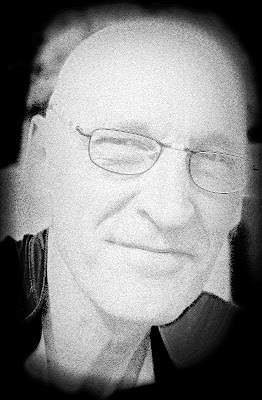
Mehr zur Vita und zum Werk der Philosophin und Schriftstellerin Anna Lydia Huber (67, 2026, Philosophische Praxis seit 2009) und des Philosophen und Schriftstellers Gerhard Kaučić (67, 2026, Philosophische Praxis seit 1989) in deren Postings „Künstliche Intelligenz“ hier in diesem Blog !
Künstliche Intelligenz 09.07.2025 Url/Link:
Künstliche Intelligenz,- eine Ergänzung 25.09.2025 Url/Link:
Visit GPP
Homepage / Website
Blogpost: Was ist Philosophische Praxis? (I) Teil 1 / Part 1
https://disseminationsdjayphilpraxkaucic.blogspot.com/2015/12/was-ist-philosophische-praxis.html
Blogpost: Was ist Philosophische Praxis? (II) Teil 2 / Part 2
https://disseminationsdjayphilpraxkaucic.blogspot.com/2016/01/was-ist-philosophische-praxis-ii.html
Blogpost: Was ist Philosophische Praxis? (III) Teil 3 / Part 3